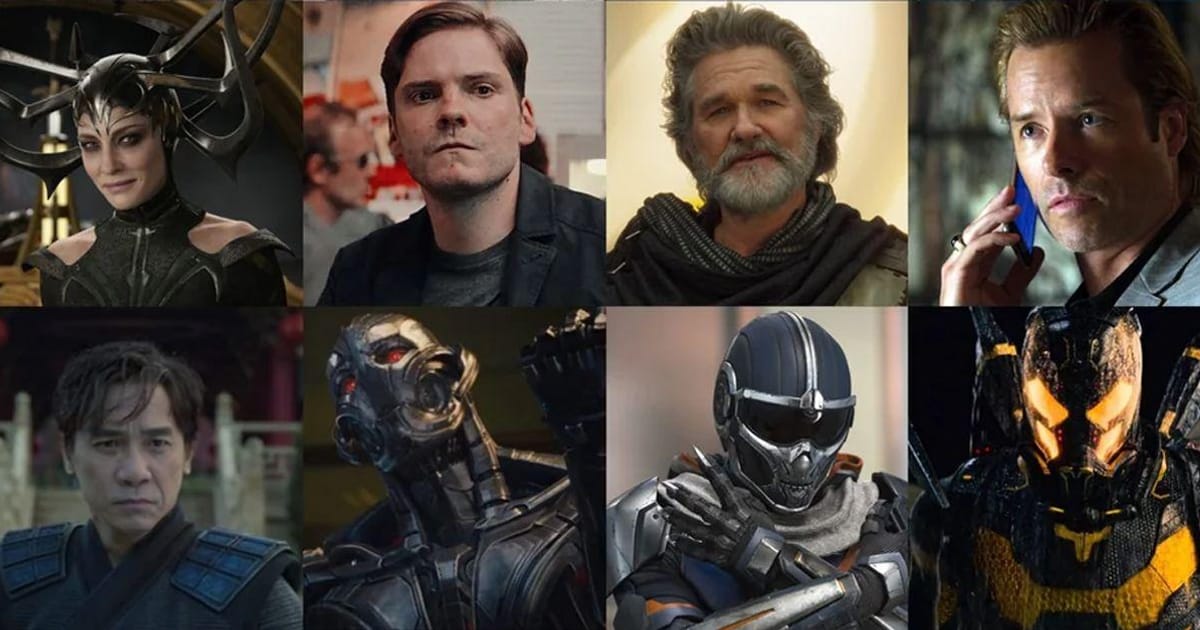
One thing Marvel fans absolutely love to dobesides arguing about power levels at 2 a.m.is pick apart
MCU villains. Not their outfits, not their CGI, but their reasons for being evil.
Because a villain with a strong motivation can carry a whole movie… and a villain with a terrible one can
sink it faster than you can say “Dark World.”
Over years of Reddit threads, ranking lists, and heated group chats, a pattern has emerged: some
Marvel villains are compelling, layered, and almost sympathetic, while others feel like
they woke up one morning and chose chaos for absolutely no good reason. Fans have been especially harsh
on the latter group, calling out villains whose motivations are flimsy, petty, or downright nonsensical.
Why Villain Motivations Matter More Than CGI
A great villain isn’t just a big bad with a cool weapon. They’re the engine of the story. Their
motivation creates stakes, tests the hero’s values, and often mirrors a deeper theme.
That’s why antagonists like Thanos, Killmonger, and Loki are still heavily debated today: fans may hate
what they do, but they understand why they do it.
On the flip side, a villain who’s evil “just because” or for a paper-thin reason makes it hard for viewers
to invest. Marvel fans have pointed out again and again that some MCU villains seem to exist
only as obstacles, not as believable people (or aliens, or robots) with coherent goals. In fan discussions,
the villains who get dragged the hardest aren’t always the weakest fightersthey’re the ones with
the worst possible reasons for their devious actions.
The MCU Villains Fans Say Had Truly Terrible Motives
1. Malekith: Doing Evil Because… Darkness?
If there were a meme for lazy villain motivation, it would probably be Malekith from
Thor: The Dark World. Fans regularly rank him among the MCU’s weakest villains, and not because
he’s underpowered, but because his reasoning is basically, “I liked it better when the universe was dark.”
We’re told that Malekith wants to use the Aether (Reality Stone) to plunge everything back into primordial
darkness. Why? So the Dark Elves can… vibe? Rule? Nap? The movie never gives us a clear emotional anchor
or personal conflict. There’s no real backstory explored on screen, no tragic loss, no nuanced worldview
just a generalized hatred of light and Asgard.
In fan conversations, Malekith is often brought up as the textbook example of a villain who feels like a
plot device, not a character. His “because darkness” motivation leaves viewers shrugging instead of
thinking or arguing about his point of view.
2. Ronan the Accuser: Space Fascist With Paper-Thin Ideology
Ronan the Accuser from Guardians of the Galaxy at least has a label: he’s an extremist Kree
fanatic. On paper, that sounds promising. In practice, many Marvel fans feel his motives never evolve beyond
“I hate Xandar, treaties are for cowards, so I’m going to blow everyone up.”
We know he opposes a peace treaty between the Kree and Xandarians, but we rarely get a deeper look at why
he’s so committed to annihilation. There’s no meaningful exploration of Kree politics or personal trauma
that shaped him. He just wants mass destruction, with the Power Stone as his blunt instrument.
Fans regularly place Ronan in the “underdeveloped” category: cool visuals, intimidating voice, zero nuance.
When your ideology boils down to “destroy them all” with no further layers, your motive feels less like a
belief system and more like a temper tantrum with better armor.
3. Yellowjacket (Darren Cross): Shrink Suit, Huge Ego, Tiny Reason
Darren Cross in Ant-Man is the kind of villain Marvel keeps coming back to: the greedy corporate
guy in a suit. He’s obsessed with weaponizing the Pym particles, jealous of Hank Pym, and eager to cash in
with military contracts. That’s realistic enough, but fans often call his motivation “stock CEO villain.”
Cross wants power, money, and validation. That’s about it. There’s no larger philosophy, no complex internal
conflictjust ego and greed. Critics have lumped him in with a long line of Marvel antagonists whose motives
are basically “I like money and control,” from Obadiah Stane to Justin Hammer and Aldrich Killian.
As a result, many fans remember Yellowjacket more for Ant-Man’s creative action scenes than for any
emotional weight behind the villain’s plans. He’s not the worst character, but his reason for going full
supervillain is painfully familiar.
4. Aldrich Killian: Tony Was Rude One Time, So… Global Terrorism
Aldrich Killian from Iron Man 3 might be the unofficial king of petty motivation. The movie opens
with Tony Stark blowing him off on a rooftop, and years later Killian reemerges as a slick genius running
the Extremis program and staging terrorist attacks.
Some fans argue that Killian’s motivation is more about power and control than simple revenge, but many
online discussions boil his origin down to “Tony hurt his feelings at a conference, so now he’s destabilizing
governments.”
Compared with more layered MCU villains, Killian’s jump from awkward scientist to mastermind terrorist feels
abrupt and melodramatic. Yes, being humiliated by your idol would stingbut using that as the emotional core
for a massive global conspiracy can feel thin, especially in a universe where other villains are grappling
with trauma, systemic injustice, or existential dread.
5. Mysterio: Mad About a PowerPoint Presentation
Quentin Beck, a.k.a. Mysterio, in Spider-Man: Far From Home has one of the most mocked motivations
among MCU fans. He’s furious that Tony Stark repurposed his holographic tech (B.A.R.F.), gave it a ridiculous
name, and pushed him out. So he assembles a crew of disgruntled ex-Stark employees to fake disasters and
become a celebrity hero.
On one hand, workplace resentment and being disrespected by a powerful boss are relatable. On the other hand,
Beck’s response is to manipulate a teenager, endanger thousands of people with weaponized illusions, and
rewrite reality for clout. Fans have joked that he’s basically a toxic ex-employee who took “I didn’t get
enough credit” to a wildly irresponsible extreme.
Instead of a philosophical stance or tragic past, his motive feels like pure ego and hurt pridea small
emotional seed stretched over a massive, destructive plan.
6. Dreykov: Misogyny as a Personality Trait
In Black Widow, General Dreykov is revealed as the architect of the Red Room, a shadowy program that
kidnaps, brainwashes, and weaponizes girls. He’s a nasty piece of work, but that’s exactly the issue: fans
often say he’s evil in such a flat, over-the-top way that he feels more like a concept than a person.
Dreykov wants control, specifically over women’s bodies and choices. That’s thematically relevant, but his
personal motivationbeyond “I like power and don’t see women as human”never gets much shading. He’s a cruel
patriarch who views people as assets, and that’s about where the character development stops.
Fans often place him in the category of villains who are hateable but not interesting. His actions are
horrifying, but his motive is disappointingly one-note, which limits how deeply audiences can engage with
him beyond pure disgust.
7. The Dark Elves, Flag Smashers & Other “Just Trust Us, They’re Angry” Villains
Beyond individual names, Marvel fans frequently complain about a pattern: whole villain groups whose
motivations are sketched in, not truly explored. The Dark Elves as a culture barely get fleshed out.
The Flag Smashers in The Falcon and the Winter Soldier are fighting for displaced people in a
post-Blip worldan idea with tons of potentialbut Karli Morgenthau’s motives and personality are often
described by fans as underwritten and inconsistent.
These antagonists are supposed to embody complicated issuesidentity after the Blip, the cost of global
conflict, marginalized communitiesbut the scripts rarely give them enough depth. So when they turn to
violence, it can feel less like a tragic escalation and more like the writers flipping the “villain” switch
because the story needs a final battle.
In online debates, fans often compare these villains to the likes of Killmonger or Thanos, who may commit
atrocities but at least have a clearly articulated worldview that people can dissect and argue about.
What Separates Great Marvel Villains From the Forgettable Ones
When fans talk about the best MCU villains, a few common traits show up:
- A clear, specific goal rooted in personal experience
- A worldview that challenges the hero’s beliefs
- Emotional stakes that go beyond “I like power”
- Actions that logically follow from their philosophy
Thanos believes the universe is overpopulated and takes a monstrous, twistedly utilitarian approach.
Killmonger channels generational trauma and systemic oppression into violent revolution. Vulture in
Spider-Man: Homecoming is a working-class guy pushed into crime after being squeezed out by
billionaire-backed cleanup crews. Even when audiences disagree with them, they can follow the logic and
feel the pain behind their choices.
The “worst-motivated” villains, on the other hand, usually fall into one of a few buckets:
- The ego trip: They’re evil because their pride was hurt (Mysterio, Killian).
- The generic extremist: They want to destroy a planet/government/system with little nuance (Ronan).
- The faceless institution: They’re cruel but never deeply explored (Dreykov, some Flag Smashers arcs).
- The cosmic shrug: They want to “end the world” for vague reasons (Malekith).
Fans aren’t demanding perfectly logical villainsthey’re perfectly happy with reality-bending witches and
talking raccoons. What they do want are antagonists whose motives feel emotionally grounded and thematically
rich, not just a checkbox on the “we need a conflict” list.
How Fan Discussions Are Shaping the Conversation Around MCU Villains
The rise of social media, Reddit, and YouTube breakdowns has turned villain analysis into a sport. Entire
videos rank dozens of MCU villains from worst to best, and comment sections are filled with
debates about who deserved better writing and who should be retired forever.
These conversations don’t just live in niche corners anymore. Articles from entertainment outlets regularly
evaluate Marvel’s “villain problem,” pointing out how early phases leaned on one-dimensional antagonists and
how later projects have tried to lean into more complex, morally grey threats.
As fans become more vocal, the bar rises. When you’ve seen villains like the High Evolutionary, Namor, or
even Wanda in Doctor Strange in the Multiverse of Madness wrestling with messy, layered drives,
it becomes much harder to accept a new villain whose only explanation is “the world hurt me once, so
everyone must suffer.”
Conclusion: Laughing at Bad Motives, Hoping for Better Baddies
Marvel fans will always argue about which MCU villain is the scariest, the strongest, or
the most iconic. But the villains who get roasted the most aren’t necessarily the weakestthey’re the ones
whose motivations feel like they were scribbled in the margins at the last minute.
From Malekith’s “bring back the darkness” obsession to Mysterio’s overblown revenge against a dead boss,
these antagonists remind us how important it is to give bad guys good reasons. When Marvel nails the
motivation, fans end up debating ethics, trauma, and ideology. When it doesn’t, they end up making memes.
The good news? The MCU has clearly shown it can create deep, compelling villains. As fan discussions
continue to spotlight which motivations work and which ones flop, there’s hope that future big bads will be
less “angry for no reason” and more “frighteningly understandable.”
devious actions, from Malekith to Mysterio and beyond.
sapo: Marvel has given us unforgettable heroesand some very questionable villains. Not
in terms of power, but in terms of why they turned evil in the first place. From Malekith’s vague
love of darkness to Mysterio’s petty grudge against Tony Stark, fans have spent years dissecting which
MCU villains had the weakest, pettiest, or downright laziest motivations. In this deep dive, we break down
the baddies whose reasons for villainy just don’t hold up, explore what makes a great Marvel antagonist,
and look at how fan debates are pushing the MCU toward smarter, more satisfying villain stories.
Marvel Fan Experiences: How We Really Talk About Bad Villain Motivations
If you’ve spent any time in Marvel fandom spaces, you know that talking about villains is practically a
hobby. The conversation doesn’t stop when the credits roll; it just migrates to couches, DMs, comment
sections, and convention lines.
For a lot of fans, the first “wait… that’s it?” moment came during rewatch marathons. The movies themselves
move fast: explosions, quips, portals in the sky. But when you sit down later with friends and actually
recap the plot, some villain motivations fall apart hilariously quickly. Someone will say, “So why did he
want to destroy the universe again?” and suddenly the room goes quiet.
Online, it gets even more intense. Reddit threads ask things like “Who had the worst motive in the MCU?” and
fans pile in with lists, mini-essays, and jokes. Malekith and Ronan are frequent targets, but Iron Man’s
rogues gallerypacked with bitter businessmen and jealous ex-colleaguesgets roasted too. People point out
how many villains are essentially mad that Tony Stark ignored them, embarrassed them, or outshined them,
then decided terrorism was the logical next step.
Group chats light up whenever a new MCU project drops. During the first watch, everyone’s hyped about
action scenes and cameos. On the second or third viewing, the villain’s logic gets interrogated. Was the
Flag Smashers’ plan actually helping anyone? Did Gorr’s story in Thor: Love and Thunder live up
to his terrifying comic book reputation, or did the movie rush past his grief and trauma too quickly?
Fans trade voice notes, screenshots, and mini-rants, trying to decide whether a villain is “misunderstood”
or just badly written.
At conventions and fan meetups, villain talk is a guaranteed icebreaker. You’ll hear people ranking their
top five bad guys while waiting in line for signings or photo ops. Someone will passionately defend Zemo’s
meticulous grudge in Civil War, while someone else complains that yet another villain wanted
“ultimate power” without any real emotional foundation. These conversations can be surprisingly thoughtful,
touching on politics, ethics, trauma, and representationright alongside jokes about bad wigs and weird
costume choices.
What’s especially fun is how fans use these weak villain motives as a springboard for creativity. Fan
fiction, fan edits, and headcanons often try to “fix” motivations that the movies left undercooked. People
dream up richer backstories for characters like Malekith or Ronan, or rewrite plot points so Mysterio’s
anger taps into something more substantial than professional jealousy. In a way, the fandom refuses to
accept flat antagonists and keeps trying to turn them into something deeper.
Over time, this constant feedback loop between screen and fandom has raised expectations. When a new movie
or show is announced, fans don’t just ask, “Who’s the villain?” They ask, “What’s their angle? What do they
believe? Is this going to be another ‘destroy the world because reasons’ situation, or will we actually get
someone as layered as Thanos, Killmonger, or Loki?”
That’s the real impact of all these discussions about “the worst possible reasons for devious actions.”
It’s not just nitpicking for the sake of it. It’s a signal to Marvel and other studios: audiences are paying
attention. They’ve seen what truly compelling villain motivations can look like, and they’re not willing to
settle for less. If future MCU villains want to avoid the “worst motive” lists and Reddit roasting sessions,
they’ll need more than a grudge and a doomsday devicethey’ll need a reason that actually hits home.