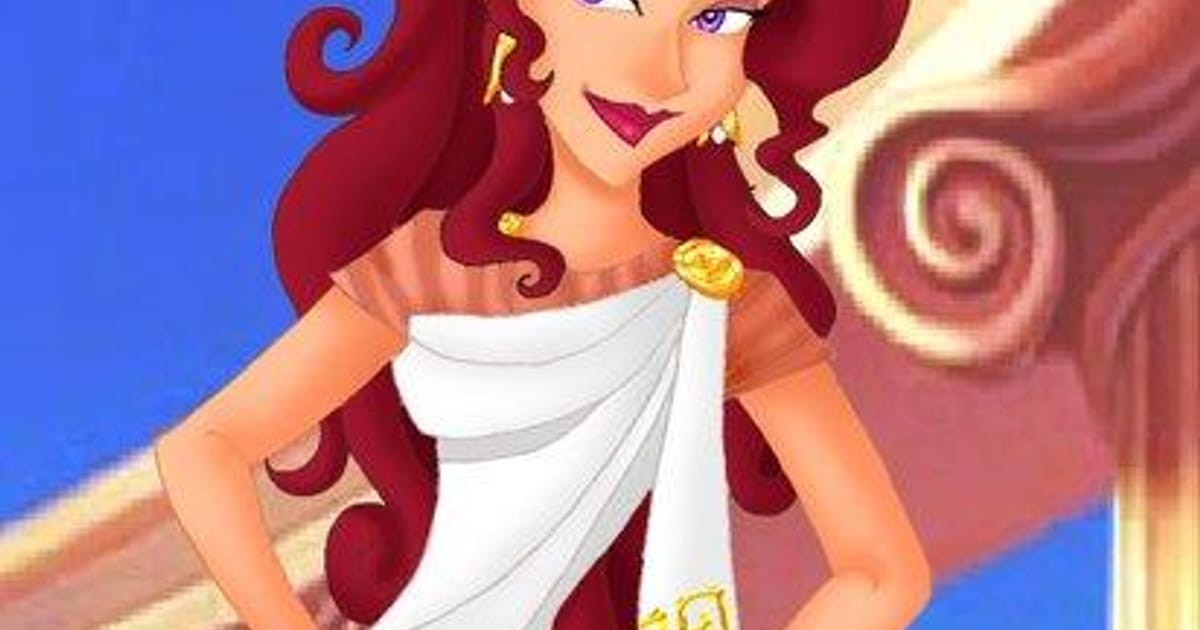
Megara“Meg,” if you’re cool and/or you’ve ever yelled “ZERO TO HERO!” at a TVhas a rare Disney superpower:
she can roll her eyes so hard you feel it through the screen. She’s witty without being mean, guarded without being
cold, and romantic without turning into a human heart-eyes emoji. In other words, she’s the love interest who
behaves like a real person.
This article is a deep-dive into Megara rankings and opinions: how she stacks up against other Disney heroines,
what makes her character work, and which Meg moments deserve the loudest standing ovation. We’ll rank her traits, her
story beats, her cultural impact, and even her “I’m fine, everything’s fine” emotional armor. Spoiler: it’s top-tier.
The Ground Rules: How We’re Ranking Megara
“Best” is a slippery wordlike Hades trying to keep a deal honest. So here’s the rubric. Each category ranks what Meg
does on-screen (and why it matters), not just how iconic she is in GIF form.
- Agency: Does she make meaningful choices, or does the plot drag her around?
- Character depth: Is she a vibe, or is she a person with motives, flaws, and growth?
- Dialogue power: Do her lines reveal character, sharpen themes, or land like perfect comedy timing?
- Emotional realism: Does her romance feel earnedmessy, cautious, and human?
- Cultural stickiness: Is she still getting referenced, quoted, and defended online years later?
- Myth-to-movie transformation: Is the adaptation interesting, even when it’s not faithful?
Megara 101: Myth vs. Mouse
Megara in Greek Myth
In classical mythology, Megara is typically presented as a Theban princess connected to Heracles (the Greek version of
Hercules). She appears in ancient sources and later retellings as part of a heroic cycle that’s not exactly “family
movie night” material. The important point for our purposes: myth-Megara is a figure in a tragedy-shaped world where
fate, gods, and consequences don’t play nice.
If you’ve ever wondered why Disney’s version feels so different, that’s why. Greek myth isn’t designed to teach you
to believe in yourself; it’s designed to make you stare into the chaos and say, “So… we’re doing this, huh?”
Megara in Disney’s Hercules
Disney’s Meg is the opposite of a blank-slate love interest. She’s sharp, skeptical, and deeply allergic to sugary
romance tropesbecause the story gives her a past. She’s also written like a classic fast-talking movie heroine,
with that screwball rhythm where every sentence sounds like it was timed with a metronome and a smirk.
That choice matters. A lot of Disney romances work because the heroine is kind and the hero is brave. Meg’s romance
works because she’s guarded and the hero is earnestso their chemistry comes from contrast. He believes in people;
she’s seen enough to want a receipt before she invests emotionally.
Ranking #1: Meg’s Character Traits (The “Why She Works” List)
Megara is one of those characters where the traits don’t sit separately like items on a checklistthey collide.
That collision is the personality. Here are her most defining traits, ranked by how much they shape the character.
-
Protective sarcasm (Gold medal, no contest).
Meg’s humor isn’t just decoration. It’s armor. She uses jokes to stay in control of the emotional temperature in the room. -
Emotional realism.
She doesn’t fall in love because the soundtrack says it’s time. She resists, doubts, and negotiates her feelings like a person
who’s been burned before. -
Moral complexity.
Meg is not presented as purely innocent or purely manipulative. She makes choices under pressure, regrets some of them, and still
tries to do better. That “in-between” space is where compelling characters live. -
Agency under constraint.
Some characters are “strong” because they punch things. Meg is strong because she navigates a bad situation with limited options
and still finds a way to choose her own line in the sand. -
Softness she refuses to advertise.
Meg has a heart; she just keeps it behind a locked door with a “do not disturb” sign and a very sarcastic security system. -
Instant read of other people.
She sizes up a room quicklywho’s lying, who’s posturing, who’s sincere. It’s a survival skill, and the film treats it as one. -
Style as storytelling.
Meg’s design and performance sell the idea that she’s lived a life before the movie started. She feels like she has off-screen scenes.
Ranking #2: Meg’s Most Iconic Moments (From “Fine” to “Forever”)
Meg’s best moments aren’t just punchlines. They’re the places where comedy flips into character development without announcing itself.
Here are the standout Meg beats, ranked by impact.
-
The anti-damsel introduction.
Meg’s first big impression is basically: “Please stop trying to turn me into a trope.” It’s a mission statement for her whole character. -
The “I don’t trust this” phase.
She doesn’t get swept away by Hercules’ optimismshe challenges it. That friction is the romance. -
The moment her mask slips (just a little).
When Meg shows vulnerability, it lands because the movie earned it. It’s not a sudden personality swap; it’s a crack in the armor. -
The song that refuses to be a standard love ballad.
Meg’s big musical moment works because it matches her voice: resistant, witty, and emotionally honest in a sideways kind of way. -
The choice that defines her.
The most important Meg moment is when she stops being a passenger in her own story. She makes a decision that shows who she iswithout needing applause. -
The post-arc Meg.
After she changes, she doesn’t become a different person. She becomes the same person with a little more hope and a little less fear.
Ranking #3: Meg’s Song Score (Because “I Won’t Say” Is a Whole Personality)
Let’s be honest: if you’ve ever had feelings you didn’t want to admit, Meg’s signature song is basically your internal monologue with backup singers.
What makes it special isn’t just that it’s catchyit’s that it’s character writing in musical form.
Why it works
- It fits her voice. The song doesn’t force Meg into a swoony mold. It keeps her stubborn, funny, and defensivewhile still letting the audience see the truth.
- It modernizes the Disney love song template. Instead of “I’m in love and it’s destiny,” it’s “I’m in love and I’m annoyed about it.” That’s relatable on a molecular level.
- It’s a cultural repeater. People don’t just remember it; they perform it. That’s how a song becomes a permanent resident in pop culture.
Bonus ranking nugget: if you scan modern “best Disney songs” lists, Meg’s song shows up not as a guilty pleasure, but as a genuinely respected entry.
That’s rare for a track that’s built around denial and side-eye.
Ranking #4: Meg vs. Other Disney Heroines (The “Unofficial Princess” Debate)
Meg has long lived in a fascinating zone: she’s iconic, beloved, and clearly “princess-adjacent,” but she’s not always treated like the marquee heroines
who dominate official branding. That mismatch has fueled years of fans calling her underrated, under-merchandised, or flat-out overlooked.
Here’s the spicy-but-fair takeaway: Meg isn’t designed to be the cleanest, safest character for a one-size-fits-all brand line. Her charm is her edge.
She’s not written to be universally aspirational; she’s written to be specific. And in storytelling, “specific” ages better than “perfect.”
Where Meg tends to rank in fan conversations
- Top tier for wit and dialogue. If the category is “best lines,” Meg is always in the room.
- High for relatability. Her cynicism reads like experience, not cruelty.
- Elite for romantic chemistry. She and Hercules have that rare dynamic where both characters change and neither gets erased.
- Debated for role-model status. Some people want heroines to be spotless. Meg is more “human with consequences,” which is exactly why others love her.
Ranking #5: The Megara Influence (Why She Still Feels Modern)
Plenty of characters are “sassy.” Meg is something more interesting: she’s a character built on contradiction. She’s tough but tired. Flirtatious but wary.
Funny but not carefree. And that mix feels incredibly modern because it mirrors how people actually cope with disappointment.
Her writing also quietly pushes back on an old storytelling habit: treating romance like a reward for goodness. Meg’s arc suggests something else:
love can be earned through trust, and trust can be rebuiltbut it takes time, choices, and accountability.
A quick “Meg in 2025” checklist
- She’s meme-proof. Her lines and expressions survive out of context because they’re grounded in character.
- She’s cosplay-friendly. Not just because the look is iconicbecause the attitude is instantly recognizable.
- She’s a template for later heroines. You can draw a line from Meg’s guarded humor to many later animated characters who mix vulnerability with bite.
Conclusion: So, Where Does Megara Land?
If you’re searching for a final verdict on Megara rankings and opinions, here it is: Meg belongs in the top tier of Disney heroinesespecially
if your ranking values character depth, emotional realism, and dialogue that actually sounds like a person talking.
She’s not the most powerful. She’s not the most magical. She’s not the official face of a franchise line. But she might be one of the most
well-written, because she’s allowed to be messy, skeptical, and brave in a way that feels earned.
Shared Fan Experiences: The Megara Effect (500+ Words)
Ask a group of Disney fans about Megara and you’ll notice something different right away: people don’t just “like” herthey talk about her like
she’s a friend who helped them survive a weird phase. Not in a dramatic way. In a “she made me feel less alone when I didn’t trust anyone” way.
One of the most common Meg experiences is the instant recognition moment: you rewatch Hercules as an older kid (or as an adult),
and suddenly Meg isn’t just “the love interest.” She’s the character who understands what it’s like to act confident while quietly bracing for
disappointment. That’s why fans often describe her as relatable. She doesn’t sparkle; she copes.
Then there’s the karaoke phenomenon. Meg’s signature song has become a go-to performance track because it lets people be funny and emotional
at the same timean unbeatable combo. Fans love that you can sing it like a comedy number, a heartbreak number, or a “please stop perceiving me” anthem.
And in a very real-life moment that delighted longtime viewers, Susan Egan (Meg’s voice) has even surprised Disney park guests by jumping into a karaoke
setting with that songbasically the most Megara way imaginable to remind the world she still owns the vibe.
Another shared experience: quoting Meg as social currency. Some characters get quoted because they’re inspirational. Meg gets quoted because
she’s efficient. Her attitude is basically a Swiss Army knife for awkward situations: unwanted attention, bad flirting, fake confidence, or that moment
when someone is being way too earnest and you need to gently puncture the balloon before it floats into space.
If you’ve ever seen Meg cosplayers at conventions, you’ll also notice how the costume is only half the performance. The real accessory is the posture:
the slight lean, the unimpressed eyebrow, the “I’m listening, but I’m not buying it” energy. Fans often talk about how fun it is to cosplay Meg because
it’s not about pretending to be perfectit’s about embodying a personality that’s sharp, theatrical, and still secretly soft.
Meg also tends to show up in people’s personal “character rankings” when they start rethinking what strength looks like. For some fans, childhood rankings
are simple: strongest equals most physically powerful. Adult rankings get more nuanced: strongest equals most emotionally resilient, most honest, most capable
of change. Meg climbs the leaderboard in that version because she has to unlearn self-protection without losing herself.
Finally, there’s the experience of defending Meglovingly, loudly, and with receipts. Fans will argue she deserves more recognition,
more merchandise, more “unofficial princess” respect, and more credit for being a turning point in how animated romances can feel. And even if you don’t
personally place her at #1, it’s hard not to respect the case: Megara is a character who feels written, not manufactured. That’s why people keep ranking her,
debating her, singing her song, and quoting herbecause she still feels alive on the page and on the screen.