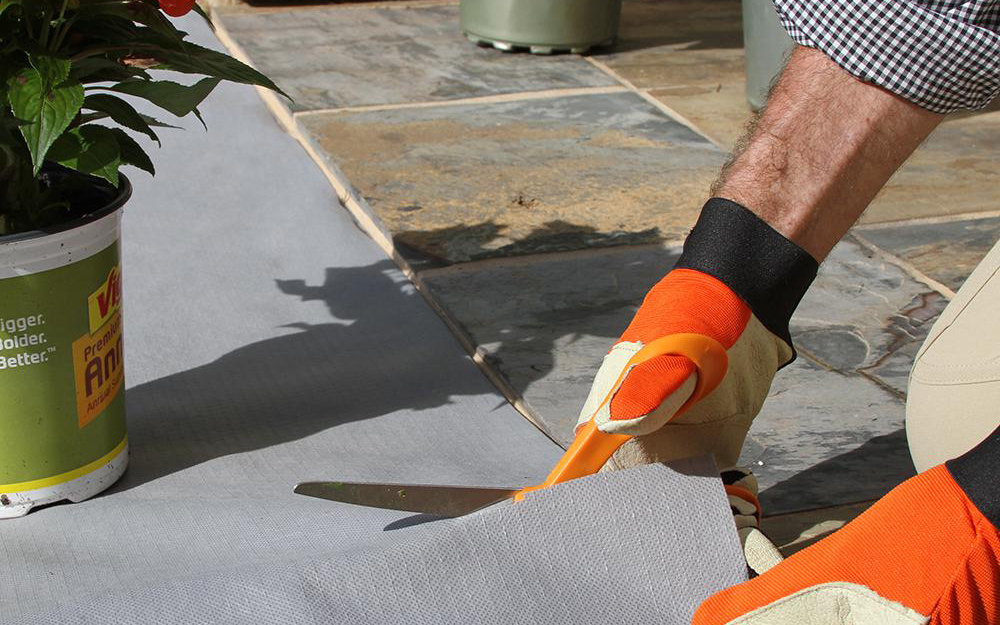
Landscape fabric is sold like a magic trick: roll it out, toss on mulch or rock, andpoofyour weed problems
vanish. Then real life shows up wearing crabgrass and laughing.
If you’ve got landscape fabric in a bed and weeds are popping up, your first instinct is totally normal:
grab, yank, win. But here’s the frustrating truth: pulling weeds through landscape fabric is one of the fastest ways
to make both the weeds and the fabric situation worse. It’s like trying to “fix” a sweater snag by tugging the loose thread.
Congratulationsyou now own a wearable hole.
Let’s break down exactly why you should stop yanking weeds through landscape fabric, what’s actually happening in your
mulch bed, and what to do instead (so you’re not out there every weekend playing tug-of-war with dandelions).
The Big Misunderstanding About Landscape Fabric
Landscape fabric (also called weed barrier fabric or geotextile) is designed to block sunlight from reaching the soil,
which can reduce the germination of some weedsfor a while. The problem is that most weed problems in mulched beds
don’t come from weeds rising dramatically from the depths like a horror movie villain.
A huge percentage of “mystery weeds” in landscape beds come from new seeds that land on topblown in by wind,
dropped by birds, or delivered by the tiny chaos gremlins known as “neighbor’s neglected yard.” Over time, leaves,
dust, decomposing mulch, and soil particles build up on top of the fabric and create a thin layer of “new soil.”
That’s all many weed seeds need to sprout.
So you end up with weeds rooted in the gunk above the fabric, plus a few tougher weeds that manage to
poke through seams, holes, or weak spots. That’s the exact moment most people start pullingand that’s where the trouble begins.
Why Pulling Weeds Through Landscape Fabric Backfires
1) You Turn Your Weed Barrier Into Swiss Cheese
Landscape fabric is strong enough to handle being covered and stapled down. It’s not designed to be a punching bag.
When you yank a weed, especially one with a stubborn root or branching root system, you can:
- tear the fabric,
- stretch it into permanent gaps,
- rip open seams where two pieces overlap, and
- pull up staples so the fabric shifts and buckles.
And once there’s a hole, light reaches the soil below, water and debris collect in the gap, and the fabric loses the
one job it was hired to do. Those holes become VIP entrances for future weeds.
2) You Often Leave the Root Behind (Which Is Basically Weed Cloning)
Many common landscape weeds are annuals (easy-ish) but a lot are perennials or have aggressive root structures
(not easy, not friendly, and definitely not impressed by your weekend plans). When a weed’s roots tangle into or
under the fabric, pulling tends to snap the plant at the stem or break off part of the root.
For many perennials, that’s not a defeatit’s a haircut. The remaining root can resprout, sometimes sending up
multiple shoots. So the weed you tried to remove becomes a little “family business.”
3) Weeds Can Root Through the FabricAnd Then You’re Stuck
Here’s the sneaky part: weeds that start on top can push roots down into the fabric weave and sometimes through it,
especially if the fabric is older, thinner, or already compromised. Once roots knit into the material, the weed and
fabric become roommates. Removing the weed cleanly can require lifting the fabricor removing it entirely.
When you pull, you’re not just removing a plant. You’re tugging against a woven barrier that’s stapled to the earth.
Something’s going to give, and it’s usually the fabric (and your patience).
4) You Disturb Mulch, Expose Light, and Invite More Weeds
Pulling weeds is surprisingly disruptive. Even small weeds can drag up mulch and leave little craters. Those craters
expose the surface to sunlight, create spaces where wind-blown seeds settle, and reduce the mulch layer’s ability to
block weed germination.
Think of mulch like a blanket. Your goal is to keep it evenly spread and thick enough to shade out seedlings.
Weed-yanking often does the opposite: it “fluffs” the blanket into patchy coverage.
5) You Can Spread Seeds (and Make Next Month’s Problem)
Some weeds drop seeds easily when handledespecially if they’ve started flowering or forming seed heads.
A quick yank can shake seeds loose and distribute them across your bed like you’re seasoning a salad.
If you’re dealing with a weedy patch, your best move is almost always to manage weeds while they’re young,
before they flower, and to avoid actions that scatter seed.
The Real Reason You’re Seeing Weeds: “Soil” Builds on Top
Even if your landscape fabric was installed perfectly, nature has a long game. Organic mulch decomposes.
Leaves fall. Dust blows in. Tiny bits of soil wash in during storms. Over time, the top of your fabric becomes a
thin growing medium, and weeds don’t need much.
This is why people often say, “My weed barrier worked… for like two years.” That’s not your imagination.
Fabric can reduce weeds temporarily, but it doesn’t stop new weed seeds from germinating above it.
It can actually make the later weeding stage more annoying, because now weeds are rooted into the fabric itself.
What’s Happening Under the Fabric (and Why It Matters)
A healthy garden bed isn’t just “dirt.” It’s a living system filled with organisms that help plants thrivemicrobes,
insects, earthworms, and fungal networks. Several extension educators and horticulture researchers warn that landscape
fabric can interfere with normal soil processes over time by altering water movement, air/gas exchange, and organic matter cycling.
In practical terms, that can mean:
- Water doesn’t soak in evenly (especially once the fabric clogs with fine particles).
- Soil can become less biologically active when organic debris can’t integrate naturally.
- Roots may behave oddly near barriers, and beds can become harder to amend with compost.
None of this means your yard is doomed. It just explains why fabric often feels like a “shortcut” that ends up
requiring more work laterespecially in planting beds where you want rich soil and flexibility.
When Landscape Fabric Makes Sense (and When It Really Doesn’t)
Better uses
- Under gravel or stone paths where you want separation between soil and aggregate.
- Under hardscape edges where digging is minimal and aesthetics matter more than soil biology.
- Temporary suppression (short-term) for specific projects, if you plan to remove or refresh it.
Usually a bad fit
- Perennial flower beds where plants spread, self-seed, and beds evolve.
- Around trees and shrubs where you want stable moisture, healthy roots, and easy mulching.
- Vegetable gardens where you regularly amend soil and replant.
- Any bed you plan to “improve” with compost, topdressing, or frequent planting changes.
If you already have fabric in a planting bed, the goal isn’t to panicit’s to manage it realistically.
Which brings us to the big question:
How do you remove weeds without pulling them through the fabric?
What To Do Instead (So You Win Without Shredding the Fabric)
Option 1: Cut the weed at the base (the “no drama” method)
For weeds growing on top of fabric (in decomposed mulch and debris), the easiest solution is often:
snip or slice at the crown (where the stem meets the root). Use a hand pruner, garden knife,
or a sharp hoe for tiny seedlings.
This avoids tearing fabric and prevents seed scattering if you remove weeds before they flower. In many cases,
repeated cutting weakens the plant over timeespecially if you follow up by refreshing mulch.
Option 2: Lift mulch, then gently loosen the weeddon’t yank
If the weed seems “attached,” don’t pull harder. Pull smarter:
- Brush mulch aside so you can see the base of the weed and the fabric surface.
- Use a narrow hand tool to loosen the root in the debris layer above the fabric.
- Pull slowly, keeping tension low and steadystop if the fabric starts to lift.
- If roots are threaded into the fabric, cut at the base instead of forcing it.
Option 3: Remove a small section of fabric (if it’s already failing)
If you have an area where the fabric is torn, clogged, or covered in a thick layer of decomposed mulch,
it may be doing more harm than good. In that case, the best “weed control” may be a reset:
- Pull back mulch.
- Cut and remove the fabric in that section.
- Weed thoroughly and add compost if the soil is compacted.
- Re-mulch with a thick layer of wood chips (often 3–4 inches is recommended in many home landscape settings).
This is counterintuitive, but many gardeners discover that a fabric-free bed with properly maintained mulch
becomes easier to weed over time.
Option 4: Re-mulch strategically (because mulch is the real weed barrier)
Whether you keep fabric or not, mulch is what blocks light at the surface and reduces weed germination.
If you can see fabric through thin mulch, your bed is basically wearing sunscreen with holes in it.
Top up mulch when it decomposes. Keep it evenly spread. And avoid “mulch volcanoes” around trunks
(trees and shrubs do not want a cozy collar of damp mulch).
If You’ve Already Been Pulling Weeds Through Fabric
No shame. You were promised less work and you accepted the offer like a rational human.
Here’s how to recover:
1) Patch the damage (only if it’s minor)
Small tears can sometimes be overlapped with a new piece of fabric and pinned down, but understand:
patches are temporary. As debris builds, weeds will still germinate above the barrier.
2) Stop making new holes
Switch to cutting weeds at the base and re-mulching. Treat fabric like a screen door: once it’s ripped,
it stops screening.
3) Decide whether the fabric is worth keeping
If the bed is mostly plants (not gravel), and the fabric is old, clogged, or tangled with roots,
removal may be the long-term sanity choice. Many extension educators advise that once perennial weeds have rooted
through fabric, removal becomes extremely difficult and sometimes the only practical fix is to remove the fabric itself.
Better Alternatives to Landscape Fabric in Planting Beds
Cardboard or paper as a temporary barrier
Plain cardboard (tape removed) or layered paper can suppress weeds while decomposing over timemeaning it won’t
become a permanent plastic net you have to wrestle later.
Thick organic mulch
Arborist wood chips, shredded bark, and leaf mold can suppress weeds and improve soil as they break down.
Unlike synthetic fabric, they feed soil life rather than separating it from organic inputs.
Living groundcovers and dense planting
A well-designed bed uses plants as “green mulch.” When soil is shaded by groundcovers or closely spaced perennials,
fewer weed seeds germinate, and the ones that do are easier to spot and remove.
Quick FAQ: Landscape Fabric and Weeding
Does landscape fabric stop weeds forever?
No. It can reduce weeds for a limited time, but weeds often appear as debris and decomposed mulch create a growing layer on top.
Why do weeds grow on top of weed barrier fabric?
Because nature deposits “soil” above itdust, leaves, composted mulch, and sediments. Seeds germinate in that layer.
Is it okay to use fabric under mulch?
Many garden educators caution against it in planting beds because organic mulch decomposes into a rooting layer above the fabric,
and weeding can become harder as roots penetrate and tangle with the barrier.
What’s the best way to remove weeds from landscape fabric?
Cut weeds at the base, loosen gently without yanking, and maintain a thick mulch layer so fewer seeds germinate in the first place.
Real-World Experiences: What Gardeners Run Into (and What Actually Worked)
If you’ve ever felt personally betrayed by landscape fabric, you are in enormous company. Talk to enough homeowners,
master gardeners, or landscape pros and you’ll hear the same storiesdifferent weeds, same plot twist.
Experience #1: “The Fabric Confetti Bed.” This usually starts with good intentions: new mulch bed,
fresh fabric, clean edges. For the first season, it looks fantastic. Then a thin layer of decomposed mulch forms on top,
a few seedlings appear, and the homeowner starts pulling them “real quick.” By mid-summer, the fabric has tiny tears near
each pulled weed. Next season, those tears become bigger openings, mulch slips under the fabric in places, and weeds start
emerging where light reaches the soil below. The bed becomes a patchwork of rips that catch on rakes and hand tools.
The fix that worked best in these cases wasn’t “stronger pulling” (never is). It was switching to cutting weeds at the crown,
topping up mulch to restore full coverage, and patching only the largest tearsthen planning a gradual fabric removal if the bed
kept deteriorating.
Experience #2: “The Perennial That Moved In and Took Over the Lease.” Certain weeds don’t just grow;
they establish. People report that once a tough perennial (think deep roots, runners, or a thick crown) gets a foothold,
it can thread into the fabric. Now every attempt to pull either snaps the plant or lifts the fabric. In these beds, the most
effective approach was surprisingly calm: stop yanking, cut the growth repeatedly before it flowers, andif the weed keeps returning
remove a small section of fabric around the problem plant so the root can be addressed without shredding the entire bed.
It’s not glamorous, but it’s far less exhausting than an endless tug-of-war.
Experience #3: “The Rock Bed That Turned Into Soil Anyway.” Many people install fabric under rock expecting
a forever-clean, zero-weed zone. In reality, leaves, grit, and dust accumulate between rocks and create enough growing medium for weeds.
Pulling weeds in rock is already annoying; pulling weeds that have rooted into fabric under rock is next-level annoying. What helped most
here was adopting a maintenance mindset: periodic debris removal (so you’re not composting on purpose), spot-treating weeds early by cutting
or gently loosening them, and accepting that even rock beds need routine care. Some homeowners eventually replaced sections with more
plant-friendly designsgroundcovers plus mulchbecause living plant cover reduced the “rock-bed compost problem.”
Experience #4: “The Tree Ring Trouble.” Another common scenario: fabric around trees and shrubs looks tidy,
but over time it can interfere with maintenance, trap debris, and encourage weeds to root into the barrier. When weeds pop up,
pulling often tugs at the fabric near the trunkexactly where you don’t want chaos. The solutions that worked best were simple:
remove synthetic fabric near the base, maintain a proper mulch ring (kept back from the trunk), and rely on mulch depthnot fabricfor weed suppression.
The theme across these experiences is consistent: landscape fabric turns weeding into a structural problem.
Once roots and fabric get involved, pulling is rarely the clean win you hope for. Cutting early, mulching well, and choosing soil-friendly
barriers (or no barrier) tends to create less work over timeeven if it feels like the opposite on day one.
Bottom Line
If you remember only one thing, make it this: don’t pull weeds through landscape fabric.
Pulling often tears the barrier, leaves roots behind, spreads seeds, and can actually make the bed more weed-prone over time.
Instead, cut weeds at the base, loosen gently when appropriate, and keep mulch thick enough to block light.
Landscape fabric isn’t pure evilit has specific uses, especially under gravel. But in planting beds, it often creates a weird,
expensive obstacle course where weeds still show up and removal gets harder. If your bed is already a fabric battlefield,
consider whether a long-term switch to mulch-forward, soil-friendly weed control might save you the most time (and sanity).