There are two kinds of mornings: the “I need coffee before words” kind, and the “I can smell pancakes, life is beautiful” kind. This guide is for the second oneor for anyone trying to turn the first into the second.
If you’ve ever ended up with pancakes that looked fluffy in the pan but turned into sad little coasters on the plate, don’t worry. The fix usually isn’t fancy ingredients. It’s technique. A great pancakes recipe is really a mix of simple pantry staples and a few small decisions: how much you stir, how long you rest the batter, and how hot the griddle is.
Below is a complete, from-scratch pancake recipe with practical tips, flavor variations, common mistakes to avoid, and a long “pancake experience” section at the end for real-world kitchen wisdom. The goal: fluffy homemade pancakes that are tender inside, golden outside, and worthy of extra maple syrup.
Why This Pancakes Recipe Works
This homemade pancakes recipe is built around a classic balance of flour, milk, egg, sugar, salt, and leavening. The magic happens in the method:
- Lumpy batter is good batter. Overmixing develops too much gluten and makes pancakes chewy instead of soft.
- A short batter rest helps. Resting gives the flour time to hydrate and the leavening time to activate, which helps create a fluffier texture.
- Steady heat beats high heat. Pancakes need enough heat to brown, but not so much that the outside burns before the center cooks.
- Flip once and move on. Pancakes are not gymnasts. One clean flip gives better rise and texture.
In other words: this is not just a pancake recipe. It’s a tiny breakfast engineering projectwith delicious consequences.
Classic Fluffy Pancakes Recipe (From Scratch)
Ingredients
- 1 1/2 cups all-purpose flour
- 2 tablespoons granulated sugar
- 2 teaspoons baking powder
- 1/4 teaspoon baking soda (optional but recommended for extra lift)
- 1/2 teaspoon salt
- 1 1/4 cups milk (whole milk gives richer flavor)
- 1 large egg
- 3 tablespoons unsalted butter, melted and slightly cooled (or neutral oil)
- 1 teaspoon vanilla extract (optional, but it makes the kitchen smell amazing)
- Butter or oil for the pan
- Maple syrup, fruit, or other toppings for serving
Instructions
- Mix the dry ingredients. In a large bowl, whisk together the flour, sugar, baking powder, baking soda, and salt.
- Mix the wet ingredients. In a separate bowl (or large measuring cup), whisk the milk, egg, melted butter, and vanilla.
- Combine gently. Pour the wet mixture into the dry ingredients. Stir just until the flour disappears. The batter should be thick and a little lumpy. Do not beat it smooth.
- Rest the batter. Let it sit for 5 to 10 minutes while the pan or griddle heats. This step helps with fluffiness and tenderness.
- Heat the pan. Preheat a lightly greased griddle or skillet over medium heat (about 350–375°F if using an electric griddle).
- Cook the pancakes. Pour 1/4 cup batter per pancake onto the hot surface. Cook until bubbles rise and begin to break and the edges look set, about 2 minutes.
- Flip once. Turn and cook for another 1 to 2 minutes, until golden brown and cooked through.
- Serve warm. Stack, butter, syrup, repeat. Optional but highly encouraged.
Ingredient Breakdown (What Each One Does)
Flour
All-purpose flour is the reliable base for classic pancakes. It gives enough structure without making the pancakes heavy. If you want to add whole-wheat flour, start by swapping in 25% to 50% and increase the liquid slightly if the batter feels too thick.
Baking Powder and Baking Soda
These are your pancake lifters. Baking powder gives a steady rise, while baking soda reacts quickly with acidic ingredients (like buttermilk) to create extra bubbles and better browning. Using both is especially helpful in buttermilk pancakes.
Sugar
Just a little sugar improves flavor and helps the surface brown nicely. Pancakes shouldn’t taste like cake; they should taste lightly sweet and ready for toppings.
Egg
The egg helps bind everything together and adds a bit of richness and structure. It also supports lift when the batter heats up.
Milk (or Buttermilk)
Milk gives moisture. Buttermilk gives moisture and personality: a slight tang, softer crumb, and better lift when paired with baking soda. If you love diner-style fluffy pancakes, buttermilk is a strong move.
Butter or Oil
Melted butter adds flavor to the batter. For the pan, oil is often more forgiving because it won’t burn as quickly as butter. A lot of experienced cooks use oil for cooking and save the butter for serving, which is honestly a smart breakfast life choice.
Pro Tips for the Best Pancakes Every Time
1) Don’t Overmix the Batter
This is the biggest pancake rule. The batter should look slightly lumpy. If it looks smooth like cake batter, you’ve probably mixed too much. A few lumps are normal and welcome.
2) Let the Batter Rest
Even a short rest (5 to 10 minutes) helps the batter thicken and improves texture. During that time, the leavening starts doing its job and the flour hydrates. Translation: fluffier pancakes and fewer regrets.
3) Use the Right Heat
Medium heat is your friend. Too hot, and the outside browns before the center is done. Too low, and the pancakes dry out before they get color. If using an electric griddle, 375°F is a strong starting point. If using a skillet, do a test pancake first and adjust.
4) Look for Bubbles and Set Edges
Flip when the top has bubbles that start to pop (or form little holes) and the edges look less wet. If you flip too soon, the pancake may collapse or smear. If you wait too long, it can get dry.
5) Keep Pancakes Warm the Smart Way
If you’re making a big batch, keep cooked pancakes in a warm oven (around 200–250°F). Place them in a single layer or on a rack so steam doesn’t make them soggy. Pancakes are fluffy; no one wants a stack of sleepy sponge discs.
6) Make a Test Pancake
The first pancake is often the “practice pancake.” This is normal. Use it to check heat, timing, and browning. The first pancake teaches. The rest of the batch graduates with honors.
Pancake Variations (Because the Basic Recipe Is Just the Beginning)
Buttermilk Pancakes
Replace the milk with buttermilk and keep the baking soda in the recipe. The result is tangier, softer, and often a little taller. This is the classic choice for extra-fluffy homemade pancakes.
Blueberry Pancakes
Instead of stirring berries into the whole bowl (which can turn the batter streaky), pour the batter onto the griddle first, then sprinkle blueberries on top. Flip once the bubbles appear. This keeps the batter cleaner and the berries more evenly distributed.
Chocolate Chip Pancakes
Same move as blueberries: add chocolate chips directly onto each pancake after it hits the pan. This helps keep the chips from sinking to the bottom of the bowl and avoids overmixing.
Banana Pancakes
Add thin banana slices on top of each pancake while the first side cooks, or mix mashed banana into the batter for a sweeter, softer pancake. If you add mashed banana, reduce the sugar slightly.
Whole-Grain Pancakes
Swap in some whole-wheat flour (25% to 50%) for a nuttier flavor. Whole-grain flour absorbs more liquid, so add an extra tablespoon or two of milk if needed. Letting the batter rest becomes even more important here.
Common Pancake Mistakes and How to Avoid Them
Mistake: Pressing the Pancakes with a Spatula
It feels productive. It is not productive. Pressing squeezes out air and moisture, which makes pancakes dense. Let them cook undisturbed.
Mistake: Using Old Baking Powder
If your pancakes come out flat even when you did everything right, the leavening may be old. Fresh baking powder matters more than people think.
Mistake: Cranking the Heat
A smoking-hot pan can make dark pancakes with raw centers. Keep it at medium and adjust slowly. Pancakes reward patience.
Mistake: Stacking Pancakes Immediately in a Steamy Pile
Steam gets trapped and softens the crust. If you care about texture, use a warm oven and a rack or loose arrangement before serving.
Serving Ideas for Pancake Breakfasts That Feel Special
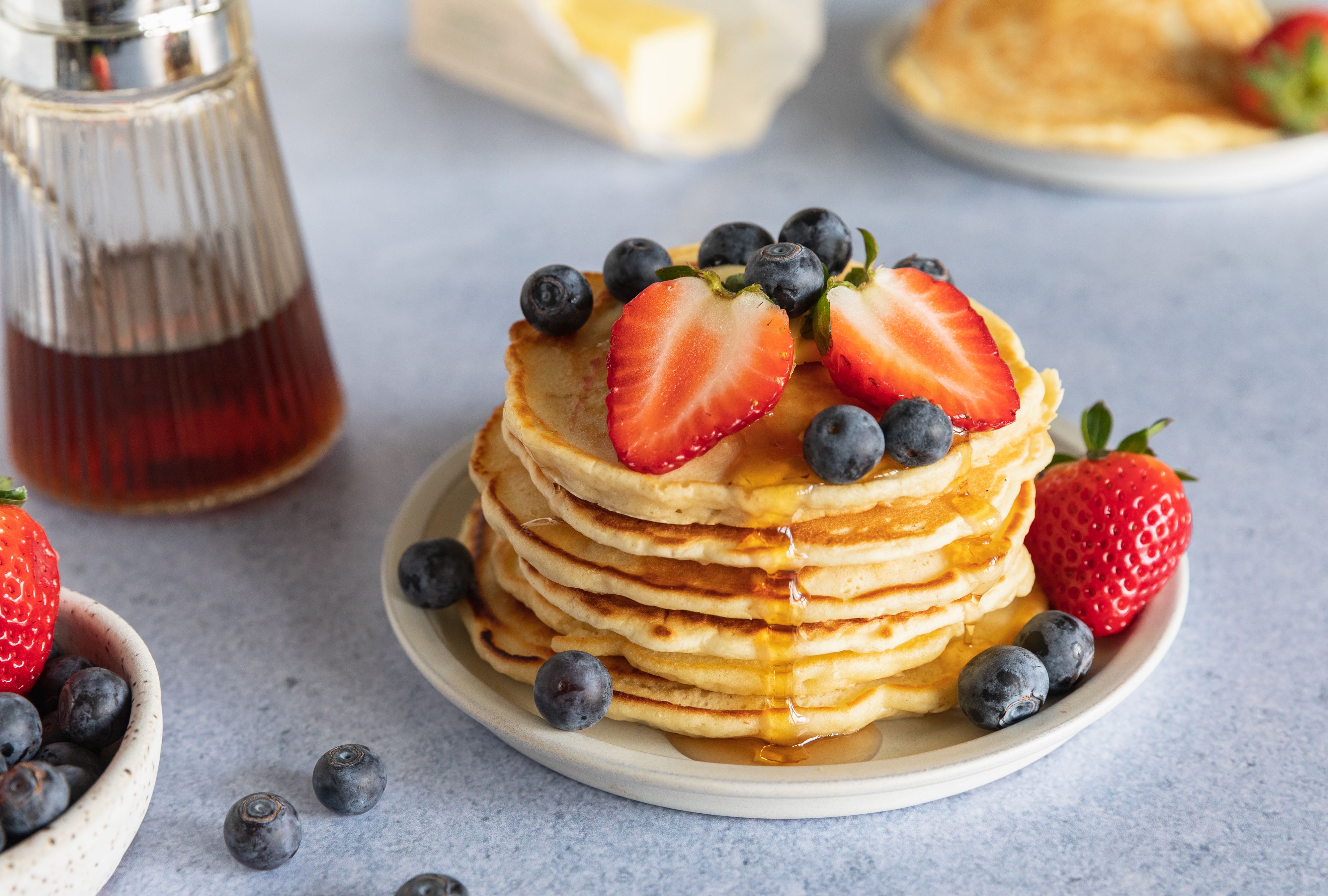
- Classic: Butter + maple syrup
- Fresh: Strawberries, blueberries, and a spoonful of yogurt
- Cozy: Warm cinnamon apples and chopped pecans
- Dessert-for-breakfast: Chocolate chips, banana slices, and whipped cream
- Tangy-sweet: Lemon zest with berry compote
- Crowd brunch: Pancake board with toppings in small bowls (syrup, fruit, nuts, peanut butter, chocolate chips)
For a brunch table, keeping toppings ready before the first pancake comes off the griddle makes a huge difference. Pancakes are best hot, and nobody wants to watch syrup being hunted down in the back of the fridge while the stack cools.
How to Store and Reheat Pancakes
Refrigerator
Let pancakes cool, then store them in an airtight container for up to 4 days. Place parchment paper between layers if possible to reduce sticking.
Freezer
Pancakes freeze beautifully. Cool completely, layer with parchment, and freeze in a zip-top bag or freezer-safe container. This is one of the easiest meal-prep breakfasts around.
Reheating
- Toaster: Great for one or two pancakes; brings back some edge texture.
- Oven: Best for a larger batch. Cover loosely with foil and warm at 350°F for a few minutes.
- Microwave: Fastest, but can soften the surface.
Quick Food Safety Notes for Pancake Batter
Because pancake batter usually includes egg and dairy, a few basic safety habits matter:
- Keep eggs refrigerated until you use them.
- Don’t leave raw batter sitting out for a long time.
- Cook pancakes until the batter is fully set and no wet raw batter remains in the center.
- If making a large batch for a group, keep cooked pancakes warm safely (not lukewarm on the counter forever).
These are simple habits, but they’re worth itespecially when breakfast includes eggs and milk.
The Pancake Experience (Extended Kitchen Notes, ~)
Making pancakes is one of those cooking experiences that looks easy from across the room and then gets very humbling once the spatula is in hand. The first pancake always has main-character energy. Sometimes it’s perfect. Sometimes it’s oddly shaped, slightly pale, and emotionally confusing. Either way, it teaches the cook what the pan is doing.
One of the most common experiences with a pancakes recipe is the urge to “fix” the batter. It looks lumpy, so people keep stirring. Then they stir more. Then they stir like they’re training for a whisking marathon. A few minutes later, the pancakes cook up flat and chewy, and everyone wonders what happened. What happened is gluten. Pancake batter is one of those rare times when “good enough” mixing is actually the correct answer. The batter should look imperfect. That’s the point.
Another very real pancake moment happens at the stove: the heat chase. The pan looks like it’s taking too long, so the heat gets turned up. The first side browns too quickly, the second side cooks unevenly, and suddenly breakfast becomes a rescue mission. A better experience comes from steady medium heat and a test pancake. That first one is not a failure; it’s calibration. Professional kitchens do this all the time, and home cooks should too.
Then there’s the flip. Every cook develops a flipping personality. Some are patient and wait for bubbles and set edges. Others flip early because they’re excited, optimistic, or just hungry. The early flip usually creates a messy pancake with batter sliding sideways. The patient flip creates that classic golden surface that looks like a diner photo. If pancake-making has a life lesson, it may be this: wait 20 more seconds.
Pancakes are also one of the best foods for learning rhythm in the kitchen. Mix, rest, pour, watch, flip, hold warm, repeat. It becomes almost relaxing once the process clicks. Toppings can be prepped while the batter rests, and by the third or fourth pancake, the whole kitchen starts to smell like a weekend. Even on a weekday, pancakes can make the morning feel less rushed and more intentional.
For families, pancake-making becomes a memory machine. Kids remember who made “the giant one,” who got the chocolate chip smiley face, and who stole the first pancake before the rest were ready. For solo cooks, pancakes still feel generous. A small batch can become breakfast for today and freezer pancakes for later in the week.
And that may be the best thing about a good homemade pancakes recipe: it’s practical and comforting at the same time. The ingredients are simple. The technique is learnable. The result is warm, filling, and easy to customize. Once the basic method is mastered, pancakes stop being a recipe you follow and become a breakfast skill you own. That’s when the fun really starts.
Conclusion
A great pancakes recipe doesn’t need complicated ingredients or chef-level tricks. It needs solid technique: mix gently, rest the batter, use medium heat, and flip at the right time. Once those habits are in place, fluffy homemade pancakes become easy, consistent, and honestly kind of hard to stop making.
Whether this is for Sunday brunch, a quick weekday breakfast, or a “breakfast for dinner” situation (always a good idea), this recipe gives you a strong foundation. Start classic, then experiment with berries, chocolate chips, or buttermilk. Pancakes are flexible like thatvery supportive, low drama, excellent with syrup.