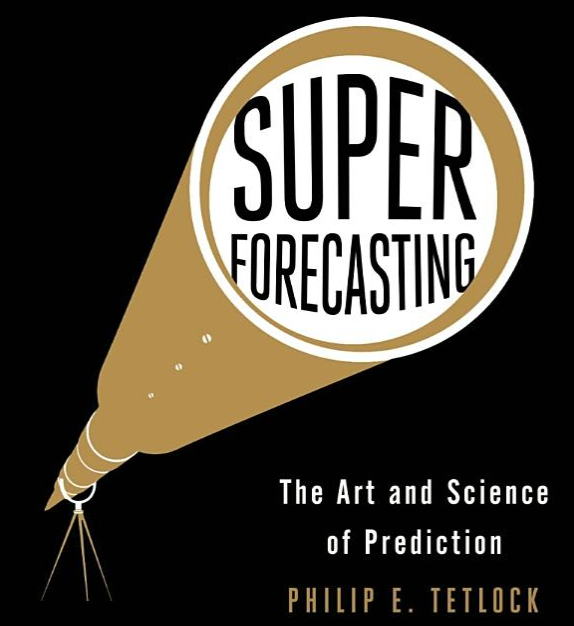
If forecasting were a sport, most of us would show up in flip-flops, do one warm-up stretch, and then confidently predict the championship outcome based on vibes. Superforecasting is what happens when you retire the vibes, keep the curiosity, and put disciplined probability thinking in charge.
This article is a fresh, practical reboot of superforecasting for today’s world: AI copilots, geopolitical shocks, noisy markets, and very online certainty theater. We’ll unpack what superforecasting is, where it came from, why it works, and how to apply it in business and everyday life without becoming a joyless spreadsheet monk. (No offense to spreadsheet monks. Some are excellent forecasters.)
What Superforecasting Actually Means
From “I’m sure” to “I’m 63% confident”
Superforecasting is the practice of making explicit, testable probability estimates about future eventsand then updating those estimates as new evidence arrives. Instead of saying, “This launch will do great,” you say, “There’s a 63% chance this launch hits 50,000 users in 90 days.” That is concrete. Trackable. Teachable.
The shift sounds small, but it’s huge: once a forecast is numerical, you can score it, compare it, and improve it. Vague predictions (“something big will happen soon”) are social media fuel, not decision tools.
Why this matters again right now
Superforecasting is getting re-kindled because leaders need better judgment in unstable conditions: macro uncertainty, fast technology cycles, and policy whiplash. The old patternmake one annual plan, pretend it’s a prophecy, and act shocked in Q3has expired.
Modern teams are returning to short forecast cycles, explicit assumptions, and fast evidence updates. In other words: less crystal ball, more calibration.
The Origin Story: How Superforecasting Became a Serious Discipline
The superforecasting movement didn’t emerge from motivational posters. It grew out of real failures and rigorous testing. After major intelligence misses in the 2000s, the U.S. intelligence ecosystem began asking a hard question: “Can we forecast geopolitical events more accurately, on purpose?”
That question fed into large-scale forecasting tournaments in which participants made probability estimates on real-world events, and their accuracy was tracked over time. These tournaments generated millions of forecasts and produced a striking result: certain people and methods consistently outperformed baseline forecasters. Better forecasting wasn’t luck; it was a trainable pattern.
Research associated with this effort identified “superforecasters,” often top performers who were grouped, retrained, and continuously evaluated. Their edge came less from dramatic genius and more from habits: decomposition, humility, active updating, and careful probabilistic reasoning.
The Core Engine: How Superforecasters Think
1) Start with base rates before storytelling
Superforecasters begin with the outside view: “Historically, how often does this kind of event happen?” Only then do they add inside-view specifics. Most bad forecasts reverse this orderfirst narrative, then selective stats to justify the narrative.
2) Break big questions into smaller, resolvable parts
Big outcomes are built from sub-events. Example: “Will Product X succeed in Southeast Asia?” becomes:
- What’s the probability of regulatory approval by quarter-end?
- What’s the probability CAC remains below target?
- What’s the chance onboarding completion stays above 40%?
- What’s the probability a local competitor cuts pricing within 60 days?
Decomposition lowers noise and surfaces leverage points for action.
3) Update often, not dramatically
Superforecasting is rarely about one heroic prediction. It’s about many small, rational updates. New evidence should nudge forecasts up or down. If your probability never changes, you’re not forecastingyou’re branding.
4) Stay calibrated
Calibration means your confidence matches reality over time. If you label 100 events as “70% likely,” about 70 should happen. Superforecasters obsess over this match. It’s one reason scoring systems matter.
5) Score predictions and learn from misses
In probabilistic forecasting, the Brier score is a standard metric: lower is better. It penalizes overconfidence and rewards honest uncertainty. If your team doesn’t score forecasts, improvement becomes guesswork wrapped in post-hoc storytelling.
The Traits Behind Better Forecasts
Research has repeatedly linked stronger forecasting performance with a mix of cognitive and behavioral habits:
- Actively open-minded thinking: willingness to test your own view.
- Need for cognition: enjoyment of hard thinking instead of hot takes.
- Frequent updating: forecasts revised as facts evolve.
- Probabilistic language: replacing certainty theater with confidence ranges.
- Team exchange: structured disagreement that improves signal quality.
Notice what’s missing: charisma, TV-ready certainty, and one-size-fits-all ideology. Superforecasting rewards curiosity, not chest-thumping.
Why “Re-Kindled” Fits 2026
AI is accelerating the need for judgment, not replacing it
Recent work suggests AI assistants can improve human forecasting performance in some settings. That’s excitingbut also clarifying. Better prediction tools increase the value of disciplined judgment about objectives, tradeoffs, and decisions. If you ask bad questions, you get better wrong answers, faster.
Put simply: AI can help you forecast. It cannot choose your values, risk tolerance, or strategic intent.
Organizations are institutionalizing forecasting practice
Public-interest and policy organizations now run structured forecasting programs with explicit scoring, decomposition methods, and ongoing updates. This is the practical maturity phase of superforecasting: less hype, more workflow.
A Practical Superforecasting Playbook for Teams
Step 1: Build a forecasting question bank
Create 20–50 measurable questions tied to decisions. Good questions are clear, resolvable, and time-bounded. Bad questions are philosophical debates in disguise.
Step 2: Require probabilities, ranges, and rationale
Ask forecasters to submit:
- Point probability (e.g., 62%)
- Confidence range (e.g., 52–70%)
- Three key drivers
- One disconfirming indicator that would change their mind
Step 3: Update on cadence
Weekly or biweekly updates are usually enough. Keep revision costs low. Treat updates as a feature, not a sign of weakness.
Step 4: Score everything
Use Brier score (and relative Brier for peer comparison where relevant). Track performance by topic, horizon, and forecaster. Improvement needs data.
Step 5: Run postmortems without blame theater
After resolution, ask:
- What did we assume incorrectly?
- What evidence did we underweight?
- What updated too slowly?
- What can we encode as a checklist next cycle?
Step 6: Reward accuracy and learning velocity
Don’t reward confidence style. Reward calibration, consistent updates, and quality reasoning. The loudest forecaster in the room is often the least reliable signal.
Common Mistakes That Kill Forecast Quality
- Binary thinking: forcing yes/no too early instead of using probability ranges.
- Anchoring on first estimate: refusing to move despite new data.
- Narrative addiction: preferring elegant stories over messy evidence.
- No resolution criteria: asking questions that can’t be clearly settled.
- No scoreboard: discussing forecasting quality without measurement.
- Incentivizing certainty: promoting confident presenters over accurate forecasters.
Where Superforecasting Creates Immediate ROI
Strategy
Forecast competitor moves, policy shifts, and demand scenarios. Use probabilities to stress-test capital allocation before committing millions.
Operations
Improve inventory, staffing, and supply planning with rolling probabilistic forecasts instead of static quarterly assumptions.
Risk and compliance
Estimate likelihood of regulatory events and enforcement changes. Link each forecast to contingency triggers.
Product and growth
Forecast adoption milestones, churn inflection points, and channel efficiency. Tie probabilities directly to launch gates.
500-Word Experience Section: How Re-Kindled Superforecasting Feels in Practice
The most useful “experience” pattern in re-kindled superforecasting is this: teams stop arguing about who sounds smartest and start competing to be most calibratable. In one composite case from cross-functional workshops (product, policy, and risk teams), the first week was chaotic. Everyone spoke in certainties: “This will definitely pass,” “No chance that vendor delivers,” “Users always hate pricing changes.” By week two, the language shifted: “I’m at 58% because A and B improved, but if C weakens, I drop to 44%.”
That language change sounds cosmetic. It isn’t. Once people quantify beliefs, hidden assumptions surface quickly. One analyst realized her “80% confidence” relied on a single source with stale data. A product manager who usually anchored the room with decisive opinions started writing disconfirming indicators in advance. “If activation dips below 22% by next Friday, I cut my forecast by 15 points.” Suddenly, forecast updates became normalnot political.
Another experience pattern: decomposition lowers anxiety. Big strategic questions are intimidating because they feel all-or-nothing. In workshops, teams learned to split a scary prediction into sub-questions with shorter horizons. Instead of one giant call on “market expansion success,” they tracked five smaller probabilities: legal timeline, partner readiness, onboarding speed, CAC trajectory, and early retention. Accuracy improved, but so did morale. Smaller questions made uncertainty actionable.
A surprising social effect also appeared: humility became contagious once scoring was transparent. When no one is scored, confidence theater wins. When everyone is scored, people become more honest about uncertainty. In these sessions, top performers were rarely the loudest. They were the ones who updated most often, revised for the right reasons, and documented why they moved from 41% to 53% instead of pretending they “knew it all along.”
Teams also reported better meetings. Forecast-first agendas reduced drift and ego spirals. A typical weekly rhythm looked like this:
- 10 minutes: review resolved questions and Brier outcomes.
- 20 minutes: update open forecasts with new evidence.
- 15 minutes: challenge top assumptions and identify one missing data source.
- 10 minutes: assign next update owners and trigger thresholds.
By month two, leaders noticed fewer “surprises.” Not because the world got simpler, but because teams had built early-warning sensitivity. They weren’t trying to be prophets. They were getting better at noticing when the probability landscape changed.
The most repeated reflection from participants was refreshingly unglamorous: “I thought forecasting was about being right once. It turns out it’s about being less wrong over time.” That line captures the lived experience of re-kindled superforecasting. It is not magic. It is disciplined curiosity, tracked over many decisions, under real pressure.
Conclusion: Superforecasting as a Repeatable Advantage
Re-kindled superforecasting is less about predicting the future perfectly and more about designing better decisions under uncertainty. Its power comes from measurable probabilities, structured decomposition, frequent updates, and honest scoring. That combination converts “intuition theater” into a learning system.
In a noisy world, this is a competitive edge: teams that forecast clearly adapt earlier, allocate resources smarter, and panic less. If you want one practical takeaway, use this tomorrow: pick five resolvable questions, assign probabilities, define update triggers, and score outcomes. Do that for three months, and your organization’s judgment quality will not look the same.
Future-seeing is overrated. Future-preparing is where the wins are.