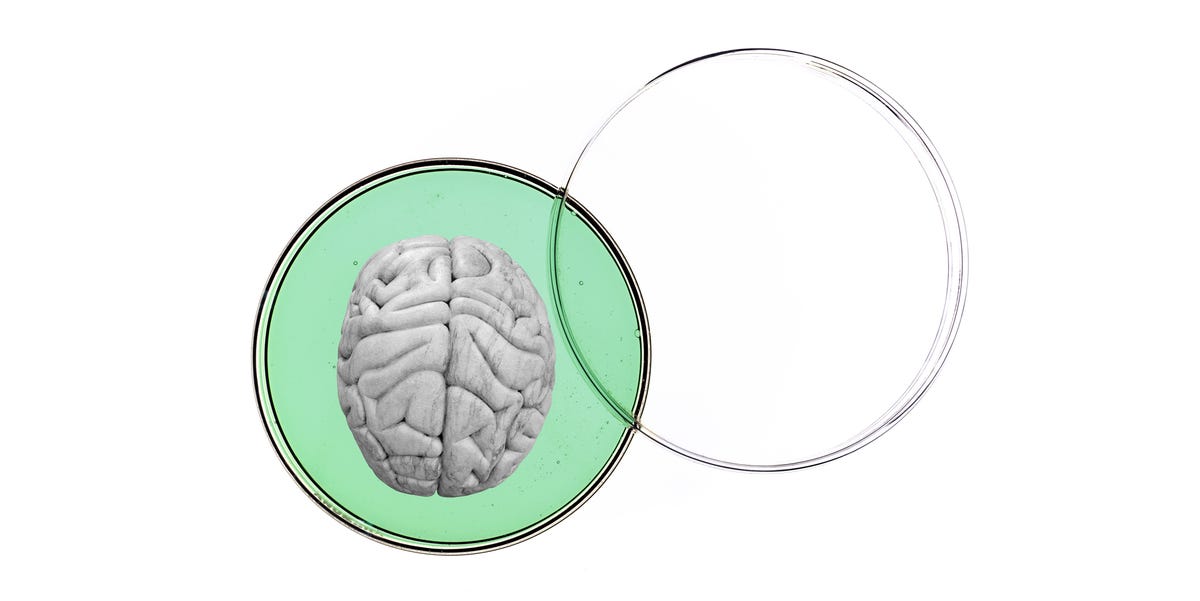
It sounds like the opening line of a sci-fi thriller: scientists have grown a tiny human “mini brain” in a dish, and it’s firing electrical signals like the brain of a 40-day-old fetus. No, it isn’t plotting our downfall. But it is pulsing with real neural activity, and that could change how we study mental health, brain development, and even consciousness itself.
This lab-grown brain organoid is only a few millimeters across, but it’s surprisingly sophisticated. It combines several regions of the brain, includes primitive blood-vessel-like structures, and produces electrical patterns that look a lot like early fetal brain activity. For researchers, that’s like getting a live, zoomed-in documentary of how the human brain starts wiring itself up.
In this article, we’ll walk through what these “tiny brains” really are, how they’re grown, what it means to fire like a 40-day-old fetus, and why the ethics of this research are getting louder by the week. We’ll also end with a more personal, experience-focused look at what it’s like to work with mini brainsand how it feels to stare at a dish that’s buzzing with human neural activity.
What Exactly Is a ‘Tiny Brain’?
First, let’s clear something up: nobody is growing a full, conscious human brain in a jar. The technical term for these tiny brains is brain organoids or cerebral organoids. They’re three-dimensional clumps of human brain-like tissue grown from stem cells. They mimic some of the structure and function of the developing brain, but in a much smaller and simpler form.
Most organoids are only a few millimeters in size, with millions of neurons rather than the tens of billions you’d find in an adult human brain. Yet even at that scale, they can develop:
- Layers of neurons similar to those in the cerebral cortex.
- Support cells that help neurons survive and communicate.
- Networks of cells that send electrical signals back and forth.
Think of them as “model brains” for research: simplified, controllable systems that let scientists watch early brain development unfold in slow motion, without needing fetal tissue or animal brains for every experiment.
From skin cell to mini brain
The process starts with induced pluripotent stem cells (iPSCs). These are regular adult cellsoften skin or blood cellsthat scientists “reprogram” back into a stem-cell-like state. In the lab, those stem cells are coaxed to become neural stem cells, then encouraged to self-organize into 3D clusters.
With the right growth factors, nutrients, and culture conditions, the cells spontaneously arrange into structures resembling early brain regions. It’s a bit like giving Lego bricks a set of instructions and then watching them build a mini cityexcept the bricks are alive and they already know how to stick together.
How Do You Grow a Brain in a Dish?
Growing a lab brain is part biology, part engineering, and part patience. Traditional brain organoids often represent just one brain region, such as the cortex. The newer “whole-brain” or multi-region organoids go further by combining pieces that resemble different parts of the brain.
Building a multi-region ‘tiny brain’
In recent experiments, researchers generated separate organoids mimicking:
- The cerebral cortex (involved in thinking and perception).
- The midbrain and hindbrain (important for movement, arousal, and basic functions).
- Endothelial tissue, which forms the basis of blood vessels.
They then fused these units together using special proteins that help tissues stick. The result is a more complex mini brain that includes multiple brain-like regions and primitive vessel-like structures. Some of these organoids contain around 6–7 million neuronsa lot for something small enough to balance on a fingertip.
While that’s nowhere near the complexity of a real fetal brain, it’s enough to start modeling how different brain regions might talk to one another in early development.
Adding nutrients and “exercise”
Maintaining a mini brain isn’t just “set it and forget it.” These organoids need:
- Constant nutrients brought in by a carefully controlled liquid medium.
- Oxygenation, often helped by rotating bioreactors or special culture devices that keep fresh fluid moving around the organoid.
- Timeweeks to monthsfor networks of neurons to develop and start firing.
Over time, the neurons don’t just fire randomly. They begin to coordinate into patternsrhythms and waves of activity that scientists can measure using electrodes, similar to how we record brainwaves with EEG in humans.
Firing Like a 40-Day-Old Fetal Brain
So what does it really mean for a tiny lab-grown brain to “fire like a 40-day-old fetus”?
Researchers compared the electrical activity of their mini brains to what’s seen in early fetal development. In this period, the human brain is just beginning to build networks of neurons that generate:
- Simple, low-frequency oscillations.
- Short bursts of synchronized firing.
- Early patterns of activity that lay the groundwork for later, more complex brainwaves.
When scientists recorded activity from the organoids, they found that:
- The firing rates were similar to those expected at very early stages of human brain development.
- The patterns of activity evolved over time, becoming more organized and layeredmuch like what happens during early gestation.
- Machine-learning algorithms trained on fetal or preterm-infant EEG sometimes couldn’t easily distinguish the organoid patterns from real early brain recordings.
That’s where the headline comes from: the organoid’s electrical behavior looks a lot like a 40-day-old fetal brain. But that doesn’t mean it experiences the world, has thoughts, or is anything like a full human mind.
Activity without a body
It’s important to remember that the brain isn’t just a lump of neurons. In real life, the brain constantly receives signals from the bodyeyes, ears, skin, internal organs. A tiny brain in a dish has none of that sensory input or bodily feedback.
So even though these mini brains show fetal-like firing, they’re still:
- Isolated from all real-world experience.
- Limited in size, diversity, and connectivity.
- Missing major structures, like a fully organized cortex with long-range wiring and a functioning nervous system.
In other words, it’s a powerful model of early brain activitynot a baby brain in a jar.
Why This Tiny Brain Matters for Mental Health and Neurological Disease
If all of this sounds like a flex“look what we can grow”there’s a deeper reason scientists are so excited. Brain organoids give researchers something they’ve wanted for decades: a human-based, controllable system for studying how brain disorders emerge.
Modeling neurodevelopmental conditions
Many mental health and neurological conditions, such as autism, epilepsy, and schizophrenia, seem to start with subtle changes in brain development. With organoids, researchers can:
- Grow mini brains from people with specific genetic variants.
- Watch how their neurons form networks differently from those in typical organoids.
- Measure how changes in genes or environment affect early brain wiring and firing patterns.
Having a multi-region organoid that resembles a 40-day-old fetal brain means scientists can start asking more holistic questions. Instead of studying just one slice of cortex, they can explore how early signals might ripple across different brain-like regions.
Testing drugswithout testing on people first
Another big promise of lab-grown tiny brains is drug development. Before a new medication reaches human trials, researchers can:
- Apply it to organoids that model certain conditions.
- See how it affects neuron growth, survival, and firing patterns.
- Identify potential problemslike abnormal rhythms or cell deathearly in the process.
That doesn’t replace clinical trials, but it can make them smarter, safer, and more targeted. It may also reduce reliance on animal models that don’t always reflect uniquely human brain features.
Are These Mini Brains Conscious?
Now for the question that keeps ethicists up at night: if a tiny brain fires like a fetal brain, could it ever become conscious?
The short answer from most scientists is: not yet, and probably not at this level. Current organoids:
- Are far too small and simple compared to a real brain.
- Don’t receive sensory input or feedback from a body.
- Don’t have the layered, long-range networks believed to be essential for awareness.
Still, the fact that organoids can now produce complex, fetal-like electrical patterns has shifted the conversation from “this is purely hypothetical” to “we should be ready for what comes next.”
Activity vs awareness
It’s crucial to distinguish between neural activity and conscious experience. Your spinal cord, your gut nervous system, and even a disconnected slice of brain tissue can show activity without anything like thought or awareness.
For mini brains, we’re seeing:
- Patterns that resemble early developmental stages.
- Signals that become more organized over time.
- Responses to certain stimuli or drugs.
That’s fascinating and scientifically valuablebut it doesn’t automatically equal feelings, memories, or a sense of self. Still, the closer organoids get to mimicking real human brain states, the more we have to think ahead.
The Ethical Debate Around Lab-Grown Tiny Brains
You don’t need a philosophy degree to sense that growing human-like brain tissue raises big ethical questions. As organoids gain complexity, ethicists, lawmakers, and the public are asking:
- Is there a point where a mini brain deserves special protection?
- How should we monitor for signs of sentience or pain?
- Do fused, multi-region organoids need different rules than simpler ones?
Professional groups and neuroethics working groups have started proposing guidelines, including:
- Limits on how advanced organoids can become without special oversight.
- Requirements to monitor electrical activity for signs that resemble suffering.
- Transparent public communication about what organoids can and cannot do.
Public opinion is split. Some people feel that as long as organoids are not conscious, the benefits for treating diseases like Alzheimer’s, epilepsy, or major depression are worth the risk. Others argue that we’re moving too quickly, building increasingly brain-like systems without a clear line we refuse to cross.
One thing nearly everyone agrees on: as tiny brains become more life-like, science can’t treat them as just another cell culture. The ethics need to grow along with the organoids.
What It Feels Like to Work With a ‘Mini Brain’
Reading about a tiny brain that fires like a 40-day-old fetus is one thing. Standing in a lab, watching its electrical activity light up on a screen, is something else entirely.
Imagine you’re a neuroscientist coming in for your regular morning routine. You check the incubator, pull out a dish the size of a compact mirror, and there it is: a faint, pale blob floating in nutrient solution. To the naked eye it looks unimpressive, more like overcooked rice than anything resembling a brain.
But when you place the dish on a recording platforman array of tiny electrodesand watch the data appear, the story changes. Lines begin to twitch across your monitor. Bursts of coordinated spikes show up in different channels. As the software analyzes the signals, you see patterns you’ve come to recognize: slow oscillations, synchronized bursts, gradually emerging rhythms that look eerily like the earliest brainwaves recorded in real fetuses or very premature infants.
On paper, you know this organoid is just a cluster of cells. It doesn’t see, feel, or think. There’s no body attached, no sensory world feeding into it, no memories forming. Yet it’s hard not to feel a tiny jolt of awe. This is human neural tissue, grown from reprogrammed skin cells, organizing itself into something that behaves like the beginning of a mind.
For many researchers, that feeling is a mix of excitement and responsibility. On the one hand, these mini brains are powerful tools. They offer insights into disorders that have long been mysteriouswhy some brains develop seizures, why certain genetic changes lead to autism-like differences, why some psychiatric conditions emerge during adolescence. With organoids, scientists can replay early development over and over, tweaking variables, testing drugs, and watching in detail what goes wrong and when.
On the other hand, there’s a quiet, nagging question: how far is too far? As organoids become more complexespecially when multiple regions are fused, or when blood-vessel-like structures and sensory inputs are addedthe line between “just cells” and “something we ought to treat with special care” starts to blur. Some labs are already building internal review processes that go beyond standard animal ethics, asking whether certain experiments risk creating organoids that might experience distress.
Outside the lab, the experience is different but just as emotional. When people hear “scientists grew a tiny brain that fires like a 40-day-old fetus,” reactions range from amazement to discomfort. Some see hope: a path to better treatments for depression, Parkinson’s disease, or developmental disorders. Others worry about a slippery slopetoday it’s a pea-sized mini brain, tomorrow it’s something more capable, and society hasn’t yet decided what moral status to give it.
For science communicators and clinicians, that means a new kind of conversation with patients and the public. They find themselves explaining that:
- The mini brains aren’t conscious in any human sense.
- The goal is to understand and treat disease, not to build artificial minds.
- Ethical guidelines and public input are actively shaping how the field moves forward.
If there’s one shared experience among people working in this area, it’s a sense of standing at a threshold. Growing a tiny brain that fires like a 40-day-old fetus is not the same as creating a baby in a dishbut it is a sign that our ability to model the human brain is entering a new era. The challenge now is to use that power wisely: to unlock the brain’s secrets, ease human suffering, and still respect the uneasy feeling that comes when you watch a lab-grown “mini mind” flicker to life on your screen.