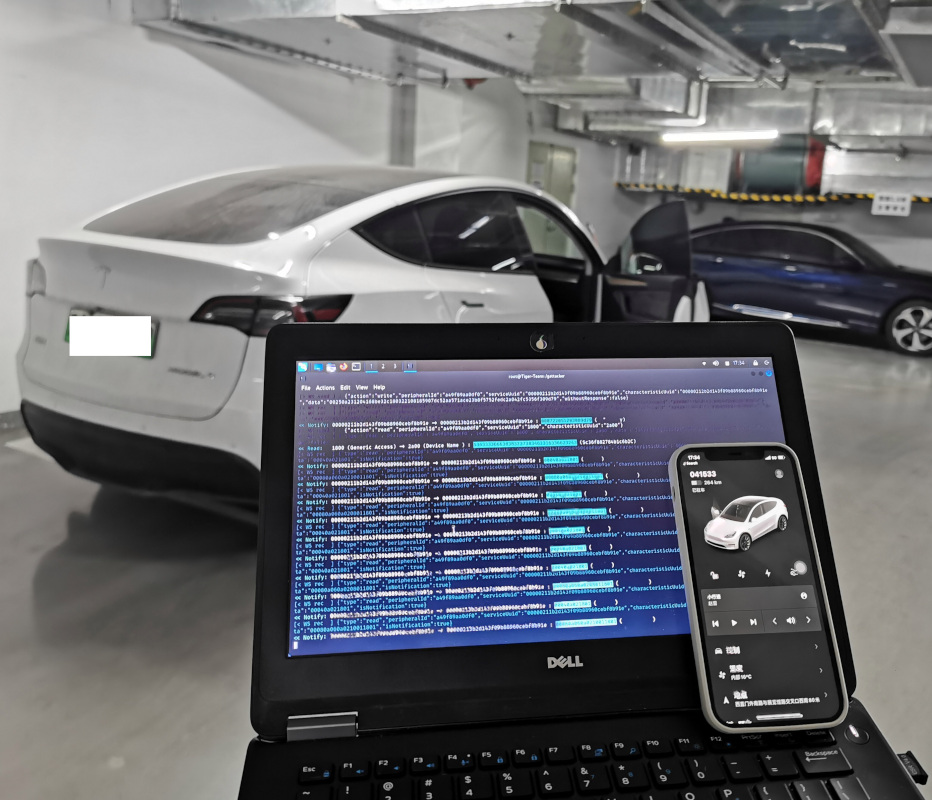
Modern cars are amazing. They can park themselves, stream your favorite playlist, diagnose engine trouble, and politely remind you that your tire pressure is questionable life advice. They are also, increasingly, rolling software platforms with dozens of electronic control units, wireless radios, cloud APIs, mobile apps, over-the-air update pipelines, and data-sharing agreements that are longer than some novels.
So when headlines scream “new car hack discovered,” most security engineers don’t gaspthey sigh, nod, and say, “Yep, that tracks.” The real surprise is not that modern vehicles have vulnerabilities. The surprise is that we still treat each discovery like a one-off drama instead of the predictable outcome of enormous system complexity, uneven software maturity, and incentives that historically prioritized speed-to-market over secure-by-design engineering.
This article breaks down why security vulnerabilities in modern cars are not shocking, what attack surfaces matter most, what recent incidents teach us, and what automakers, regulators, fleets, and drivers can do right now to reduce risk. If you own a connected vehicle, this is your plain-English guide to automotive cybersecurity without the jargon soup.
Why Modern Car Security Problems Were Always Predictable
Cars became “computers on wheels” faster than security culture evolved
A modern connected vehicle can include infotainment stacks, telematics control units, Bluetooth and Wi-Fi radios, smartphone pairing, GPS, app ecosystems, and cloud services. Every new feature creates valuebut also adds a potential attack path. Software-defined vehicles deliver convenience and safety improvements, but they also multiply dependencies: code libraries, suppliers, firmware layers, backend services, identity systems, and APIs.
Security teams call this the “attack surface explosion.” Product teams call it “innovation.” Both are right. The challenge is that security engineering often has to retrofit controls into systems that were built for usability and speed first.
Vehicle life cycles are long, software threat cycles are short
A vehicle may stay on the road for a decade or more. Software vulnerabilities can appear weekly. This mismatch is brutal. If update architecture, secure boot, logging, incident response, and patch governance were not designed early, fixing problems in the field gets expensive and slow. Meanwhile, attackers are fast, distributed, and motivated by theft, fraud, extortion, surveillance, or reputation.
Supply chains are now security chains
Cars are assembled ecosystems. OEMs rely on Tier 1 and Tier 2 suppliers, cloud providers, app partners, analytics vendors, and telecom components. A single weak supplier process can expose an entire product line. In practice, automotive cybersecurity is less about one brilliant exploit and more about cumulative risk across hundreds of integrations.
The Biggest Vulnerability Buckets in Modern Vehicles
1) Access & theft attacks: keyless relay, CAN abuse, and weak anti-theft design
Theft is the most visible consumer-facing security issue. Attackers do not always need “Hollywood hacking.” Sometimes they exploit weak immobilizer implementation, keyless entry relay opportunities, or exposed wiring paths to inject malicious signals into vehicle networks.
The lesson: security is not just digital. It is cyber-physical. A vulnerability can start in code, RF communication, or physical accessand still end with a stolen car in under minutes. Anti-theft software updates, better immobilizer coverage, and hardened network segmentation matter more than glossy marketing copy about “smart mobility.”
2) Telematics, app, and web backend vulnerabilities
If your car has a companion app, remote start, account-based services, or cloud telematics, then your security perimeter is no longer the vehicleit is the entire web stack. Researchers have repeatedly shown that account linking flaws, weak authorization checks, and backend misconfigurations can expose sensitive controls.
In plain terms: an insecure API can become a remote key. And unlike old-school mechanical weaknesses, cloud flaws can scale across huge fleets quickly. The risk is amplified when vehicle identity, owner identity, and command privileges are not strictly validated at every step.
3) Privacy and data governance failures that become security problems
Privacy and security are cousins, not strangers. When automakers collect precise location, driving behavior, biometrics, or in-cabin signals, weak governance can lead to misuse, unauthorized sharing, or high-value data concentration. Big data pools attract attackers and create regulatory exposure.
Many drivers don’t realize how frequently vehicles and apps can generate behavioral telemetry. If consent flows are confusing and opt-outs are difficult, users lose controland trust erodes. In cybersecurity, trust is not branding. It is operational discipline.
4) OTA update pipeline and software integrity risks
Over-the-air updates are essential for patching modern vehicles. But OTA itself is a high-value target. If signing keys, update servers, rollback protections, or deployment validation are weak, patching mechanisms can become attack vectors.
Secure OTA requires cryptographic integrity, staged rollout controls, robust monitoring, and rapid rollback capabilities. “We can update remotely” is not enough. The real question is whether updates are provably trustworthy end-to-end.
5) Third-party and aftermarket exposure
Insurance dongles, aftermarket telematics, diagnostic adapters, and unofficial accessories can open side doors into vehicle systems. Even legitimate integrations can weaken defenses when authentication and least-privilege boundaries are lax.
This is where ecosystem governance matters: vendor security requirements, contract controls, software bill of materials practices, vulnerability disclosure channels, and response SLAs.
What Recent Incidents Tell Us
Historic wake-up call: remote control fears became real
A decade ago, high-profile demonstrations and subsequent recalls proved that remote attack paths were not theoretical. That moment changed how regulators, automakers, and the public discussed vehicle cyber risk. The key takeaway still holds today: safety-critical systems must assume compromise attempts will occur.
Recent web/API flaws show scale risk in connected fleets
Newer incidents involving web portals and connected services reinforced a painful point: one backend bug can create broad exposure. When digital identity and vehicle commands intersect, strict authorization logic is non-negotiable. Security testing must include abuse cases, not only happy-path QA.
Data practices can trigger regulatory consequences
Regulatory actions around connected vehicle data have made one thing clear: collecting behavioral and location data without meaningful consent can become both a privacy crisis and a cybersecurity governance failure. Trust damage often outlasts the technical fix.
Geopolitics now intersects with vehicle cybersecurity
Policymakers increasingly view connected vehicle software and communication components through a national security lens. That means supply-chain due diligence is no longer optional “best effort.” It is becoming a compliance baseline for market access.
Why Vulnerabilities Keep Reappearing
Security still competes with launch deadlines
Automotive product cycles are under pressure: feature competition, EV transition, ADAS expectations, and software differentiation. In this environment, teams can be tempted to defer hard security work that does not demo well on launch day.
Fragmented architecture across generations
Many manufacturers support mixed fleets spanning old and new electronic architectures. Legacy constraints can limit what “modern” defenses are practical in older platforms, especially when hardware roots of trust were not built in.
Inconsistent security maturity across suppliers
One supplier may operate with rigorous secure development lifecycle controls; another may still treat security testing as a final checklist task. Attackers only need one weak link. Vehicle security is therefore a governance problem as much as an engineering one.
What Good Automotive Cybersecurity Looks Like
For automakers and suppliers
- Adopt secure-by-design engineering from concept phase, not after launch.
- Use layered architecture and strict segmentation between infotainment/telematics and safety-critical controls.
- Implement strong identity, authentication, and authorization across cloud APIs and apps.
- Harden OTA with signed updates, anti-rollback controls, and cryptographic verification.
- Operate continuous vulnerability management, including bug bounties and coordinated disclosure.
- Require security evidence from suppliers: threat models, test artifacts, SBOM visibility, patch SLAs.
- Practice incident response drills that include legal, PR, dealer, and customer workflows.
For regulators and industry bodies
- Align safety and cybersecurity oversight so reporting pipelines are consistent.
- Incentivize transparency: timely disclosure, patch status communication, and recall clarity.
- Promote baseline standards that support interoperability and enforceable accountability.
- Encourage information sharing through trusted industry channels.
For drivers and fleet operators
- Install software updates promptly (vehicle firmware and companion apps).
- Use strong, unique passwords for manufacturer accounts and enable multi-factor authentication when available.
- Review privacy settings in vehicle apps and portals; disable unnecessary data sharing.
- Be cautious with third-party OBD devices and unofficial accessories.
- Factory-reset infotainment before resale or transfer.
- Park smart: well-lit areas, locked vehicle, and visible deterrence still matter.
The Bottom Line: “Not Surprising” Should Not Mean “Acceptable”
Security vulnerabilities in modern cars are predictable because modern cars are deeply connected computing environments with real-world safety consequences. Predictable does not mean unavoidable. The industry has the playbook: risk-based design, layered controls, transparent governance, fast patching, and honest communication with users.
We should stop treating each new vehicle vulnerability as a bizarre anomaly and start treating automotive cybersecurity as continuous safety engineering. The winners in this market won’t just build smarter carsthey will build trustworthy systems that can withstand the messy reality of the internet, supply chains, and human behavior.
Extended Experience Section (Additional ~): What This Looks Like in Real Life
If you spend time talking to mechanics, fleet managers, SOC analysts, and everyday drivers, the same theme appears again and again: car security failures rarely feel dramatic at first. They feel inconvenient, confusing, and easy to dismissuntil a pattern emerges.
A fleet operations manager notices several vehicles reporting odd telematics gaps. At first, it looks like routine connectivity noise. Then a regional manager spots unauthorized remote commands in logs that were “technically valid” but behaviorally strange. Nobody panics immediately because each event, taken alone, is explainable. Together, they are a clear signal. The postmortem later reveals a brittle authorization rule in a cloud workflow. Not a movie-scene exploit. Just a logic flaw that scaled.
A family sedan owner gets an insurance premium shock and starts digging through app settings they barely remember agreeing to. They discover driving-behavior toggles buried behind multiple menus, and policy language that sounds like legal origami. Their first reaction is not “cybersecurity incident.” It is “Why did nobody explain this clearly?” That gapbetween technical reality and user understandingis where trust collapses fastest.
In a dealership service lane, technicians are now expected to troubleshoot both mechanical wear and software symptoms. They update control modules, re-pair accounts, reset connectivity profiles, and explain why a phone app feature disappeared after a patch. These teams are doing frontline cybersecurity work whether the job title says so or not. The best shops have learned to treat updates and digital hygiene like oil changes: routine, essential, and non-negotiable.
Security researchers describe another recurring pattern: disclosures that begin with a “small bug” and end with a bigger systemic lesson. A web portal issue exposes account-linking weakness. A convenience feature reveals privilege escalation paths. A benign telemetry endpoint leaks identifiers that make correlation attacks easier. None of these findings alone means every car is instantly controllable. But each one adds evidence that automotive platforms need disciplined, repeatable security architecturenot one-off heroics.
On owner forums, you can see the emotional arc in real time. First comes denial (“This is probably exaggerated”), then frustration (“Why didn’t the app warn me?”), then adaptation (“Okay, what settings should I change right now?”). Practical guidance helps: update now, rotate credentials, revoke stale app permissions, review account devices, and disable optional data-sharing features you do not need. People feel better when they can act.
Insurance investigators report that theft trends also evolve quickly. Criminal groups don’t need to invent advanced attacks if scalable weak points already exist. They standardize what works, share methods, and move to the next target class. Defensive progress does happensoftware fixes, law enforcement coordination, and design improvements can reduce lossesbut the window between weakness discovery and widespread abuse can be short.
The most encouraging “experience” from the field is this: when automakers communicate clearly, patch quickly, and support customers without jargon, confidence rebounds faster than expected. Drivers are not asking for perfection. They are asking for honesty, speed, and control. In other words, the same principles that define good security in every digital industry now apply on four wheels.
So yes, vulnerabilities in modern cars are somehow not surprising. But the response can still be impressive: transparent governance, resilient architecture, and user-first controls that make security visible, understandable, and actionable. That is how the industry turns a predictable problem into a competitive advantage.
Conclusion
The automotive world has entered a permanent cybersecurity era. Cars are connected, software-rich, data-intensive systems, and vulnerability discovery will continue. The smart response is not fearit is maturity. Build secure foundations, verify continuously, patch rapidly, and communicate clearly with drivers.
If automakers treat cybersecurity as core safety engineering, regulators keep pressure on accountability, and consumers practice basic digital hygiene, modern vehicles can remain both innovative and trustworthy. The headline may be “not surprising,” but the outcome does not have to be disappointing.