Jeans are the Switzerland of your wardrobe: they go with everything, they survive questionable life choices, and somehow they’re always the first thing you reach for.
So when someone tells you to wash jeans inside out, it can sound like one more fussy rule invented by Big Laundry to keep you busy.
But here’s the twist: turning your denim inside out is one of the easiest ways to help your favorite pair look better for longerwith basically zero effort.
Laundry pros recommend it for a simple reason: most of the “damage” that makes jeans look tiredfading, pilling, worn edges, and rubbed-off dyehappens on the outside.
Flip them, and you’re shielding the part everyone sees from the rough-and-tumble world of the wash drum.
Let’s break down why it works, when it matters most, and how to wash jeans so they keep their color and fit (instead of turning into sad, crunchy denim pancakes).
The short answer: Yeswash jeans inside out (most of the time)
In most households, the best default is: turn jeans inside out, wash cold, use a gentle cycle, and air dry when you can.
That combo helps preserve color, reduces abrasion, and lowers the odds of stretching, shrinking, or prematurely “distressing” your denim (the accidental kind).
The only big exception: if the stain is on the outside and it’s serious (think grease, mud, grass, sauce with goals), you’ll want to pre-treat it properly.
You can still end up washing inside out, but stain care changes the gamemore on that in a minute.
What turning jeans inside out actually does in the wash
1) It cuts down friction (a.k.a. the fading factory)
Washing machines clean by agitating fabric against water, detergent, and other items. That agitation creates friction, and friction is what scrapes and roughs up fibers.
On denim, that often shows up as fading along seams, pocket edges, hems, and the front thighsthe same places you already naturally fade from wearing.
When you flip your jeans inside out, the outer, dyed surface gets less direct rubbing against the drum and other clothes.
The inside takes more of the “scrub,” which is fine because it’s not the side you’re showing off at brunch.
2) It helps protect the indigo dye and keeps dark denim darker
Many jeansespecially dark wash and raw denimuse indigo dye that can release during washing. That’s why denim fades over time, and why new jeans sometimes “share” their color
with your lighter laundry in a way you did not consent to.
Turning jeans inside out doesn’t magically stop dye from bleeding, but it can reduce how much loose dye transfers onto other items because the dyed surface is less exposed to direct contact.
It’s a practical step for color preservation, especially if you want your black jeans to stay black and not drift into “charcoal-ish memories.”
3) It prevents snags and zipper drama
Denim hardwarezippers, buttons, rivetscan snag other fabrics and also get scratched up themselves.
Washing inside out (and zipping/buttoning first) helps protect both your jeans and the rest of the load, especially if you’re washing denim with sturdier items.
4) It’s gentler on distressing, stretch denim, and special finishes
Distressed jeans and stretch blends look great, but they can be more vulnerable in the wash.
Flipping them reduces abrasion on ripped areas and helps keep stretch fibers from getting roughed up.
If your jeans have a coating, a dark rinse, or a “lived-in” finish you want to preserve, inside-out washing is your low-effort insurance policy.
When washing jeans inside out matters most
- Dark wash, black, and raw denim: Best candidates for inside-out washing to preserve color and reduce dye transfer.
- New jeans (first few washes): Dye is more likely to release early on, so protect the outer surface and wash with similar colors.
- Stretch jeans: Gentle washing reduces wear on elastane and helps maintain fit.
- Distressed/ripped denim: Less abrasion helps prevent rips from expanding into full-on denim disasters.
- Jeans with embroidery or decorative details: Inside-out washing protects stitching and surface embellishments.
When you might not wash inside out (or you’ll tweak the plan)
If the stain is on the outside and it’s stubborn
If you’ve got a visible stain on the outside, the priority is removing it without setting it. That usually means:
pre-treat first (don’t just hope your washer “figures it out”),
and consider whether the stained area needs more direct exposure during washing.
A practical approach: pre-treat the stain from the outside (right side out), let it sit for the recommended time, then flip inside out for the wash.
If the stain is heavy and you’re worried it’ll stay put, you can wash right side out once, then go back to inside-out for future washes.
If your jeans are genuinely filthy
Denim is durable, but “I gardened, painted, and crawled under the porch” is a different situation than “I wore these to the office and sat politely.”
For heavy soil, you may need a slightly longer wash, a careful pre-soak, or focused stain treatment. Even then, cold water is often the safer starting point to prevent shrinkage and fading.
The laundry-pro method: How to wash jeans step-by-step
Here’s a simple routine that works for most denim and helps your jeans last.
(Yes, it looks like a lot written out. In real life, it takes about the same effort as opening the washer.)
Step 1: Read the care label (seriouslyjust once)
Care labels exist because fabrics and finishes vary. Some jeans are fine in the machine; others prefer gentler handling.
If the label says “wash separately” or “cold only,” it’s not being dramaticit’s trying to keep your jeans from turning into a science experiment.
Step 2: Empty pockets and close closures
Check pockets for tissues, receipts, and anything that might become paper-mâché.
Zip zippers, button buttons, and fasten snaps to help jeans hold their shape and reduce snagging.
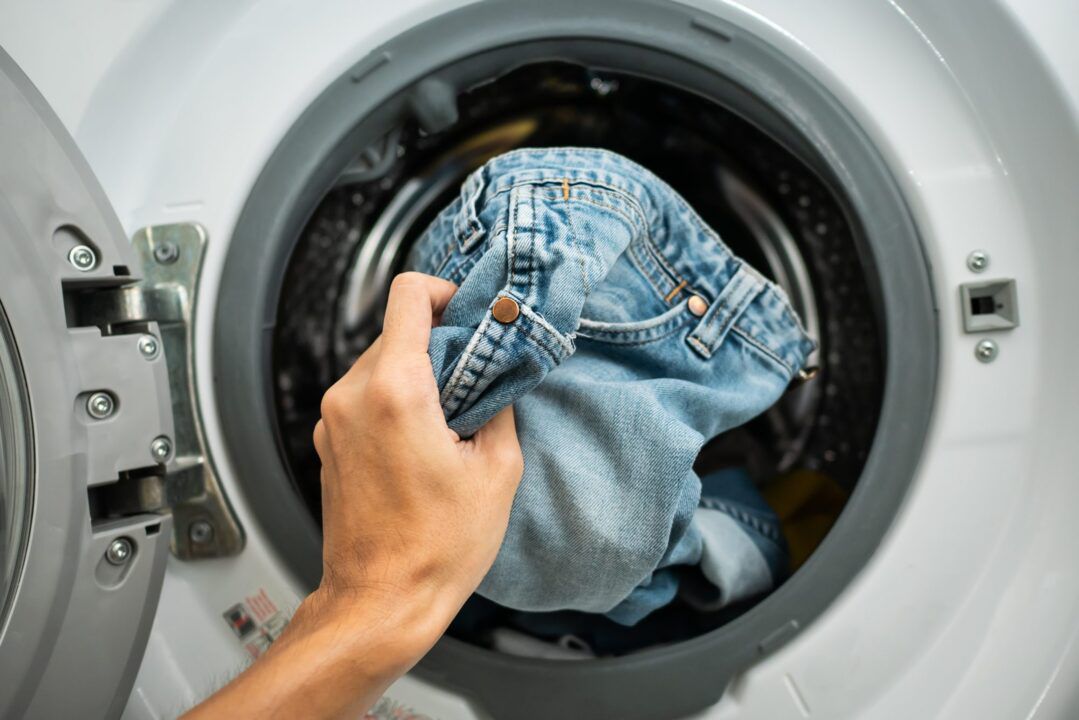
Step 3: Turn jeans inside out
Flip them and smooth them out a bit. This is the big move that helps reduce fading and abrasion on the outside.
Step 4: Sort smart (denim is a color bully)
Wash dark jeans with dark items. Wash light denim with light items.
For brand-new dark denim, consider washing alone or with similarly dark, older pieces the first time or two.
Step 5: Choose cold water and a gentle cycle
Cold water is a denim best friend: it helps reduce fading and shrink risk.
A gentle or delicate cycle limits agitation, which is what causes that sandpaper-like wear.
If your washer has a “denim” cycle, it often aims for thorough cleaning with controlled agitationuse it if your machine does it well, but gentle is a safe default.
Step 6: Use the right detergent (less is more)
Choose a mild detergent. If you’re preserving dark washes, a detergent formulated for dark colors can help maintain richness.
Avoid harsh bleaching agents unless you’re intentionally lightening denim (and are emotionally prepared for the outcome).
Step 7: Skip fabric softener for most jeans
Fabric softener can leave residue that affects absorbency and may impact certain stretch fibers over time.
If your jeans feel stiff, try air drying with a little movement, or a brief low-heat tumble at the end (more on drying below).
Step 8: Dry gently (your future self will thank you)
Air drying is the gentlest option for denim and helps preserve fit. Hang by the waistband or lay flat and reshape seams.
If you use a dryer, keep heat low and pull jeans out while slightly damp to reduce shrinkage and deep creasing.
How often should you wash jeans?
There’s no single “correct” number because life is not a controlled laboratory (sadly). In the real world, how often you wash depends on:
how long you wear them, how much you sweat, what you do in them, and whether they smell or show soil.
Many denim and laundry experts suggest jeans can go multiple wears between washes. A common sweet spot is every few wears for everyday use,
with longer stretches if you’re mostly sitting, and more frequent washing if you’re doing physical work or sweating.
The best rule is practical: wash when they’re visibly dirty, stretched out, or starting to smell.
If you’re trying to preserve color and shape, fewer washes help. If you’re prioritizing hygiene (hot climate, heavy activity, sensitive skin),
you’ll wash more often. Both are valid. Your jeans are not judging youonly your laundry basket is.
Keep jeans fresh between washes (without doing a full wash)
Air them out
After wearing, hang jeans in a well-ventilated spot instead of tossing them in a pile. Airflow helps odors dissipate and keeps fabric from getting musty.
Spot clean small stains
For a small mark, use a damp cloth and a tiny amount of mild soap. Blotdon’t aggressively rubso you don’t create a faded “halo.”
Spot cleaning is especially useful for denim you want to keep dark and crisp.
Steam (the gentle reset)
A garment steamer can reduce wrinkles and refresh fabric. Even hanging jeans in the bathroom during a warm shower can help loosen odors and wrinkles.
It’s not a replacement for washing when jeans are truly dirty, but it’s a great in-between option.
The freezer trick (myth-ish, but sometimes helpful)
You’ve probably heard “freeze your jeans to kill bacteria.” The science is mixed, and freezing doesn’t reliably eliminate bacteria the way washing does.
But some people find it can reduce odors temporarily. If you try it, seal jeans in a bag to avoid freezer smells moving in permanently.
(Nobody wants “hint of garlic bread” denim.)
FAQs: Quick denim care answers
Should you wash new jeans before wearing?
It’s often a good ideaespecially for dark denimbecause new jeans can release dye and may have finishing chemicals from manufacturing.
If you’re worried about dye transfer to furniture or lighter clothing, a first wash can help.
Does washing inside out prevent dye bleeding completely?
No. It can reduce abrasion and limit how much dye rubs onto other items, but dye behavior depends on the denim, the wash settings, and what else is in the load.
Washing with similar colors and using cold water are your best supporting moves.
Can you tumble dry jeans?
You can, but heat is one of the fastest routes to shrinkage and extra fading.
If you use a dryer, go low heat and pull them out a little damp. Air dry the rest of the way for a better fit.
Bottom line: Flip, wash cold, and let denim live its best life
If you want jeans that stay darker, smoother, and more “new” looking, washing inside out is a smart habit.
Pair it with cold water, a gentle cycle, and sensible drying, and your denim will reward you by not betraying you with surprise shrinkage or sad fading.
(Or at least it’ll betray you less often.)
Real-Life Laundry Moments: 6 Denim “Experiences” You’ll Recognize (and What They Teach You)
You don’t need a laboratory to understand denim care. Most people learn through a series of very relatable laundry momentstiny plot twists that happen
somewhere between “I’ll do laundry tonight” and “Why do my jeans look like they fought a washing machine and lost?”
Here are a few real-world scenarios that show why washing jeans inside out is such a practical habit.
1) The “My black jeans are now charcoal” surprise
You buy a fresh pair of black jeans. They look sharp, clean, expensivelike you have your life together.
Then you wash them a couple of times with regular cycles and warm water, and suddenly they’re not black anymore. They’re… “vintage.” Unintentionally.
This is where inside-out washing helps: the outer dye gets less friction, and cold water slows color loss.
Combine that with a gentle cycle and a detergent suited for dark fabrics, and your jeans stay closer to their original shade.
2) The “Why do my pockets look worn out already?” mystery
Pocket edges, belt loops, hemsthese spots fade first because they’re high-friction zones in both wearing and washing.
Toss jeans right side out into a crowded load, and those edges rub against everything like they’re trying to start a campfire.
Turning jeans inside out won’t stop natural wear from living your life, but it helps prevent the wash cycle from speeding up that wear.
3) The zipper incident (a.k.a. denim-on-delicates crime)
Almost everyone has accidentally washed jeans with something softermaybe a favorite tee, a hoodie, or that one top that snags if you look at it wrong.
If the zipper is open or the jeans are right side out, hardware can scrape and catch.
The fix is simple and very “laundry pro”: zip and button first, flip inside out, and consider washing denim with sturdier items.
It’s not about being precious; it’s about avoiding a load full of tiny regrets.
4) The “distressed jeans got more distressed” escalation
Distressed denim is designed to look worn, but the washer can turn tasteful rips into unplanned ventilation.
Agitation pulls on loose threads, and rubbing makes frayed edges fray harder.
Turning jeans inside out reduces direct abrasion on distressed areas, and tossing them into a large mesh bag can add even more protection.
If you love the distressed look, treat it like a featurenot an invitation for your washer to finish the job.
5) The “Why do they fit weird now?” fit shift
Jeans can change shape from heat, over-drying, and aggressive cyclesespecially stretch denim.
Many people notice the waistband feels tighter, or the legs twist a bit, or the fabric gets stiff.
Inside-out washing doesn’t solve every fit issue, but it supports a gentler routine that does: cold water, gentle cycle, and air drying or low heat.
The goal is to clean the jeans without cooking them.
6) The “I didn’t wash them, but they smell… fine?” in-between win
Sometimes jeans aren’t dirty; they’re just not fresh. Maybe they picked up restaurant smells, or you wore them all day and they feel a little “lived in.”
This is where airing out and spot cleaning shine. Hang them somewhere with airflow, steam them lightly, or clean a small spot instead of doing a full wash.
Washing less often can extend denim life, and inside-out washing makes the washes you do run less punishing on the outside finish.
It’s the balance most people want: jeans that last, and a routine that doesn’t feel like a second job.
The big takeaway from all of these everyday denim moments is simple: laundry isn’t just cleaningit’s maintenance.
Washing jeans inside out is one of those rare habits that’s easy, free, and genuinely effective. Your future self (and your future jeans) will appreciate it.