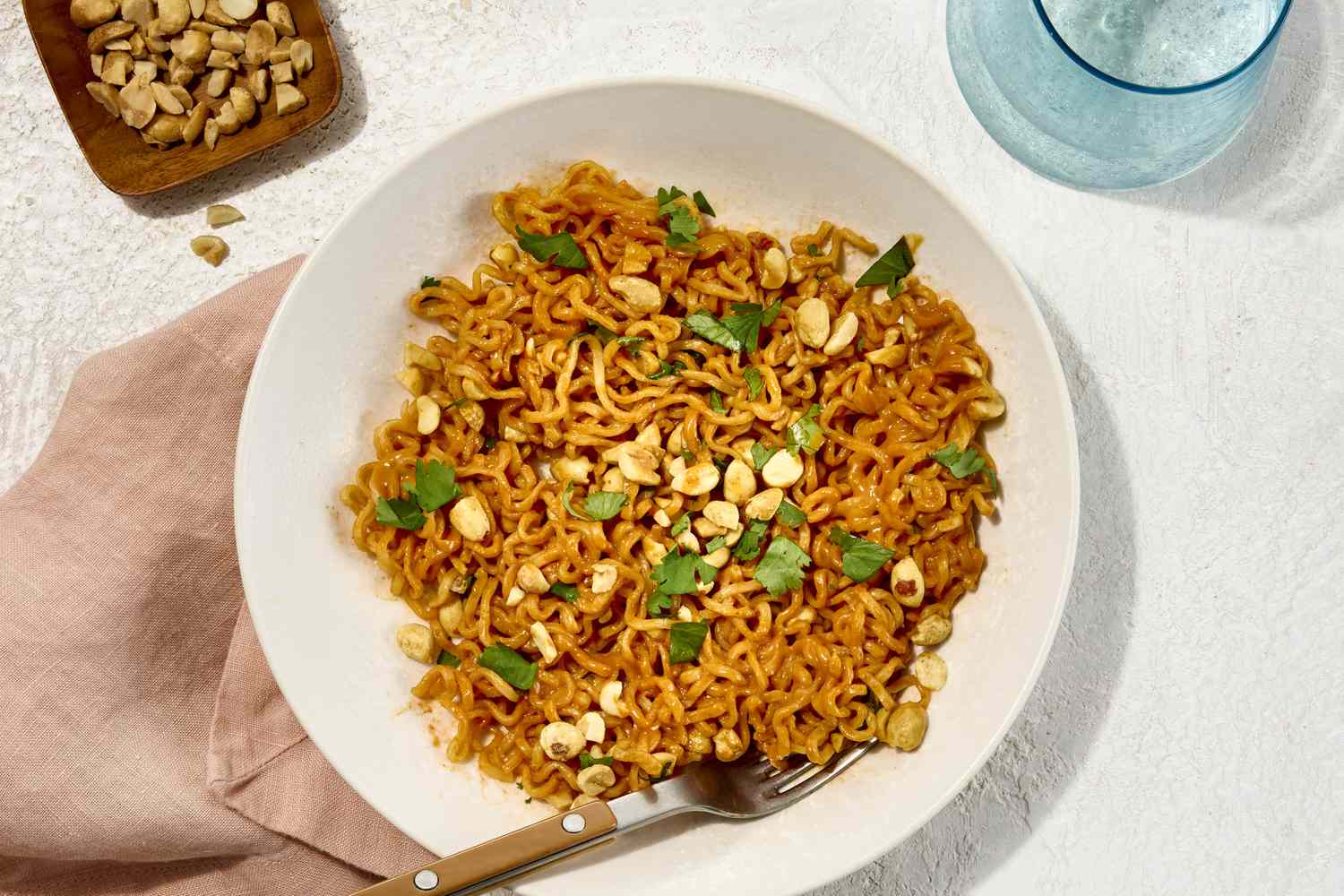
If your weeknight dinner routine feels a little “instant noodle in a sad bowl,”
this Thai Peanut Butter Ramen recipe is your glow-up moment.
It’s creamy, spicy, a little sweet, and packed with slurpy noodles and crunchy
toppings. Think of it as what would happen if your favorite peanut sauce and a
cozy bowl of ramen decided to move in together.
Thai-inspired peanut ramen recipes from popular U.S. food sites typically
start with three big flavor pillars: red curry paste, creamy peanut butter,
and either vegetable or chicken broth, often rounded out with coconut milk for
extra richness.
We’ll borrow that winning framework, streamline it, and add easy options so you
can customize it whether you’re a tofu lover, a chicken fan, or strictly
veggie-forward.
Why Thai Peanut Butter Ramen Works So Well
On paper, it sounds wild: ramen + peanut butter. In reality, it’s
exactly what your taste buds have been waiting for. Thai-style peanut sauces
often combine:
- Creamy peanut butter for richness and body
- Red curry paste for warmth and aromatics
- Soy sauce and fish sauce (or miso/tamari) for umami depth
- Coconut milk for silky texture
- Lime juice for brightness and balance
When you pour that over ramen noodles, you get a broth that’s simultaneously
savory, nutty, spicy, and a little tangy. Many cookbook authors and food blogs
note how peanut-based broths are “comfort food with a twist” because they feel
indulgent but can easily be loaded with veggies and lean protein.
Ingredients You’ll Need
This version hits that sweet spot between “weeknight easy” and “restaurant
impressive.” You probably have half of these ingredients already.
For the Creamy Peanut Ramen Broth
- 2 tablespoons neutral oil (canola, avocado, or vegetable)
- 3 cloves garlic, minced
- 1 tablespoon fresh ginger, finely grated
- 2 to 3 tablespoons Thai red curry paste (adjust to heat level)
- 4 cups vegetable or chicken broth
- 1 cup canned coconut milk (full-fat for extra creaminess)
- 1/3 cup creamy peanut butter (unsweetened, smooth)
- 2 to 3 tablespoons soy sauce (low sodium if possible)
- 1 tablespoon rice vinegar or lime juice
- 1 to 2 tablespoons honey or maple syrup for gentle sweetness
- 1 to 2 teaspoons chili garlic sauce or sriracha (optional, for extra spice)
For the Noodles and Add-Ins
- 8 to 10 ounces ramen noodles (2–3 packs; discard seasoning packets)
- 1 to 2 cups sliced vegetables (such as bell peppers, mushrooms, carrots, or baby bok choy)
- 8 ounces protein of choice (cubed tofu, sliced chicken, shrimp, or tempeh)
- 1 cup baby spinach or shredded kale (stirred in at the end)
For Garnish
- Chopped roasted peanuts
- Sliced green onions
- Fresh cilantro or Thai basil leaves
- Lime wedges
- Chili oil or extra sriracha (optional)
Feel free to treat this list as a template rather than a contract. U.S.-based
food blogs often encourage swapping in whatever noodles, veggies, and proteins
you already have, as long as you keep the peanut-curry-coconut trifecta intact.
Step-by-Step: How to Make Thai Peanut Butter Ramen
1. Prep Your Ingredients
Mince the garlic, grate the ginger, slice your vegetables, and cube your
protein. Having everything ready before you crank up the heat keeps the
cooking process smooth and less chaotic (and reduces the chance of burning
your garlic while you desperately chop mushrooms).
2. Build the Flavor Base
In a large pot, heat the neutral oil over medium heat. Add the garlic and
ginger and sauté for about 30 seconds to 1 minute, just until fragrant. Stir
in the Thai red curry paste and cook for another 1–2 minutes. You want the
curry paste to darken slightly and smell toastythis step “blooms” the spices
and deepens the flavor of your broth.
3. Create the Peanut and Coconut Broth
Pour in the broth and coconut milk and whisk to combine with the curry paste
mixture. Once the liquid is mostly smooth, whisk in the peanut butter,
soy sauce, and honey or maple syrup. The peanut butter will slowly melt into
the broth and turn it luxuriously creamy.
Bring everything to a gentle simmer. Taste and adjust the seasoning:
- Add more soy sauce if it needs salt or depth.
- Add lime juice or rice vinegar if it tastes flat or heavy.
- Add chili garlic sauce or sriracha if you want more heat.
4. Cook the Protein and Veggies
Add your chosen protein (tofu, chicken, shrimp, etc.) to the simmering broth.
If you’re using chicken, make sure it cooks through completely; if you’re using
tofu, let it simmer long enough to soak up flavor. Toss in the sliced
vegetables and cook just until crisp-tenderusually 3 to 5 minutes, depending
on the vegetable.
5. Cook the Noodles
In a separate pot, cook the ramen noodles according to the package directions
until just al dente. Many quick peanut ramen recipes recommend this
two-pot method so the starch from the noodles doesn’t thicken the broth too
much and you can perfectly time the texture.
Drain the noodles and set aside.
6. Assemble the Bowls
Divide the cooked noodles among serving bowls. Ladle the hot peanut butter
ramen broth, veggies, and protein over the noodles. Stir in the baby spinach
or kale so it wilts gently in the heat.
Top each bowl with chopped peanuts, green onions, cilantro or Thai basil, and
a squeeze of fresh lime. If you like things spicy, finish with a drizzle of
chili oil or extra sriracha.
Tips for the Best Thai Peanut Butter Ramen
Use the Right Peanut Butter
Natural, unsweetened creamy peanut butter gives you control over salt and
sweetness. Many U.S. recipes emphasize avoiding peanut butters that are very
sweet or flavored, because they can throw off the balance of the broth.
Balance Is Everything
A great peanut ramen should hit salty, sweet, spicy, and tangy notes. If the
broth is too thick or intense, whisk in a little hot water or broth. If it
tastes dull, a squeeze of lime usually wakes everything up. If it’s too spicy,
add a splash more coconut milk and a bit of sweetener.
Don’t Overcook the Noodles
Ramen noodles continue to soften in hot broth. Aim for slightly under al dente
when boiling them, especially if you plan to store leftovers. Otherwise you’ll
wake up to peanut-flavored noodle porridge (which, while not awful, is not the
plan).
Layer Your Garnishes
The toppings are not optional fluffthey’re part of the flavor architecture.
Crunchy peanuts contrast with the silky broth, herbs add freshness, and lime
slices let each person adjust acidity at the table.
Easy Variations and Customizations
Protein Swaps
- Tofu: Press and pan-sear for crispy edges, then simmer briefly in the broth.
- Chicken: Thinly sliced chicken thighs or breasts work well; simmer until cooked through.
- Shrimp: Add near the end of cooking; they only need a few minutes.
- Tempeh or chickpeas: Great for extra plant-based protein.
Vegan and Gluten-Free Options
To keep things vegan, use vegetable broth and skip fish sauce, replacing it
with extra soy sauce or a spoonful of miso paste. For gluten-free, choose
rice ramen or gluten-free noodles and ensure your soy sauce or tamari is
labeled gluten-free. Many modern peanut ramen recipes highlight how easily
this dish adapts to different dietary needs with just a few swaps.
Make It Extra Veggie-Packed
Treat the broth like a hot tub for vegetables. Good options include:
- Shredded cabbage or coleslaw mix
- Matchstick carrots
- Snow peas or snap peas
- Broccoli florets
- Baby corn or canned corn
- Sliced mushrooms (shiitake, cremini, or button)
Broth vs. “Saucy Noodles” Version
You can use the exact same ingredients and simply reduce the amount of broth
if you prefer a saucier noodle dish rather than a full soup. Many quick
peanut butter ramen recipes toss cooked noodles with a thick peanut sauce and
just enough hot cooking water to make it glossy instead of soupy.
Serving and Storage Tips
Serve your Thai Peanut Butter Ramen piping hot, with toppings on the side so
everyone can customize. This dish is best enjoyed fresh, but leftovers can be
stored in airtight containers in the fridge for up to 3 days.
-
For best texture: Store broth and noodles separately if
possible, then combine and reheat gently on the stove with a splash of water
or broth. -
Reheating: Warm the broth over low to medium heat until hot
but not boiling, then add noodles and veggies just until warmed through.
Experience Corner: Living With Thai Peanut Butter Ramen
One of the most interesting things about Thai Peanut Butter Ramen is how often
people say, “I wasn’t sure about this… and now I can’t stop making it.” If you
browse recipe reviews for peanut-based ramen or noodle dishes, a pattern
emerges: someone tries it on a whim, then it quietly becomes part of their
weekly rotation. The combination of pantry staples (peanut butter, noodles,
soy sauce) and big, cozy flavor makes it both approachable and strangely
addictive.
Imagine a chilly weeknight where you’re staring into the fridge, wondering how
to turn half a bell pepper, a lonely carrot, and an opened carton of broth
into something that feels like a real meal. With this recipe, those odds and
ends become supporting actors in a bowl of ramen that feels like you
absolutely planned it. You whisk together the peanut butter, curry paste,
coconut milk, and seasonings; suddenly the kitchen smells like your favorite
Thai spot, and the vegetables seem less like leftovers and more like a
colorful, intentional garnish.
Another common “experience story” with Thai-inspired peanut ramen is the
moment people discover how customizable it is. One night you might keep it
simple with just noodles, broth, and a handful of spinach. Another night, you
might go full-on deluxe with crispy tofu or shredded chicken, sautéed
mushrooms, blistered peppers, and a mountain of herbs. You don’t need to
reinvent the base recipe every time; you just treat it like a friendly canvas
that welcomes whatever you throw at it.
Over time, home cooks often develop their own personal “house rules” for this
dish. Some like the broth extra tangy and always keep lime wedges on the
table. Others are team “peanutty and rich,” leaning heavily into coconut milk
and a bigger scoop of peanut butter. Spice lovers might add a spoonful of
gochujang, chili oil, or extra red curry paste, while those who prefer gentle
heat stick to a small drizzle of sriracha. These micro-adjustments are
exactly what turn a recipe from something you follow into something that feels
like yours.
Hosting friends? Thai Peanut Butter Ramen is secretly an excellent casual
dinner-party move. You can prepare the broth and toppings in advance, then
cook the noodles right before serving. Set the table with bowls of chopped
peanuts, herbs, chopped scallions, lime wedges, and chili oil. Let everyone
assemble their own bowl, buffet-style. There’s always at least one guest who
says, “Wait, peanut butter? In ramen?” They’ll be the same person asking for
the recipe link later.
It also works surprisingly well as a “meal prep but not boring” option. Make a
batch of broth on Sunday and keep it in the fridge. When you’re ready to eat,
cook a fresh portion of noodles, reheat a ladleful of broth, and drop in
whatever vegetables you have on hand. This keeps the noodles from getting
mushy and lets you change up the toppings each time so you’re not eating
identical leftovers all week.
Perhaps the best part of living with Thai Peanut Butter Ramen in your
repertoire is the confidence it gives you in the kitchen. Once you’ve made it
a couple of times, you start to understand how adjustable the balance of
salty, sweet, spicy, and tangy really is. That awareness transfers to other
dishes tooyou become the person who knows that a splash of citrus can fix a
flat-tasting soup, or that a spoonful of nut butter can turn a thin sauce into
something silky and satisfying. In that sense, this recipe is more than just a
delicious bowl of noodles; it’s a tasty little lesson in flavor-building.
So whether you’re cooking for one, feeding a crowd, or just trying to level up
your instant-ramen game, this Thai Peanut Butter Ramen recipe is the kind of
dish you’ll keep coming back to. It’s forgiving, flexible, and constantly
rewardingexactly the kind of kitchen companion you want on a busy weeknight.