A good fan doesn’t “cool” a room the way an air conditioner doesit cools you. (Yes, that’s a technical term.
No, I’m not taking questions.) By moving air across your skin, a fan helps sweat evaporate faster, which makes you feel
cooler even if the thermostat is being emotionally unsupportive.
In 2025, the fan world got refreshingly practical: quieter sleep modes, smarter controls, better airflow shaping, and
designs that don’t look like they escaped from a high school gym. We sifted through hands-on testing, lab scoring, and
editor-vetted roundups to build a short list that actually matches how people livetiny bedrooms, open living rooms,
WFH desk caves, patios, and the “garage where projects go to become permanent.”
Our 2025 Editor Picks at a Glance
- Best overall versatility: Shark FlexBreeze Pro Mist (pedestal ↔ tabletop, indoor/outdoor, mist option)
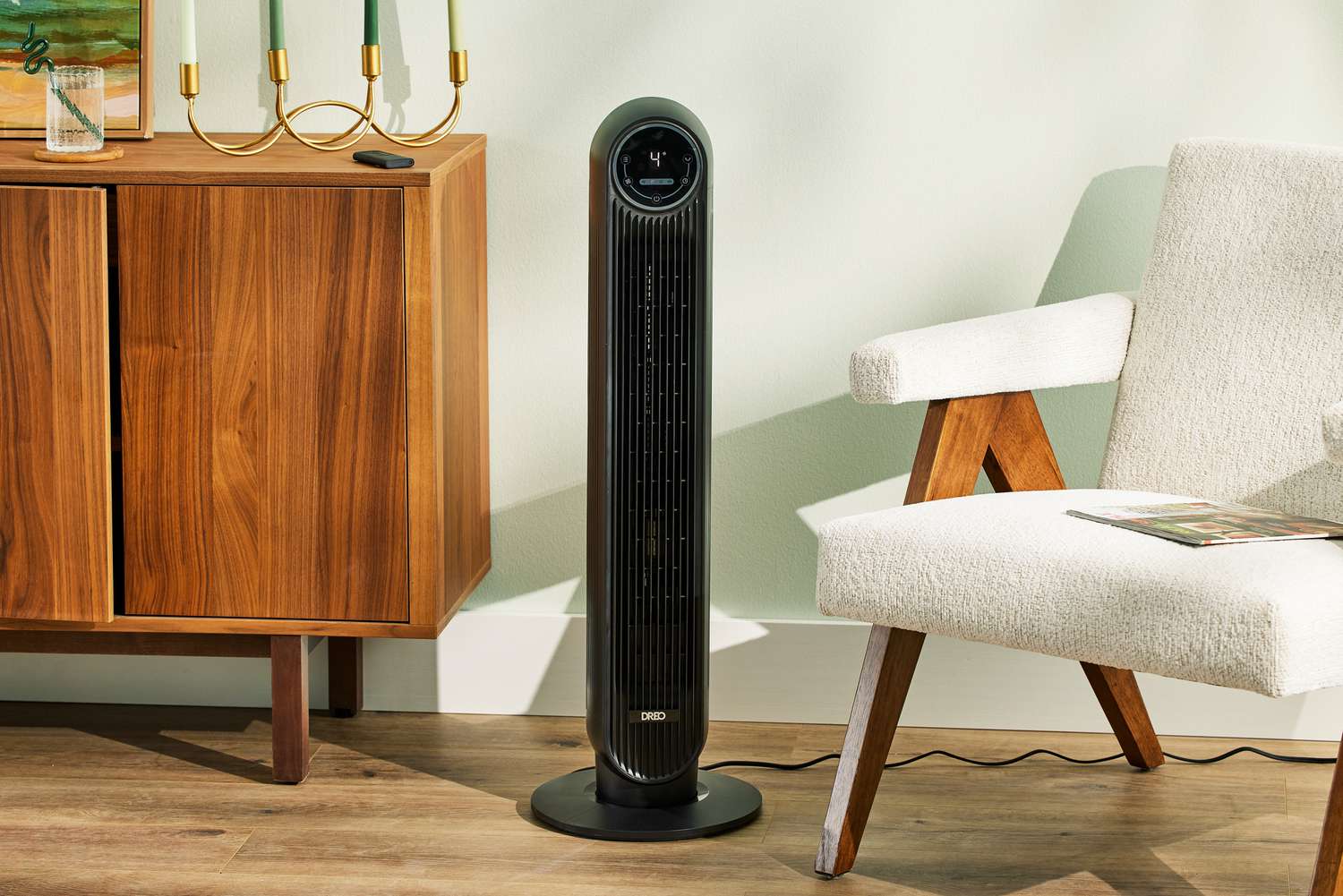
- Best tower fan for most homes: Dreo Nomad One (strong airflow, bedroom-friendly modes)
- Best smart tower upgrade: Dreo Smart WiFi Tower (app/voice control, multiple speeds, quiet profile)
- Best for big rooms: Vornado 660 air circulator (moves air like it has a goal in life)
- Best budget “small but mighty”: Hampton Bay high-velocity table fan (simple, punchy airflow)
- Best compact personal fan: Vornado Flippi V6 (tiny footprint, surprisingly useful)
- Best “pretty enough to leave out”: Vornado Swan Vintage oscillating fan (aesthetic + functional)
- Best shop/garage brute: Lasko high-velocity floor fan (for when you want wind, not vibes)
- Best ceiling fan picks: Westinghouse Comet (value), Minka-Aire Barn LED Smart (smart + style)
How We Chose These Fans
We prioritized models that repeatedly earned top marks across reputable editorial and lab-style testing in 2025, then
filtered them through real-life sanity checks: Does it fit in an actual room? Is it easy to control at 2 a.m.? Can you
clean it without taking a vow of silence? Does it deliver meaningful airflow without sounding like a small aircraft
negotiating with a bigger aircraft?
Our final list balances tower, pedestal, desk, floor, and ceiling fansbecause “best fan” depends on whether you’re
cooling a bed, a desk, a living room, or an entire household of people who all run different temperatures like
competing Wi-Fi networks.
The Best Fans of 2025: Deep Dive Picks
Best Overall Versatility: Shark FlexBreeze Pro Mist
If you want one fan to cover “bedroom at night,” “living room during the day,” and “patio when it’s a thousand degrees,”
this is the overachiever. The FlexBreeze line stood out in 2025 roundups for its adaptability: it converts between
pedestal and tabletop setups, works indoors and outdoors, and (in the Pro Mist version) can add a misting function for
extra comfort in dry heat.
- Best for: People who move their fan around, households with indoor/outdoor use, and anyone who wants one “do-it-all” option.
- Why we like it: Flexible form factor, strong coverage, and features that feel practicalnot gimmicky.
- Watch-outs: Bigger footprint than ultra-slim towers; misting is great outside, less necessary indoors.
Best Tower Fan for Most Homes: Dreo Nomad One
Tower fans win on space efficiency (hello, small apartments), and in 2025 the Dreo Nomad One kept popping up as a
favorite because it pairs strong airflow with quality-of-life features people actually use: remote control, multiple
modes, and a profile that’s easier to live with in a bedroom. It’s the kind of fan that disappears into your space
until you turn it on and immediately stop being mad at summer.
- Best for: Bedrooms, medium-size living rooms, and anyone who wants “set it and forget it” cooling.
- Why we like it: Helpful modes (including night/eco-style options), solid reach, slim footprint.
- Watch-outs: Like most towers, it’s not for blasting air across a warehouse-sized space.
Best Smart Tower Upgrade: Dreo Smart WiFi Tower (and similar smart towers)
Smart fans can be either brilliant or deeply unnecessarythere is no middle. In 2025, the better smart towers earned
their keep by doing two things well: staying quiet at low speeds and letting you fine-tune airflow without standing up.
If you like app control, voice assistants, scheduling, or tweaking settings from bed, a smart tower can feel like an
upgrade you’ll use daily.
- Best for: Light sleepers, smart-home folks, and anyone who loves routines (“Night mode at 10:30, don’t judge me”).
- Why we like it: More speed steps, useful automation, remote/app convenience.
- Watch-outs: If you hate apps on principle, buy a great non-smart tower and live happily ever after.
Best for Big Rooms (Air Circulation): Vornado 660 Air Circulator
A circulator isn’t trying to be gentle. It’s trying to move air through a room like it’s reorganizing the furniture.
In 2025 lists, the Vornado 660 showed up as a strong option for larger spaces because it’s designed to push and mix air,
not just blow a narrow breeze. This makes it especially good for pairing with air conditioningcirculators help distribute
cool air more evenly so your AC doesn’t do all the emotional labor.
- Best for: Large living rooms, open floor plans, and “my AC vent is on the wrong side of the universe” situations.
- Why we like it: Strong circulation, simple controls, effective room-wide impact.
- Watch-outs: Not the slimmest option; it’s a “set it in a spot” fan more than a “tuck in a corner” tower.
Best Budget “Small but Mighty”: Hampton Bay High-Velocity Table Fan
Budget fans usually ask you to choose between power and regret. This one keeps regret low. High-velocity table fans are
blunt instrumentsin the best wayand the Hampton Bay option repeatedly lands on “best budget” lists because it’s simple,
portable, and pushes a noticeable breeze for the price.
- Best for: Dorms, desk areas, spot-cooling while cooking, or saving money for literally anything else.
- Why we like it: Strong airflow for a compact fan; easy to move.
- Watch-outs: Fewer features (no fancy timer/app); aim it carefully and let it do its thing.
Best Compact Personal Fan: Vornado Flippi V6
A personal fan should be easy: small footprint, quick setup, and airflow that’s helpful from 2–4 feet away (aka the
“keyboard-to-face” zone). The Flippi-style compact circulators earned praise in 2025 coverage for delivering a focused
breeze without taking over your entire desk like it pays rent.
- Best for: Desks, bedside tables, and small rooms where every square inch counts.
- Why we like it: Compact, portable, and surprisingly effective for its size.
- Watch-outs: It’s personal coolingnot whole-room climate control.
Best “Pretty Enough to Leave Out”: Vornado Swan Vintage Oscillating Fan
Some fans are functional. Some fans are decor. The Swan Vintage is one of the rare models that tries to be bothan
oscillating fan with a retro look that still delivers practical cooling. If you care about aesthetics (or you’ve ever
hidden a fan in a closet when guests arrive), this category is for you.
- Best for: Living rooms, styled bedrooms, and anyone who wants airflow without visual clutter.
- Why we like it: Oscillation + design-forward look; feels intentional in a room.
- Watch-outs: You may pay extra for styledecide if that’s worth it for your space.
Best High-Velocity Floor Fan for Workspaces: Lasko High-Velocity Floor Fan
This is the “I am not here to be subtle” option. High-velocity floor fans are built for garages, workshops, basements,
and big utility spaces. In 2025 testing roundups, Lasko-style floor fans stood out for pushing a ton of air and being
easy to position for direct cooling.
- Best for: Garages, home gyms, workshops, and anyone sanding/painting/building anything.
- Why we like it: Strong airflow, rugged usefulness, straightforward controls.
- Watch-outs: Not the quietest category; that power comes with sound.
Best Ceiling Fans of 2025: Westinghouse Comet (Value) and Minka-Aire Barn LED Smart (Smart/Style)
Ceiling fans are the long-game play: they don’t take up floor space, they help with whole-room comfort, and they can
reduce how hard your AC has to work. In 2025, value picks like the Westinghouse Comet showed up as dependable options,
while smart/statement models like the Minka-Aire Barn LED Smart appealed to people who want modern controls and a design
that feels intentional.
- Best for: Whole-room comfort, bedrooms, living areas, and anyone tired of tripping over floor fans.
- Pro tip: In summer, most people run ceiling fans counterclockwise to push air downward for a wind-chill effect.
- Watch-outs: Installation matters; if wiring makes you nervous, hire a pro and keep your eyebrows.
How to Choose the Right Fan (Without Turning It Into a Hobby)
1) Pick the right fan type for your space
- Tower fan: Slim, good for bedrooms and modern spaces, usually includes timers and remotes.
- Pedestal fan: Adjustable height and direction; great for living rooms and bedrooms.
- Air circulator: Built to move air around the room; excellent with AC and open layouts.
- Desk/personal fan: Spot cooling for one personperfect for WFH.
- High-velocity floor fan: Utility cooling for garages/workshops; louder but powerful.
- Ceiling fan: Whole-room comfort with zero floor footprint; best for consistent daily use.
2) Noise matters more than you think
A fan that’s “fine” at noon can be unbearable at midnight. If you’re buying for a bedroom, prioritize sleep/night modes,
dimmable displays, and a low-speed setting that’s genuinely quiet. Bonus points if button beeps can be disabledbecause
nothing says “rest” like a loud electronic chirp after you finally get comfortable.
3) Controls: remote, timer, and the “I’m lazy but efficient” factor
A timer is underrated. It lets you fall asleep cool and stop the fan later without waking up. Remotes are greatuntil
they vanish. We like models with a clear storage spot (or a magnetic attachment) because the couch will absolutely eat
your remote given the chance.
4) Cleaning and maintenance (aka the dust audit)
Fans collect dust like it’s their side hustle. Look for designs that are easy to wipe down, have accessible grills,
and don’t require advanced disassembly skills. If you’re considering a fan-with-filter or a purifier combo, remember:
filters are a recurring cost, not a one-time event.
5) Energy use: the quiet money-saver
Fans are generally cheap to run compared to air conditioning, and they can help you raise your thermostat a bit while
staying comfortable. If you’re using AC, think of a fan as a multiplier: it helps the cool air spread, so the system
doesn’t have to work as hard to keep the room livable.
Fan Placement Tricks That Actually Work
- Create a cross-breeze: Place a fan near a window to pull in cooler evening air, and open another window across the room.
- Pair with AC strategically: Aim a circulator so it pushes cool air out of the “AC corner” and into the rest of the room.
- Use the “bed lane” approach: For sleep, you don’t need to cool the whole roomaim airflow across the bed zone.
- Don’t fight physics: If your room is humid, airflow helps comfort, but dehumidifying can make everything feel better faster.
- Safety basics: Keep cords clear, don’t drape fabrics near fans, and use stable basesespecially around kids and pets.
Editor Field Notes: of Real-Life Fan Experience (So You Don’t Learn the Hard Way)
The first thing you notice when you live with a fan day after day isn’t the top speedit’s everything that happens
between “off” and “full blast.” The best fans feel controllable: you can dial in a gentle breeze for a Zoom call,
switch to a stronger stream while you’re cooking, then drop back down to a whisper for sleep without feeling like you’re
negotiating with a leaf blower. That’s why multi-step speed control (and genuinely usable low speeds) matters more than
marketing claims about maximum airflow.
Another real-life lesson: placement beats raw power more often than you’d expect. Put a great fan in a bad spot and you’ll
cool exactly one square foot of aircongratulations to that square foot, by the way. Put a good fan in a smart spot and the
whole room feels different. Circulators earn their reputation here: aim one so it “mixes” air around the room, especially
if you have AC. The result isn’t icy air; it’s fewer hot pockets and less of that “why is it colder over here and tropical
over there?” drama. For bedrooms, the win is even simpler: you’re not cooling furnitureyou’re cooling a person. Aim airflow
across the bed (not straight into your face unless you enjoy waking up dehydrated and confused).
You also learn quickly that the “best fan” changes with your schedule. Daytime comfort is about coverage; nighttime comfort
is about noise and light. Displays that glow like tiny billboards can ruin an otherwise excellent fan, so dimmable screensor
screens that go dark in sleep modeare not frivolous. Same for button beeps: the moment you try to adjust settings quietly
at 1:17 a.m. and your fan chirps loud enough to wake a houseplant, you’ll understand why “mute controls” is a real feature.
And remotes? Great in theory. In practice, they vanish into couch cushions like they’re training for a magic act, which is why
built-in storage or magnetic remotes feel like small luxuries that become big conveniences.
Finally: dust. Fans collect it. Fast. If you run a fan daily, you’ll end up cleaning it more than you expectespecially in
bedrooms and kitchens. That’s why ease of cleaning is part of real value. A budget fan that wipes down in 30 seconds can be
more “livable” than a premium model that requires a screwdriver and a pep talk. The best experience is the one you’ll keep
using: a fan that fits your room, matches your tolerance for noise, and is easy enough to maintain that it doesn’t turn into
a dusty monument to optimism.
Final Take
If you want one flexible, modern fan that can handle both indoor and outdoor life, start with the Shark FlexBreeze Pro Mist.
If you want a space-saving tower that’s easy to live with, the Dreo Nomad One is a consistent 2025 favorite. For big-room air
movement, Vornado’s circulator approach still makes a strong case. And if you’re building comfort into a home long-term,
ceiling fans remain the quiet MVP.