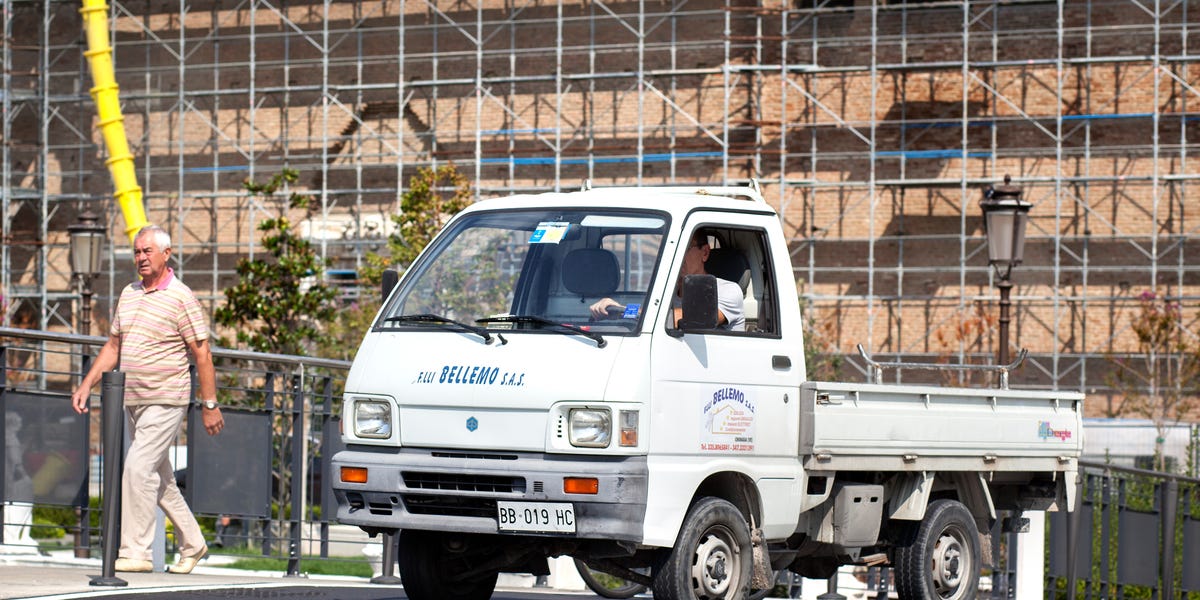
Imagine a pickup truck that looks like it was designed by someone who got distracted halfway through drawing a shoebox.
Now imagine that same shoebox hauling lumber, compost, and the emotional baggage of every contractor who’s tired of modern trucks being the size of studio apartments.
That’s the kei truck: tiny, practical, and weirdly lovable.
In the U.S., kei trucks are having a momentpart utility, part nostalgia, part “I can finally park like a normal person.”
But there’s a catch that hits buyers right in the glovebox: in a patchwork of state rules, kei trucks can be perfectly legal in one place and basically treated like contraband in another.
One national outlet summed up the mood bluntly: cute and hardy… but still illegal in 19 states.
If that sounds ridiculous, welcome to the world of American vehicle regulation, where “federally importable” and “state-registerable” are two very different animals.
Let’s break down what a kei truck is, why people want one, why some DMVs want them gone, and what you can do to avoid turning your dream micro-truck into an expensive lawn ornament.
What Is a Kei Truck, Exactly?
“Kei” (short for keijidōsha) is Japan’s category for ultra-compact vehicles designed to meet strict size and engine limits.
Kei trucks are the work-truck version of that concept: small cab, small engine, small footprint, and a bed that’s shockingly usable for real chores.
Typical kei-truck traits you’ll actually notice
- Compact dimensions: easy to store, easy to maneuver, and easy to fit where full-size trucks fear to tread.
- Small-displacement engines: often around 660cc, built for efficiency and local roads.
- Utility-first design: folding bed sides, flat load floors, and “work before vibes” engineering.
- Right-hand drive (often): not a dealbreaker, but it will make drive-thrus feel like a social experiment.
Common models U.S. enthusiasts chase include the Honda Acty, Suzuki Carry, Subaru Sambar, and Mitsubishi Minicabvehicles that were never designed for American interstates,
but were absolutely designed to be useful all day long.
Why Americans Fell for the Tiny Truck
The kei truck boom isn’t just about cuteness (though, yes, they’re adorable in a “mini fridge that can haul gravel” way).
It’s also a reaction to a U.S. truck market that keeps trending bigger, taller, and more expensive.
Many buyers don’t need a 6,000-pound pickup to move mulch twice a month.
They need a toolone that doesn’t require a second mortgage and a three-point turn to exit a driveway.
Three reasons kei trucks fit modern life
- They’re practical at low speeds: farms, small businesses, campuses, maintenance crews, nurseries, and property managers love “small-but-capable.”
- They’re budget-friendly (by truck standards): many imports cost far less than a new U.S.-market pickup.
- They’re efficient and right-sized: less vehicle to push around means less fuel and less hassle.
There’s also a cultural component. Kei trucks are a rolling rebuttal to the idea that “more metal” automatically equals “better transportation.”
They’re a quiet reminder that utility doesn’t need to be enormousand that fun can be practical.
The Federal Rule That Makes Kei Trucks Possible: The 25-Year Import Exemption
Here’s the twist: many kei trucks are legal to import into the U.S. even if they can’t be easily registered everywhere.
At the federal level, a key concept is the “25-year rule” for vehicle importation.
In plain English, certain vehicles that are 25 years or older can be imported without having to meet modern Federal Motor Vehicle Safety Standards (FMVSS) in the same way as newer vehicles.
Importing a vehicle still involves paperwork and proper declarations at entry.
In practice, importers commonly deal with federal forms and processes that confirm the vehicle’s status and compliance pathway.
If you’re buying a kei truck already stateside from a reputable importer, much of this may have been handledbut you still want to verify the documents exist.
Important reality check
Federal importability does not guarantee state registrability.
Think of it like this: federal rules can let the vehicle through the front door of the country,
and then state DMVs decide whether it gets a driver’s license and permission to mingle with regular traffic.
So Why Are Kei Trucks Still Illegal (or Effectively Banned) in Some States?
States regulate vehicle titling, registration, and road use. That means every DMV can interpret categories differently.
And kei trucks live in a weird regulatory neighborhood: they’re older imports, often right-hand-drive, often lacking modern crash protection,
and not built for U.S. roadway speeds or American crash test assumptions.
1) Safety standards and crash expectations
Many kei trucks were designed for Japan’s roads, speeds, and regulatory environment.
They may lack airbags, modern crash structures, and U.S.-style bumper requirements.
Some states look at that and say: “Not on our roads.”
2) Category confusion: “mini truck,” “UTV,” “off-road,” “low-speed vehicle”… pick one
A lot of the drama isn’t about whether kei trucks are “bad.”
It’s about what they are legally.
Some states classify them as off-road vehicles, farm-only equipment, or unconventional vehicles that can’t be titled for normal road use.
Others create a limited-use laneallowing operation only on certain roads (often with speed-limit caps) and requiring special registration.
3) Policy whiplash and title revocations
The scariest scenario for owners isn’t “you can’t register it.”
It’s “you registered it, and later the state changes its mind.”
Several states have faced controversy over tightening policies and revoking registrations that were previously issued.
That uncertainty is part of what keeps the kei truck debate so heated.
The Patchwork Map: Legal Here, Questionable There, Nope Over There
Kei truck legality in the U.S. isn’t a single mapit’s a stack of maps with sticky notes.
Even when a state “allows” kei trucks, the permission often comes with strings:
limits on road types, speed limits, insurance requirements, inspections, or how the vehicle is titled.
States moving toward clearer legalization
-
Texas: Advocates pushed for clearer protections for older imported mini trucks, turning what had been inconsistent policy into a more formal pathway.
For many enthusiasts, Texas became a proof-of-concept: organize, educate lawmakers, and you can change the rules. -
Colorado: Colorado enacted a framework that recognizes kei vehicles, but with timelines that phase in implementation rather than flipping a switch overnight.
It’s a legalization storybut with patience required. -
Massachusetts: After controversy and review, Massachusetts signaled that owners could register kei vehicles under an updated policy position, though ongoing review and studies have been part of the conversation.
In other words: progress, but keep your paperwork tidy.
Oregon: still the ongoing cliffhanger
Oregon has been one of the states where enthusiasts argue that kei trucks are practical for small businesses and rural use,
while regulators worry about roadway compatibility.
Legislative efforts have surfaced, stalled, and resurfaced.
As of early 2026, supporters are still pushing for a bill that would create defined rules for titling and on-road useoften with highway restrictions.
The “illegal in 19 states” headlineand what it really means
When you hear that kei trucks are “illegal” in a certain number of states, it usually means one of these:
- The state won’t issue a title/registration for normal on-road use.
- The state restricts use so heavily (farm-only, off-road-only, limited roads) that “street legal” becomes practically meaningless.
- The state has revoked or refused registrations under certain classifications.
The number can also shift depending on how you count “restricted” versus “banned,” and policies can change faster than a kei truck merges onto a highway.
So treat any single-number claim as a snapshot, not a forever fact.
Buying a Kei Truck Without Regret: A Practical Checklist
If you’re temptedand who wouldn’t be?this is the part where you protect your wallet and your blood pressure.
Because the kei-truck lifestyle is best enjoyed when your DMV isn’t sending you ominous letters.
Step 1: Confirm the basics (age and import documents)
- Verify the vehicle’s age: the 25-year import pathway depends on age.
- Ask for import documentation: reputable sellers can show you what was filed and how the vehicle entered the U.S.
- Match the paperwork to the truck: VIN/chassis numbers should align across documents.
Step 2: Call your DMV (yes, really)
Don’t rely on “a guy online said it worked in 2022.”
Ask your DMV how the vehicle would be classified and titled in your state.
Use the right terms: “Japanese mini truck,” “kei truck,” “right-hand-drive import,” and whatever category your state uses (mini truck, low-speed vehicle, off-road).
Step 3: Know the common restrictions before you fall in love
- Road limitations: some states restrict use on high-speed roads or highways.
- Equipment requirements: lighting, mirrors, tires, and reflectors may need updates.
- Insurance realities: not every insurer loves niche imports; get quotes early.
- Use limitations: antique plates or special registration types may restrict “daily driver” use.
Step 4: Don’t build your plan around loopholes
You’ll hear stories about creative registration strategies.
Some are legal in specific circumstances; others are risky, dependent on technicalities, or can create problems if you’re stopped or if a state cracks down.
The safest long-term play is simple: follow your state’s rules as written, and if the rules are bad, support efforts to improve them.
Why the Kei Truck Fight Matters (It’s Not Just About Cute Trucks)
This debate is really about what kinds of vehicles America wants on its roadsand who gets to decide.
Kei trucks sit at the intersection of affordability, utility, safety expectations, and environmental concerns.
The case for allowing them (with smart limits)
- Affordability: they can be a real option for small businesses and rural owners who need utility without luxury pricing.
- Urban practicality: smaller vehicles reduce parking stress and can fit into older infrastructure.
- Right-sized transport: not every job needs a full-size truck.
The case for restricting them
- Crash compatibility: size and structure differences matter in collisions with larger vehicles.
- Speed environment: many kei trucks were not designed for sustained high-speed U.S. driving.
- Regulatory consistency: DMVs don’t love gray areas, and kei trucks live in one.
The most reasonable policy approaches tend to land in the middle:
allow kei trucks with clear definitions, enforce equipment requirements, and restrict them from the fastest roads.
That way, they can do what they do bestworkwithout pretending they’re built for 75-mph survival contests.
What’s Next: More Bills, Clearer Rules, and a Lot of Tiny-Truck Advocacy
The trend line is obvious: enthusiasts are organizing, lawmakers are paying attention, and more states are exploring legislation.
Advocacy groups and industry organizations have supported bills that clarify titling and registration pathways.
Meanwhile, some states remain cautious, and others continue to debate whether restrictions should be loosened or tightened.
If you’re watching this space, expect more of the same:
proposed bills, DMV policy memos, court challenges, and the occasional social-media uproar featuring a tiny truck and a very large sense of injustice.
Owner Experiences: The Kei Truck Life (The Fun Parts and the “Oh Right” Parts)
The best way to understand kei trucks isn’t a spec sheetit’s the day-to-day reality owners describe:
the surprise, the stares, the utility, and the constant feeling that you’re driving a practical joke that can also haul plywood.
First, the attention. Owners often say a kei truck gets more comments than a sports car.
People ask what it is, where it’s from, whether it’s street legal, and whether it came free with a vending machine.
If you like chatting at gas stations, congratulations: you’ve found your community outreach program.
If you don’t, start practicing the polite smile that says, “Yes, it’s tiny. No, it’s not a toy. Yes, it can carry that.”
Second, the usefulness is real. A kei truck’s bed is low and accessible, which makes loading and unloading surprisingly easy.
Owners commonly talk about using them for landscaping runs, dump trips, property maintenance, and small-business deliveries.
It’s the opposite of a luxury truck experienceno giant hood, no massive blind spots, no complicated tailgate choreography.
Just a simple machine doing simple work.
Third, the driving experience is… honest. Around town, many owners describe kei trucks as nimble and confidence-inspiring.
You can thread through narrow streets, park in spaces that would make a full-size pickup cry, and see out of the cab like it’s a rolling greenhouse.
But there’s a reason so many states focus on road type and speed: at higher speeds, these trucks can feel busy, loud, and less comfortable.
They were designed for local roads, not cross-country endurance runs.
Fourth, parts and maintenance are a mixed bag. Owners often report that basic maintenance is straightforwardsimple engines, straightforward layoutsbut sourcing parts can be a learning curve.
The upside is that an enthusiast network exists, importers stock common parts, and online communities are surprisingly helpful.
The downside is that “quick trip to the corner auto parts store” isn’t always quick when your vehicle is a 1998 right-hand-drive import with model-specific components.
Finally, the legality anxiety is the buzzkill nobody puts in the listing. In states with unclear rules, owners talk about living with uncertainty:
will the DMV renew? will a policy change? will the classification shift?
That’s why experienced buyers emphasize one thing: buy the truck you can legally use where you live.
The happiest kei truck stories usually come from places with clear rulesand from owners who use their trucks within sensible limits.
In short: a kei truck can be a brilliant tool and a daily dose of joy.
But it’s also a reminder that, in America, “tiny and adorable” doesn’t automatically mean “welcome on the road.”
Conclusion
Kei trucks are cute, tough, and wildly usefulexactly the kind of vehicle that makes you wonder why everything else got so enormous.
Thanks to federal import rules, they can arrive legally.
Thanks to state-by-state registration authority, they can also be stopped at the DMV door.
If you want one, treat it like any smart vehicle purchase: verify paperwork, understand your local rules, and buy for the roads you’ll actually drive.
And if your state is one of the holdouts, you’re not aloneenthusiasts across the country are pushing for clearer, fairer policies that balance safety with practicality.