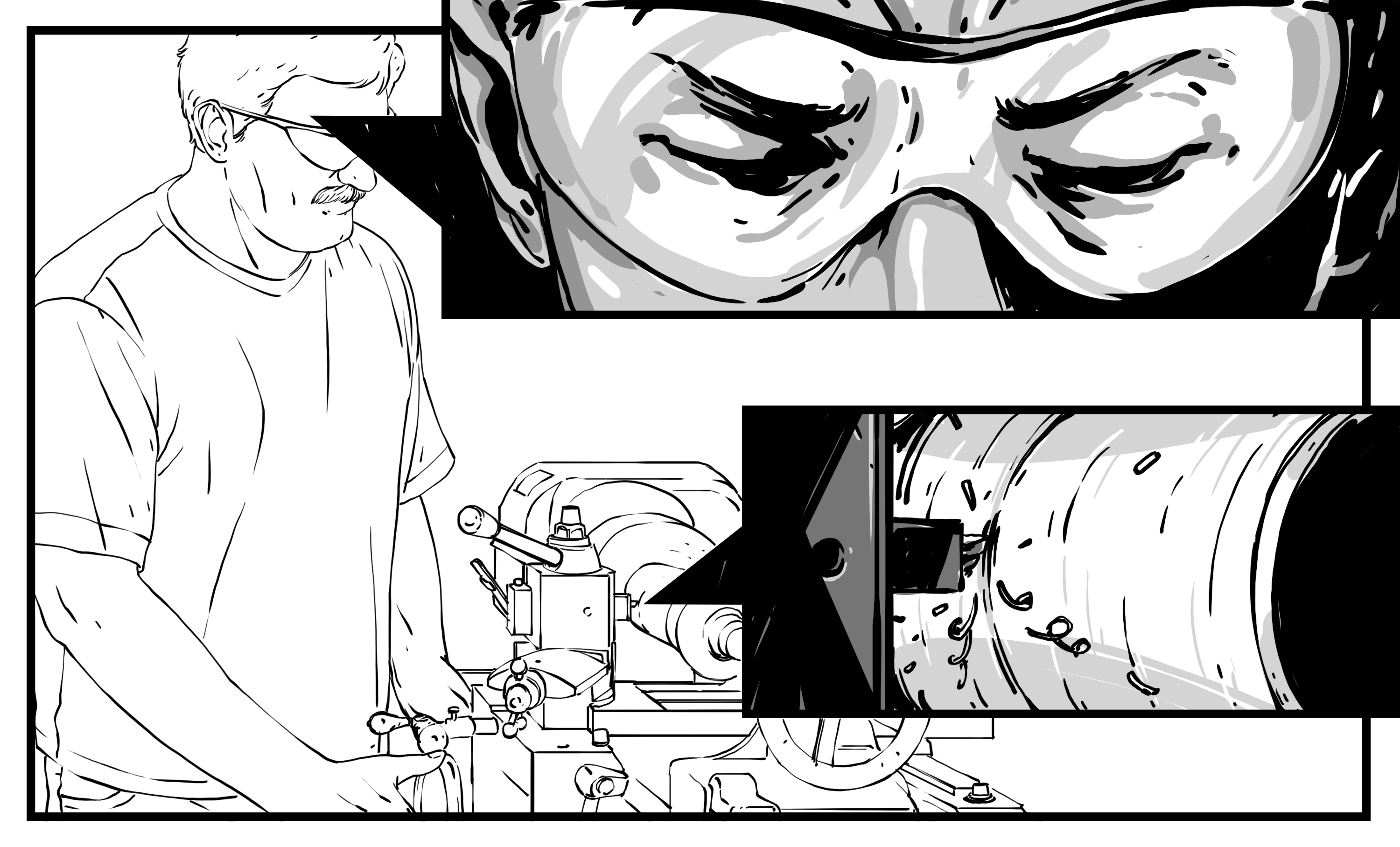
Every shop has royalty. Sometimes it’s the five-axis machining center with more axes than a high school math test. Sometimes it’s the grinder that can make a block of steel look like a mirror had a glow-up. But if you want the one machine that’s been quietly running the kingdom since before “automation” was a buzzword, you’re looking for the lathe.
Calling the lathe “the king of machine tools” isn’t just shop-floor poetry. It’s a practical title earned by versatility, historical impact, and the simple fact that a shocking amount of modern manufacturing still starts with: “Make it round. Make it true. Don’t mess it up.”
What Exactly Is a “Machine Tool” (And Why Should You Care)?
A machine tool is basically a stationary, power-driven machine that shapes materialsoften metalinto useful parts. The shaping can happen by removing material (chips), shearing, forming, or even using nontraditional energy like electrical or chemical processes. In other words: machine tools are the reason your car exists, your phone fits together, and your fridge door doesn’t fall off when you grab a midnight snack.
In a modern shop, “machine tools” includes the usual suspectslathes, mills, grinders, machining centers, EDM machinesas well as the supporting cast that makes them productive: workholding, cutting tools, probing systems, and measurement equipment. If manufacturing were a movie, machine tools are the special effects team. You only notice them when something goes terribly wrong.
Why the Lathe Wears the Crown
Turning is the process of removing material from the outside diameter of a rotating workpiece. That one conceptspinning the part and bringing a tool to itis the lathe’s superpower. With it, the lathe can create cylinders, tapers, grooves, shoulders, faces, bores, and threads. If a part has symmetry around an axis, the lathe is immediately interested… and possibly offended you considered anything else first.
It’s the master of fundamentals
- Geometry control: Diameters, concentricity, and straightness live here.
- Surface finish: The difference between “looks fine” and “seals flawlessly.”
- Threading: The unsung glue of modern engineering.
- Tooling discipline: Tool height, offsets, nose radius compensationyour future self will thank you.
That’s why many machinists treat lathe skills like culinary knife skills: once you’ve got the basics down, everything else feels less scary. Also, you stop “freehanding” things that shouldn’t be freehanded.
A Quick History Lesson (No Pop Quiz, Promise)
The lathe is ancienthumans have been spinning material on an axis for a very long time. But the lathe became a manufacturing kingmaker when it evolved from “spin and scrape” into precision equipment that could reliably reproduce parts.
The leadscrew changed everything
One of the biggest milestones in machine tool history was the development of practical screw-cutting lathes. A leadscrew geared to the spindle allowed the cutting tool to advance at a constant, predictable ratemeaning accurate, repeatable screw threads. That might sound niche until you remember that standardized threads helped unlock interchangeable parts, scalable assembly, and the industrial world as we know it. Basically, the leadscrew didn’t just cut threadsit cut lead times for civilization.
Even today, the logic remains: if you can cut accurate threads, you can build machines that build more machines. That’s not a metaphor; it’s a supply chain.
The Royal Court: Mills, Grinders, and Other Nobility
Let’s be fair: the lathe may be king, but it has a competent royal court. Each machine tool earns its paycheck by doing certain jobs faster, cleaner, or more repeatably than a lathe can.
Turning vs. milling vs. grinding
- Turning (lathe): The part rotates. Great for shafts, bushings, sleeves, pins, pulleys, and anything “round-ish.”
- Milling (mill or machining center): The tool rotates. Great for prismatic parts, pockets, slots, holes, contours, and complex faces.
- Grinding (grinder): Abrasive cutting. Great for tight tolerances, hard materials, and superior surface finishes.
In practice, shops often choose the machine based on the feature that matters most. If your part is a hydraulic shaft that must be concentric and smooth, turning is your first stop. If it’s a valve body with pockets and ports, milling gets the spotlight. If it’s hardened steel that must hold tenths all day, grinding takes the micand quietly judges your earlier process choices.
The Modern King: From Engine Lathe to CNC Turning Center
Traditional engine lathes can perform turning, facing, drilling, boring, and threading with a single-point tool. They’re foundational machinesstill used for prototypes, repair work, and training because they force you to understand the “why,” not just the “Cycle Start.”
But the lathe’s crown got a serious upgrade with CNC. As CNC technology matured, shops gained large turning centers that were accurate and versatile, even if early generations could be intimidating and expensive. Today, CNC lathes (often called turning centers) span everything from compact job-shop machines to high-volume production beasts with subspindles, bar feeders, and automation.
What makes a turning center different?
Many turning centers include features that turn “a lathe” into “a production system”:
- Turrets: Multiple tools indexed into position quickly.
- Chucks and collets: Fast workholding for blanks or bar stock.
- Programmable axes: Repeatability that doesn’t depend on your caffeine level.
- Secondary spindles: Complete machining in one cycle (and fewer setups).
Live tooling, C-axis, and the “Why stop at round?” era
Modern turning centers can do far more than turning. Add a C-axis (spindle indexing) and live tooling, and you can drill, tap, and mill features around the circumference. Add Y-axis travel, and you can shift tools off centerline to create more complex featuresespecially for mill-turn work.
In mill-turn, the logic is simple: keep the part clamped once, and do as much as possible before you let go. Turn & Mill platforms take this further by combining turning and milling in a single workspace, often enabling multi-sided machining and complex geometry without bouncing the part between machines. Fewer setups usually means fewer errors, fewer “how did that happen?” meetings, and fewer gray hairs.
Swiss-type lathes: the king’s precision watchmakers
If you’ve ever held a tiny medical screw or a miniature aerospace fastener and thought, “Who even makes this?”, the answer is often a Swiss-type lathe. Swiss turning centers support slender workpieces close to the cut, helping control deflection and enabling high-precision production of small parts. They’re a specialty within the turning worldlike a royal jeweler who also happens to be terrifyingly efficient.
The Crown Jewels: Workholding, Tooling, and Spindles
A lathe without proper workholding is just a fancy metal spinner. The magic happens when you pair the machine with the right workholding, cutting tools, and spindle setup.
Workholding: chucks, collets, and the art of “don’t let it fly”
- Jaw chucks: Flexible, great for varied shapes, strong grip.
- Collets (like 5C systems): Fast, accurate, ideal for bar work and repeatability.
- Expanding collets and step chucks: Useful for gripping internal diameters or odd profiles.
The “best” choice depends on the part: bar-fed production loves collets; odd-shaped blanks may need jaws; thin-walled parts might require specialized solutions to avoid distortion. This is where experienced machinists earn their wizard reputationoften while pretending it was obvious all along.
Cutting tools: carbide, coatings, and indexable sanity
Modern turning often relies on carbide insertsespecially indexable toolsbecause they support consistent performance, quick edge changes, and predictable tool life. Tool selection depends on material (steel, stainless, nickel alloys, aluminum), operation (roughing vs. finishing), and stability (setup rigidity and part overhang). Coatings and carbide grades can reduce friction, improve wear resistance, and help parts come off the machine looking like they were made on purpose.
High-speed steel still has a placeparticularly in manual operations, special geometries, or where toughness mattersbut carbide generally dominates CNC production due to speed and rigidity advantages.
Spindles and tool changers: the king’s heartbeat
Spindle design affects torque, speed, and cutting performance. Some spindles emphasize low-end torque for heavy cutting; others chase higher RPM for smaller tools or lighter cuts. Meanwhile, tool changing systems (especially on machining centers) show how modern machine tools prioritize reliability and repeatabilitybecause downtime is the one thing every shop agrees is a villain.
Keeping the Crown Straight: Accuracy, Metrology, and Calibration
Making parts “to print” means managing more than just programming. Machine accuracy depends on geometry, thermal behavior, spindle condition, axis performance, setup rigidity, and the measurement strategy you use to verify results.
Accuracy isn’t one numberit’s a whole personality
Machine tool accuracy includes positioning, repeatability, and the ability to hold tolerances across the working envelope. Shops use tools like ballbars and laser calibration to evaluate performance. And here’s the mindset shift that separates great shops from “good enough” shops: metrology is a manufacturing process. It adds value by preventing scrap, catching drift, and confirming capability.
On-machine measurement: measure where you make
On-machine measurement can reduce rework and scrap, shorten lead times, and improve consistencyespecially when paired with proper calibration and monitoring. The catch is important: measurement is only useful if the machine’s geometric accuracy is sufficient for the tolerances you need. Otherwise, you’re just doing expensive guesswork with nicer graphics.
Safety: The King Demands Respect (And PPE)
Lathes are elegant machines. They’re also extremely comfortable with rotational energy and have no problem turning a loose sleeve into an unforgettable lesson. Safety isn’t optional; it’s the admission ticket to a long machining career.
Machine guarding is not a “nice-to-have”
Machine guarding is required to protect operators from hazards like rotating parts and flying chips. Use shields, guards, and safe work practices. Also: remove jewelry, tie back hair, and avoid gloves near rotating equipment unless the process explicitly calls for them (and you know what you’re doing). The lathe does not negotiate.
Metalworking fluids: useful, but manage them
Metalworking fluids help with cooling, lubrication, and chip evacuation. But poorly managed fluidsor poor hygienecan contribute to skin irritation, dermatitis, and respiratory issues. Good ventilation, proper maintenance, and safe handling matter just as much as feeds and speeds.
How to Choose a Lathe Worthy of the Title
If you’re shopping for a lathe or turning center, you’re not just buying a machineyou’re buying capability, throughput, and future flexibility.
Questions that save money (and regret)
- What’s your typical part envelope? Swing, length, and spindle bore decide what fits.
- Job shop or production? Tooling, automation, and bar feeding change the economics.
- Do you need milling on the lathe? Live tooling, C-axis, and possibly Y-axis.
- How tight are your tolerances? Accuracy strategy, probing, and metrology plan.
- What’s your material mix? Power, rigidity, and tooling costs vary wildly.
Buying “too small” is painful. Buying “too complex” can be painful in a different, more expensive way. The goal is to match capability to your real workflowthen leave a little headroom for the jobs you’d like to win next year.
FAQ: Quick Answers About the King of Machine Tools
Is the lathe really the king of machine tools?
In many machining traditions, yesbecause it teaches fundamentals and handles a wide range of operations on rotational parts. It also played a major role in enabling precision threads and interchangeable manufacturing.
What’s the difference between a CNC lathe and a turning center?
The terms overlap, but “turning center” often implies expanded capability: turret tooling, more axes, possible subspindle, live tooling, and automation options.
When do you need Y-axis on a lathe?
Y-axis helps when tools must move off the centerline to create features around the partcommon in mill-turn work and complex geometries.
How do shops keep lathes accurate over time?
Calibration, preventative maintenance, thermal control, and smart measurement routines. Many shops verify machine behavior with standardized tests and monitor drift before it becomes scrap.
From the Shop Floor: Experiences That Make the Lathe “King” (For Real)
Ask ten machinists why the lathe is king and you’ll get twelve answersbecause two of them will argue about tool nose radius compensation while the rest quietly nod. But the real “lathe experience” isn’t a single trick. It’s a collection of moments that teach you how manufacturing behaves when steel meets reality.
First, there’s the moment you realize setup is the job. The cutting is just the part that makes noise. On a lathe, tiny choiceshow far the part sticks out, whether you grip on raw stock or a finished diameter, how you indicate a boreshow up immediately in surface finish and taper. A shaft that looks perfect at the chuck can betray you an inch away if you’re not supporting it. That’s why tailstocks, steady rests, and proper workholding feel less like accessories and more like allies.
Then comes the universal lathe rite of passage: chatter. It’s the machine’s way of saying, “Hello, I’d like to discuss rigidity.” You learn that chatter isn’t just annoying noiseit’s a signal. Too much overhang, too little support, a dull insert, an aggressive depth of cut, or a speed that lands right on the system’s “please vibrate” frequency. You make one change at a time: tighten the setup, reduce stick-out, tweak RPM, adjust feed, or choose a different insert geometry. When the cut finally smooths out, it feels like the part is exhaling.
Next is the strangely satisfying art of holding size. Turning teaches tolerance like nothing else because the part gives you constant feedback. You measure, compensate, measure again. You learn what heat does to a long run of partshow the machine warms up, how tools wear, how a tenth can vanish if you rush the last finishing pass. And you learn that metrology isn’t a separate “quality department thing.” It’s part of the machining loop, as normal as coolant and chips.
There’s also the day you discover the power of one setup. A simple turned bushing becomes more complex when the print asks for a cross hole, a flat, a keyway, or a milled feature. With live tooling and a C-axis (and sometimes a Y-axis), suddenly the lathe stops being “just for round parts.” You drill, tap, mill, and finish without moving the workpiece to another machine. When it works, it feels like cheatingexcept it’s not; it’s process integration.
Finally, the lathe teaches respectespecially for safety. You get serious about chip control, guarding, and habits. You stop wearing anything that could snag. You stop reaching near rotation. You treat every setup like it’s capable of surprising you, because it is. Over time, those experiences don’t just make better parts. They make better machinists. That’s why the lathe keeps its crown: it doesn’t just make componentsit builds competence.
Conclusion: The Crown Still Fits
The lathe earned the title “King of Machine Tools” by doing what kings are supposed to do: provide stability, set standards, and make the rest of the system possible. From the historical leap of precision threading to today’s CNC turning centers with live tooling and mill-turn capability, the lathe remains the machine that teaches fundamentals while delivering modern productivity.
If you want to understand machiningreally understand itspend time with a lathe. It will reward you with better instincts, better parts, and the kind of quiet confidence that comes from making something round, true, and right. Just remember: the king expects respect. And proper guarding.