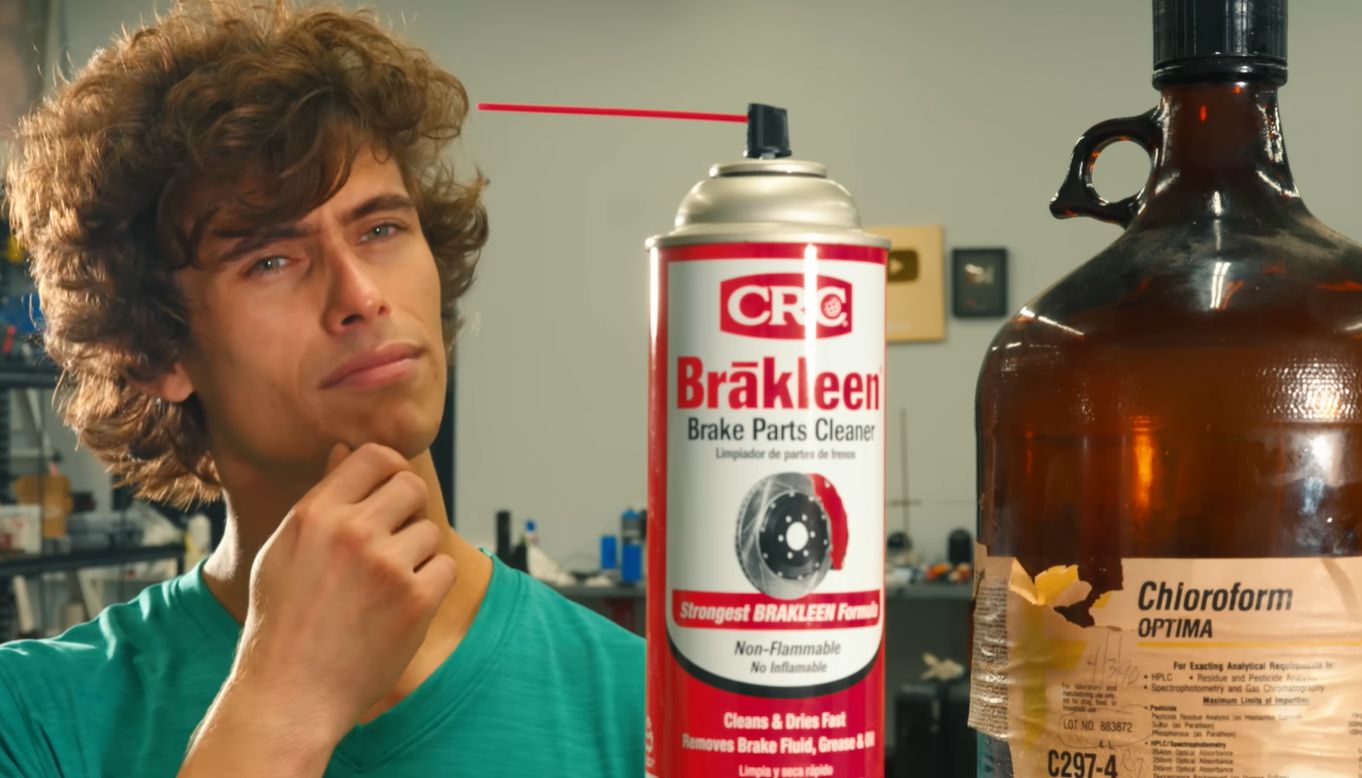
Welding and brake cleaner may seem like ordinary garage companions: one fixes metal, the other removes grime. Put them in the same work area, however, and the combination can become far more dangerous than a scorched rag or an unpleasant smell. Under the wrong conditions, residue or vapor from certain chlorinated brake-cleaner formulas can break down around welding heat and arc radiation, potentially creating highly toxic gases, including phosgene.
That is not a dramatic internet myth invented to frighten people away from weekend projects. It is a serious chemical-safety issue recognized in occupational guidance. The risk is easy to underestimate because brake cleaner is familiar, welding is familiar, and familiarity can make a dangerous shortcut feel like a normal Tuesday.
The central rule is simple: never treat any brake cleaner, degreaser, spray solvent, coating remover, or mystery can as welding-safe without checking the product label and Safety Data Sheet. A clean-looking metal surface is not automatically a chemically safe surface. In this case, “looks dry” is not a reliable safety certification.
Why Welding and Brake Cleaner Can Become a Deadly Combination
Welding creates intense heat, ultraviolet radiation, sparks, fumes, and rapidly changing air currents. Brake cleaner is designed to dissolve oils, grease, brake dust, and other contaminants. That sounds like a helpful partnership until the cleaner contains chlorinated solvents or leaves vapors where hot work takes place.
Certain chlorinated compounds can decompose when exposed to high heat or welding radiation. One possible byproduct is phosgene, a highly toxic gas that can severely injure the respiratory system. Other irritating or corrosive gases may also form. The result is a hazard that does not necessarily announce itself with a giant cartoon skull floating above the workbench. It can be colorless, difficult to recognize, and dangerous before a worker realizes there is a problem.
This is why the issue is bigger than “do not spray something near a flame.” Welding hazards are not limited to fire. A chemical can be nonflammable and still create a severe inhalation hazard when heated or exposed to an arc. In other words, a product may refuse to burn while still behaving like the villain in a shop-safety horror movie.
Not Every Brake Cleaner Is the Same
One of the most dangerous assumptions in a garage is that every can labeled “brake cleaner” has the same ingredients. It does not. Product formulas vary by brand, region, manufacturer, and changing regulations. Some brake cleaners are chlorinated. Others are non-chlorinated. Some formulas may be marketed as low-VOC, fast-drying, heavy-duty, or professional-grade. None of those phrases answers the question that matters before welding: What chemicals are actually inside this can?
Before any hot work, read the label and consult the product’s Safety Data Sheet, commonly called an SDS. Pay special attention to warnings about chlorinated solvents, halogenated solvents, decomposition products, welding, heat, sparks, vapors, toxicity, and respiratory hazards. Ingredients that may warrant extra caution include chlorinated solvent families and compounds commonly used in degreasing applications.
It is also important not to turn “non-chlorinated” into “automatically safe.” Non-chlorinated products may reduce the specific risk of phosgene formation, but they can still contain flammable solvents or produce hazardous vapors. A non-chlorinated cleaner can create a fire or flash hazard around sparks and hot metal. The correct takeaway is not “buy a different can and forget safety.” The correct takeaway is “know the chemistry, remove solvent hazards, and prepare metal using a verified welding-safe process.”
Why “I Can’t Smell Anything” Is a Bad Safety Test
Many shop accidents begin with the phrase, “It smells fine to me.” Unfortunately, the human nose is not an industrial hygiene instrument. Some hazardous gases may have weak warning properties, delayed irritation, or odors that vary from person to person. Smell can be useful as a clue that something is wrong, but it cannot prove that air is safe.
Phosgene is often described as having an odor somewhat like newly cut hay or green corn at lower concentrations, but odor is not a dependable warning system. Waiting for a distinct smell before leaving an unsafe area is like waiting for a seatbelt warning after the crash. It is backwards.
The same caution applies to ventilation myths. A cracked garage door, an open bay, or a fan pointed across the room may make a space feel breezier, but feeling airflow is not the same as controlling a hazardous vapor. Welding fumes and gases can move unpredictably. They may accumulate in low or enclosed areas, drift toward coworkers, or remain in locations where the welder is no longer standing.
The Risk Extends Beyond the Person Holding the Torch
The welder is not the only person at risk. A helper, mechanic, painter, passerby, or employee working nearby may be exposed to the same contaminated air. Someone may be leaning over a workbench, crouching near a vehicle, or entering the area after the weld is finished without realizing a chemical hazard occurred.
This matters especially in small workshops, home garages, repair bays, pits, basements, trailers, enclosed fabrication areas, and other places where air movement is limited. Hazardous vapors do not care who bought the welding helmet. Everyone in the area needs to be considered when planning safe hot work.
Workplace safety rules often require employers to control welding fumes, identify hazardous coatings and cleaners, provide adequate ventilation, and train workers on chemical hazards. Even in a home garage, the same mindset is useful: treat the space like a professional shop, not like a place where a mystery aerosol can gets a free pass because it lives next to a socket set.
How to Create a Safer Welding Workflow
1. Separate cleaning from hot work
Do not clean a part with brake cleaner and then immediately weld it because the surface looks dry. Keep solvent-cleaning tasks away from welding, cutting, grinding, brazing, torches, heaters, sparks, and other ignition or high-temperature sources. Residue and vapor can be more persistent than appearance suggests.
2. Check the product before using it
Read the can. Find the SDS. Look for statements about chlorinated ingredients, hazardous decomposition products, flammability, vapor hazards, and restrictions around heat or welding. When the chemical composition is unclear, treat the product as unsuitable for use near hot work until a qualified source confirms otherwise.
3. Use a verified metal-preparation method
For welding preparation, use methods recommended by the welding-equipment manufacturer, the metal supplier, the coating manufacturer, or a qualified workplace safety professional. Mechanical cleaning methods may be appropriate in some situations, but the right approach depends on the material, coating, metal condition, and work environment.
Do not improvise with random chemicals because they happen to remove grease quickly. Fast is not the same thing as safe. A shortcut that saves three minutes can create a medical emergency that destroys the entire day, the project, and possibly much more.
4. Remove coatings and contamination before welding
Paint, rust inhibitors, galvanizing, adhesives, oils, sealants, coatings, and solvents can all change what is produced during welding. Before starting, inspect the workpiece and its surroundings. The safest weld begins before the helmet drops.
5. Treat ventilation as a control, not a magic spell
Good ventilation and local exhaust are important for welding safety, but ventilation does not make dangerous chemical choices harmless. The strongest control is eliminating the hazardous product from the hot-work area in the first place. Exhaust systems, work positioning, and respiratory protection should be selected through a proper hazard assessment, not guessed at after the first plume appears.
6. Keep aerosol cans and solvent-soaked materials away
Store brake cleaner and other solvents away from the welding zone. Remove solvent-soaked rags, contaminated absorbents, and open containers. Never leave a recently used aerosol can on the bench beside a welding project as though it is merely a spectator. In a shop, every chemical container is part of the scene.
7. Create a pause-and-check habit
Before starting hot work, ask three questions: What is on this metal? What was used to clean it? What does the SDS say? That short pause can prevent a much longer emergency.
Symptoms of Possible Toxic Fume Exposure
Possible signs of exposure to hazardous decomposition gases may include coughing, throat or eye irritation, chest tightness, trouble breathing, nausea, headache, dizziness, or a burning sensation in the nose, throat, or lungs. A particularly dangerous feature of phosgene exposure is that serious respiratory effects may not always be immediate. Someone can feel better briefly and then become much worse later.
Do not assume that mild symptoms mean the danger has passed. Delayed breathing problems can occur after exposure to certain toxic gases. Anyone who may have inhaled fumes from welding near chlorinated solvents should be medically evaluated promptly, even if symptoms seem minor at first.
What to Do If You Suspect Exposure
If you suspect that welding fumes may have mixed with brake-cleaner vapors or another chemical cleaner, stop work immediately. Leave the contaminated area and keep other people away from it. Do not rush back inside to retrieve tools, finish a weld, or become the heroic rescuer in a bad safety training video.
Call emergency services immediately if anyone has difficulty breathing, chest tightness, severe coughing, confusion, collapse, or other serious symptoms. In the United States, call 911 for emergencies. The Poison Help Line at 1-800-222-1222 can also provide immediate expert guidance for chemical exposures. Bring or provide the product container, label, and SDS so medical professionals can identify the chemical involved.
Do not rely on home remedies, internet guesses, or “walking it off.” Chemical inhalation injuries require professional medical advice. The right information delivered early can make a major difference in how responders evaluate the exposure.
Why Professional Shops Need Clear Hot-Work Rules
For businesses, this risk belongs in the written safety program. A solid hot-work policy should identify prohibited cleaners, require SDS access, establish pre-weld inspection steps, control solvent storage, train employees, and make clear who can authorize welding in potentially contaminated areas.
Workers should feel comfortable stopping a job when they do not know what was used on a part. No production deadline is worth gambling with toxic fumes. A supervisor who says “just hit it with the welder” may be saving a few seconds while spending everyone else’s safety budget.
For hobbyists, the same rule applies in plain language: when you do not know what chemical is on the metal, do not weld it. Research first. Clean safely. Prepare correctly. Then weld.
Conclusion: The Can Is Small, but the Hazard Is Not
Combining welding and brake cleaner can create a lethal chemical hazard when chlorinated solvents or contaminated vapors are exposed to welding heat and radiation. The danger is not limited to flames, smoke, or obvious chemical spills. It can involve invisible gases, delayed respiratory injury, and exposure to anyone nearby.
The safest habit is also the simplest: identify every product used around the workpiece before hot work begins. Read the label, review the SDS, avoid chlorinated and unknown cleaners near welding, keep solvents out of the hot-work area, and take any suspected exposure seriously. A clean weld is good. A safe welder is better.
Experience-Based Safety Lessons: What Shops Learn the Hard Way
The following examples are fictionalized composite scenarios based on common shop-safety lessons and public occupational-safety guidance. They are not individual medical case reports.
The “It Was Just a Quick Spray” Lesson
A mechanic is preparing a small bracket for a repair. The metal is greasy, the job is behind schedule, and a can of brake cleaner is within arm’s reach. The cleaner is sprayed onto the part, wiped quickly, and followed by welding because the surface appears dry. This is the kind of sequence that feels ordinary in a busy garage: spray, wipe, weld, move on.
The lesson is that the safety decision happened before the first spark. Nobody stopped to ask what was inside the can, whether the vapor had cleared, whether the product was compatible with hot work, or whether residue remained in seams and tight areas. The danger was not caused by carelessness in the dramatic movie sense. It was caused by a routine shortcut that did not feel important until it became very important.
The “We Have Always Used This Product” Lesson
Another common situation involves a shop that has used the same brand name for years. Workers assume they know the product because the label design looks familiar. But product formulas can change. Different versions may be sold in different regions. A can with a similar name can contain different ingredients from an older can sitting on a shelf.
The real lesson is that brand familiarity is not chemical knowledge. A product name is marketing. An SDS is safety information. Shops that treat labels and SDS documents as part of the pre-job check reduce the odds that old habits will quietly become new hazards.
The “The Garage Door Was Open” Lesson
People often believe an open garage door solves every fume problem. It does not. Airflow may be poor near the floor, behind a vehicle, under a lift, inside a trailer, or around crowded equipment. A fan can move vapors without removing the hazard. It may even send fumes toward another person who has no idea what is happening.
The experience-based takeaway is that ventilation is important, but it is not permission to weld around unknown chemicals. The first choice should be removing the solvent hazard from the process. Fresh air helps, but it should not be asked to perform magic.
The “No One Wanted to Slow Down” Lesson
Many incidents have a social component. A junior worker notices a cleaner was used but does not want to sound inexperienced. A hobbyist worries that asking questions will make them look overly cautious. A supervisor wants the vehicle finished before the next appointment. Everyone sees the schedule. Nobody sees the chemical risk clearly enough to stop the job.
The better culture is one where stopping work is treated as skill, not weakness. The most professional sentence in a workshop may be, “I do not know what is on this metal, so I am not welding it yet.” That sentence can prevent an exposure, protect coworkers, and turn a potentially tragic event into a mildly inconvenient delay. Mild inconvenience is an excellent trade for keeping lungs functional.
The “Symptoms Seemed Small at First” Lesson
Toxic gas exposures can be deceptive. A person may cough, feel throat irritation, step outside, and decide they are probably fine. That is why suspected exposure should never be dismissed simply because someone appears better after leaving the area. Delayed respiratory effects are one reason prompt medical evaluation and accurate product information matter.
The practical lesson is simple: do not diagnose chemical exposure from a workbench. Stop the work, leave the area, get qualified help, and provide the product label or SDS. The goal is not to win an argument about whether the fumes were “really that bad.” The goal is to make sure no one pays for a shortcut with their health.