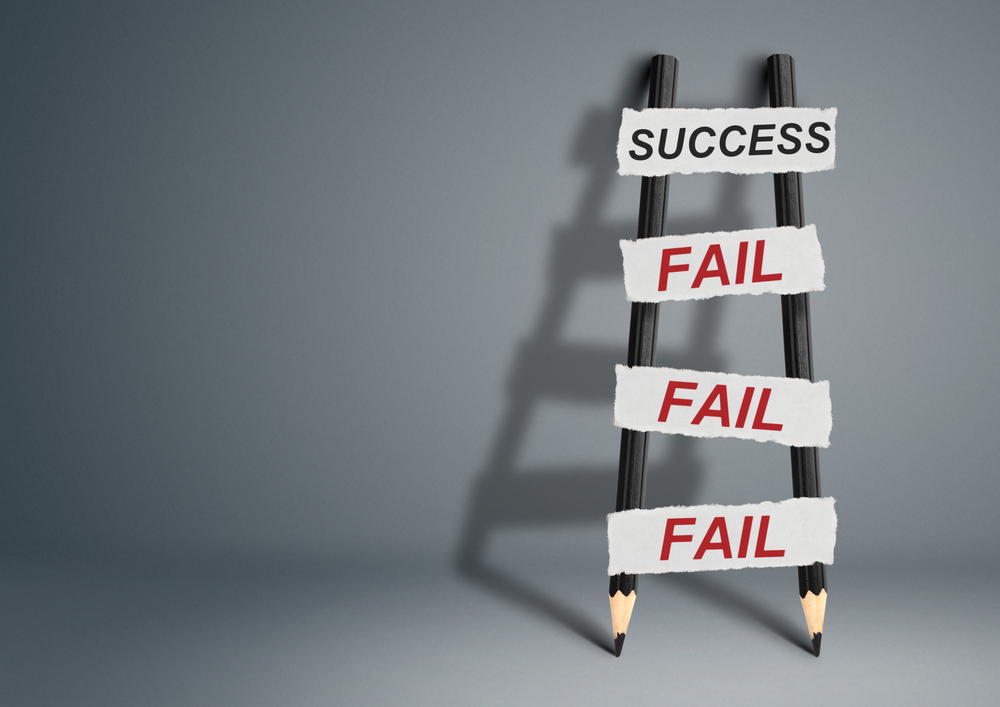
If you hang around founders long enough, you’ll notice something slightly alarming: they talk about failure the way most people talk about coffee.
“We burned through our first MVP.” “Our first idea totally flopped.” “The launch was a disasterbut we learned a ton.”
To outsiders, that sounds like chaos. To entrepreneurs, it’s Tuesday.
The mindset of an entrepreneur isn’t about avoiding failure at all costs. It’s about using small, calculated failures as fueldata points on the way to something that actually works.
In this world, “failure is an option” not because founders enjoy pain, but because they know it’s the price of real innovation.
In this article, we’ll unpack why failure plays such a big role in entrepreneurship, how a growth mindset changes everything, and how you can turn your own missteps into unfair advantages in business.
What we usually get wrong about failure
Many of us grow up in environments where failure is treated like a permanent label. You fail a test, you’re “not good at math.”
You mess up at work, you’re “not management material.” The lesson is simple: avoid failure, even if it means avoiding risk.
Entrepreneurship flips that script. Research on entrepreneurial learning shows that failure is often a crucial part of the processespecially for people who go on to build successful companies later.
Founders who recover from setbacks tend to come back with sharper judgment, better strategies, and a more realistic view of their markets.
At the same time, failure still carries stigma, even in highly entrepreneurial cultures like the United States. Studies point out that founders can feel social isolation and judgment after a venture collapses, which can make it harder to try again.
So if failure is both painful and valuable, the question becomes: how do entrepreneurs think differently so they can survive itand actually use it?
Inside the entrepreneurial mindset
At the heart of the entrepreneurial mindset is one big belief:
skills and results can be improved over time. That’s the core idea of a growth mindset, a concept that’s been widely studied in education, performance, and entrepreneurship.
Research on entrepreneurial growth mindset shows that people who believe they can develop their abilities are more likely to take action, experiment, and keep going after a setback.
In some studies, even short mindset training made participants more willing to launch and grow ventures compared with control groups.
Key traits of the entrepreneurial mindset
- Curiosity over certainty. Entrepreneurs ask “What might work?” instead of insisting “I already know.”
- Action over perfection. They default to testing in the real world, not debating in long meetings.
- Resilience over reputation. They expect things to go wrong and plan for the bounce-back.
- Optimistic realism. They believe things can improve, but they don’t sugarcoat the numbers.
This mindset doesn’t magically make failure fun. It just makes it useful.
Why “failure is an option” (and actually a feature)
In a lab, you run experiments. Most of them “fail,” in the sense that they don’t confirm your original guess. Yet nobody calls the scientist a loser.
You say, “We got results,” and move on.
Great founders treat the market the same way. They use each “no,” each flop, and each awkward pivot as information. In Lean Startup methodology, this is formalized as the
build–measure–learn loop: you ship a minimum viable product (MVP), measure how real customers respond, then learn what to change next.
When you think this way, failure becomes:
- Feedback. Every misfire reveals what customers don’t wantor how they actually behave versus what they say.
- Risk control. Small, fast experiments help you “fail cheap,” before you’ve burned years and your entire budget.
- Signal of movement. If you never fail at anything, you might simply not be trying anything new.
In the United States alone, there are tens of millions of entrepreneurs, and many have experienced one or more failed ventures before finding success.
The difference between those who stop and those who eventually succeed often comes down to what they do with that first big crash.
Importantly, “failure is an option” does not mean “go wild, consequences don’t matter.” It means: design your bets so that if they fail, you get a lesson you can afford.
Productive failure vs. reckless failure
Not all failure is created equal. Some failures set you up for a smarter second act. Others… are just expensive and avoidable.
What productive failure looks like
- You were testing a clear hypothesis. For example: “If we shorten our onboarding from 20 minutes to 5, activation will increase by 20%.”
- You limited the downside. You tested with a subset of users, kept budgets small, or used a prototype.
- You measured real outcomes. You tracked sign-ups, revenue, churn, or other concrete metrics, not just vibes.
- You ran a post-mortem. Afterwards, you analyzed what happened and recorded lessons for next time.
What reckless failure looks like
- All-in on a guess. You poured everything into a product nobody had seen or validated.
- No customer reality check. You built for months based only on your own opinion or a few friends’ feedback.
- No learning loop. After things go wrong, you shrug and say, “The market just wasn’t ready.”
Entrepreneurs still make reckless mistakesit happens. The mindset shift is that they’re determined not to make the same reckless mistake twice.
Leaders who treat failure as a feature, not a bug
Plenty of well-known innovators openly credit failure as a core part of their success.
Business leaders from technology and retail to manufacturing often highlight that repeated trial and error, with lots of dead ends, is how they arrived at breakthrough products.
Some companies even formalize “permission to fail.” One global retailer introduced a playful internal initiative where employees receive a symbolic “permission to make mistakes” card, signaling that experimentation is encouraged and missteps won’t automatically be punished. The goal is to keep a big company feeling scrappy, so people feel safe trying new ideas instead of playing it safe in endless meetings.
At the same time, recent research highlights that not everyone gets treated equally when they fail. A 2025 study found that after a failed startup, female founders in particular were significantly less likely to get funding for their next venture and raised far less capital than male peers with the same track record.
The lesson for all of us: the entrepreneurial mindset has to go hand in hand with changing how we, as investors, partners, and colleagues, interpret other people’s failures. If we only reward certain groups for “failing forward,” we leave a lot of talent on the table.
How to turn your own failures into fuel
So how do you actually apply this in your own business or side hustle? Here’s a practical playbook.
1. Do emotional first aid (you’re not a robot)
Before you philosophize about “valuable lessons,” allow yourself to be human. Losing a client, shutting down a product, or watching a launch flop hurtsfinancially and emotionally.
Take a beat. Talk to trusted peers or mentors. Go for a walk. Write down what you’re feeling instead of pretending you’re fine. Denying the emotional side usually just pushes it into your next decision.
2. Run a clean post-mortem
Once you can think clearly, treat the failed project like a case study:
- What were we trying to achieve?
- What assumptions did we make?
- Which of those assumptions were wrong?
- What did the data (or customers) actually tell us?
Document this somewhere you and your team can revisit. Future-you will thank past-you for the notes.
3. Extract the assets
Even a failed venture leaves behind “assets”:
- Code, designs, or processes that can be reused.
- Contact lists and relationships you’ve built.
- New skillssales, pitching, negotiation, UX research, and more.
Many founders later realize that their second or third company moved faster because they recycled assets from the first one.
4. Redesign your bets
Now use what you learned to redesign how you take risks:
- Can you test new ideas with smaller, cheaper experiments?
- Can you get real customer feedback earlier?
- Can you build in clearer metrics so you know sooner when something isn’t working?
This is how failure stops being a random painful event and becomes a deliberate input into better strategy.
5. Tell the story on your terms
Finally, practice explaining your failure like a pro. Not as a dramatic confession, but as a narrative:
“We launched X, here’s what we believed. The market showed us Y instead. We shut it down, and here’s how we apply those learnings today.”
Investors, partners, and employees don’t expect you to be perfect. They do expect you to be honest, thoughtful, and adaptable.
Lessons from the trenches: An entrepreneur’s experience
To make this mindset concrete, let’s walk through a composite story based on patterns from real founders.
Meet Alex, a software engineer who decided to launch a startup helping small gyms manage memberships. Version one of the product looked beautiful. The dashboard had charts. There was a slick onboarding flow. There were three pricing tiers, all named after mythological creatures because… branding.
There was just one small problem: almost no one used it.
Alex had skipped the boring partscustomer interviews, simple prototypes, and ugly but functional tests. Instead, they built what they thought gyms needed. After a few months of slow sales, shrinking savings, and ghosted demos, the company quietly shut down.
For a while, Alex took it personally. “Maybe I’m not cut out for this. Real entrepreneurs don’t mess up like this.” Only later, after talking to other founders, did Alex realize: this story is extremely normal.
The turning point came when Alex treated the failure like a product itselfsomething to analyze, not just feel bad about. A mentor asked three pointed questions:
- “Where did your assumptions come from?”
- “What surprised you the most?”
- “What would you test first next time?”
Alex realized that the gyms who did show interest all wanted something embarrassingly simple: automatic billing and a way to freeze memberships when people travel. They didn’t care about dashboards or mythological creatures. They wanted invoices that went out on time and fewer awkward conversations at the front desk.
Armed with that insight, Alex launched a second attemptmuch smaller in scope. Instead of building a full platform, they created a lightweight billing tool that integrated with software gyms already used. The first version wasn’t pretty, but customers actually paid for it.
This time, Alex:
- Charged from day one to see if the problem was real enough for people to spend money on.
- Talked to customers every week, even when the feedback stung.
- Ran small experiments: a new pricing structure here, a different onboarding email there.
Did everything go smoothly? Of course not. A key integration broke right after onboarding the biggest client. A confusing update caused a spike in support tickets. But the mindset had shifted: mistakes were now part of the process, not proof of incompetence.
Over time, Alex also learned to see personal growth as a metric. They became better at saying, “I don’t know, but I can find out.” They got faster at shipping small changes instead of obsessing over a perfect release. They also became more empathetic toward other foundersknowing that behind every “overnight success” headline there is usually a collection of things that did not work, sometimes spectacularly.
The most important lesson Alex took away was this: failure is only final if you stop showing up. As long as you’re willing to process what happened, extract the learning, redesign your bets, and try again with a little more wisdom, failure is not a dead end. It’s an optionone of many paths you take while you’re finding the one that works.
Conclusion: Failure as a strategic option
The entrepreneurial mindset doesn’t glorify failure, but it refuses to waste it.
When you treat failure as an optionnot a life sentenceyou give yourself more room to experiment. You can run small tests instead of betting the company every time. You can accept that some ideas will flop, and that’s not a sign you should never build again. It’s a sign that you’re in the arena, learning in real time.
Whether you’re launching your first side hustle or leading a fast-growing startup, the question isn’t “How do I avoid failing forever?” It’s “How do I design my failures so they make me smarter, faster, and more resilient?”
That’s the mindset of an entrepreneur: courage to act, humility to learn, and just enough stubbornness to turn a few painful missteps into your most powerful competitive advantage.