If you grew up watching The Munsters, you probably remember two things with crystal clarity:
the family’s towering, absurdly cool Munster Koach… and Grandpa’s coffin-shaped dragster,
the DRAG-U-LA (also lovingly yelled as “Dragula!” by anyone who’s ever worn a black band tee).
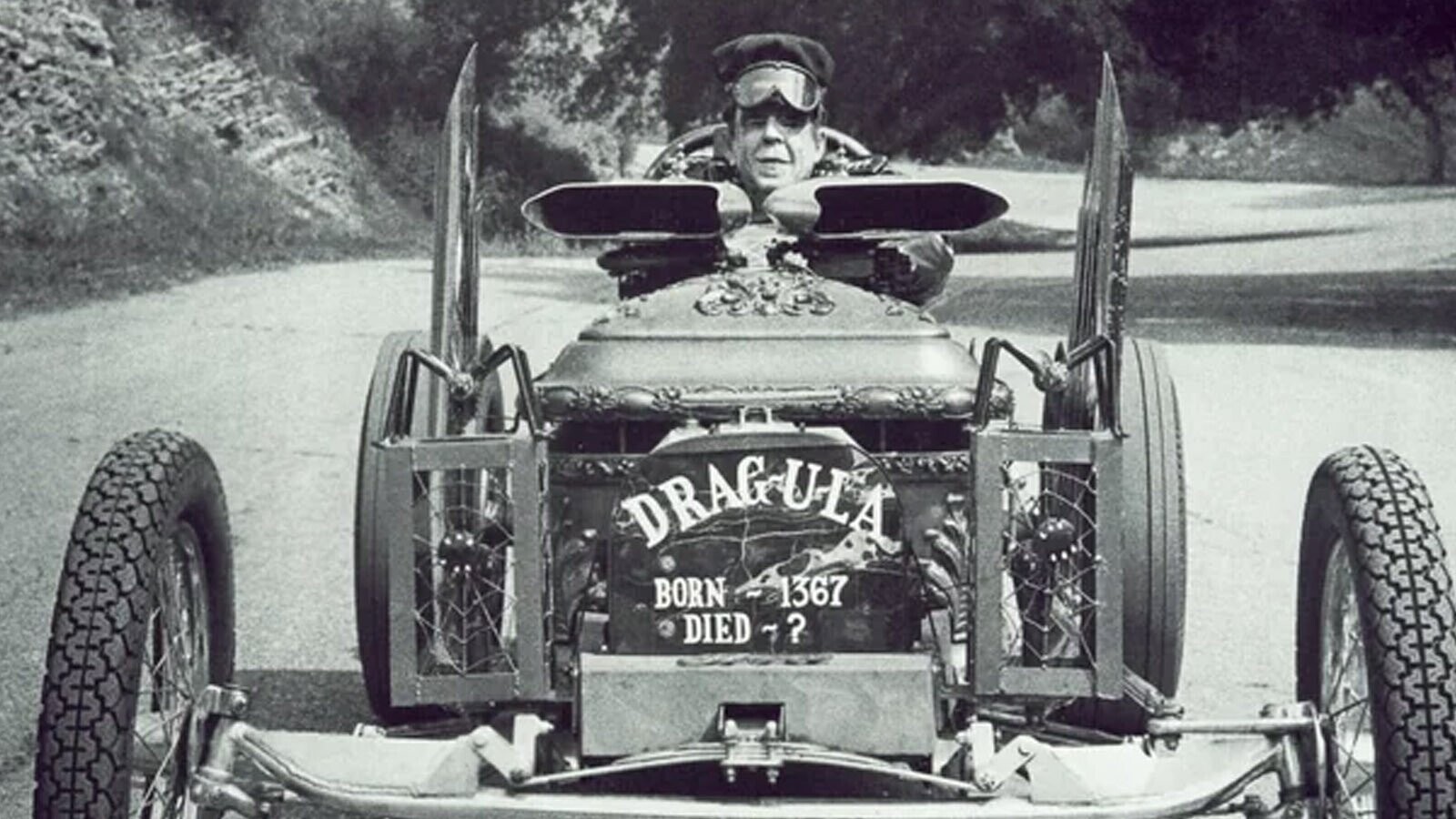
On screen, the DRAG-U-LA is a punchline with horsepowera vampire grandpa builds a drag car out of a coffin
and then casually takes it to the strip like he’s running errands. Off screen, it’s a small miracle of
mid-’60s Hollywood craftsmanship: a real, functional front-engine dragster wrapped in a gothic art project,
built fast, filmed smart, and then turned into a pop-culture fossil that refuses to stay buried.
Why the DRAG-U-LA Still Feels Like a Halloween Decoration That Can Hurt Your Feelings
The DRAG-U-LA wasn’t just a “TV prop with wheels.” It was built to look like a dragster that crawled out of a
haunted graveyardand then actually behave like one. The concept was simple, in the same way juggling chainsaws is simple:
take a coffin, bolt it onto a drag-style chassis, add a V8, and sprinkle on enough spooky details to make your PTA
meeting feel like a séance.
The car was designed by famed show-car illustrator Tom Daniel while working in the orbit of George Barris and
Barris Kustom Industries, the legendary Southern California shop that cranked out some of TV’s most iconic vehicles.
Barris’ crew then turned those drawings into a running machine for the show. The result was a coffin-bodied dragster
with a driver tucked behind the engine, a bubble canopy, and styling cues that screamed “gothic hot rod” decades
before that was a merch category.
Context Matters: “Hot Rod Herman” and the Problem Grandpa Had to Solve
In the episode “Hot Rod Herman” (first aired May 27, 1965), Herman Munster loses the Munster Koach in a drag race bet.
Grandpa’s response is basically: “Fine. I’ll build something worse.” The DRAG-U-LA is introduced as the solutiona
custom dragster meant to win the Koach back at the strip.
That plot is important because it explains why the DRAG-U-LA had to look extreme and sell the gag immediately.
Viewers needed to understand, in seconds, that this wasn’t a normal hot rod. It was a Munster hot rod:
part monster movie, part garage-built lunacy, part “what if Dracula subscribed to Hot Rod magazine?”
Behind the laughs: a real production constraint
TV schedules were tight, budgets were real, and the car needed to work for multiple camera setups. It had to be:
(1) visually readable in black-and-white, (2) safe enough for staged performance, and (3) rugged enough to move under
its own power for the shots that demanded it. That’s a nasty checklist for something that also needs to look like a
coffin with an attitude problem.
The Spookiest Part Wasn’t the ExhaustIt Was Buying the Coffin
Here’s where behind-the-scenes reality gets delightfully weird. According to Barris’ project engineer Richard “Korky”
Korkes (recounted years later), getting a coffin wasn’t as simple as “Hello, one coffin please, extra aerodynamic.”
The story goes that selling a coffin without a death certificate was treated as illegal or at least restricted at the
time, so the team arranged a hush-hush purchase from a funeral home in North Hollywoodcash paid, coffin left out back,
picked up after dark.
It’s the kind of tale you couldn’t script better: the car literally begins with a covert coffin acquisition, like a
noir film where everyone’s wearing coveralls and carrying a wrench instead of a revolver. Whether you view it as a
hard rule or an over-cautious funeral-home policy, the point is the same: even sourcing the main “body” of the car had
an eerie, clandestine vibe.
Why this detail matters for the build
The coffin wasn’t just decorationit dictated proportions, driver placement, and the entire silhouette. Once you
commit to “coffin as body,” you’re engineering around a shape that was never designed for cornering, cooling, or
camera angles. The coffin becomes the boss of the project. Everyone else just works there.
From Coffin to Dragster: How You Make a “Prop” That’s Also a Machine
The DRAG-U-LA’s construction blended show-car artistry with drag-race logic. The body was built around a coffin form
(often described as fiberglass in later documentation), mounted to a tubular frame with a front-engine dragster layout.
That layout matters: it creates the classic long-nose, big-motor stance that reads “drag racing” instantly, even to
viewers who couldn’t tell a carburetor from a coffee maker.
The engine choice: not just for speed, but for packaging
Period sources and later cataloging commonly describe the DRAG-U-LA with a Ford small-block V8often cited as a 289
cubic-inch Mustang V8 making around 350 horsepowerpaired with a four-speed manual in some accounts. The key takeaway
isn’t the bench-racing brag sheet; it’s that the car had legitimate muscle and was built to be functional, not purely
decorative.
In practical terms, a compact V8 made sense: it fit the chassis, it was serviceable, and it delivered the sound and
presence that made filming feel authentic. When you see a dragster-like car, you expect noise, vibration, and that
slightly dangerous “don’t stand too close” energy. A real engine gives you that for free.
Gothic details that also solved production problems
- Bubble canopy: A dramatic sci-fi shape that also helps frame the driver cleanly for camera.
- “Organ pipe” exhaust: Zoomie-style pipes styled like gothic organ pipesloud, readable, unforgettable.
- Tombstone/grave-marker front: A high-contrast focal point that pops in black-and-white filming.
- Lantern-style lamps and spider motifs: Texture and silhouette that stay legible under harsh studio lighting.
This is the genius of the build: the “spooky” parts aren’t random costume jewelry. Many of them make the car easier to
shoot, easier to recognize, and easier to remember.
Filming Tricks: Making a Dragster Look Fast, Safe, and Funny
Classic TV car scenes are a blend of practical movement and cinematic suggestion. You don’t always need a full-bore
quarter-mile run to convince an audience. You need the right angles: close shots of the engine, the rear slicks, the
driver under the canopy, and the crowd reacting like they just saw a werewolf parallel park.
The DRAG-U-LA’s layout helped with that. With the driver set back behind the engine, the car looks longer and more
aggressive. The coffin body gives a single, clean “read” at a glance. The styling tells you what the joke is before
anyone speaks: Grandpa built a drag car out of a coffin, and it’s going to work because this is The Munsters,
a universe where weirdness is basically a renewable resource.
Black-and-white design: the secret ingredient
Because the show was shot in black-and-white, contrast and shape mattered more than subtle color. High-contrast
elementsthe grave marker up front, spiderweb details, bright highlights on pipes and trimtranslate beautifully on
monochrome film. That’s why the DRAG-U-LA looks “graphic” and bold even today: it was designed to read instantly.
Life After the Show: The DRAG-U-LA Refuses to Stay in Its Grave
One reason the DRAG-U-LA feels legendary is that it didn’t simply vanish into a studio warehouse. The car had a second
life in exhibitions, collections, and auction culturethe afterworld where iconic props become traveling relics.
Documentation and auction listings describe restorations, displays, and appearances that kept the car in public memory.
It also appeared beyond the TV episode itself, including association with the 1966 film Munster, Go Home! in
various accounts. Over time, multiple replicas and look-alikes have circulated as wellsome built for promotions, some
for charity events, some for collectors who want to own a piece of televised weirdness without needing the original’s
provenance.
Replicas and “inspired builds” are part of the legacy
There’s the original DRAG-U-LA story… and then there’s the wider “coffin car” universe it helped popularize.
Museums and listings have noted that some promotional versions used different powerplants (often Chevrolet-based),
while the lore of the original centers on a Ford V8. That split actually makes sense: once a car becomes an icon,
people recreate the look first, then tailor the mechanicals to what’s available, drivable, and maintainable.
Pop Culture Aftershock: From Grandpa’s Garage to Rob Zombie’s Amp Stack
The DRAG-U-LA didn’t just inspire car folksit escaped into music and broader pop culture. Rob Zombie’s 1998 song
“Dragula” explicitly references the coffin dragster, turning a niche TV-car gag into a global head-bang title.
That’s the ultimate proof the design worked: people who’ve never watched a single episode can still recognize the vibe.
And the car’s influence continues through model kits, die-casts, event appearances, and YouTube walkaroundseach one
keeping the legend alive for new audiences who discover it the way all great weird things are discovered:
accidentally, at 1:00 a.m., and then immediately shared with a friend like contraband joy.
What the DRAG-U-LA Teaches About Great Design (Even If You’re Not Building a Coffin Car)
1) Commit to a silhouette
The coffin shape is the brand. You could remove half the details and still know what it is. Great designs work
at “thumbnail size,” and the DRAG-U-LA passes that test with fangs out.
2) Make the joke functional
It’s not just a coffin on wheelsit’s a dragster layout with real mechanical intent. That authenticity is what makes
the joke land. Even comedy props benefit from engineering credibility.
3) Design for the medium
The DRAG-U-LA was built to look incredible on black-and-white television. High contrast, bold shapes, readable
features. It’s a masterclass in designing for the camera, not just the garage.
Conclusion: A Spooky Build That Became Immortal
The DRAG-U-LA is one of those rare creations that works on every level: as a story gag, as a piece of automotive
artistry, and as a functional machine. It’s spooky, yesbut the real thrill is how cleverly it was built.
Between the coffin-sourcing lore, the dragster engineering, and the camera-friendly gothic details, the behind-the-scenes
story is as entertaining as the episode itself.
In other words: Grandpa Munster didn’t just build a hot rod. He built a legendand Hollywood’s craftspeople made sure
it could actually roll out of the garage without falling apart like a cheap plastic skeleton.
Experience Add-On (500+ Words): What It Feels Like to Build Something “DRAG-U-LA-Spooky” Behind the Scenes
Anyone who has ever tried to build a spooky prop that also has to functionmove, light up, survive handling,
or endure an event crowdwill immediately understand why the DRAG-U-LA is such a flex. The funny part is that the
“spooky” aesthetic is usually the easy half. The hard half is making the creepy thing behave like a reliable thing.
A coffin-shaped dragster is an extreme example, but the same lessons show up when you’re building a haunted-house
door that has to open smoothly, a Halloween animatronic that can run for six hours, or a show car that has to look
perfect even when it’s idling in traffic.
First comes the material reality check. Fiberglass looks magical in photos, but in the workshop it’s more like
a relationship that demands constant attention: sand it, fill it, sand it again, and accept that dust will become a
food group. Anything coffin-shaped introduces tight curves and awkward edges, which means you’ll spend a shocking
amount of time solving problems that sound silly out loudlike “Where do we hide the fasteners so they don’t ruin the
illusion?” or “How do we reinforce this corner so it doesn’t crack when someone inevitably grabs it like a suitcase?”
On film sets and at live events, people grab things. Always.
Then there’s the “camera versus eyeball” problem. What looks detailed up close can vanish on camera, especially under
harsh lighting. That’s why builders learn to exaggerate: deeper textures, higher contrast, bolder shapes. If you’re
making spiderweb patterns or faux grave-stone lettering, you don’t do it the way nature does ityou do it the way
a lens reads it. The DRAG-U-LA’s gothic cues work because they’re legible from a distance, which is exactly what you
need when the audience is on a couch and the action is framed in a rectangle.
Next is safety disguised as style. On spooky builds, you’re constantly hiding practical solutions inside theatrical
choices. A lantern might be chosen because it looks old-world, but it also provides a perfect “housing” for a modern
light source and wiring. A decorative pipe might conveniently become a protective barrier for something hot or sharp.
Even the bubble canopy conceptdramatic, futuristicalso creates a clean boundary that says, “Driver lives here,” which
helps staging and blocking. In DIY builds, that translates to simple rules: sharp edges get rounded, anything that gets
touched gets reinforced, anything that gets hot gets shielded, and everything gets tested twice because the third test
will happen in front of strangers with phones.
Finally, there’s the emotional experience that never shows up in specs: the moment your ridiculous idea becomes real.
The first time a spooky build rolls forward under its own power (or just lights up correctly), you get this jolt of
disbelieflike, “Wait, we actually did it.” It’s equal parts pride and terror, because now the project is no longer a
concept. It’s a thing that can break, attract attention, and demand maintenance. That’s the hidden cost of building
icons: once something is memorable, it has to keep performing. The DRAG-U-LA’s continued life in collections, events,
and replicas makes perfect sense from a builder’s perspectivebecause when a design lands this hard, people don’t want
it to disappear. They want to see it again. They want to stand next to it. They want to build their own version.
So if you’ve ever built a Halloween prop, a show car, a cosplay accessory, or even just a haunted centerpiece that had
to survive a party, you already share a tiny slice of the DRAG-U-LA experience: the spooky part is the fun hook. The
real work is making the hook hold.