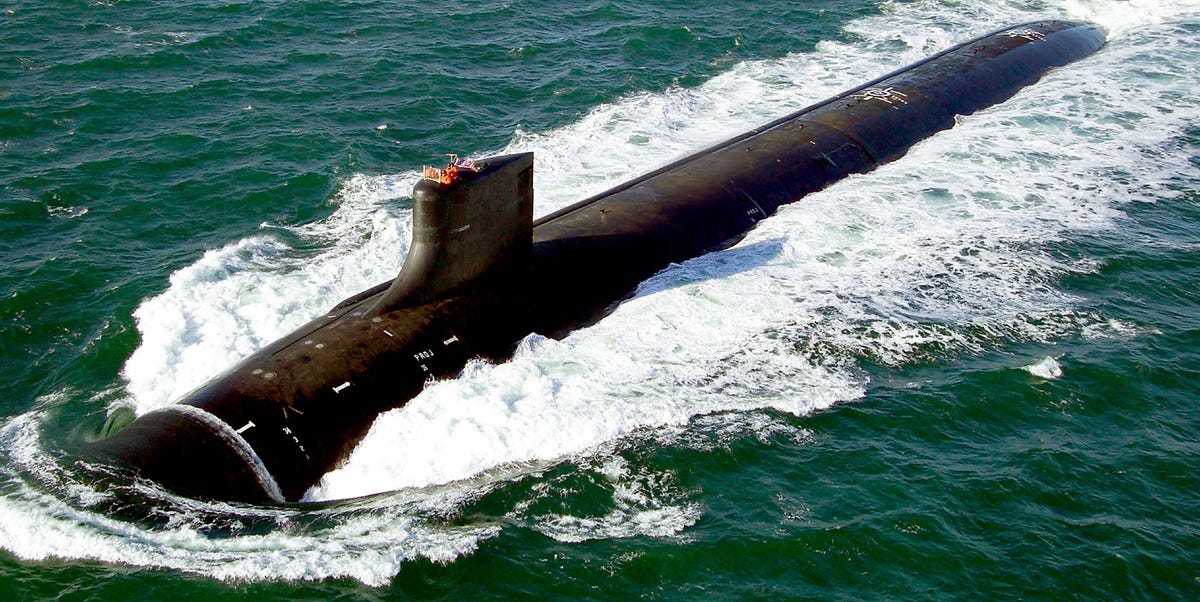
The U.S. Navy’s next-generation attack submarine, currently known as SSN(X), is one of those defense programs that sounds like it escaped from a classified movie trailer: faster, quieter, more heavily armed, built for unmanned systems, and designed for a threat environment that will not arrive politely with a calendar invite. Yet the real story is less Hollywood and more shipyard math, congressional oversight, industrial bottlenecks, nuclear propulsion, and a very expensive race to preserve America’s undersea edge.
At the simplest level, SSN(X) is intended to become the successor to the Virginia-class attack submarine, the workhorse nuclear-powered attack submarine the Navy has been buying since the late 1990s. But “successor” undersells the ambition. Public Navy and congressional documents describe a boat meant to blend the best traits of several submarine families: the speed and payload of the Seawolf class, the stealth and sensors of the Virginia class, and the long service life and operational availability associated with the Columbia-class ballistic missile submarine program. In other words, the Navy wants a submarine that can sneak like a shadow, sprint like a predator, carry more tools than a hardware store, and stay useful for decades. No pressure.
What Is SSN(X)?
SSN(X) stands for the Navy’s Next-Generation Attack Submarine. In Navy language, “SSN” means a nuclear-powered attack submarine, and the “X” means the final design has not yet been determined. That “X” is important. It is not a superhero flourish. It means this program is still in development, with many details intentionally undisclosed or still being refined.
Attack submarines are not ballistic missile submarines. Their job is not to sit quietly as part of the nuclear triad. Instead, they are the Navy’s underwater multitools. They hunt enemy submarines and surface ships, collect intelligence, support special operations forces, launch land-attack missiles, help protect carrier strike groups, conduct surveillance, and perform mine warfare missions. If a carrier is the Navy’s floating airport, an attack submarine is the quiet figure in the corner who knows everything and says very little.
The Navy already operates three main SSN families: Los Angeles-class boats, the small but powerful Seawolf class, and the Virginia class. The Los Angeles boats are aging out after decades of service. Seawolf submarines are famously capable but extremely expensive and limited to only three hulls. Virginia-class submarines are modern, flexible, and still in production, but the Navy is already planning for what comes next because submarine design is a marathon measured in decades, not a quick shopping trip.
Why the Navy Wants a New Attack Submarine
The Navy’s case for SSN(X) begins with a blunt reality: undersea competition is getting harder. Near-peer adversaries are improving submarines, sensors, missiles, unmanned systems, and anti-submarine warfare networks. The ocean is still huge, but it is not getting simpler. Modern submarines must survive in waters filled with better listening systems, smarter mines, longer-range weapons, and more persistent surveillance.
That is why the Navy wants SSN(X) to provide greater speed, increased horizontal payload capacity, improved acoustic and non-acoustic signatures, higher operational availability, and the ability to work with off-board vehicles and sensors. Translated into civilian English: it needs to move quickly, carry more weapons and mission gear, be harder to detect, spend more time ready for missions, and act as a mothership for unmanned systems.
This matters because future undersea warfare will likely involve more than one submarine quietly stalking another. It may involve networks of sensors, unmanned underwater vehicles, seabed systems, electronic warfare, cyber-resilient communications, and long-range precision weapons. SSN(X) is being shaped for that world.
The Big Design Idea: Seawolf Muscle, Virginia Stealth, Columbia Endurance
Public descriptions of SSN(X) often sound like the Navy is trying to build a “greatest hits” album of American submarine design. The Seawolf class is remembered for speed, deep-ocean performance, and weapons capacity. The Virginia class is valued for stealth, modularity, sensors, special operations support, and adaptability. The Columbia class, although a ballistic missile submarine rather than an attack submarine, brings lessons about long service life, quieting, and availability.
If SSN(X) really combines those traits, it will almost certainly be larger than today’s baseline Virginia-class submarines. Public congressional analysis has already suggested the design could be bigger than the original Virginia class and possibly larger than the original Seawolf design. That would not be surprising. Submarines tend to grow as the Navy adds quieter machinery, larger payload spaces, more power-hungry electronics, improved sensors, and room for future upgrades. The submarine diet plan, apparently, is not going well.
Size, however, is not just about bragging rights. A larger hull may allow more weapons, more unmanned systems, more electrical power, improved quieting technologies, better habitability, and growth margins for future systems. The tradeoff is cost. In shipbuilding, every extra foot of ambition arrives with a bill, usually wearing a very serious expression.
What Capabilities Are Expected?
1. More Speed and Mobility
The Navy has publicly emphasized greater speed as a desired SSN(X) attribute. Speed is not just about chasing another submarine like an underwater police drama. It affects how quickly a boat can move between theaters, reposition during a crisis, escort high-value forces, or reach a patrol area before events turn ugly.
2. Increased Payload Capacity
Payload is one of the biggest themes. Current Virginia-class Block V submarines add the Virginia Payload Module, which increases missile and mission payload capacity. SSN(X) is expected to go further by increasing horizontal payload capacity, meaning more capacity associated with the torpedo room and mission spaces rather than only vertical launch tubes. That could support torpedoes, missiles, mines, special mission equipment, and unmanned underwater vehicles.
3. Better Stealth
Quietness remains the crown jewel of submarine warfare. If an adversary cannot find you, it has a hard time targeting you. Public documents refer to improved signatures, including acoustic and non-acoustic signatures. Acoustic quieting means reducing sound. Non-acoustic signatures may involve reducing other detectable traces, but public details are limited for obvious reasons. Nobody publishes the recipe for invisibility and then acts surprised when everyone bakes the cake.
4. Integration With Unmanned Systems
One of the most important clues about SSN(X) is its expected ability to coordinate with remote autonomous systems, off-board vehicles, and sensors. This could make the submarine a command node for a wider undersea network. Instead of one crewed submarine doing everything alone, SSN(X) could deploy or coordinate unmanned vehicles that scout, monitor, map, deceive, relay information, or carry specialized payloads.
5. Higher Operational Availability
The Navy does not just need powerful submarines. It needs submarines available for deployment. Maintenance delays have been a persistent challenge across the submarine force. SSN(X) is expected to emphasize operational availability, meaning the design should help keep boats ready and reduce time stuck in maintenance. A submarine in dry dock may be impressive, but it does not deter much except perhaps a welder’s lunch break.
When Will SSN(X) Arrive?
The schedule has already moved. Earlier planning discussed first procurement in the 2030s, but the Navy’s FY2025 budget submission deferred the first SSN(X) from FY2035 to around FY2040 because of broader budget limits. That delay is a major story. It means the Virginia class will remain the backbone of the attack submarine force for longer, and the design industrial base must bridge a gap between the Columbia-class design work and SSN(X).
That gap matters because designing nuclear submarines requires rare expertise. Naval architects, nuclear propulsion specialists, acoustic engineers, systems integrators, welders, suppliers, and shipyard managers do not appear overnight like apps on a phone. If the design workforce goes cold, restarting it becomes harder and more expensive. The Navy says it will manage the challenge, but Congress is watching closely.
How Much Will It Cost?
No one should expect SSN(X) to be cheap. Public estimates have suggested future unit costs could land well above current Virginia-class submarines. Earlier congressional analysis cited Navy and Congressional Budget Office estimates in the range of several billions per boat, with CBO estimates higher than the Navy’s. More recent discussions continue to frame SSN(X) as a costly but strategically important program.
The FY2026 budget request included about $622.8 million in research and development funding for SSN(X). That is not procurement money for a finished submarine; it is the funding used to refine technologies, design work, propulsion development, systems engineering, and early program maturation. In other words, the Navy is still paying for the blueprint, not yet backing the finished boat into the driveway.
The Industrial Base Problem
SSN(X) cannot be understood without the submarine industrial base. U.S. nuclear-powered ships are built by two shipyards: General Dynamics Electric Boat and HII’s Newport News Shipbuilding. Around them is a nationwide web of suppliers, many of which provide highly specialized components. Some of those suppliers are sole-source providers, meaning there may be no easy backup if production slips.
The Navy is already trying to build Columbia-class ballistic missile submarines and Virginia-class attack submarines at demanding rates. The long-term goal has been to support production of one Columbia-class submarine and two Virginia-class submarines per year. That is a huge workload. Add SSN(X) design and eventual production, and the challenge becomes even bigger.
GAO and congressional reporting have repeatedly highlighted the importance of supplier development, workforce growth, quality assurance, and production performance. These are not glamorous topics, but they are the difference between a submarine that arrives on time and one that becomes a very expensive promise with a propeller.
How SSN(X) Fits With Virginia-Class Submarines
The Virginia class is still evolving. Block III introduced a redesigned bow and Virginia Payload Tubes. Block V adds the Virginia Payload Module, increasing missile capacity and mission flexibility. Future Blocks VI and VII are expected to continue improving the design. This means SSN(X) is not replacing a stagnant platform. It is being developed while Virginia-class boats continue to receive upgrades.
That creates a useful bridge. The Navy can mature technologies, payload concepts, unmanned-system integration, and maintenance lessons through Virginia-class upgrades before rolling the best ideas into SSN(X). It also means the final SSN(X) design may depend heavily on what the Navy learns during the next decade of Virginia construction and operations.
What We Do Not Know Yet
Despite the buzz, many SSN(X) details remain unknown. The Navy has not publicly released a final hull design, exact displacement, full weapons capacity, reactor details, acoustic technologies, sensor suite, unmanned vehicle loadout, or procurement quantity. That is normal. Submarine programs are among the most sensitive military projects in the world.
So, when reading claims that SSN(X) will definitely have a certain speed, specific weapon count, or revolutionary secret feature, bring a healthy spoonful of skepticism. Public information supports broad expectations: more speed, more payload, more stealth, more availability, and stronger unmanned-system integration. Anything more precise may be informed analysis, educated guessing, or internet fog wearing a captain’s hat.
Strategic Importance: Why This Boat Matters
Attack submarines are central to U.S. naval strategy because they can operate where other forces may be at greater risk. In a conflict involving a capable maritime power, submarines can gather intelligence, threaten enemy ships, hunt submarines, launch precision strikes, and complicate adversary planning. Their value is not only what they do, but what an opponent must fear they might do.
SSN(X) is therefore more than a replacement program. It is a bet on undersea dominance in the 2040s and beyond. By then, the Navy may face denser sensor networks, more unmanned systems, long-range missiles, contested logistics, and faster decision cycles. The submarine that enters service in that environment must be designed for adaptation, not just today’s mission checklist.
Challenges Ahead
The biggest SSN(X) challenges are easy to name and hard to solve: cost, schedule, industrial capacity, technology risk, and requirements discipline. If the Navy asks for too much, the design may become unaffordable. If it asks for too little, the boat may not stay relevant long enough. If shipyards and suppliers cannot expand capacity, even a brilliant design could arrive late. If Congress loses confidence, funding turbulence could slow the program further.
The smartest path will likely require ruthless prioritization. The Navy must decide which capabilities are essential, which can be added later, and which belong in the “cool but please stop bankrupting the future” folder. Open architecture, modular payload spaces, and upgradeable systems could help SSN(X) avoid becoming obsolete before it reaches midlife.
Experience-Based Perspective: Reading the SSN(X) Story Like a Defense Watcher
Following the SSN(X) program is a bit like watching someone design a Formula 1 car inside a bank vault while Congress checks the receipt through a mail slot. You can see the outline. You can hear the ambition. You can track the budget lines. But the most interesting details are deliberately hidden, and that is exactly how submarine programs are supposed to work.
The first experience anyone has when studying SSN(X) is humility. Public submarine information is always incomplete. A destroyer can show off radars, missile cells, and deck equipment in photographs. A submarine’s most important qualities are the things you cannot see: quieting, reactor performance, sonar processing, crew training, maintenance discipline, and how well it disappears into the ocean. That makes SSN(X) analysis different from ordinary weapons coverage. It rewards careful reading, not loud certainty.
The second experience is realizing that “next generation” does not mean science fiction. The future submarine will still be shaped by steel, welds, suppliers, shipyard schedules, budgets, and human crews. It may coordinate with unmanned systems and carry advanced sensors, but it still has to be built by people in real facilities with real constraints. That is why the industrial base discussion is not a boring footnote. It is the plot. Without enough skilled workers, suppliers, quality-control capacity, and stable funding, the world’s best design remains a PowerPoint submarine, which is notably less useful underwater.
The third experience is appreciating why the Navy moves early. A 2040 procurement date may sound far away, especially if your personal planning horizon currently ends at dinner. But in submarine years, 2040 is practically tomorrow morning. Nuclear submarine design, testing, supplier preparation, workforce training, reactor development, and shipyard planning take enormous time. Decisions made now will shape what sailors operate decades from now.
The fourth lesson is that tradeoffs are unavoidable. Everyone wants a submarine that is faster, quieter, cheaper, larger, easier to maintain, packed with weapons, full of unmanned systems, and delivered on time. Everyone also wants a refrigerator that folds laundry. Engineering does not work that way. More payload can mean more size. More quieting can mean more cost. More advanced technology can mean more testing risk. SSN(X) will succeed only if the Navy balances ambition with discipline.
Finally, the SSN(X) story shows why undersea power remains one of the hardest military advantages to build and one of the easiest to take for granted. Submarines rarely parade. They do not dominate social media with dramatic silhouettes against sunsets. Their whole purpose is to be absent from view. But in a crisis, the knowledge that U.S. attack submarines may be nearby can shape an adversary’s choices before a shot is fired. That silent influence is the real reason SSN(X) matters.
Conclusion
The Navy’s next-generation attack submarine is still years away from construction, but the broad outline is clear. SSN(X) is intended to be a larger, faster, stealthier, more flexible nuclear-powered attack submarine built for great-power competition and a more networked undersea battlespace. It is expected to carry more payload, work closely with unmanned systems, improve operational availability, and preserve U.S. undersea superiority into the 2040s and beyond.
The program’s biggest threats may not come from enemy submarines, at least not yet. They may come from cost growth, schedule delays, supplier shortages, shipyard capacity, and the difficult art of not asking one submarine to do absolutely everything. If the Navy can manage those risks, SSN(X) could become the next defining American attack submarine. If not, it may become a cautionary tale with a very expensive hull number.
For now, what we know is enough to say this: SSN(X) is not merely another submarine. It is the Navy’s long-term answer to a future where the ocean gets more crowded, more contested, and far less forgiving. The boat has no final public shape yet, but its mission is already visiblekeep America dangerous, quiet, and very hard to find beneath the waves.