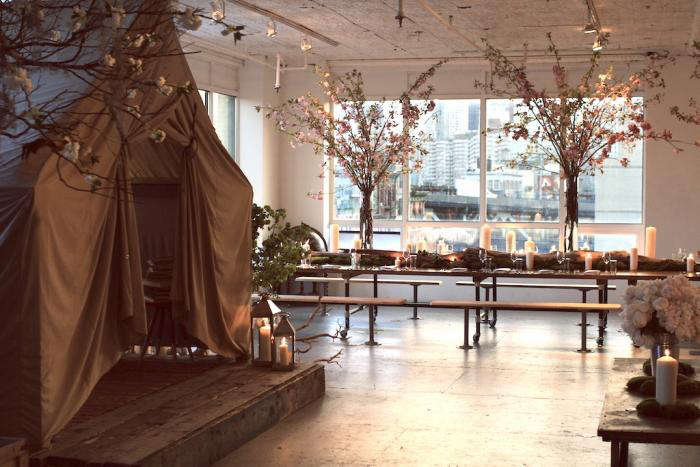
Some spaces have a “work-life balance.” The Silkstone Loft has a full-on double life: it clocks in at 9 a.m., runs meetings,
answers emails, and pretends it’s never spilled olive oil on anything. Then the sun goes down, the table gets dressed up,
and suddenly your “office” is hosting a dinner club like it has a reservation system and a tiny ego.
Featured on Remodelista, the Silkstone Loft is the kind of place that makes you rethink the basic idea of a room.
It’s not a dining room. It’s not an office. It’s a stage that swaps costumessometimes literallydepending on what the day demands.
And if you live in an apartment where every square foot has to earn its keep, it’s also wildly practical (in the most stylish,
slightly mischievous way possible).
What Is the Silkstone Loft, Really?
The Silkstone Loft is an airy Lower East Side loft used by Phil Winser and Ben Towillpartners in the Silkstone brand and the
restaurant world orbiting around it. By day, the loft functions as their workspace. By night, it transforms into a dining club
and event venue: cooking classes, tastings, and the kind of gatherings where people genuinely talk to each other instead of
scrolling in silence.
The standout detail (and the one you’ll never forget) is the “office within the office”: a canvas tent set on a raised platform.
It’s part camping fantasy, part clever spatial planningan instant boundary in an open plan without building a wall.
Add in a custom phone booth for private calls, a simple functional kitchen, and warm atmospheric lighting, and you’ve got a space
that can switch gears fastwithout feeling like a folding chair convention.
Why a Day-to-Night Space Works (and Why It’s Not Just a Party Trick)
The Silkstone Loft feels fresh because it solves a modern problem with an old-school idea: one room, many uses, and a strong sense
of ritual. The “ritual” matters more than people think. In open-plan spaces, the biggest challenges are often privacy, noise,
and the fact that everything is visible all the timeespecially when you’re trying to focus and your sink is auditioning for a
starring role. That’s why well-designed flex spaces rely on clear zones, smart storage, and quick-change cues (lighting, layout,
and surfaces) that tell your brain: “We’re in a different mode now.”
In other words: you don’t just need furniture. You need a system. The Silkstone Loft’s genius is that it treats “work” and “host”
like two separate shifts, each with its own setup. The conversion isn’t accidentalit’s engineered.
The Silkstone Loft Playbook: Design Moves Worth Stealing
1) Build a “Room Within a Room”
In a loft, walls are rare and attention spans are rarer. The canvas tent creates a contained work zonevisually and psychologically.
It’s a boundary that still lets light and energy move through the space. You don’t need an actual tent to copy the strategy:
think curtains on a ceiling track, an open bookshelf, a folding screen, or even a tall plant cluster that makes your desk feel
like its own address.
2) Use a Platform to Declare a Zone
A raised platform is a design “highlighter.” It marks a territory without cluttering sightlines. In practical terms, it can also
hide cords, stash storage, or create a subtle thresholdlike stepping onto a mini stage where your only job is to focus.
If a platform isn’t feasible, mimic it with a thick rug, a low shelf, or a change in lighting that frames your desk area.
3) Keep the Kitchen Simple (Because Nighttime You Will Thank You)
The Silkstone kitchen reads as straightforward and functionalless “look at my marble” and more “I can actually cook here.”
That matters when your space has to pivot quickly. Fancy styling is great, but the real flex-space superpower is wipeable,
durable, and easy to reset. If your night mode includes food, choose surfaces and layouts that can handle it without drama.
4) Let Lighting Do the Heavy Lifting
The fastest way to change a room’s personality is to change the light. Work mode wants bright, directional task lighting.
Dining-club mode wants layered glow: table-level warmth, dimmed ambient light, and a few points of sparkle to make everyone look
like they got eight hours of sleep (even if they definitely did not).
The Silkstone Loft leans into moodcandles on the table before guests arrive, lanterns for a cozy “camping” feel, and the kind of
atmosphere that makes even takeout containers feel like they should be plated.
5) Put a “Privacy Capsule” Somewhere, Anywhere
The custom phone booth is more than a quirky detail; it solves the #1 complaint of open spaces: nowhere to take a call or have a
private moment. You can steal the concept with a small acoustic nook, a closet desk that closes, a curtain-enclosed chair, or a
compact booth-style seat. The point isn’t perfectionit’s relief.
6) Make the Table the Boss (Not a Decorative Afterthought)
In the Silkstone Loft, the dining table isn’t “furniture.” It’s the main character. That’s how dinner clubs work: the table is
where strangers become friends, where a cooking demo becomes a conversation, and where the room’s energy concentrates.
If you want the office-to-dining switch to feel natural, invest in a table you actually want to sit at for hours. Not just for
dinneralso for planning, brainstorming, and the occasional “I’m eating lunch over my laptop because I’m powerful” moment.
How to Create Your Own “Office by Day, Dining Club by Night” Setup
You don’t need a Lower East Side loft or a tent platform to copy the Silkstone Loft’s logic. You just need to design your space
around transitions. Here’s a practical blueprint you can adapt to an apartment, a studio, or a house that has exactly one room
doing the work of three.
Step 1: Define Your Two Modes in One Sentence Each
- Day mode: What must this space do for me to work well (focus, calls, screens, paperwork, calm)?
- Night mode: What must this space do for hosting (seating, serving, lighting, flow, cleanup)?
Write the sentences down. Seriously. When a room tries to be everything, it becomes nothing. Your “two sentences” keep the design honest.
Step 2: Choose One Anchor for Each Mode
- Work anchor: a desk or workstation you can actually use without hunching like a gargoyle.
- Hosting anchor: a dining table (or expandable table) with chairs that can sit real humans comfortably.
If you can’t fit both, pick the stronger anchor and make the other one transformable (folding desk, wall-mounted drop-leaf,
nesting stools, stackable chairs, or a table that does double duty with a fast reset).
Step 3: Zoning Without Walls (The “Invisible Architecture” Trick)
Zoning is how you keep a flex space from feeling like a rummage sale. Use at least two of the following:
- Rugs: one under the desk zone, one under the dining zone (or one large rug and furniture “clusters”).
- Lighting: one dedicated task light + one dining pendant or chandelier + dimmable ambient.
- Furniture orientation: desk faces away from the dining zone; table faces the social zone.
- Room dividers: open shelves, curtains, screens, or plants for separation without darkness.
Step 4: Build a 10-Minute Reset Routine (Because You’ll Actually Use It)
The Silkstone Loft works because it can shift fast. Create a “conversion kit” you keep in one place:
- A tablecloth or runner that instantly changes the vibe
- Two candleholders or a small lantern-style light
- A tray for salt/pepper/napkins (so you’re not hunting through drawers like it’s an escape room)
- A small bin to “sweep” office clutter into (cords, notebooks, mailgone)
The goal: when you’re done working, your space doesn’t look like it’s still on the clock.
Step 5: Make Storage Do the Sneaky Work
Flex spaces fail when the stuff wins. Give each mode a home:
- Work storage: closed drawers, baskets, file boxes, cable management, and a “charging station” that isn’t chaos.
- Hosting storage: a bar cart (non-alcoholic works great), a shelf for plates/glasses, and a bin for linens.
Bonus move: if your dining table doubles as a desk, store a desk pad and laptop stand nearby so you can set up and pack down quickly.
How to Host a “Dining Club” Night Without Losing Your Mind
“Dining club” doesn’t have to mean complicated. Think of it as a structured hangout with better lighting and less screen time.
Modern dinner clubs and private dining concepts are popular because they feel personalsmaller, warmer, and more intentional than a
typical night out. But at home, the key is to host like a human, not like a restaurant.
Plan the flow, not the fantasy
- Keep the menu simple: one impressive centerpiece + easy sides + a make-ahead dessert.
- Create a “landing zone”: a spot for coats, bags, and the inevitable phone pile.
- Use stations: a water/tea setup, a snack board, and a clear spot for servingso guests aren’t crowding your cooking area.
- Pick one activity: tasting flight, mini cooking demo, or a themejust one. Not a talent show.
The Silkstone Loft hosted events like cooking instruction and tastings, plus hands-on moments like oyster shucking. The lesson isn’t
“copy the exact event.” It’s “give the night a shape.” People relax when they know what’s happening.
The Details That Make the Silkstone Loft Feel Like a Place (Not Just a Room)
Texture and nostalgia
Exposed brick, a vintage school map, and industrial touches keep the space groundedwarm, slightly retro, and not overly polished.
That balance is perfect for a room that needs to work hard. Overly precious interiors don’t love multitasking.
Human-scale light
Candlelight and lantern-style lighting don’t just look goodthey pull focus down to the table. That’s where people connect.
You can mimic that feeling with rechargeable lamps, dimmers, or shaded bulbs that warm the room without glare.
A strong “brand” of hospitality
The Silkstone vibe is relaxed entertaining with real intention: a table that invites lingering, food that feels thoughtful, and
a setup that says “you’re welcome here” without making it weird. (The only thing you should make weird is maybe the playlist.
In a good way.)
Small Space? Here’s the “Studio Apartment Edition”
If you’re working with a studio or a tiny multipurpose room, the strategy stays the samejust more compressed:
- Use vertical space: floating shelves above the desk; wall hooks near the entry; a slim cabinet for hosting supplies.
- Divide lightly: curtains or an open bookcase divider to separate work zone from dining zone.
- Choose stackable seating: stools that tuck under a console; chairs that hang on wall hooks; or a bench that slides under the table.
- Go modular: nesting tables, collapsible desks, and rolling carts that move when the “shift” changes.
The goal isn’t to pretend you have more space than you do. It’s to make the space you have behave better.
Common Flex-Space Mistakes (and How to Avoid Them)
Mistake: Work clutter becomes permanent decor
Fix it with a “daily sweep” bin or drawer. If it takes more than two minutes to hide your work mess, your storage system is too complicated.
Mistake: One lighting setting for everything
Fix it with layers and dimming. Even a simple setuptask lamp + warm table lampcreates an instant mood shift.
Mistake: No privacy plan
Fix it with a nook, a curtain, or a booth-style seat. Open plans can be social, but they can also be loud and distracting if you don’t build in relief.
Mistake: Hosting is hard because the room isn’t designed for flow
Fix it with clear pathways, a serving station, and fewer objects in the “traffic zone.” A dinner club should feel like a party, not an obstacle course.
Conclusion: A Space With a Double Life (and a Very Good Reason for It)
The Silkstone Loft is memorable because it’s playfulan office in a tent, a phone booth in a loft, lanterns that make a city space feel
like a campsite. But it’s also deeply practical. It proves that a room doesn’t have to be one thing forever. It can change with you,
with your schedule, and with the kind of life you want to host inside it.
If you’re craving a home that supports focus and connection, take the Silkstone approach: create zones, build a fast reset,
let lighting signal the shift, and give your table the respect it deserves. Your room can have a day job and a nightlifeand you don’t
even have to pay it overtime.
Experiences: Living the “Office by Day, Dining Club by Night” Life (Extra)
The first thing you notice when you run a two-shift space is how much your brain loves a clear cue. In day mode, you want the room to
behave: the chair slides in cleanly, the desk surface stays open, the light is bright enough to keep you from squinting at your screen
like you’re decoding ancient scrolls. But the real magic happens at the moment you decide the workday is over. In a traditional home,
you might shut a door. In a flex space, you create a “closing ritual”and it’s surprisingly satisfying.
A good ritual is simple: you tuck the laptop away, sweep stray papers into a box, and change the lighting. Even one warm lamp can soften
the whole room. If you add something tactilea table runner, cloth napkins, a small candle, a lantern-style lampthe space stops feeling
like a workstation that happens to contain food. It starts feeling like a place where people gather on purpose. That shift isn’t just
aesthetic; it’s emotional. You’re telling yourself (and later, your guests) that the next few hours are meant for connection.
Hosting in a converted office teaches you to respect flow. You learn quickly where people naturally stand (usually right where you’re trying
to carry hot dishes, naturally). So you start designing for movement: a tray station near the kitchen, a drink-and-water corner away from
the cooking zone, and a clear “parking spot” for bags and coats. When you get it right, the room feels effortlesseven if you worked all
day in the same footprint. When you get it wrong, you end up politely asking three friends to scoot left while you do an awkward shuffle
with a salad bowl. Consider that your cardio for the week.
A dinner-club vibe also changes how you think about seating. In day mode, chairs are tools. At night, chairs are social infrastructure.
Too few seats and people hover. Too many and the room feels cramped. The sweet spot is flexible: a bench that slides under the table, a couple
of stackable chairs, and one “wild card” stool that can move wherever conversation needs it. The goal isn’t formal perfectionit’s comfort
and good sightlines, so nobody feels stuck at the end of the table like they’re in time-out.
Over time, the biggest experience-based lesson is that a flex space rewards restraint. You stop buying fussy objects that look great once
and annoy you forever. You start prioritizing durable surfaces, easy-clean textiles, and lighting that flatters everyone. You become a little
obsessed with storage (but in a charming way, like a person who owns labels and isn’t ashamed). And you realize something important:
the “club” part isn’t about exclusivity. It’s about intention. When your space can shift from productivity to hospitality in minutes, you’re
more likely to say yes to inviting people overon a random Tuesday, for a small class, for a simple meal, or for a night where the only agenda
is good conversation and the feeling that home can be bigger than its square footage.