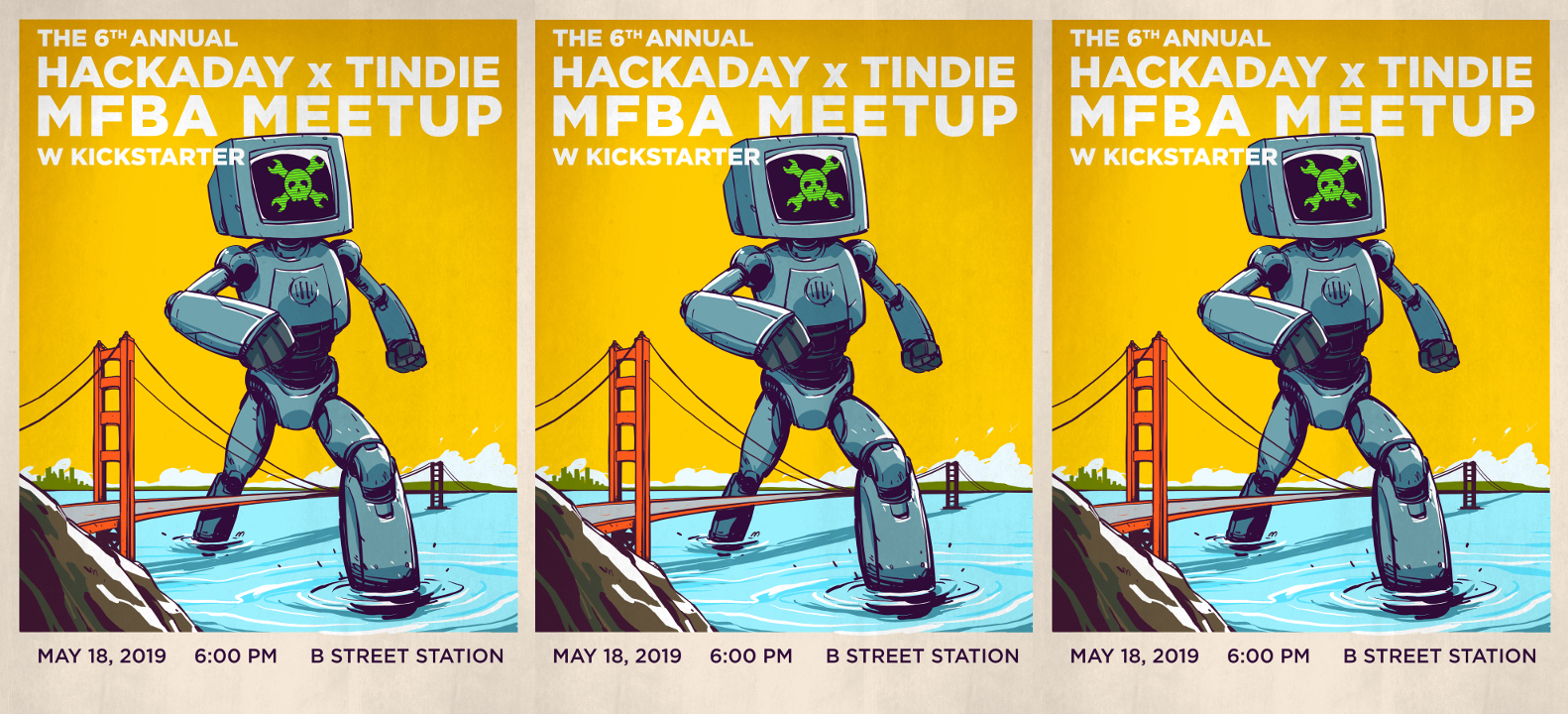
There are two kinds of Saturdays: the ones where you do laundry, and the ones where you accidentally end up in a room full of blinking LEDs,
half-finished robots, and someone earnestly explaining why their “temporary” wiring harness is absolutely production-ready.
If you’re staring down a meetup that combines Hackaday, Tindie, and Kickstarter, congratulations:
you’ve found the second kind. It’s part show-and-tell, part group therapy for hardware people, and part “wait… you can actually sell that?”
This article is your friendly, caffeine-fueled field guide: what this kind of meetup usually looks like, why these three names belong in the same sentence,
and how to get real value out of a night where the dress code is “whatever doesn’t catch on a soldering iron.”
We’ll keep it practical, a little nerdy, and only slightly opinionated about the correct number of zip ties in a go-bag (it’s “more than you think”).
Why Hackaday, Tindie, and Kickstarter make a weirdly perfect trio
Hackaday: the campfire where hardware stories get told
Hackaday is where projects go to be admired, questioned, improved, and occasionally roasted (lovingly). It’s a media hub and community magnet
for people who build with microcontrollers, sensors, PCBs, motors, RF modules, 3D printers, and pure stubbornness.
At a meetup, “Hackaday energy” usually means two things: bring something and talk to strangers about it.
That “bring-a-hack” culture matters. Hardware is tactile. You can show a CAD render, surebut a blinking prototype on the table does more in 10 seconds
than a 10-slide pitch deck. The room gets louder (in a good way) when someone drops a project on the table and says,
“Okay, so the bug only happens if you breathe near it.”
Tindie: the bridge between ‘I built it’ and ‘other people bought it’
Tindie lives in that sweet spot between hobby project and full-scale company: small-batch boards, quirky modules, niche tools, and delightfully specific gadgets.
It’s the marketplace that says, “You don’t need a warehouse and a venture round to sell a clever hardware thing.”
In the Hackaday universe, Tindie often represents the “soft launch” path:
sell a run of 25–200 units, learn what breaks, refine the assembly process, and build a tiny but loyal customer base.
It’s hardware entrepreneurship with training wheelsand that’s a compliment.
Kickstarter: the rocket booster (and the responsibility) for scaling
Kickstarter is where hardware projects can jump from “friends think it’s cool” to “uh-oh, 4,000 people want one.”
That’s powerful. It’s also where timelines go to learn humility.
The platform has specific expectations for hardware creatorsespecially around honesty, prototypes, and production plansbecause backers deserve clarity.
Put simply: Kickstarter can help you scale demand, but it will also scale your mistakes.
That’s why a meetup that mixes builders (Hackaday), small-batch sellers (Tindie), and crowdfunders (Kickstarter) is so valuable.
You get a full spectrum of “idea → prototype → product → people actually receiving it.”
What a meetup like this typically feels like
If you’ve never been to a maker-heavy meetup, imagine a science fair where everyone is old enough to order a drink and young enough (emotionally)
to be excited about a new kind of connector. The vibe usually includes:
- Project show-and-tell: prototypes on tables, demo boards, wearables, weird test jigs, and occasional “please don’t touch, it’s unstable.”
- Fast networking: five-minute conversations that turn into “send me your repo” or “I know a manufacturer who can do that.”
- Shop talk: supply chain, lead times, enclosure headaches, firmware updates, and the eternal debate: JST vs. “whatever I had in the drawer.”
- Cross-pollination: creators meet customers, engineers meet designers, and someone discovers they’re not the only person obsessed with e-paper.
Hackaday has historically hosted meetups around big maker events (especially in the Bay Area), where people come straight from booths and demos
and finally get to show the “secret” projects that didn’t fit the official display. The best conversations happen when everyone’s tired enough
to be honest but energized enough to be curious.
How to show up prepared (without turning it into homework)
Bring a “table-ready” version of your project
You don’t need a polished product. You need something that can survive a demo without begging for a firmware reflash every 90 seconds.
Aim for a version that’s:
- Self-contained: battery pack or a reliable power option (and the cable you always forget).
- Explorable: a button to press, a sensor to trigger, a screen to show statesomething interactive.
- Explainable in 30 seconds: if you can’t summarize it quickly, you’ll spend the whole night giving a TED Talk to one person.
Pack the small stuff that saves the night
Hardware meetups reward the prepared. A tiny kit can turn “cool idea” into “working demo”:
- USB battery bank + cables (USB-C and whatever your project stubbornly uses)
- A spare sensor/module if yours is held on by hope
- Business cards or a simple QR code to your project page
- Painter’s tape + marker (labeling your stuff prevents “my board walked away” sadness)
Have two versions of your story
People you meet will fall into two buckets: builders and buyers/backers.
Your explanation should flex:
- The builder version: what’s under the hood, what’s tricky, what feedback you want (“I’m debugging EMI” is a real conversation starter).
- The buyer version: what it does, why it matters, and what problem it solves (bonus points for a real-world example).
The three lanes from prototype to “people can actually get one”
Lane 1: Share it (open-source and community-driven)
Some projects are happiest as open designs: documented builds, shared firmware, community improvements, and forks that make the original better.
Meetups are perfect for finding collaborators: the person who loves writing documentation, the one who can redesign your PCB in an hour,
and the wizard who makes enclosures look like real products instead of “electronic snacks in a plastic box.”
Lane 2: Micro-batch it (the Tindie approach)
If your project is useful and repeatable, Tindie-style selling can be the smartest next step.
Micro-batching forces you to answer the questions that matter:
- What’s your bill of materials (and what happens when a part goes out of stock)?
- How long does assembly take per unit?
- What’s your test procedure so you don’t ship “mystery failures”?
- Can you support customers without turning your inbox into a second job?
It’s also a reality check on pricing. Many first-time sellers price the parts and forget the labor, packaging, support time,
and the fact that shipping labels aren’t generated by magic elves.
Lane 3: Crowdfund it (Kickstarter for scale)
Kickstarter can make sense when you’ve validated demand and you’re ready to manufacture at larger volume.
But “ready” has a specific meaning in hardware:
- Working prototype: not just rendersreal proof that the core features function.
- Credible production plan: how you’ll build it, test it, and deliver it.
- Timeline with buffers: because supply chains don’t care about your launch calendar.
- Communication plan: backers aren’t just paying; they’re trusting you to keep them informed.
One of the most useful things at a meetup is hearing how creators handled the messy middle:
the tooling revision, the surprise compliance requirement, the component substitution, the packaging redesign that added two weeks,
and the “we discovered our cable vendor is actually three raccoons in a trench coat” moment.
What to ask (and what to listen for) when Kickstarter is in the room
If you’re considering crowdfunding, meetups are a rare chance to ask practical questions in plain English.
Here are high-signal prompts that usually get great answers:
“What did you wish you had tested earlier?”
Creators often discover late that their prototype passed in the lab but fails in real life:
heat buildup, cable strain, RF noise, battery quirks, or enclosure tolerances that cause intermittent resets.
Ask about their test plan, especially the boring stuff (because the boring stuff breaks first).
“How did you set your price?”
Pricing is where many hardware projects quietly bleed out.
People underestimate fulfillment costs: packaging, shipping, returns, and the time it takes to handle customer support.
Experienced folks will talk about margins, not just parts.
“What did manufacturing surprise you with?”
This is where you’ll hear gold:
minimum order quantities, yield rates, assembly constraints, lead times, test fixtures, and the difference between
a “prototype-friendly” design and a “factory-friendly” design.
How to make the meetup worthwhile even if you’re not launching anything
If you’re a hacker: go for feedback and friendships
Bring your project even if it’s half-baked. Especially if it’s half-baked.
The right person will see your mess and say, “Oh, I’ve solved that exact problem.”
Meetups accelerate learning because you get live debugging advice, not just comment threads.
If you’re a future buyer/backer: learn how to spot good hardware
Talking to creators in person makes you a smarter customer:
- Look for prototype maturity: can they demonstrate core functions reliably?
- Listen for production thinking: test plans, sourcing strategy, and realistic timelines.
- Notice transparency: the best creators admit risks and explain mitigations.
This isn’t cynicismit’s respect for how hard hardware is. Great creators don’t promise perfection;
they promise effort, clarity, and a plan.
The underrated superpower: post-meetup follow-up
A meetup can feel like a blur of names, projects, and “wait, who was the person with the tiny rover?”
Do two things the next day and you’ll be ahead of 90% of attendees:
- Send quick follow-ups: “Great meeting youhere’s the link to the project / BOM / repo we discussed.”
- Write down what you learned: three improvements you’ll make, one person you’ll contact, one resource to read.
Hardware progress isn’t just solder and codeit’s momentum. Meetups create momentum. Follow-up keeps it alive.
500+ Words of Real-World Meetup Experiences (What You’ll Probably See and Feel)
If you’ve never been to a Hackaday/Tindie/Kickstarter-style meetup, here’s the most accurate spoiler:
you’ll walk in thinking you’re “just going to look around,” and you’ll leave with three new contacts, five new ideas,
and a sudden urge to redesign your power input stage at 2:00 a.m.
Experience #1: The Demo Table That Instantly Becomes a Magnet.
Someone sets a project downmaybe it’s a badge from a maker event, a tiny synth, a sensor rig, or a robot that looks harmless until it moves.
Within minutes, a small circle forms. People lean in. Someone asks, “What microcontroller?” Someone else asks, “What’s the power draw?”
A third person says, “Oh wow, that reminds me of a problem I had with I2C noise,” and suddenly the conversation turns into a micro-workshop.
This is the meetup’s secret sauce: a table is basically a social router. Bring a project and you become discoverable.
Experience #2: The “So You Want to Sell This?” Moment.
A builder starts describing their project as a hobbythen someone casually says,
“This would do really well on Tindie,” like they’re suggesting you try a new coffee shop.
At first, the builder laughs. Then they start mentally calculating what it would take to build ten more.
That’s when the practical questions arrive: “How long does it take you to assemble one?”
“Do you have a test procedure?” “What happens if the main chip goes out of stock?”
This is where people learn that selling hardware isn’t just building itit’s repeatability, packaging, support,
and not underpricing your own time. The best advice usually comes from someone who has shipped small batches and still has their sanity.
Experience #3: Kickstarter Talk That Feels Like Both Pep Rally and Cautionary Tale.
When Kickstarter enters the chatsometimes literally, sometimes as the topic of conversationthe room splits into two moods:
excitement and respect. People get excited about the reach and the possibility. But the veterans get quiet in a very specific way,
like they’re remembering a timeline that didn’t survive first contact with reality.
You’ll hear phrases like “lead time,” “yield,” “tooling revision,” and “we added a month for shipping and it still wasn’t enough.”
And then someone new asks the question everyone secretly wants answered: “How do you avoid becoming one of those delayed gadget stories?”
That’s where you’ll hear the best, most grounded advice:
show a working prototype, be honest about risks, price for fulfillment, build buffers, and communicate consistently.
The lesson isn’t “don’t crowdfund.” The lesson is “crowdfund like an adult.”
Experience #4: The Unexpected Collaboration.
You’ll also see quieter wins: a designer offers to help someone’s enclosure look less like a science experiment,
a firmware person volunteers to improve a bootloader, a manufacturing-savvy attendee explains how to panelize a PCB
or choose assembly-friendly parts. These aren’t dramatic moments. They’re the kind that change what your project becomes.
Meetups are one of the few places where you can trade a problem for a solution in under five minutes,
purely because you happened to stand near the right person holding the right weird board.
If you want the biggest takeaway: go in curious, leave with notes. The magic isn’t just the eventit’s what you build afterward
because you finally met people who speak your exact dialect of “hardware problem.”
Conclusion: Turn one Saturday into a launchpad
A meetup with Hackaday, Tindie, and Kickstarter is more than a hangoutit’s a compressed crash course in modern indie hardware.
You’ll see what people are building, how they’re selling small-batch products, and what it really takes to scale through crowdfunding.
Bring a project (even a scrappy one), ask smart questions, and follow up afterward.
That’s how a single Saturday turns into your next prototype revision, your first sale, or your best collaborator.