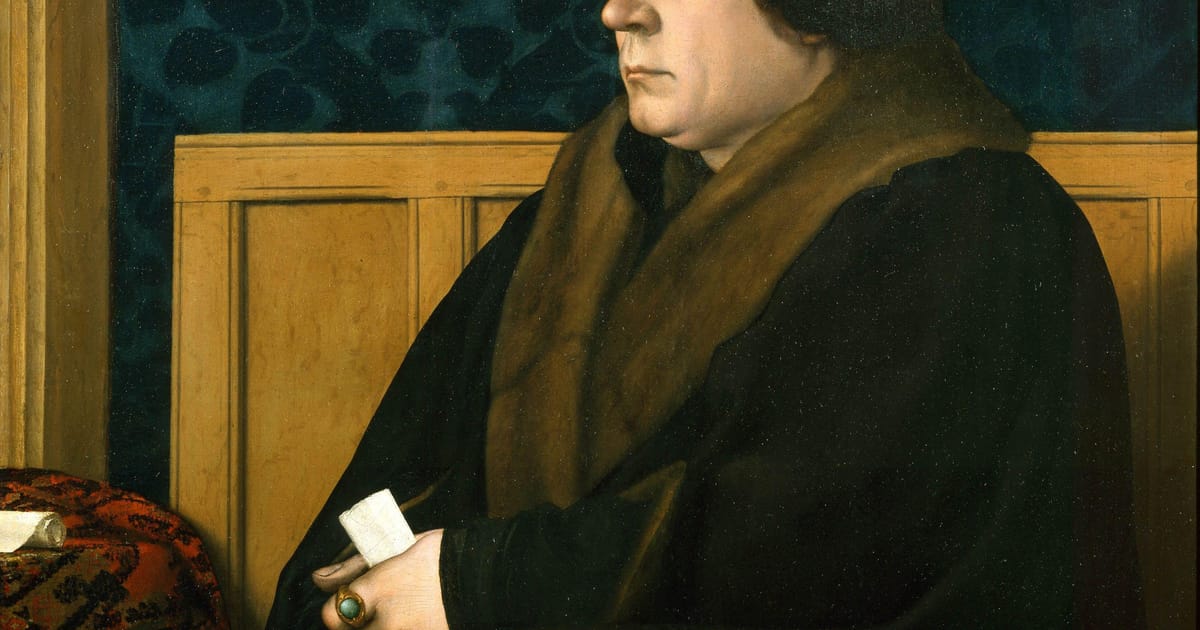
If Tudor England were a reality show, Thomas Cromwell would be the contestant who starts in the background,
quietly learns how every camera works, then somehow ends up running the control roomuntil the producers
decide he’s “too powerful” and write him off in a dramatic finale.
Cromwell (c. 1485–1540) served as King Henry VIII’s chief minister during the most explosive political,
religious, and administrative shake-up England had seen in centuries. He helped engineer the break with Rome,
reorganized government at a scale that still makes policy wonks swoon, and oversaw the Dissolution of the Monasteries
a move that permanently changed English religion, land ownership, and wealth. He also died the classic Tudor way:
fast rise, faster fall, and an execution that made yesterday’s favorite suddenly “a traitor.” That combination is why
“Thomas Cromwell rankings and opinions” are all over the map.
Why Cromwell Is So Hard to “Rank”
Ask ten historiansor ten history fansand you’ll get twelve Cromwells. He’s been painted as:
a ruthless enforcer, a pragmatic reformer, a bureaucratic genius, a religious zealot, a survivor of aristocratic snobbery,
and a convenient scapegoat for Henry VIII’s choices. Modern pop culture also matters: portrayals like Wolf Hall
nudged many readers and viewers toward a more complex, human Cromwell than older depictions that cast him as a villain
opposite Thomas More’s saintly glow.
So instead of pretending there’s one “correct” ranking, let’s do what Cromwell would do: build a clear framework,
show the receipts (in spirit), and admit that outcomes depend on what you valueefficiency, morality, stability, or
simply “did this person change history?”
A Practical Ranking Framework: Six Categories That Define Cromwell’s Legacy
Think of this as a scorecard for a politician who lived in an era when “HR policy” meant “the Tower of London.”
Each category includes (1) a ranking score out of 10 and (2) why opinions split.
1) Administrative Skill: 10/10
Cromwell’s strongest case for greatness is competence. He helped modernize governance, strengthened royal administration,
and expanded the machinery that could actually implement policy across the realm. If you like your history with
paperwork, audits, and systems that scale, Cromwell is your MVP.
Why opinions split: Some see “efficient government” as progress; others see it as building a more
powerful state that can do more harm, faster.
2) Religious Policy Impact: 9/10 (with a moral asterisk)
Cromwell helped entrench royal supremacy and drove the English Reformation forward through law and enforcement.
He supported reforms that reshaped worship and religious authorityand he pushed policies that reduced Rome’s power in England.
Why opinions split: If you view the Reformation as liberation from corruption and foreign control,
Cromwell looks like a reformer. If you see it as state-sponsored upheaval, coercion, and cultural loss, he looks like an
architect of trauma.
3) The Dissolution of the Monasteries: 9/10 for impact, 3/10 for popularity
Dissolving monasteries wasn’t just “closing some buildings.” It meant redistributing huge amounts of land and wealth,
dismantling religious communities, and transforming local lifeeducation, charity, and healthcare included.
Cromwell’s role makes him central to one of the most consequential property and institutional changes in English history.
Why opinions split: Even people who admire Cromwell’s brainpower often struggle with the human cost.
Critics focus on cultural destruction and suffering; defenders emphasize the political logic, the Crown’s finances,
and the long-term shift toward a different religious settlement.
4) Political Ethics: 4/10 (and that might be generous)
Tudor politics rewarded survival, and Cromwell survived by being sharp, relentless, and sometimes merciless.
He used law as a weapon (common in the period, but still morally troubling). He also served Henry VIIIa king whose
decisions could be brutal even when the paperwork was “legal.”
Why opinions split: Some argue you can’t judge 16th-century politics by modern ethics.
Others say “context” explains behavior but doesn’t excuse it.
5) Relationship Management: 8/10 (until it became 0/10)
Cromwell rose by reading people and power structures quicklyespecially Henry VIII. Yet his fall shows the risk of
serving a volatile monarch: one miscalculation and you go from “indispensable” to “unperson” overnight.
Why opinions split: Was his fall proof he overreached? Or proof that no one could win long-term
against court factions and a king who changed moods like weather?
6) Historical Reputation Management: 7/10 (posthumously, thanks to other people)
For centuries, Cromwell often appeared as the shadowy operatorespecially in narratives sympathetic to Thomas More.
Then newer scholarship and popular works complicated that picture, pushing him closer to “tragic modernizer” than “pure villain.”
Why opinions split: Reputation depends on which sources get amplifiedreligious polemics,
court gossip, later political agendas, or contemporary reinterpretations.
Ranked List: Cromwell’s 7 Most Consequential Moves (and Why They Still Trigger Debates)
Below is a ranking based on historical consequenceshow much each move changed institutions, power, and everyday life.
It’s not a “moral ranking.” If it were, Tudor England would need a whole new scoring system.
-
Building the legal framework for royal supremacy (Top impact).
The shift of religious authority toward the Crown became a foundation stone of England’s changing identity.
It wasn’t just theology; it was constitutional power. -
Driving the Dissolution of the Monasteries.
Vast property transfers reshaped wealth and local institutions. Supporters call it a strategic overhaul;
critics call it legalized destruction. -
Scaling governance: turning royal wishes into national policy.
Cromwell helped create a government that could administer, tax, inspect, and enforce more consistently.
The modern state didn’t start here, but it got an aggressive upgrade. -
Managing (and surviving) Henry VIII’s marital politicsuntil he didn’t.
Cromwell’s career was tied to Henry’s marriages because dynastic succession drove everything.
His involvement made him powerfuland eventually vulnerable. -
Promoting authorized English religious texts.
Cromwell’s role in supervising the production of the Great Bible is a reminder that “policy” also meant
shaping what people could read and hear in church. -
Outmaneuvering aristocratic factions (for a while).
His rise from relatively humble origins fueled both admiration and resentment. In court politics,
being brilliant is helpful; being brilliant without a noble pedigree can be fatal. -
Taking the fall when politics turned.
Cromwell’s execution shows the Tudor reality: power is borrowed, not owned. His end also helps explain why
opinions about him stay intensehe’s both agent and victim of the system he strengthened.
Opinions Through Time: How Cromwell Became Everyone’s Favorite Argument
The “Villain” Cromwell: The Enforcer in a Violent Age
In many older cultural depictions, Cromwell is the cold operatorsomeone who manipulates law and fear to crush opponents,
especially compared with Thomas More, who is often portrayed as principled. This framing makes Cromwell the face of
bureaucratic ruthlessness: not the king with the axe, but the person who drafts the memo that schedules it.
The “Modernizer” Cromwell: The Builder of a More Functional Government
Another school of opinion emphasizes Cromwell’s administrative talent and strategic clarity.
This Cromwell looks like a reforming manager in a medieval workplace: he streamlines, audits, enforces standards,
andyesmakes enemies in the process. Admirers argue that England’s governance and legal machinery became more coherent under
his influence, even if the goals were shaped by Henry VIII’s demands.
The “Tragic Operator” Cromwell: Competence Doesn’t Save You
Modern narrativesespecially those influenced by popular historical fiction and prestige televisionoften land here:
Cromwell as a complicated figure shaped by class, loss, ambition, and the constant pressure of serving a dangerous ruler.
In this view, he is neither saint nor devil, but the person who tries to do real work in a system that rewards loyalty
and punishes visibility.
Where Pop Culture Tilts the Scales: Wolf Hall vs. the “Classic Villain” Tradition
If your mental image of Cromwell comes from older stories centered on Thomas More, you’re likely to rank Cromwell lower on
morality and higher on menace. If your mental image comes from Wolf Hall, you’re more likely to see him as capable,
restrained, and emotionally layeredstill ruthless at times, but not cartoonishly evil.
This matters because most people don’t meet Cromwell in an archive. They meet him in a classroom, a documentary,
a museum label, a podcast, a novel, or a TV series. Public opinion moves when storytelling changes.
Mini-FAQ for Search (Because Everyone Googles the Same Questions)
Was Thomas Cromwell “good” or “bad”?
He was influential. That’s the safest answer. “Good” and “bad” depend on your moral framework, your view of religious reform,
and how you weigh state-building against human cost.
What did Cromwell actually do for Henry VIII?
He was a principal adviser and policy enginehelping implement royal supremacy, advancing reforms, and overseeing
major institutional changes like the Dissolution of the Monasteries. He also handled sensitive political fallout
that came with Henry’s personal and dynastic decisions.
Why was Cromwell executed?
Court politics, factional enemies, and Henry VIII’s shifting priorities converged. Cromwell’s association with the
Anne of Cleves match is often discussed as part of the chain of events leading to his downfall, but Tudor falls
are rarely about one mistake; they’re about when enough powerful people decide the moment is right.
Why do historians disagree about him so much?
Because the stakes are huge: religious change, property redistribution, and the growth of state power.
Cromwell sits at the center of all three, and every interpretation reflects what the historian thinks “matters most.”
So…Where Does He Rank Overall?
If you’re ranking “most consequential Tudor policymakers,” Cromwell is near the top. If you’re ranking “most lovable”
Tudor personalities, he’s competing with people who arranged executions as a hobbyso, honestly, it’s a crowded field.
A fair composite ranking (mixing impact, capability, and ethical controversy) might place him as:
- Top-tier impact: among the most consequential figures of Henry VIII’s reign.
- Elite competence: one of the era’s strongest administrators and political operators.
- High controversy: deeply polarizing because his work reshaped lives, wealth, and faith.
The real takeaway: ranking Cromwell is less about him alone and more about what you believe makes a political figure “great.”
If greatness means effectiveness, he scores high. If greatness requires moral restraint, Tudor England is going to leave you
disappointedand Cromwell won’t be the only one.
Experiences Related to “Thomas Cromwell Rankings And Opinions” (Reader-Style, Real-World Encounters)
Most people don’t form an opinion about Thomas Cromwell by reading sixteenth-century administrative records for fun
(though if you do, please know there’s a proud community of fellow document nerds). Instead, they build their ranking
through a series of experiences that feel surprisingly modern: arguing about leadership, power, propaganda, and what happens
when a government becomes more “efficient.”
One common experience starts with a storyoften Wolf Hallthat makes Cromwell feel less like a textbook label and more
like a person with strategy, grief, and limits. Viewers then bounce into a second experience: comparison. They’ll contrast that
portrayal with older narratives that elevate Thomas More as the heroic conscience. Suddenly Cromwell becomes a test case for how
perspective changes history. The same actions can look like “reform” from one angle and “ruthless enforcement” from another.
Another experience is place-based. Tudor London isn’t just an idea; it’s a map you can walk in fragmentsespecially in museums
and historic exhibits that reference the Tower, court politics, and the machinery of royal power. Standing in a space associated
with Tudor authority tends to sharpen people’s opinions fast. For some, the immediacy of execution culture makes Cromwell’s role
feel darker. For others, it highlights how dangerous his job was: serving a king who could reverse the rules without warning.
Then there’s the “paper trail” experience, which can change rankings dramatically. When readers encounter reproductions of letters,
annotated documents, or exhibitions that emphasize policy mechanicswho ordered what, what was enforced, and how information moved
Cromwell often rises in the competence category. Even critics of his morality will admit that the man understood systems: audits,
inspections, reporting lines, and legal scaffolding. Seeing how governance operated in practice can make him look less like a
cartoon villain and more like an administrator with unusually modern instincts.
Classroom debate is its own rite of passage. Students often rank Cromwell differently depending on the prompt: “Was he a reformer
or a destroyer?” “Did he expand opportunity by rising from modest origins, or did he simply weaponize power?” “Is he responsible
for Henry’s choices, or is he the person Henry used to make choices stick?” These debates tend to mirror adult political arguments,
which is why Cromwell remains oddly current. He’s a historical figure who forces people to talk about institutions, not just personalities.
Finally, many people experience Cromwell through “value sorting.” If you care most about stability and the protection of local social
institutions, you may rank him lower because the Dissolution changed communities permanently. If you care most about state capacity,
law, and administrative modernization, you may rank him higher even while acknowledging the costs. That’s the strange longevity of
Cromwell opinions: they keep resurfacing because the questions he raisesabout power, reform, and the price of “getting things done”
never really go away.
Conclusion
Thomas Cromwell sits in the rare historical category of “too important to ignore and too complicated to settle.”
If you’re ranking pure impact, he’s a top contender in Tudor England. If you’re ranking moral comfort, he’s a hard sell.
But if you’re ranking figures who reveal how politics actually worksthrough law, bureaucracy, image management, and survival
Cromwell is practically a master class in human ambition under pressure. Just don’t forget the Tudor footnote:
mastering the system doesn’t mean the system won’t eventually master you.