Marvel movies don’t just give us superheroes, explosions, and the occasional emotional damage.
They also give us something even more dangerous: free time to overthink every frame. From
Iron Man to the multiverse chaos of the latest MCU phases, fans have turned wild
speculation into an art form. Some theories are clever, some are cursed, and some are
so unhinged that you secretly hope they’re true.
Below are ten of the most rip-roaring, brain-twisting Marvel movie theories floating around
fandom. Some have been debunked, some partly confirmed, and others are clinging to life in
the multiverse of “maybe.” Either way, they show just how far Marvel fans will go for
one more layer of meaning in the Marvel Cinematic Universe.
1. Ant-Man Versus Thanos: The Infamous “Butthole Theory”
What the theory says
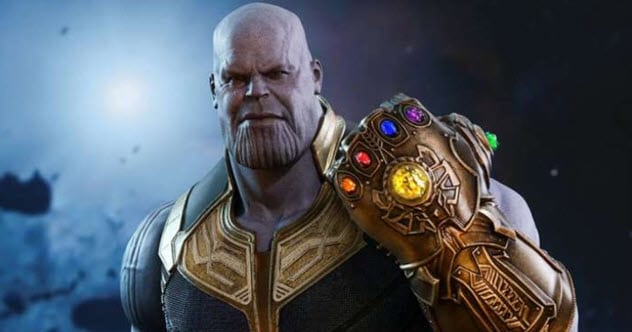
Let’s start with the most notorious MCU theory of all time. The “Butthole Theory” argues that
Ant-Man could have ended Avengers: Endgame instantly by shrinking, flying into Thanos’s
body via a very specific entrance, and then expanding. Problem solved, universe saved,
trauma minimized… right?
Why fans loved it
This theory went viral because it’s equal parts ridiculous and technically consistent with
Ant-Man’s powers. Fans made memes, fake posters, and even mock trailers. Marvel leaned into
the joke with winks in interviews and marketing, and it’s now basically canon in fandom
that everyone has thought about this at least once and immediately regretted it.
Does it hold up?
Practically? No. Comedically? 100%. Marvel would never put this on screen, but as a symbol
of how far Marvel theorizing can go, it’s unbeatable. It also shows how fans will test
the limits of every power set until someone, somewhere, suggests something truly cursed.
2. The Galactus Connection Hidden in Guardians of the Galaxy
What the theory says
In Guardians of the Galaxy, Knowhere is literally the severed head of a Celestial.
Some fans believe this is a quiet nod to Galactus, the planet-eating cosmic force from the
comics. The idea: the MCU has been teasing bigger cosmic threats for years, and Galactus
is the natural “final boss” once Thanos is old news.
Why it caught fire
The theory fits nicely with Marvel’s gradual escalation from Earth-based problems to
cosmic-level insanity. It also works well with the multiverse and upcoming
Fantastic Four plans, where Galactus is a major villain in the comics. Fans see
Knowhere, the Celestials in Eternals, and all that cosmic lore as puzzle pieces
quietly aligning for Galactus to eventually show up and ruin everyone’s day.
Current status
Nothing is confirmed, but with multiversal crossovers and cosmic stakes rising,
Galactus appearing is less “if” and more “when.” This theory isn’t so much wild as
inevitable, which makes it one of the more realistic entries on this list.
3. Marvel “Predicted” the Coronavirus
What the theory says
One of the more eerie theories points to how often Marvel deals with global catastrophes,
biological threats, and sudden, world-changing events. Some fans argue that storylines
involving weaponized viruses, sudden population shifts, and worldwide lockdown vibes
eerily “predicted” the COVID-19 pandemic.
Why it spooked people
When real life starts to resemble superhero plots, people notice. Scenes of empty cities,
people wearing masks, and world governments scrambling to respond suddenly hit very
differently after 2020. That opened the door for fans to look back at MCU moments
and say, “Wait… did Marvel see this coming?”
Reality check
As creepy as the parallels feel, this is more about fiction exploring common sci-fi themes
than a true prediction. Superhero stories have always loved pandemics, alien invasions, and
mass extinction scenarios. Still, the timing made this particular theory feel hauntingly
on-the-nose for a while.
4. Tony Stark Backed Up His Consciousness Before He Died
What the theory says
Tony Stark may be gone, but is he gone gone? One popular theory suggests that
before his big sacrifice in Avengers: Endgame, Tony uploaded his mind into an AI
system. The idea: he could live on as a digital mentor, similar to the A.I. version of
Jarvis or Friday, only this time it’s Tony himself calling the shots.
Why fans cling to it
Emotionally, it’s perfect. Tony is the tech guy who’s always ten steps ahead, and the MCU
has already shown AI consciousness as a thing (hello, Vision). Fans point to the holographic
message Tony leaves after his death as proof that he could have done a much more advanced
version of this behind the scenes.
Could Marvel actually do it?
Technically? Absolutely. Contractually and creatively? That’s trickier. Bringing Tony back
too often risks cheapening his sacrifice. But a short cameo, a voice, or a one-off A.I.
appearance in a future Spider-Man or Young Avengers project would instantly
validate this theory and probably crash the internet.
5. The Kid in Iron Man 2 Was Always Peter Parker
What the theory says
In Iron Man 2, a little boy wearing an Iron Man mask stands up to a drone at the
Stark Expo before being saved by Tony. For years, fans theorized that this kid was a young
Peter Parker long before Tom Holland’s Spider-Man formally joined the MCU.
The theory that became “canon-ish”
This started as a pure fan theory, but it got so popular that Marvel creatives leaned into it.
Tom Holland has said he believes it’s Peter, and Marvel effectively adopted the idea retroactively.
That turns a throwaway moment into a touching piece of foreshadowing: Tony saved Peter,
and years later Peter helps carry Tony’s legacy.
Why it matters
The charm of this theory isn’t about continuity perfection. It’s about making the MCU feel
like a living, interconnected world where background details can suddenly become emotional
payoffs a decade later. It’s fan headcanon that Marvel basically shrugged and said,
“You know what? That’s actually pretty good.”
6. Loki Was Always the Quiet Architect of Doom
What the theory says
Loki stans will tell you he isn’t just a mischievous side character; he’s the accidental
architect of almost everything. By stealing the Tesseract, faking deaths, cutting deals,
and constantly nudging cosmic objects into the wrong hands, Loki is theorized to be the
secret domino that leads to Thanos’s victory and the rise of the multiverse madness.
Supporting evidence
Loki’s show on Disney+ turns him into a literal multiversal linchpin. The TVA, Kang,
and timeline-branching chaos all revolve around Loki’s presence. That retroactively boosts
fan theories that his earlier movie actions had far more cosmic consequences than they
seemed at the time.
From villain to narrative spine
Loki’s arcfrom petty villain in Thor to tragic, time-warped herois exactly the
kind of long-term narrative payoff Marvel loves. The theory that he unknowingly broke
the universe, then had to help fix it, fits almost too well with where the MCU has gone.
7. Thanos Actually Won (and the Main Timeline Is a Branch)
What the theory says
According to this theory, the timeline where the Avengers “win” in Endgame by
time-traveling and undoing the Snap isn’t the original sacred timelineit’s a branch.
In the true main timeline, Thanos’s victory stands, and the universe simply adapts.
Our heroes created a splinter reality where they get their friends back.
Why it blew people’s minds
Once the MCU embraced branching timelines, this theory went from “edgy” to “alarmingly plausible.”
If you accept that time travel creates new branches rather than rewriting a single stream,
then Thanos’s Snap remains canonically successful in at least one core reality. The Avengers
might have saved their world, but not every world.
The emotional punch
This twist reframes Endgame as a bittersweet win. The heroes succeed, but only by
stepping sideways into a better universe instead of fixing the original one. It adds a layer
of existential dread and moral ambiguity to what looked like a straightforward happy ending.
8. Marvel Has Been Quietly Building the Young Avengers All Along
What the theory says
Look at the roster: Kate Bishop, Cassie Lang, Billy and Tommy, America Chavez, Kid Loki,
Kamala Khan, and more. The theory is simple: Marvel has been stealth-introducing
younger heroes to build a full-blown Young Avengers team behind the scenes.
Why fans are convinced
The MCU rarely introduces characters this deliberately without a long-term plan.
The ages line up, the power sets are complementary, and the emotional baton-passing
from older heroes (Hawkeye, Ant-Man, Captain Marvel) feels intentional. Fans see it
as Marvel’s way of future-proofing the franchise with a new core team.
What it could lead to
A Young Avengers movie or Disney+ event series would be an easy win: built-in fandom,
a fresh tone, and plenty of crossover potential with legacy heroes. Whether Marvel calls
them “Young Avengers” or invents a new label, the theory that we’re already watching their
origin story unfolding is extremely solid.
9. Secret Mutants Have Been Hiding in Plain Sight
What the theory says
After Disney acquired Fox, fans immediately started hunting for mutant breadcrumbs.
The theory: mutants already exist in the MCU, just not under that name yet. Places like
Madripoor, powered characters with unexplained abilities, and genetic “miracles” are
taken as signs that Marvel is quietly setting the table for the X-Men.
Clues fans obsess over
Locations like Madripoor, which has classic X-Men ties in the comics, fueled speculation.
So do characters whose powers are framed as “gifts,” “enhancements,” or “unique genetics.”
Add in multiversal crossovers and surprise cameos from ex-Fox Marvel characters, and
it’s easy to see why fans think the mutant switch is about to flip.
Why it’s smart storytelling
Rather than dropping mutants into the MCU overnight, Marvel can use this theory’s logic
to say: “They’ve been here all along, but under different labels.” That softens the
transition, respects existing continuity, and gives long-time fans the satisfaction
of saying, “I knew it.”
10. Dead Characters Aren’t Really GoneThey’re Multiverse-Ready
What the theory says
In a universe with branching timelines and infinite realities, is anyone ever truly dead?
This theory argues that major deathsTony Stark, Black Widow, certain villainsare less
permanent goodbyes and more “don’t call us, we’ll call you” situations. Future movies or
events can pluck alternate versions from different universes whenever the story (or box office)
demands it.
Evidence in the movies themselves
Spider-Man: No Way Home, Loki, and other multiverse-heavy stories have
already resurrected or reimagined characters through variants. Once the door is open to
alternate versions, the emotional math changes. A death in one universe doesn’t guarantee
permanent absence from the franchise.
The double-edged sword
On one hand, this theory makes the MCU endlessly flexible and lets beloved actors return.
On the other, it risks making death feel less meaningful. The trick for Marvel is to use
this power sparingly, saving it for rare, high-impact moments rather than routine fan service.
Living With Marvel Theories: A Fan Experience (Extra Deep Dive)
If you’ve ever left a Marvel movie and immediately opened Reddit, TikTok, or YouTube instead
of going to sleep like a responsible adult, congratulationsyou are part of the Marvel
Theory Industrial Complex.
The experience usually starts in the theater. The credits roll, the lights come up, and that
one friend in your group says, “Wait, did you notice…?” Maybe it’s a background logo, a
throwaway line, or a weird camera angle. Suddenly you’re in the parking lot, arguing about
whether a blurry character in the distance was actually a mutant, a Skrull, or just an
overworked extra.
Then comes the post-movie research phase. You search for “ending explained” videos,
scroll through endless threads, and discover that someone has already freeze-framed every
single scene to extract clues you missed. That barely-visible number on a wall? It’s
obviously a comics issue reference. That oddly specific shade of green? Clearly a hint
about Doctor Doom. Or it’s just paint. But where’s the fun in that?
Over time, these theories turn watching Marvel movies into an ongoing group project. You’re
not just consuming stories; you’re co-writing them in your head. You develop favorite
fan-theorists, follow accounts that specialize in wild speculation, and start sentences
with, “Okay, hear me out…” a lot more than you used to.
The best part is how theories change the emotional weight of older movies. Once you’ve heard
the “Iron Man 2 kid is Peter Parker” theory, you can’t unsee it. That tiny scene becomes a
heartwarming proto-mentorship moment. Once you consider that the Avengers might have
created a branch reality instead of restoring the original, Endgame starts to feel
more bittersweet and tragic. Theories don’t just explain things; they rewire how you feel
about them.
Of course, the downside is disappointment. For every theory that pays offlike certain
multiverse cameos or a long-rumored character finally showing upthere are dozens that
crash and burn. Sometimes the actual movie is simpler, quieter, or less wild than fans
imagined. That can leave people feeling let down, not because the story was bad, but
because the story in their heads was louder.
Still, Marvel theories are part of the fun now. They fill the gap between releases, keep
characters alive in the cultural conversation, and turn casual viewing into a full-contact
hobby. Whether you’re mapping out multiverse logic on a whiteboard or just scrolling past
memes about Ant-Man and Thanos you wish you never saw, you’re participating in something
bigger: a global, slightly unhinged, always entertaining conversation.
And that might be the real magic of Marvel movie theories. Even when they’re wrong,
they give fans a sense of ownership and creativity. The MCU stops being just a set of films
and becomes a shared playground where everyone is allowed to ask, “But what if…?”
Conclusion: The Marvel Multiverse… of Theories
From Ant-Man’s most infamous hypothetical mission to the idea that Tony Stark’s mind is
still out there somewhere in the cloud, Marvel movie theories range from genuinely
insightful to gloriously absurd. They prove that the Marvel Cinematic Universe doesn’t
end when the credits roll; it keeps expanding in the imaginations of millions of fans.
Some of these theories will never leave the realm of memes and message boards. Others may
one day get a knowing nod in a future movie or show. Either way, they’re a reminder that
Marvel’s real superpower might not be lasers or magic portalsit’s the ability to keep
people thinking, debating, and laughing long after they leave the theater.