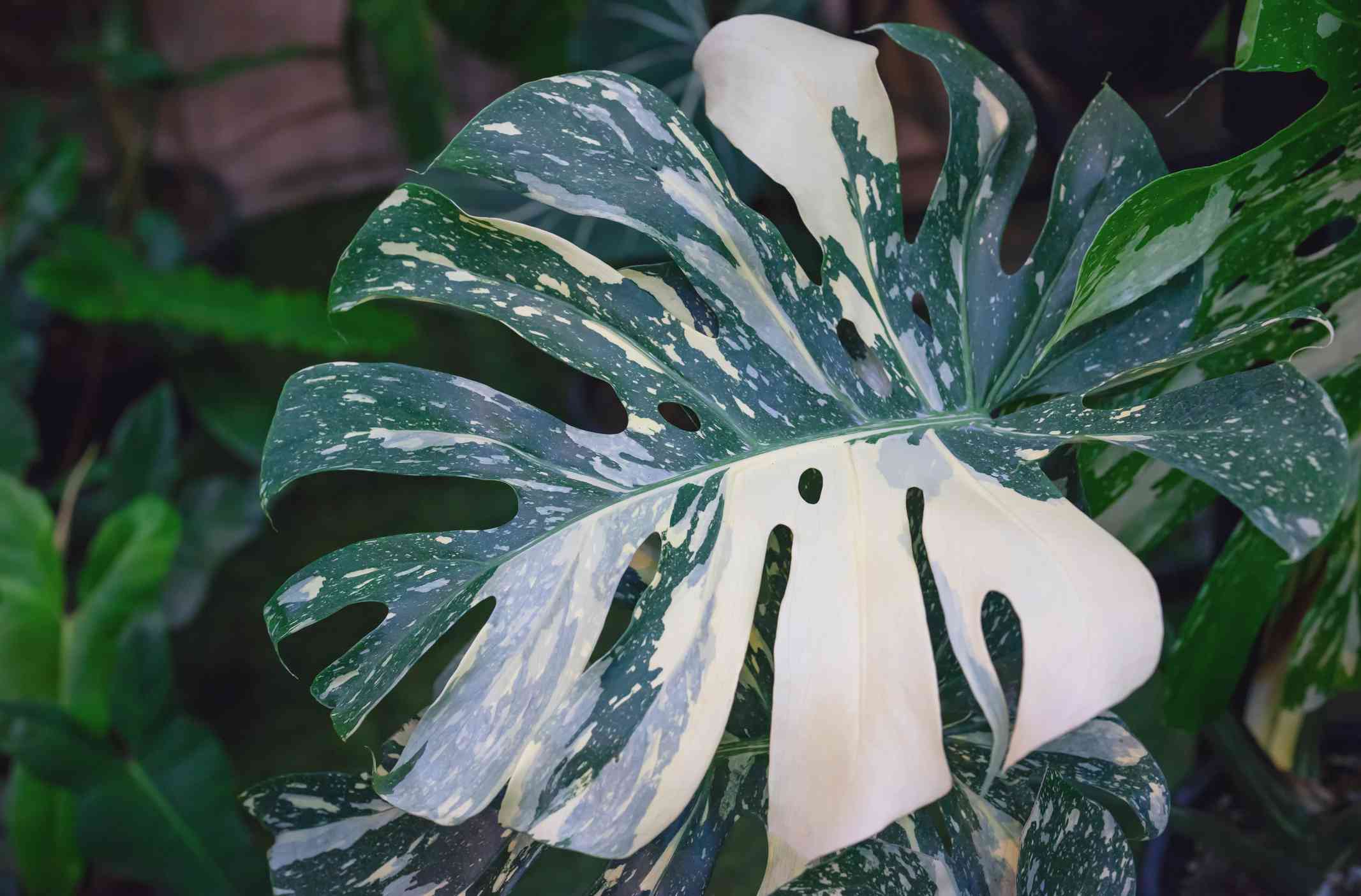
Variegated plants are the fashion icons of the plant world: they show up wearing stripes, splashes, freckles, or
creamy-white “paint strokes” like they’re headed to a botanical runway. If you’ve ever stared at a
Monstera with half-moon leaves and thought, “How is that even real?”welcome. Today we’re breaking down
what variegation is, why it happens, what it costs the plant (and your wallet), and how to keep those patterns
looking intentional instead of… accidentally all green.
This guide is designed for beginners and plant nerds alikeclear explanations, real examples, and practical care
tips you can use immediately. No fluff. No weird keyword chanting. Just the good stuff (with a little humor,
because plants are already dramatic enough).
What “Variegated” Actually Means
A variegated plant is simply a plant whose leaves (or stems, sometimes flowers or fruit) show
more than one color at the same time. Most commonly, you’ll see green paired with white, cream,
yellow, lime, silver, pink, or even multiple colors layered together.
That pattern can be predictable (like a neat border) or chaotic (like a leaf was spun on a paint splatter wheel).
Variegation can show up as:
- Marginal variegation (color on the edges)
- Center/medial variegation (a stripe through the middle)
- Marbled variegation (swirly, mixed pattern)
- Speckled variegation (dots and flecks)
- Sectoral variegation (big blockshalf a leaf can be white)
The Science Behind the Look: Why Leaves Turn Two-Toned
Leaf color is largely controlled by pigments and leaf structure. The big star is chlorophyll,
the green pigment that helps plants capture light for photosynthesis. When some cells have less chlorophyll (or
none), other colors show throughor the leaf reflects light differently. That’s where variegation comes from.
Here’s the key idea: not all variegation is created the same way. Knowing which “type” you have
can help you care for it, propagate it, and avoid accidentally keeping a plant with a disease you don’t want to
share.
Types of Variegation (And What Causes Each One)
1) Genetic variegation (stable patterns)
Some plants are genetically programmed to produce variegation as part of their normal growth. Think of it as a
plant that was born with a built-in pattern. In these cases, the variegation tends to be stable
and repeatableoften showing up reliably leaf after leaf.
These plants can sometimes be grown true-to-type from seed (depending on the plant and cultivar), though many
popular houseplant varieties are still produced vegetatively to guarantee the look.
2) Chimeral variegation (the “two-genetics-in-one-plant” situation)
This is the type that fuels collector hypeand the type that can also break your heart.
A chimera is a plant made of two (or more) genetically different tissues growing
together in layers. If one layer can produce chlorophyll and another layer can’t, you get green-and-white (or
green-and-yellow) patterns.
Chimeral variegation can be unstable. Why? Because the plant may produce new growth dominated by
one tissue layer. That’s how you get reversionwhen your variegated plant starts putting out
solid green leaves.
3) Viral variegation (pretty… but potentially a problem)
Sometimes variegation-like patterns come from plant viruses that create mosaic, mottling, rings,
or streaking. Certain infected plants can look attractive, and some have historically been kept because of that
appearance.
The catch: viruses can spread (often through sap, tools, insects, or propagation), weaken plants over time, and
infect other plants in your collection. If a plant’s “variegation” looks more like irregular mottling with
distorted growth, odd spotting, or widespread yellowing that doesn’t match the cultivar’s normal pattern, it’s
worth investigating before you propagate or place it near your favorites.
4) Structural (a.k.a. “silver”) variegation
Not all variegation is pigment-based. Some plants appear silvery or light-patterned because of the way their leaf
tissues are builttiny air spaces or specialized cell layers reflect light differently. The result can look like
metallic patches, frosty areas, or “glow” on the leaf surface.
This kind of variegation can be surprisingly durable because it isn’t always tied to missing chlorophyll in the
same way white variegation is.
5) “Stress color” vs. true variegation
Here’s a common mix-up: some plants change color due to light intensity, temperature, or nutrition.
For example, many plants develop deeper reds/purples when exposed to bright light or cool nights, thanks to other
pigments. That’s not the same as stable variegation, even if it’s equally gorgeous.
Is Variegation Good or Bad for the Plant?
Variegation is visually amazing, but it often comes with trade-offsespecially when the light-colored areas lack
chlorophyll.
-
Less green = less photosynthesis. White or pale sections contribute less energy, so growth can
be slower. -
Higher light needs. Because the plant has fewer “solar panels,” it typically needs brighter
conditions to produce the same energy as a fully green plant. -
More burn risk. Pale sections can scorch more easily in harsh sun because they have less
pigment protection.
In nature, some variegation may have ecological roles (camouflage, herbivore deterrence, or light management),
but as a houseplant owner, your main takeaway is practical: variegated plants often grow slower and want
brighter (but gentle) light.
Why Variegated Plants Revert (And Why It’s Not Personal)
Reversion happens when a variegated plant starts producing more solid green growth. This is most
common in chimeral variegation. And the reason is brutally logical: green tissue is better at making food.
If your plant is stressed, underlit, or just trying to survive, it may lean into the greener, more efficient growth.
Reversion triggers commonly include:
- Too little light (the plant “needs” more chlorophyll)
- Stress from inconsistent watering, pests, or root issues
- Pruning that removes variegated growth points
- Propagation methods that don’t preserve variegated tissue layers
If you spot an all-green stem on an otherwise variegated plant, don’t panic-scroll the internet at midnight.
The basic strategy is usually: prune back green shoots to the last variegated node (when the plant
is healthy enough to handle it), and improve conditions so the plant doesn’t feel like it’s living in a survival movie.
Variegated Plant Care: The Rules That Actually Matter
Different plants have different needs, but variegated plants share a few consistent care principles. Think of these
as the “house rules” that keep your plant from turning into a plain green roommate.
Light: bright, indirect, and consistent
Most variegated houseplants do best in bright, indirect light. That usually means near an
east-facing window, or a few feet back from a bright south/west window with sheer curtains.
- Too little light: new leaves may come in greener, smaller, or less patterned.
- Too much direct sun: pale sections can scorch or brown.
A practical goal: give the plant enough light that it can “afford” the white parts, but not so much that those
same parts get toasted.
Water: steady beats dramatic
Variegation doesn’t magically change a plant’s thirst, but stress does. A plant that swings between drought and
flood is more likely to make survival choiceslike reverting.
Use the usual houseplant approach:
- Water when the top inch or two of soil is dry (adjust for plant type and pot size).
- Use a pot with drainage holes, and don’t let it sit in water.
- In winter or low light, water less often.
Soil: airy, well-draining, not “mud in disguise”
Variegated aroids (like pothos, philodendron, monstera) typically like a chunky mix that drains well and holds
some oxygen around the roots. For other plant groups, follow the species’ normal preferencesbut always prioritize
drainage and root health.
Fertilizer: feed the green parts, not the hype
Variegated plants can grow slower, but they still need nutrients. A balanced fertilizer during the growing season
is usually enough. Avoid over-fertilizingexcess salts can stress roots, which is exactly the opposite of what we want.
Pruning: protect your variegation “real estate”
If a plant starts producing an all-green stem that grows faster than the variegated parts, that green growth can
eventually dominate. Pruning is how you keep the plant focused on the look you actually signed up for.
Tips:
- Remove strongly reverted shoots by cutting back to the last variegated node (when safe for the plant).
- Don’t remove too many green leaves at oncegreen is still the plant’s energy source.
- Always use clean tools to avoid spreading pathogens.
Propagation: How to Keep Variegation in the Next Generation
Propagating variegated plants is where dreams come true… or where you accidentally create a very healthy green plant.
The right method depends on the type of variegation.
Chimeral variegation: preserve the right tissues
With chimeras, you need propagation methods that keep the mixed tissues together. That often means:
- Stem cuttings with a node (and ideally visible variegation near the growth point)
- Division (great for clumping plants)
- Grafting (more common in horticulture than houseplant hobbyists)
A classic example: some variegated snake plant cultivars can lose their pattern if you propagate by leaf cuttings.
Division is typically used to maintain the variegated look.
Genetic/stable variegation: usually easier
If variegation is genetically stable, many propagation methods will preserve it more reliablythough you should still
expect natural variation in how strongly the pattern shows on each leaf.
Viral variegation: please don’t propagate it
If variegation is caused by a virus, propagating spreads the virus. That’s a hard pass for most home collections.
How to Shop for Variegated Plants Without Getting Played
Variegated plants are popular, and popularity attracts… creative storytelling. Here’s how to buy smarter.
Check the growth point (not just one pretty leaf)
Variegation that appears only on a single leaf can be temporary, damage-related, or not representative of future growth.
Look for consistency across multiple leavesor at least a visible pattern near the newest growth.
Beware “too good to be true” white
Leaves that are almost entirely white may look stunning, but they can be a liability. A plant needs
enough green tissue to photosynthesize and sustain itself. Some highly white plants struggle long-term unless they also
have sufficient green leaves elsewhere.
Look for a node on cuttings
If you’re buying a cutting, make sure it includes a nodethat’s where new growth can form. A leaf
without a node is just… a very expensive leaf.
Watch for “painted plant” gimmicks
Some sellers dye or artificially alter plants (especially in novelty markets). Real variegation is part of the leaf
tissue. If color looks like surface paint, wipes off, or appears unnaturally uniform, be cautious.
Popular Variegated Houseplants (And Why People Obsess Over Them)
Variegation shows up across tons of plant families, but these are some of the most common (and most loved) in home
collections:
Pothos varieties
Easy, forgiving, and naturally decorative. Variegated pothos types like ‘Marble Queen,’ ‘Pearls and Jade,’ or
golden-variegated forms tend to keep their pattern best in brighter light.
Monstera varieties
Variegated monsteras can show blocky white sectors or speckled “constellation” patterns. Many are slow-growing and
pricey because propagation can be limited and variegation can be inconsistent.
Philodendrons
From crisp white patches to multi-color foliage, philodendrons are a variegation playground. Many prefer warm temps,
bright indirect light, and an airy soil mix.
Snake plants (Sansevieria/Dracaena trifasciata types)
Tough as nails, but variegated forms may need the right propagation method (often division) to keep the pattern.
Ficus elastica (‘Tineke’ style looks)
Variegated rubber plants can be stunning, but they’ll reward steady care and consistent light more than chaotic
“water whenever you remember” schedules.
Troubleshooting: When Your Variegated Plant Looks… Unhappy
“My new leaves are less variegated.”
Most often this is a light issue. Increase brightness (without blasting it with harsh sun), and keep care consistent.
Also remember: some plants naturally vary leaf to leaf. Don’t judge the whole plant by one leaf having an identity crisis.
“The white parts are browning.”
Common causes include sunburn, low humidity (for tropicals), inconsistent watering, or mineral/salt buildup. Move the
plant away from direct sun, review watering habits, and consider using filtered water if your tap water is very hard.
“I got a fully white leaf. Is that good?”
It’s visually exciting, but it’s not always great for the plant. One white leaf won’t doom it, but a string of
all-white growth can reduce the plant’s ability to feed itself. Your goal is balance: enough variegation to be
pretty, enough green to be functional.
Conclusion: Variegation Is BeautifulAnd a Little Bit of a Negotiation
A variegated plant is a plant with multi-colored foliage caused by changes in pigment, genetics, tissue layering
(chimeras), leaf structure, or sometimes viruses. The reason variegated plants can be trickier is simple:
the light-colored parts often don’t photosynthesize well, so the plant needs more gentle light and less stress
to maintain the look.
If you give stable carebright indirect light, good drainage, consistent watering, and smart pruningyou’ll have
a much better shot at keeping those patterns crisp. And if it reverts anyway? Congratulations: you’re officially
in the plant hobby now. That’s basically the entrance exam.
Real-World Experiences: What Growing Variegated Plants Is Actually Like (The Extra )
Let’s talk about the part nobody mentions in the glamorous listing photos: owning a variegated plant is a mix of
delight, detective work, and mild emotional turbulence.
First, there’s the lighting obsession. You put the plant in a spot you swear is bright… and two weeks
later your newest leaf rolls out looking suspiciously greener than the last. Suddenly you’re rearranging furniture like
you’re staging a home for a photoshoot, except the client is a pothos. You’ll start using phrases like “bright indirect”
with the seriousness of a NASA engineer.
Then comes the reversion scare. You notice one all-green leaf and immediately imagine the entire plant
turning into a plain green salad overnight. The reality is usually calmer: one green leaf doesn’t always mean the end.
But it does teach you a useful skillevaluating growth patterns rather than panicking at a single data point. (Plants:
secretly great at personal development, annoyingly.)
Next is the watering learning curve. Many plant owners start out watering by vibes. Variegated plants
tend to punish that approach with stress signals: droopy leaves, crispy edges on pale sections, or sluggish growth.
Eventually you develop a rhythm: checking soil, noticing pot weight, and recognizing that “more water” is not a
personality traitit’s a plan.
If you try propagation, you’ll experience the classic moment of wisdom:
not every cutting becomes a clone of the parent. That’s when people learn the difference between
“this plant has variegation” and “this growth point can produce variegation.” You’ll start inspecting nodes like a jeweler
judging diamonds. You’ll also gain deep respect for growers who consistently produce stable variegated stockbecause it’s
not just luck, it’s careful selection and patience.
Another real-world experience: variegated plants photograph better than they grow. Online, they look
like perfect art. In your living room, they grow one leaf at a time, sometimes slowly, occasionally crooked, and often on
their own schedule. That’s normal. The win isn’t having a flawless plant; it’s learning how to keep it healthy while still
looking like the quirky masterpiece you bought.
Finally, there’s the social side. Friends will ask why you paid more for a plant that’s “missing green.” You’ll try to
explain tissue layering, stability, and demand, and realize you sound like you joined a botanical secret society. And you
kind of did. But when a new leaf unfurls with clean marbling or a perfect half-moon? That little dopamine hit makes sense.
Variegated plants are part science, part art, and part “look what my plant just did!”