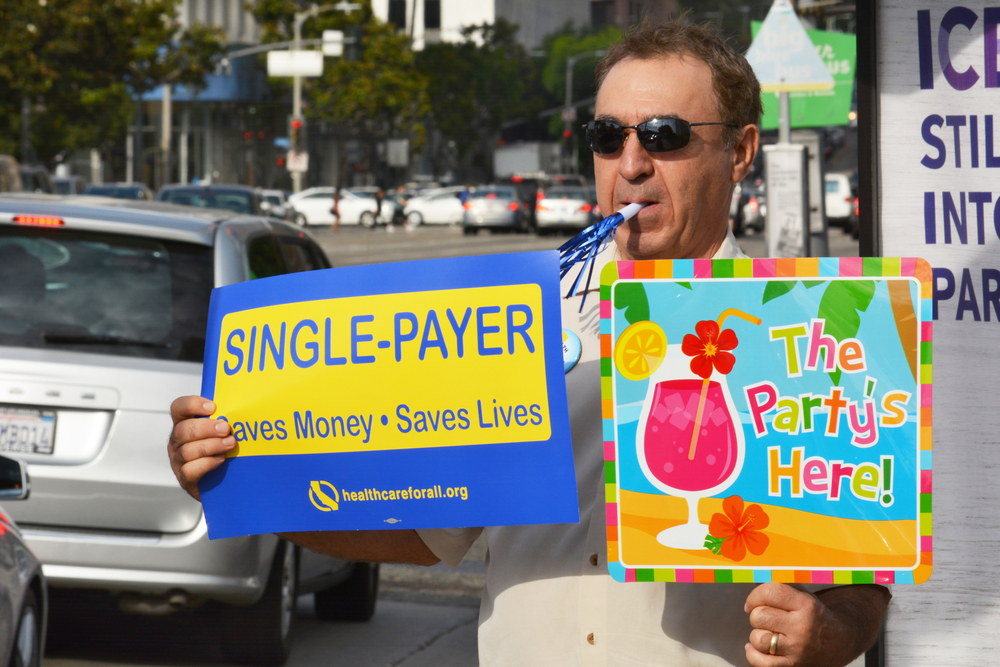
Few phrases in American politics spark more debate than “single-payer health care.”
For some, it sounds like a golden ticket to universal coverage; for others, like a
one-way trip to bureaucracy and long wait times. But set the campaign slogans aside
for a moment. If we started with a blank page and asked, “What would an optimal
single-payer health care system actually look like?”what would we build?
This article walks through the core design choices behind a well-functioning
single-payer system: how it’s financed, what it covers, how doctors and hospitals
get paid, and what guardrails are needed to avoid the pitfalls critics worry about.
Think of it as a blueprint, not a billthe goal is clarity, not campaign talking points.
First things first: what is single-payer (and what isn’t)?
A single-payer health care system is one where a single public authority
organizes and pays for most medically necessary care for everyone in the country.
That payer is usually a national or regional government agency. Providersdoctors,
hospitals, clinicscan still be public, private, or a mix. The key word here is
payer, not provider.
That means:
-
It’s different from “socialized medicine,” where the government both
pays for and directly provides care (like the U.S. Veterans Health
Administration). -
It’s also different from systems that achieve universal coverage through
multiple insurers, heavy regulation, and subsidies (think Germany or Switzerland). -
“Medicare for All” ideas are a type of single-payer proposal, but existing
Medicare itself isn’t a pure single-payer system because private plans play
a large role.
In other words, “single-payer” is mainly a financing model: one public plan,
one set of rules, coverage for everyone.
The core goals of an optimal single-payer system
Before getting into the plumbingtaxes, payment rates, benefit designit helps
to be clear about the destination. An optimal single-payer health care system
would aim to:
- Cover everyone as a matter of right, not as a job perk or income test.
- Protect people financially so medical bills don’t trigger debt or bankruptcy.
- Use money efficiently by cutting waste and administrative complexity.
- Support high-quality care, including mental health and preventive care.
- Preserve meaningful choice of clinicians and hospitals.
- Be sustainable over decades, not just during the honeymoon phase of reform.
Those goals aren’t unique to single-payer, but the model tries to reach them by
simplifying who pays and how.
Financing: replacing premiums with taxes (without paying twice)
In an optimal single-payer design, most of the money Americans currently pay
in premiums, deductibles, and out-of-pocket costs would be replaced by
progressive taxes. The idea isn’t to stack new costs on top of the old ones;
it’s to swap many fragmented payments for a simpler, more predictable system.
How the money would flow
-
Payroll contributions from employers and employees, scaled by income,
would replace employer-sponsored premiums. -
Income-based taxes (potentially with higher marginal rates at the top)
would help finance coverage for people outside the traditional workforce. -
Targeted taxesfor example on tobacco, alcohol, or sugary drinkscould
support prevention initiatives while nudging healthier behavior.
The crucial design test is whether the average household’s new tax payments are
lower than what they currently spend on premiums, deductibles, and surprise bills.
Many academic models suggest that if the system is designed carefullywith lower
administrative overhead and more bargaining power on pricesoverall national health
spending can hold steady or even fall while coverage expands.
Making financing fair
An optimal system would be built around ability to pay. That means:
- Low-income households pay little or nothing in direct taxes for coverage.
- Middle-income families see net savings as premiums and deductibles disappear.
- High-income households and very profitable firms shoulder a larger share.
Transparency is non-negotiable. People should be able to visit a government
website, enter their income, family size, and state, and see roughly what they’d
contribute under the single-payer plan compared with what they’re likely paying now.
What would be covered under an optimal single-payer plan?
A bare-bones single-payer plan that skimps on benefits would miss the point.
An optimal model would mirror or exceed the benefit packages seen in other
high-performing countries with universal coverage.
Comprehensive, evidence-based benefits
At minimum, the national benefit package would include:
- Primary and preventive care, including vaccines and screenings.
- Outpatient specialty care.
- Hospital and emergency services.
- Mental health and substance use treatment at parity with physical health.
- Prescription drugs, including generics and medically necessary brand-name drugs.
- Maternity care and pediatric services.
- Rehabilitation and home health services.
-
Long-term care coverage designed to protect families from catastrophic costs
as the population ages.
To keep the package sustainable, the system would rely on a national
health technology assessment process that evaluates new drugs, devices,
and procedures for clinical value and cost-effectiveness. Treatments that deliver
substantial health benefits at a reasonable cost are covered widely; marginal ones
still can be used, but perhaps with more modest coverage.
Cost-sharing that nudges, not punishes
The cleanest version of single-payerno copays or deductiblesis simple but
politically and fiscally challenging. An optimal system might allow modest,
value-based cost-sharing designed to steer, not block, care:
- $0 for preventive care and high-value medications for chronic diseases.
- Small, predictable copays for standard office visits.
- Caps on annual out-of-pocket costs to prevent financial shock.
Critically, cost-sharing would be waived or reduced for low-income patients and
never used as a backdoor way to ration necessary care.
Paying doctors and hospitals: fair, simple, and strategic
In a single-payer system, the public payer has enormous leveragebut with great
bargaining power comes great responsibility. Paying too generously drives up
costs; paying too little risks burnout, shortages, and quality problems.
Hospitals on global budgets
Many experts favor putting hospitals on global operating budgets, similar to
how fire departments or public schools are funded. Instead of billing per test or
procedure, hospitals would receive an annual budget based on:
- The size and health needs of the population they serve.
- Past performance and efficiency.
- Quality metrics and equity goals.
This approach discourages unnecessary volume and makes it easier to plan
investments in staff, equipment, and buildings. Capital projectsnew wings,
shiny machineswould be funded through a separate, transparent process so
they’re guided by community need, not by which service line promises the
highest margins.
Physicians: blended payment models
For clinicians, an optimal system would mix:
-
Negotiated fee schedules for many services, simplifying billing and
drastically cutting administrative overhead. -
Per-patient payments (capitation) for primary care teams to promote
continuity, prevention, and coordination. -
Quality and equity bonuses tied to outcomes, patient experience,
and closing care gaps among disadvantaged groups.
The goal is to support good medicine: more time listening to patients, less time
arguing with insurance companies about coding and prior authorizations.
Cutting waste and administrative bloat
One of the biggest selling points of single-payer is the potential to
slash administrative complexity. Today, hospitals and clinics juggle dozens of
payers, thousands of plan designs, and endless billing rules and prior auth
hoops. That eats up staff time and money that could go toward actual care.
In an optimal single-payer system:
- There is one enrollment process, one insurance card, and one set of rules.
-
Billing uses a single electronic claims standard, with real-time adjudication
where possible. -
Prior authorization is used sparingly, with transparent criteria and
strong oversight to prevent abuse. -
Providers no longer maintain entire departments just to chase denials
and resubmit claims.
Lower overhead doesn’t just save money; it can make working in health care
less soul-crushing. A leaner administrative structure is a major reason why
some single-payer systems abroad spend less as a share of GDP while achieving
comparable or better outcomes.
Ensuring access, quality, and innovation
Critics worry that single-payer inevitably leads to long wait times and
sluggish innovation. Those risks are realbut they’re largely problems of
design and political will, not destiny. An optimal system builds in
safeguards from the start.
Managing wait times
To maintain timely access, the system would:
-
Track wait times for key services in real time and publish the data in
an accessible public dashboard. -
Guarantee maximum wait standards for urgent, cancer, and elective care,
backed by extra funding when benchmarks are missed. -
Use telehealth, advanced practice clinicians, and better triage to make
the most of the workforce. - Support targeted recruitment and training programs in underserved areas.
When wait times rise above agreed thresholds, automatic corrective actionsmore
funding, expanded clinic hours, or temporary contracting with supplemental providers
would kick in, not just handwringing.
Keeping innovation alive
Innovation doesn’t have to disappear just because a single public payer is
writing most of the checks. A well-designed system would:
-
Support public and private biomedical research through predictable,
multi-year funding. -
Use value-based drug pricing that rewards treatments offering real gains,
while speeding generic and biosimilar competition. -
Encourage pilot projects and “sandbox” regions where new care models can
be tested and scaled rapidly if they work.
The aim is to shift from “innovation that maximizes billable units” to
“innovation that maximizes health outcomes per dollar.”
Governance: who runs this thing?
Even the best policy blueprint can be wrecked by bad governance. An optimal
single-payer system would be run by a national health authority with:
- A clear legal mandate to pursue access, quality, equity, and financial sustainability.
-
Professional, nonpartisan leadership with fixed terms and insulation from
day-to-day political meddling. -
Strong public engagement, including advisory councils representing patients,
clinicians, employers, and community groups. -
Radical transparency: open data on spending, outcomes, disparities, and
performance of regions and institutions.
States or regions could manage local implementationprovider networks,
certain benefit detailswithin national standards. This balances national
equity with local flexibility and experimentation.
Transitioning from the current U.S. system
It’s one thing to sketch an ideal; it’s another to get there from the current
maze of private plans, Medicare, Medicaid, and employer coverage. An optimal
transition would be phased, predictable, and supportive of people who
would be most disrupted, like workers in the insurance industry.
Possible transition steps
-
Lower the Medicare eligibility age in stages while improving benefits,
making it more attractive as a default option. - Automatically enroll newborns and uninsured adults into the new national plan.
-
Gradually roll large employer groups into the system, allowing time to
renegotiate contracts and adjust wages as premium obligations disappear. -
Provide retraining and job placement support for workers whose roles in
claims processing and benefits management shrink as complexity falls.
The key is to avoid a chaotic overnight switch while also preventing endless
delay. Clear timelines, early investments in IT and data infrastructure, and
ironclad assurances about continuity of care are essential.
What could go wrongand how an optimal design responds
No system is magic. Even a carefully designed single-payer model faces real risks.
-
Underfunding: If lawmakers chronically shortchange the system,
quality and access will slide. Guardrail: link funding levels to objective
population health and access metrics, and require public votes or supermajorities
for cuts below a defined benchmark. -
One-size-fits-all rigidity: A single national plan can be slow to
adjust to diverse local needs. Guardrail: allow regional flexibility within
national minimum standards, and formal pathways to approve local innovations. -
Political interference: Benefit decisions could be hijacked by
short-term politics. Guardrail: independent health technology assessment bodies
that follow transparent, evidence-based rules. -
Provider backlash: If payment changes are abrupt or perceived as
unfair, morale and participation may suffer. Guardrail: multi-year transition
schedules, inclusive negotiations with provider groups, and honest public
communication about trade-offs.
In other words, an optimal single-payer system isn’t just a big insurance plan.
It’s a long-term governing project that needs ongoing maintenance, feedback, and
adjustment.
Experiences and stories that illuminate the idea
Discussions about single-payer can feel abstractpercent of GDP here,
administrative savings there. It becomes more real when you think about how
it plays out in people’s lives and in the day-to-day work of clinicians.
A patient’s-eye view
Imagine a 52-year-old self-employed contractor living in a mid-sized American city.
Today, his coverage might depend on a patchwork of marketplace plans with rising
premiums, a high deductible, and networks that mysteriously change from year
to year. A bad fall from a ladder could quickly turn into thousands of dollars
in bills, hours on the phone with insurers, and anxiety about collections.
In an optimal single-payer system, his experience looks different. He’s
automatically covered as a resident; his contributions show up as a line on
his tax return instead of a premium bill that jumps each January. When he falls,
the question at the emergency room is “Are you okay?” not “Is this hospital
in-network?” The bills that show up later are straightforward, with low or
no cost-sharing and a clear annual cap if any copays apply.
That doesn’t mean care is free in the cosmic sensehe’s still paying through
taxesbut the financial risk tied to getting sick is dramatically lower,
and the paperwork burden is almost nonexistent.
A clinician’s experience
Consider a primary care physician working in a community clinic. Today, she might
spend a frustrating amount of time juggling prior authorizations, responding to
denials, and navigating different formularies depending on whether her patient
has a commercial plan, Medicaid managed care, Medicare Advantage, or a short-term
policy. Burnout isn’t just about long hours; it’s about feeling like the system
gets in the way of practicing good medicine.
In a well-designed single-payer system, she still has pressureslimited time,
the difficulty of helping patients with complex social needsbut the payer side
is less chaotic. One standard formulary with an appeals process, one set of
billing rules, one portal for lab and imaging authorizations. The clinic has
fewer billing specialists and more care coordinators, community health workers,
and mental health professionals, because the financial incentives have shifted
toward keeping people healthy instead of managing billing complexity.
Lessons from other countries
Countries with single-payer systems or near-single-payer arrangements offer
real-world hints about what works and what doesn’t. Experience abroad suggests:
-
Universal, simple coverage is achievable. When everyone is in the
same system, basic coverage gaps shrink dramatically, and administrative
processes can be streamlined. -
Strong primary care is essential. Systems that invest heavily in
primary carelong-term relationships, team-based models, easy accesstend to
manage chronic disease more effectively and keep hospital use in check. -
Underinvestment shows up as wait times. When policymakers squeeze
health budgets to solve short-term fiscal problems, waiting lists often grow.
Sustainable funding formulas and independent oversight help keep this in check. -
Politics never disappears. Even the best-designed systems face
ongoing battles over budgets, benefits, and reforms. The difference is that
the basic social contracteveryone is covered, regardless of income or jobremains in place.
These experiences don’t offer a copy-and-paste solution for the United States,
but they do show that the combination of universal coverage, lower administrative
overhead, and reasonably good outcomes is not just a theoretical possibility.
It’s something other countries live with every day, with their own imperfections
and course corrections.
Bottom line
An optimal single-payer health care system isn’t a utopia where no one ever
waits for care or argues over budgets. It’s a practical design that trades
today’s complexity and gaps in coverage for a simpler promise: everyone is in,
the rules are clear, and most of the money goes to care instead of paperwork.
Whether a country chooses that path is ultimately a political decision. But the
design questions are technical, solvable, and informed by decades of international
experience. If we’re going to debate single-payer, it’s worth debating it at its
best: not as a slogan, but as a carefully built system aimed at universal,
sustainable, and high-quality care.