The International Space Station is often described as humanity’s most impressive group project. It is part science lab, part orbital apartment, part engineering miracle, and part very expensive reminder that even countries that argue on Earth still need to share the plumbing in space. So when reports surfaced that Russia had sent a mysterious experiment toward the ISS without explaining much to NASA, space watchers did what space watchers do best: they squinted at photos, zoomed in too far, and began asking, “Wait, what is that thing?”
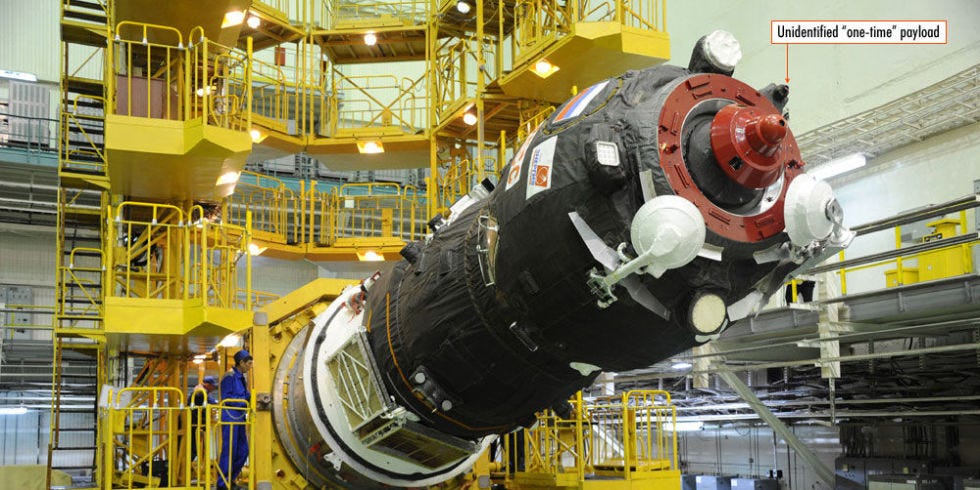
The phrase “secret ISS experiment” sounds like the opening scene of a spy thriller. In reality, the story is more complicated and, in some ways, more interesting. The mystery centered on Russia’s Progress MS-07 cargo spacecraft, known to NASA as Progress 68, which launched in October 2017 to deliver food, fuel, and supplies to the station. In photos from launch preparations, observers noticed an unusual external device mounted on the front section of the spacecraft. NASA reportedly asked Russian officials what it was. The answer was brief: a one-time scientific payload. That was it. No grand explanation, no glossy research brochure, no “Meet Our Little Space Gadget” press kit.
That silence is what made the payload famous. Not because anyone proved it was dangerous, but because the ISS normally runs on trust, coordination, and paperwork thick enough to make a printer beg for early retirement. Every visiting spacecraft, external experiment, and operational change matters. In orbit, “probably fine” is not a management strategy. When one partner brings unfamiliar hardware near a shared space station and says little about it, people notice.
What Was the So-Called Secret ISS Experiment?
The most widely discussed theory is that the device was related to a Russian experiment called Otrazhenie, meaning “Reflection.” A similar Russian experiment had previously flown on a Progress spacecraft after it undocked from the ISS. Its purpose was reportedly to observe atmospheric and reflective properties from orbit. That may sound harmless, and it may very well be. Studying how light behaves in the atmosphere has obvious scientific value, especially for Earth observation, climate data, optical calibration, and sensor design.
But space technology has a habit of wearing two hats. One hat says “science.” The other hat says “defense application, please do not ask too loudly.” Optical sensors that study atmospheric reflection can also improve systems used for tracking objects, identifying targets, or refining reconnaissance methods. That does not mean the Progress MS-07 payload was a military project. It means the line between peaceful research and strategic value can be thin, especially when the experiment involves observation, optics, and the upper atmosphere.
The Progress MS-07 Context
Progress spacecraft are not glamorous in the way crew capsules are glamorous. They do not carry astronauts, they do not return to Earth, and they do not get much red-carpet treatment. They are orbital delivery trucks. They bring supplies, propellant, water, equipment, and spare parts to the ISS. After serving their purpose, they usually undock, burn up in Earth’s atmosphere, and take station trash with them. If the ISS had a sanitation department, Progress would be the hardworking employee nobody thanks enough.
Progress MS-07 was supposed to demonstrate an expedited rendezvous profile, reaching the station in just a few hours after launch. A launch scrub changed the plan, and the vehicle followed a two-day approach instead. That part was not mysterious. The odd part was the external hardware seen in public photos. It was not hidden under a tarp in a villain’s volcano base. It was visible. But visibility is not the same as transparency. NASA specialists could see the object; they just did not receive a detailed explanation.
Why Would Russia Keep an ISS Experiment Quiet?
There are several practical reasons a country might keep details of a space experiment limited. The first is national competitiveness. Space agencies are scientific institutions, but they are also symbols of national prestige. A new sensor, test method, or measurement technique can represent years of investment. If engineers believe the design has value, they may not want to publish every detail before the data is collected.
The second reason is bureaucracy. Not every “secret” begins as a conspiracy. Sometimes it begins as a government office deciding that one sentence is enough. Anyone who has ever filled out a form, waited in a licensing queue, or tried to get a straight answer from a large institution understands this deeply. In spaceflight, however, vague answers can become international incidents because the hardware is attached to a spacecraft approaching a shared orbital facility.
The third reason is dual-use sensitivity. Many space technologies serve both civilian and defense purposes. Cameras, radar, thermal sensors, communications links, navigation tools, materials testing, and autonomous systems can all support peaceful exploration while also improving military capability. This is not unique to Russia. The United States, Europe, China, Japan, and private companies all operate in a space environment where scientific tools can have strategic implications.
The fourth reason is politics. The ISS was built on cooperation, but cooperation does not erase national interest. Russia and the United States have continued working together in orbit even during periods of serious tension on Earth. That is remarkable. It is also fragile. When political trust is lower, small technical mysteries can look larger than they are. A little silence can echo loudly inside a partnership built on shared risk.
Was the Experiment Actually Dangerous?
Based on public information, there is no solid evidence that the unidentified Progress MS-07 payload posed a threat to the ISS crew. The more reasonable concern was procedural: why was a partner spacecraft carrying unexplained external hardware near a station operated by multiple nations? In space, safety culture depends on knowing what is attached to what, how it behaves, whether it emits anything, whether it interferes with communications, whether it changes vehicle dynamics, and whether it creates debris or contamination risks.
Think of the ISS as a shared apartment, except the apartment travels around Earth at roughly 17,500 miles per hour and a loose screw can become a high-speed problem. If your roommate installs a mysterious device on the balcony, you may not assume it is dangerous. But you will probably ask what it does before it starts blinking.
The issue, then, was less “Russia has a secret weapon on the ISS” and more “Russia did not explain a payload in the level of detail expected in a shared orbital program.” That difference matters. Responsible analysis should avoid turning every unknown object into a conspiracy. At the same time, responsible operations require clear communication. The ISS is not a place where mystery earns bonus points.
The ISS Is Built on Transparency, but Not Perfect Transparency
The International Space Station is operated by five major partner agencies: NASA, Roscosmos, the European Space Agency, the Japan Aerospace Exploration Agency, and the Canadian Space Agency. Each partner controls and manages the hardware it provides. The station is interdependent, meaning no partner can pretend its section exists in a separate universe with better snacks. Russian systems support critical functions such as propulsion and reboost, while U.S. systems contribute major power, research, control, and life-support capabilities.
That interdependence is why communication matters so much. If a visiting vehicle docks to the Russian segment, it still affects the whole station. If a module develops a leak, the whole partnership cares. If a new payload is mounted on a cargo ship, everyone wants confidence that it will not interfere with operations. The ISS does not reward secrecy because physics does not respect national boundaries.
Yet the ISS has never been a completely open laboratory in the casual sense. Partners share what they need to share for safety and operations, but they do not necessarily publish every technical detail for the public. Some research may involve proprietary technology. Some experiments may be protected by export-control rules. Some data may be scientifically sensitive until researchers finish analysis. The problem begins when limited disclosure affects partner confidence.
Why Atmospheric Reflection Research Matters
If the mysterious device was connected to the Otrazhenie family of experiments, the scientific logic is easy to understand. Earth’s atmosphere is not a simple window. It bends, scatters, absorbs, and reflects light. Clouds, aerosols, humidity, temperature layers, auroras, and sunlight angles all change what sensors see from orbit. Better measurements help improve Earth observation, environmental monitoring, remote sensing, and spacecraft imaging.
For example, a satellite looking down at Earth must separate useful information from atmospheric noise. Is that bright signal a surface feature, a cloud reflection, or a sensor artifact? Is a dim object actually dim, or is the atmosphere playing optical tricks? These are not small questions. Remote sensing supports weather prediction, disaster response, agriculture, climate research, and maritime monitoring. It also supports defense and intelligence applications. That is where the eyebrows rise.
In other words, the same knowledge that helps scientists understand atmospheric reflection can also help engineers build better surveillance or tracking systems. Space research often lives in that awkward neighborhood. The mailbox says “peaceful science,” but the house next door has defense contractors visiting on weekends.
Russia’s Long History of Quiet Space Projects
Russia inherited a space culture shaped by the Soviet program, where secrecy was not an exception; it was a habit. During the Cold War, many Soviet missions were announced only after success, and failures often disappeared into official silence. Modern Roscosmos is more public than the Soviet space program, but traces of that institutional style remain. Russia also has strong incentives to protect technical know-how as it works to maintain its position in human spaceflight.
That history does not automatically make every Russian payload suspicious. It does explain why vague communication can trigger concern among U.S. observers. Space cooperation between NASA and Roscosmos has survived political storms because engineers and mission controllers keep focusing on crew safety. But old habits and modern geopolitics can still make simple questions harder than they need to be.
Why the Story Still Matters Today
The Progress MS-07 mystery is not just a historical oddity from 2017. It points to a larger issue: the ISS is aging, international politics are tense, and the future of low Earth orbit is changing. NASA and its partners want to transition from the ISS to commercial space stations after 2030. Russia has committed to ISS operations through 2028 and has discussed building its own orbital station. The partnership that once looked permanent now feels more like a careful countdown.
Meanwhile, the Russian segment has faced real maintenance concerns, including long-running air leak investigations in the Zvezda-related transfer area. These issues are separate from the 2017 mystery payload, but they reinforce the same lesson: the ISS depends on trust, technical clarity, and fast communication. When the hardware is old and the politics are sharp, uncertainty becomes expensive.
What Can We Learn from the “Secret” ISS Experiment?
The biggest lesson is that secrecy in space does not need to be dramatic to be risky. A small unexplained payload can create confusion because spaceflight is a system of systems. Every vehicle, sensor, antenna, bracket, experiment, and procedure fits into a bigger safety picture. If one partner withholds details, even for ordinary reasons, it creates room for speculation.
The second lesson is that dual-use research deserves careful language. It is fair to say an optical or atmospheric experiment could have military relevance. It is not fair to claim it was definitely a military operation without proof. Good science writing should be curious without sprinting into conspiracy wearing roller skates.
The third lesson is that the ISS remains one of the most unusual diplomatic achievements in history. Even when Russia and the United States disagree fiercely on Earth, astronauts and cosmonauts continue sharing air, meals, emergency plans, and work schedules in orbit. That cooperation is not sentimental. It is practical. Everybody wants the crew safe. Everybody wants the station stable. Nobody wants a surprise attached to a spacecraft unless it is birthday cake, and even then, mission control would like the mass properties in advance.
Experiences and Reflections: Why This Story Feels So Human
The fascinating part of the “secret ISS experiment” story is not only the hardware. It is the very human reaction to uncertainty. People love space because it feels clean, mathematical, and grand. Rockets launch, spacecraft dock, astronauts float, and Earth glows below like a screensaver designed by a genius. But behind that elegant view is a messy human machine: agencies, budgets, politics, engineers, national pride, cautious managers, and reporters trying to understand a blurry object in a photograph.
Imagine being a NASA engineer who notices an unfamiliar device on a Russian cargo craft. You are not trying to start a diplomatic argument. You are trying to do your job. You know that every external object has to be understood. You ask the obvious question: what is it? Then you receive a short answer that says, in effect, “scientific experiment.” Technically, that is an answer. Emotionally, it is the kind of answer that makes coffee taste stronger.
Now imagine being on the Russian side. Perhaps the device is routine to your team. Perhaps it belongs to a research institute that does not want publicity. Perhaps the paperwork exists somewhere, in a folder with a title so long it could count as a short novel. Perhaps officials think the Americans are making too much of it. From their point of view, the payload may be harmless and temporary. From NASA’s point of view, incomplete information is still incomplete information. Both reactions can exist at the same time.
This is why the story works so well as a case study in space cooperation. The ISS is not held together only by bolts, modules, and solar arrays. It is held together by expectations. Partners expect to be informed. Engineers expect details. Crews expect that the adults on the ground have argued through every scenario before anything gets near their orbital home. When one piece of that expectation feels shaky, people get nervous.
For readers, the story is also a reminder to be careful with the word “secret.” Secret can mean classified. It can mean undisclosed. It can mean poorly explained. It can even mean “nobody in the press office picked up the phone.” The Progress MS-07 payload appears to fall into the category of publicly visible but insufficiently explained. That is less explosive than a conspiracy theory, but more realisticand reality is usually better written than fiction anyway.
There is also something oddly comforting here. The fact that observers noticed the device shows how watched spaceflight has become. Public photos, independent analysts, journalists, and space enthusiasts now form an unofficial layer of accountability. A strange attachment on a spacecraft can become a global question within hours. That does not replace official transparency, but it does encourage it. In the modern space age, if you bolt something unusual to a spacecraft, someone with a large monitor and too much curiosity will find it.
In the end, Russia’s mysterious ISS experiment matters because it reveals the delicate balance of orbital life. Science, strategy, trust, secrecy, and cooperation all share the same narrow hallway. The ISS has survived because its partners usually choose communication over confusion. The next generation of space stations will need the same habit, especially as more nations and private companies enter orbit. Space may be vast, but shared spacecraft are small. Up there, transparency is not just polite. It is part of the life-support system.
Conclusion
So, why did Russia have a secret ISS experiment? The best answer is that Russia appears to have flown a poorly explained, possibly one-time scientific payload on Progress MS-07, likely connected to atmospheric or optical observation research. The mystery came less from proof of danger and more from the lack of detail given to a close international partner. In the uniquely sensitive world of the International Space Station, that is enough to raise serious questions.
The story is a useful reminder that space exploration is not just about rockets and research. It is about trust. The ISS works because partners share responsibilities, risks, and information. When any of those become cloudy, even a small device can cast a long shadow.
Note: This article is an original, publication-ready synthesis based on publicly available reporting and official space-agency information. It avoids source-link markup in the body for clean web publishing.