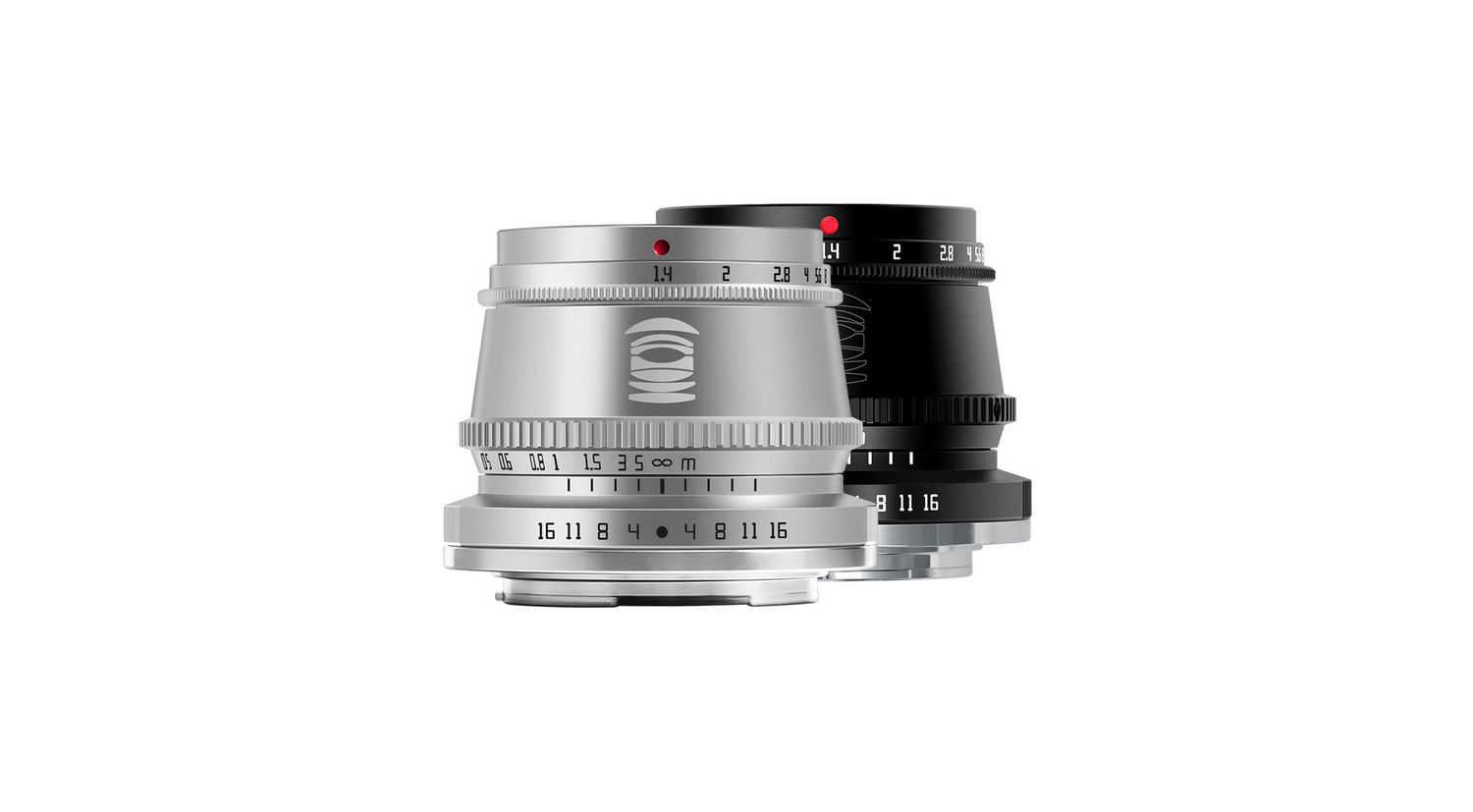
Every photographer has “that” lens. The one that cost way less than it should,
looks slightly suspicious in the product photos, shows up in a plain cardboard
box from Shenzhen… and then quietly becomes the star of your camera bag.
That’s what happened with my amazing, cheap, Chinese camera lens.
I didn’t buy it because I needed it. I bought it because it was too cheap and
too interesting not to. I’d been reading about brands like Viltrox, 7Artisans,
TTArtisan, Meike, and others making fast prime lenses for the price of a nice
dinner. These lenses don’t pretend to be perfect; they promise something more
funbig apertures, quirky character, and the freedom to shoot without feeling
like every click is burning money.
Over time, this little lens has become my go-to for portraits, street shots,
and low-light experiments. It’s far from flawless, and that’s exactly why I
love it. Let’s talk about what makes these cheap Chinese lenses genuinely
compelling and why this particular one has completely reshaped how I think
about camera gear.
The Rise of Cheap Chinese Camera Lenses
Just a few years ago, “cheap Chinese lens” was basically code for “soft,
flary, weird, and maybe a bit of a gamble.” Today, the narrative is very
different. Companies like Viltrox, 7Artisans, Meike, TTArtisan, Laowa, and
others have stepped up their game, releasing lenses with surprisingly solid
optics and build quality at budget-friendly prices.
Photography sites and reviewers increasingly point out that third-party
lensesespecially from newer manufacturershave helped make fast primes and
specialty lenses accessible to everyday shooters, not just professionals with
giant budgets. Some of these lenses even compete with name-brand glass in
sharpness, contrast, and overall performance, especially on modern mirrorless
cameras that are more forgiving of optical quirks.
At the same time, these brands keep pushing into more mounts: Sony E, Fujifilm
X, Nikon Z, Canon RF, Micro Four Thirds, and even L-mount, bringing affordable
glass to cameras that used to be limited to expensive native options. That
competition is great for photographersand honestly, it’s one of the reasons
gear has become more fun lately.
Meet My Favorite Budget Lens
My personal “hero” in this story is a compact, fast prime: a small Chinese
lens with a wide maximum aperture, all-metal construction, and a price that
made me do a double-take. The exact brand isn’t as important as what it
representsbecause there are many similar optionsbut imagine something like
a 35mm or 50mm f/1.4 or f/1.8 from a company such as Meike, 7Artisans, or
TTArtisan.
It arrived with no fancy packaging or velvet-lined case. Just foam, a simple
cap, and the lens. But once I picked it up, I was surprised: it felt dense,
solid, almost vintage. Metal barrel, smooth-focus ring, clicky aperture
stops. If you grew up on plasticky kit lenses, this feels like a tiny tank.
The lens I bought is manual focus, which is a big reason it’s so affordable.
No autofocus motor, no complex electronics, no built-in image stabilization.
Instead, you get a pure, mechanical shooting experience. On mirrorless
cameras with focus peaking and magnification, this isn’t a handicapit’s
actually kind of addictive.
What This Lens Does Shockingly Well
1. Low-Light and Shallow Depth of Field
The biggest reason this lens lives on my camera is its speed. With an
aperture around f/1.4 or f/1.8, it lets in way more light than a typical
kit zoom. That means:
- You can shoot indoors without cranking ISO into the “grainy potato” zone.
- Backgrounds melt away into creamy blur, making portraits look cinematic.
- You can isolate your subject in busy environments like markets or cafes.
Do you get some softness and glow wide open? Yes. But it’s a pleasing,
flattering kind of softness, especially for faces. When you stop down a bit,
the lens tightens up and delivers respectable sharpness and contrastmore
than enough for social media, prints, and even professional client work in
the right hands.
2. Characterful Bokeh and Rendering
If you’re chasing absolute clinical perfection, brand-name pro glass is
still your friend. But if you want images with personality, these budget
Chinese lenses can be surprisingly charming.
My cheap lens has multiple rounded aperture blades that produce smooth,
circular bokeh balls and a gentle falloff from in-focus to out-of-focus
areas. Sometimes there’s a bit of swirl or cat-eye shape near the edges,
and occasional “soap-bubble” texture in certain backgrounds. Technically,
those are “flaws.” Artistically, they’re awesome.
That character is exactly why many photographers experiment with inexpensive
manual lenses: they don’t all look the same. While big-brand lenses are
designed to be neutral and corrected, these cheaper lenses often have
quirksglow, vignetting, unusual bokehthat can make your photos stand out.
3. Surprisingly Solid Build Quality
One of the stereotypes about cheap lenses is that they feel cheap. That’s not
always true anymore. My lens is mostly metal, with a reassuring heft and a
smooth, damped focus ring that’s a joy to use. The aperture ring has
satisfying clicks and feels more like an old film-era lens than a modern
plastic zoom.
Is it weather-sealed? No. Could I throw it at a wall? Also no (and please
don’t test this). But for normal usetravel, casual shoots, client sessions
where I’m not standing in a hurricaneit’s more than durable enough.
The Trade-Offs (Because Nothing Is Perfect)
Let’s be honest: you don’t pay a fraction of the price of brand-name glass
without giving up something. With my lens, the trade-offs are real but
manageable.
1. Optical Imperfections
Wide open, there can be:
-
Chromatic aberration: fine purple or green fringing in
high-contrast areas, especially backlit branches or hair. -
Vignetting: darkened corners that are noticeable at
maximum aperture. -
Flare and ghosting: when shooting directly into strong
light with no hood.
The good news? Most of this is easy to fix in post or can be tamed by
stopping down to f/2 or f/2.8. And sometimes, a bit of vignetting or glow
actually enhances the mood of the shot.
2. Manual Focus and Learning Curve
If you’re used to fast, accurate autofocus, switching to manual can feel like
learning to ride a bike againexcept the bike is occasionally on fire and
your subject is a toddler sprinting toward a puddle.
Moving subjects, especially kids, pets, or events, can be challenging. You’ll
miss shots. You’ll curse. You’ll question your life choices. But you’ll also
get better. You’ll start to anticipate movement, pre-focus, and use focus
peaking and magnification more effectively.
Over time, that manual-focus discipline makes you a stronger photographer,
even when you go back to autofocus lenses.
3. Consistency and Quality Control
One of the real issues with some budget lenses is sample variation. Not every
copy comes off the assembly line exactly the same. While major brands invest
heavily in quality control, cheaper manufacturers sometimes have looser
tolerances.
That means one copy of a lens can be tack sharp and well-centered, while
another might be slightly softer on one side of the frame. Because of this,
buying from a retailer with a good return policy is smart. If something feels
off, you can exchange it.
Why a Cheap Chinese Lens Makes Creative Sense
The biggest benefit of this lens isn’t just its priceit’s the freedom it
gives me to shoot without fear.
- I don’t baby it. If it gets bumped around in a backpack, I’m not panicking.
-
I take it to places where I’d hesitate to bring a $2,000 lens: crowded
festivals, sandy beaches, dusty streets. -
I experiment moreslow shutter speeds, risky angles, weird reflections,
and shooting in the rain (light rain, not monsoon levels).
That mental freedom is underrated. When I’m not constantly thinking about
protecting expensive gear, I’m more present, more playful, and more willing
to try things that might fail. Ironically, that leads to more interesting
photos and better storytelling.
These lenses also make it easier for beginners to get into fast primes. Not
everyone can justify a big-brand 35mm or 50mm prime when they’re still
learning. A cheap lens lets you test the waters: do you actually like shooting
at wide apertures? Do you enjoy manual focus? Do you find that focal length
useful in your style of photography?
How to Choose Your Own Amazing, Cheap, Chinese Lens
If you’re tempted to pick one up, here are some practical tips to avoid
disappointment:
1. Match the Lens to Your Mount and Sensor
Make sure the lens is designed for your camera mount (Sony E, Fuji X, Nikon
Z, Canon RF, etc.) and sensor size (APS-C, full-frame, or Micro Four Thirds).
Some lenses will mount and work, but their field of view or corners may not
look as good on certain sensors.
2. Choose a Focal Length That Fits Your Style
Ask yourself what you actually shoot:
-
35mm-ish equivalents: great for street, travel, and
everyday walkaround. -
50mm-ish equivalents: classic for portraits, storytelling,
and general use. -
85mm or longer: flattering portraits, compression, and
detail shots.
There’s no “best” focal length, only what fits your habits and taste.
3. Read Real-World Reviews and Look at Sample Images
Don’t just look at specs. Specs don’t tell you how a lens feels in the hand
or how its rendering affects the mood of a photo. Look for:
- Sample galleries with portraits, landscapes, and low-light shots.
- Comments on build quality and focusing smoothness.
-
Notes about quirks: flare, color rendering, edge sharpness, and bokeh
character.
4. Manage Expectations (and Embrace the Quirks)
If you go in expecting a budget lens to behave like a premium, flagship
prime, you’ll be disappointed. If you embrace it for what it isan affordable,
character-rich toolyou’ll probably end up loving it as much as I do.
My Real-World Experience with Cheap Chinese Glass
Let me paint a more personal picture of why this lens has become such a
favorite.
The first real test came during a late-afternoon walk through the city. I
had my “serious” zoom in my bag, but the cheap Chinese lens was already
mounted. The light was fading, neon signs were starting to glow, and the
streets were full of motionpeople crossing, bikes weaving, steam coming
out of food stalls.
With the aperture wide open, I started taking portraits of strangers,
reflections in windows, and little details like coffee cups and shoes on
wet pavement. The lens gave everything this dreamy, cinematic quality:
glowing highlights, creamy background blur, just enough softness to make
the scene feel like a memory instead of a documentary record.
I missed plenty of frames. Manual focus plus moving subjects is always a
little chaotic. But the shots that did land were some of my favorite images
of the year. They weren’t perfect by technical standardsbut emotionally,
they were spot on. The lens had a way of emphasizing the subject and letting
the rest of the world melt into streaks of color and light.
Another time, I took the lens into a dimly lit restaurant for a birthday
dinner. Normally, that’s where phone cameras and slow kit lenses struggle:
everyone looks soft, noisy, and orange. With this lens, I could shoot at a
wide aperture and lower ISO, capturing genuine laughs, candlelight, and
clinking glasses without blinding anyone with a flash.
I also love using it for environmental portraitsfriends standing in doorways,
musicians rehearsing in cramped rooms, baristas framed by stacks of cups and
espresso machines. The slight vignetting and gentle corner softness work in
my favor, pulling attention toward the center of the frame where the story
is happening.
Traveling with it has been a joy too. It’s small and light enough that I can
leave the big zooms at home and just roam with a single body and this lens.
When you’re walking all day, that matters. Plus, if something terrible
happenedloss, theft, damageit wouldn’t be financially devastating. That
peace of mind makes me more willing to explore, get close to the action, and
take creative risks.
Over time, this lens has also changed how I relate to gear in general. I used
to obsess over MTF charts and pixel-level sharpness comparisons. Now, I care
more about how a lens makes me feel when I shoot with it and how the photos
look at normal viewing sizes. Does it inspire me to pick up the camera?
Does it help me tell better stories? In the case of this cheap Chinese lens,
the answer is a loud, unambiguous yes.
Is it the best lens I own? No. But it’s one of the most fun, the most
liberating, and definitely one of the most cost-effective. It reminds me why
I got into photography in the first placenot for perfect lab results, but
for the joy of capturing moments in a way that feels personal and unique.
Final Thoughts: It’s Not Just About the Price
I love this amazing, cheap, Chinese camera lens not just because it saved me
money, but because it gave me something that’s hard to quantify: permission
to play. It gives me fast glass, interesting character, and a tactile,
hands-on shooting experience, all for a price that feels almost suspiciously
low.
Are there compromises? Absolutely. You trade a bit of polish and convenience
for quirks and charm. But if you’re willing to embrace manual focus, work
around the imperfections, and treat the lens as a creative partner instead of
a lab instrument, you may find that one of these budget Chinese lenses becomes
your unexpected favorite too.
In the end, photography isn’t about owning the most prestigious logo on your
lens. It’s about the images you make, the stories you tell, and the fun you
have along the wayand on all of those fronts, this little lens delivers
far beyond its price tag.