If you’ve ever looked at the ocean and thought, “Wow, that’s a lot of empty space,” you’re basically halfway to understanding offshore wind.
The other half is realizing the ocean gets deep fast… and deep water makes traditional, fixed-bottom wind turbines start sweating through their hard hats.
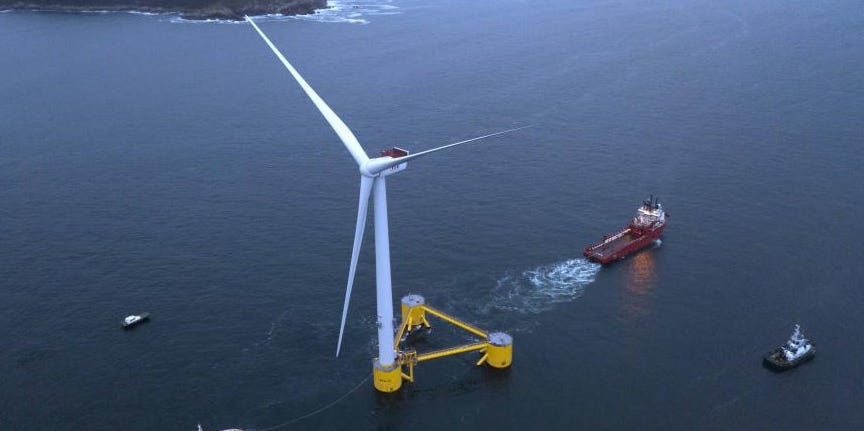
Enter WindFloat Atlantic: a small-but-mighty floating offshore wind farm that helped prove you can put utility-scale wind turbines on
floating platforms, moor them to the seabed, and let them quietly get to work while the waves do their dramatic thing.
WindFloat Atlantic matters for one simple reason: it’s a real, operating, grid-connected example of floating offshore windbeyond prototypes, beyond
“PowerPoint energy,” and firmly in the “yes, this produces electrons” category. It’s also a handy reference point for the U.S. and other countries
eyeing deep-water wind resources, because it demonstrates what floating platforms, tow-out installation, and offshore operations actually look like
at commercial scale (even if the scale is intentionally modest).
What WindFloat Atlantic Is (and Why People Won’t Stop Talking About It)
WindFloat Atlantic is a floating offshore wind farm located off the northern coast of Portugal, near the city of Viana do Castelo.
The project totals 25 MW of installed capacity, built with three 8.4 MW turbines mounted on floating platforms.
Those platforms are moored to the seabed in roughly 100 meters of waterdeeper than where fixed-bottom foundations are typically the
easiest and cheapest option.
In other words: WindFloat Atlantic is a “proof-by-doing” project. Not the biggest. Not the flashiest. But incredibly valuable because it helped move
floating offshore wind from “promising concept” to “bankers can spell it.”
The quick “floating vs. fixed-bottom” reality check
Fixed-bottom offshore windmonopiles, jackets, gravity basesworks great in shallower waters. But many coastlines with strong wind resources
(think steep continental shelves) drop into deep water fast. Floating foundations let developers chase better wind sites without needing the seafloor
to cooperate. The wind turbine floats, the moorings keep it in place, and the cable system brings power back to shore.
Meet the Tech: The WindFloat Platform (Yes, It’s Supposed to Move a Little)
The “WindFloat” part of WindFloat Atlantic is the floating foundation technology. The platforms are semi-submersible structures designed to be stable
in waves and wind. Semi-submersible is engineer-speak for “big floating structure with columns and pontoons that behaves better than your stomach on a
small boat.”
The turbine doesn’t sit on a random barge. The platform is built to manage motion, loads, and fatiguebecause offshore wind turbines don’t just deal
with wind; they deal with wind plus wave action plus “the ocean is trying to win.” Stability is the whole game.
Moorings, anchors, and the art of staying put
Floating doesn’t mean drifting. WindFloat Atlantic’s platforms are held in place by a mooring system that connects the floating structure to anchors
on the seabed. This is one of the reasons floating wind is so interesting for deep water: you don’t have to build a rigid foundation all the way to
the ocean floor; you “tie down” a floating structure instead.
The mooring approach is a major design leveraffecting cost, reliability, installation methods, and maintenance. It also influences how much the
platform moves, how cables are managed, and what happens during extreme weather.
How WindFloat Atlantic Was Built: Ports, Tow-Out, and “No Giant Crane Ship Required”
One of the most practical lessons from WindFloat Atlantic is how floating wind changes installation logistics. Traditional offshore wind often requires
specialized heavy-lift vessels and complex offshore assembly. Floating wind can shift more work to ports and shipyardsplaces that are much better for
schedule control, worker safety, and cost predictability.
Assemble near shore, then tow to site
A defining feature of floating wind is the ability to assemble major components at port (or in sheltered waters) and then tow the full unitplatform
plus tower plus turbineto its operating location using tugs. That “tow-out” model can reduce dependence on scarce offshore installation vessels,
especially as demand rises globally.
Think of it like this: fixed-bottom offshore wind often installs like building a skyscraper on a moving treadmill. Floating wind tries to do more of
the construction in a controlled workshop, then “deliver” the finished product to sea. It’s still hard, but it’s a different flavor of hard.
Operations and Performance: What the Project Has Shown So Far
WindFloat Atlantic has been operating since 2020, supplying electricity into Portugal’s grid. Reported production figures and updates from project
stakeholders have indicated that the farm has met or exceeded expectations in multiple years, including reported annual generation around the
tens of gigawatt-hours range for a 25 MW project.
Why the numbers matter (beyond bragging rights)
For floating offshore wind, energy production is only one part of the story. The bigger questions are:
- Can the platforms hold station reliably through storms and seasonal wave patterns?
- How do the turbines and platforms age under combined wind-and-wave loads?
- What does maintenance look like when your “foundation” is floating?
- How do dynamic power cables behave over years of motion and marine exposure?
WindFloat Atlantic offers real-world learning on these questions. That learning travels wellbecause many future floating wind projects, including
potential U.S. deep-water developments, will face the same categories of challenges even if the sites differ.
Why WindFloat Atlantic Is a Big Deal for the U.S. (Even Though It’s in Portugal)
The U.S. has enormous offshore wind potential, and not all of it sits in neat, shallow waters. Floating offshore wind is particularly relevant for
regions where the continental shelf drops off quickly. That’s why U.S. agencies and labs have invested heavily in floating wind research, modeling,
and cost-reduction pathways.
WindFloat Atlantic becomes a practical reference: it’s one of the few operating floating wind farms with multiple units, and it has accumulated years
of operational experience. For U.S. planners, engineers, and port developers, the project helps ground discussions about supply chains, installation
strategies, and O&M approaches in reality instead of optimism.
Ports are not background characters in floating wind
Floating wind leans heavily on port infrastructure: laydown areas, heavy lift capacity, quayside strength, assembly space, and marine logistics.
For the U.S., where port readiness is often a bottleneck, floating wind makes ports even more central to the story. If fixed-bottom wind is “build at
sea,” floating wind is “build at port, then ship the whole idea offshore.”
The Business Side: Consortia, Risk, and the “Pre-Commercial” Phase
WindFloat Atlantic is often described as a pre-commercial or early-commercial project. That doesn’t mean it’s experimental in the casual sense.
It means the project exists in the stage where:
- Technology is proven enough to operate and sell power,
- But the industry still needs operational data to standardize designs,
- And costs are still working their way down the learning curve.
Large energy projects love certainty. Floating wind, like any emerging infrastructure, earns that certainty by operating safely, predictably, and
profitably over time. WindFloat Atlantic contributes to that “track record” in a way that reports, simulations, and small prototypes can’t match.
Engineering Lessons That Travel: What the Project Teaches the Wider Industry
1) Dynamic cables are quietly heroic
Fixed-bottom offshore wind uses cables that don’t have to flex much. Floating wind needs export and inter-array cables that tolerate movement
motion that happens every day for decades. That pushes innovation in cable design, protection, monitoring, and repair strategy. This is a classic “it’s
not the sexy part” problem, which is exactly why it can become the limiting factor if ignored.
2) Maintenance strategy can be a design feature, not a reaction
Floating wind enables a tempting idea: if major maintenance is needed, tow the whole unit back to port instead of doing delicate offshore work.
That can reduce offshore safety exposure and avoid reliance on weather windows. But it also requires planningdisconnect procedures, tow logistics,
port availability, and downtime economics. The big insight is that O&M isn’t just “after the fact”; it can shape how you design the platform,
mooring, and cables from day one.
3) Digital twins and monitoring are not optional extras
Offshore assets are expensive and hard to access. Floating wind adds additional variables: platform motion, mooring tension, fatigue cycles, and
complex structural interactions. That’s why the industry is leaning into advanced monitoring, simulation, and “digital twin” approaches to predict
maintenance needs and manage risk. If you want insurance and investors to relax, you give them data.
What Comes Next: From “Firsts” to Scale
The future of floating offshore wind hinges on scale. Larger arrays, standardized platforms, streamlined permitting, stronger port ecosystems, and
supply chain maturity all drive costs down. WindFloat Atlantic won’t be the template foreverbut it is part of the evidence base that makes scaling
feel rational.
The most realistic “next step” isn’t a sudden leap to thousands of floating turbines overnight. It’s a staircase:
more multi-unit farms, bigger turbines, better fabrication methods, improved mooring and cable supply, and repeatable port workflows.
WindFloat Atlantic sits near the bottom of that staircasebut it helped build the stairs.
WindFloat Atlantic: What It Feels Like Up Close (Experiences)
You don’t need a hard hat to appreciate WindFloat Atlantic, but if you ever find yourself near a port that supports floating wind, you’ll notice the
vibe is different from traditional offshore energy. There’s less of the “everything happens far offshore” mystique and more of a “we’re building the
ocean version of modular construction” energy. People who work around floating wind often describe it as a blend of shipbuilding, heavy industry, and
high-tech monitoringlike a maritime engineering festival that never fully packs up.
One of the most memorable reported moments in floating wind projects is the tow-out itself: seeing a full-scale wind turbine, already mounted
on a floating platform, leaving the safety of a harbor and heading out to open water. It’s oddly surreallike watching a skyscraper go on a cruise.
The towing concept also changes the mental picture of offshore wind. Instead of imagining giant jack-up vessels performing offshore choreography,
the story becomes about preparation, precision, and timing at port… followed by a deliberate, tug-assisted journey to the site.
Operations teams tend to talk less about glamour and more about routines: inspections, sensor checks, marine coordination, weather planning, and the
never-ending dance between “we want maximum uptime” and “the Atlantic has opinions.” Floating platforms add a layer of continuous motion, so
engineers often focus on what the structure is telling themmooring line loads, platform pitch and roll patterns, turbine behavior, and cable health.
The most modern offshore wind farms feel like they’re being run partly from the sea and partly from a data center. You can almost picture the platform
whispering its status through telemetry, and the control room translating it into decisions about maintenance and safety.
There’s also a practical, human side: ports and coastal communities see tangible activityfabrication work, logistics, marine services, and maintenance
planning. People familiar with early floating wind deployments often point out that the “invisible” benefits can include transferable maritime skills:
tug operations, mooring expertise, offshore safety culture, and local supply chain development. And because floating wind can expand viable sites to
deeper waters, it can widen the map of where offshore wind becomes feasiblesomething U.S. regions with deep coastal waters pay close attention to.
Finally, there’s the experience of scale. Even a 25 MW project feels enormous in person. The turbines are tall, the structures are massive,
and the ocean makes everything look both calmer and more intimidating at the same time. It’s the kind of engineering that can make you laugh a little,
because your brain briefly refuses to accept what your eyes are seeing: “Yes, that is a floating platform… carrying a turbine… in open water… on
purpose.” And then you remember: the whole point is to turn that disbelief into a repeatable industry.
If WindFloat Atlantic has an emotional takeaway (besides “wow, humans are weirdly good at building things”), it’s that floating wind feels like a
bridge between today’s offshore wind and a future where deep-water renewables are normal. Not theoretical. Not someday. Normal.