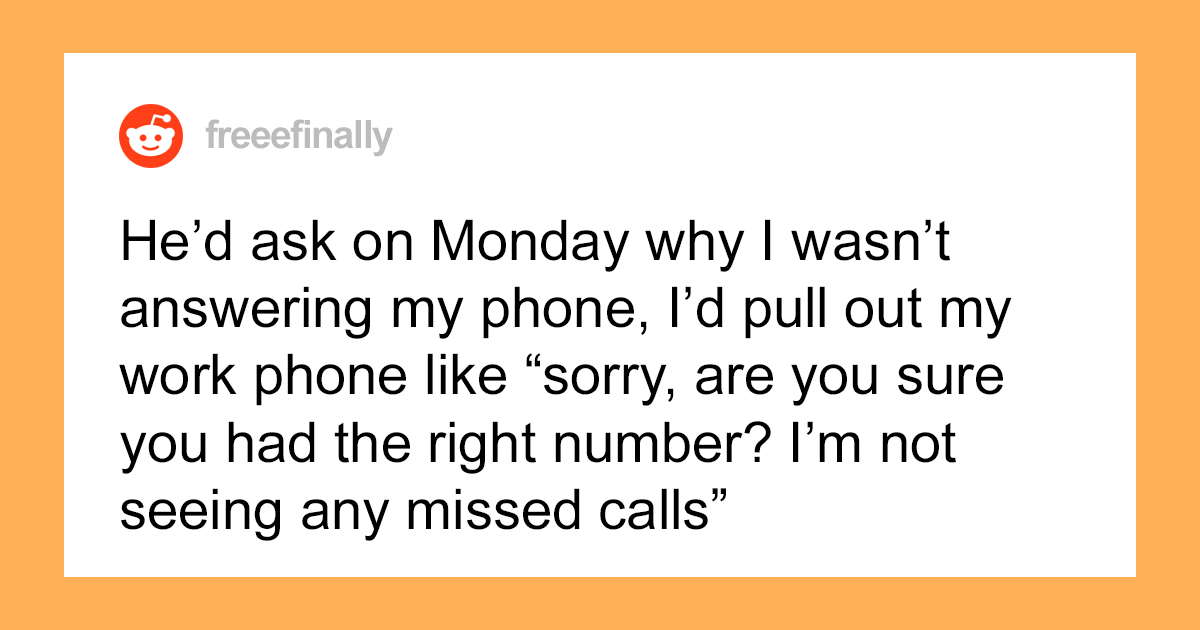
There are few things in modern office life more explosive than a worker calmly saying, “I’ll handle that tomorrow during business hours.” It sounds polite. It sounds reasonable. It sounds, frankly, like something a functional adult would say while closing a laptop and reclaiming what remains of the evening. And yet, in plenty of workplaces, that one sentence lands like a glitter bomb in a ceiling fan.
That is exactly why the story angle behind “Woman Refuses To Go Beyond 9-5 For Her Salaried Position, Work Drama Ensues” resonates so hard. It is not really about one woman, one manager, or one awkward Slack message sent at 7:42 p.m. with the emotional energy of a hostage note. It is about a bigger fight happening across American workplaces: what does a salaried position actually mean, and when did “professional” quietly become code for “perpetually available”?
The answer is messy. Salaried work can come with autonomy, better benefits, and steadier pay. It can also come with fuzzy expectations, creeping workloads, and the sort of boundary erosion that starts with “just one quick thing” and ends with someone answering emails in a grocery store checkout line while holding Greek yogurt and despair.
Why This Story Hits a Nerve
A woman refusing to work beyond 9-to-5 in a salaried role sparks drama because it challenges one of the most stubborn beliefs in workplace culture: that good employees should always give “a little extra.” In theory, that sounds noble. In practice, “a little extra” often behaves like a gremlin fed after midnight. It grows. It multiplies. It starts asking for weekend deck revisions.
Many workers have seen this pattern before. A job that was pitched as manageable slowly expands. Meetings spill over. Response-time expectations tighten. Deadlines appear with suspicious urgency. Then the employee who keeps firm office boundaries gets labeled rigid, unmotivated, or not a team player, while the people answering messages at all hours get treated like saints of corporate sacrifice.
That tension is why stories like this spread so quickly online. Readers instantly recognize the characters. There is the worker protecting her time. There is the manager who insists everything is “just part of the role.” There are coworkers split between admiration and panic, because one person setting a limit can expose how unhealthy the whole system has become.
Salaried Does Not Automatically Mean Unlimited Hours
What people get wrong about a salaried position
Here is where workplace drama often gets turbocharged by confusion. Plenty of people use salaried and exempt like they are identical twins wearing the same blazer. They are related, but not the same thing. Under federal labor rules, whether an employee is exempt from overtime depends on more than simply being paid a salary. Job duties and salary thresholds matter too.
That nuance gets lost all the time. Some bosses hear “salary” and interpret it as a subscription plan for a human being. That is not how responsible management works. A salary is compensation for a role, not a blank check on a person’s evenings, family time, sleep schedule, or last surviving nerve.
At the same time, employees should know the other half of the truth: some exempt salaried roles really do involve occasional longer hours, especially during crunch periods, launches, emergencies, or seasonal peaks. The issue is not whether extra effort ever happens. The issue is whether the extra effort is occasional and acknowledged, or constant and treated like oxygen.
Why the 9-to-5 boundary creates so much friction
When a woman says she will do her salaried job from 9-to-5 and not beyond, people around her may hear very different messages. She may mean, “I am meeting the expectations of my job, but I am not volunteering unlimited access.” A manager may hear, “I reject the culture you built.” Coworkers may hear, “Wait, are we allowed to say that too?”
That is where the drama starts. Not because the boundary is irrational, but because it forces everyone else to confront the unwritten rules they have been following without question.
Why Work Drama Ensues So Fast
The invisible creep of extra work
Most workplace resentment does not arrive with a marching band. It sneaks in quietly through tiny expectations that pile up over time. Stay online a little later. Join one more call. Polish one more slide. Be “responsive.” Hop on for a “quick sync.” Check messages before bed. Suddenly, what used to be a full workday is now a workday plus a shadow shift.
That is a major reason stories about refusing to go beyond 9-to-5 catch fire. They are rarely about laziness. They are about job creep. The employee is not refusing to work. She is refusing to let the definition of work expand forever without discussion.
The “team player” trap
Modern workplaces love to romanticize flexibility when that flexibility benefits the company. Need a worker to jump in early, stay late, or answer messages from a soccer field? Suddenly everyone is a family and agility is the highest virtue. But when employees ask for flexibility in return, such as predictable boundaries, focused hours, or protected time off, the mood can shift fast.
This is where language gets slippery. “We need commitment” can sometimes mean “we need planning.” “We need ownership” can sometimes mean “we never staffed this properly.” And “we need you to be a team player” can occasionally mean “we have normalized disorganization and would like your personal time to absorb it.”
What the Data Says About After-Hours Work and Burnout
This is not just internet drama dressed up in office clothes. Workplace researchers and health experts have been waving bright, professionally formatted warning signs for years. Chronic work stress is linked to emotional exhaustion, irritability, sleep trouble, reduced focus, and broader physical health effects. Long hours and constant availability are not badges of honor if they leave people depleted, cynical, and functioning like a browser with 64 tabs open and one sad song playing somewhere.
Survey research also shows that after-hours communication is common. Many workers report regularly responding to work emails or messages outside normal business hours. That matters because “just checking in” is rarely neutral when it comes from a boss or sits inside a culture where delayed replies are silently judged. Even when managers think they are being casual, employees often feel pressure to respond now, not tomorrow.
That pressure has real consequences. Burnout is not just being tired after a long Tuesday. It is the accumulation of chronic stress without enough recovery. People become more detached, less effective, more frustrated, and more likely to disengage. Ironically, the same culture that glorifies nonstop availability can end up hurting performance, retention, morale, and trust.
When the Employee Is Absolutely Right
In many versions of this story, the woman refusing to go beyond 9-to-5 is not being difficult. She is being clear. If she completes her responsibilities, communicates well, meets deadlines, and performs at a strong level during agreed work hours, then protecting her evenings is not a scandal. It is boundary setting.
She may also be correcting a workplace distortion. Plenty of organizations rely on ambiguity because ambiguity is convenient. When expectations stay vague, managers can praise sacrifice without budgeting for it, measuring it, or explaining why the role requires it. The worker who says, “Please define the actual expectations of this salaried position,” suddenly becomes disruptive mainly because she is asking the quiet part to put on a nametag.
She is especially justified if the “extra” work is routine, unplanned, or disconnected from real urgency. A true emergency is one thing. A manager’s poor planning is not an emergency with better branding.
When the Employer Has a Point
To be fair, not every complaint about a 9-to-5 boundary is nonsense. Some salaried roles genuinely carry broader responsibility. A manager, attorney, administrator, creative lead, or operations professional may sometimes need to stay late during key periods. A strict clock-out mentality can create friction if the job was clearly defined from the start as outcome-driven and occasionally high-demand.
But that is the key phrase: clearly defined from the start. Employers have a stronger case when expectations are transparent, workloads are reasonable, priorities are realistic, and extra effort is the exception rather than the company’s entire operating system. Employees can handle hard seasons much better when leadership is honest, organized, and respectful.
What usually causes the real drama is not the existence of occasional long days. It is the expectation of permanent overextension without clarity, compensation, flexibility, or appreciation.
How to Handle This Without Turning the Office Into a Soap Opera
For employees
If you are in the woman’s position, the smartest move is calm specificity. Do not frame it as rebellion. Frame it as role management. Ask what is urgent, what can wait, and what success looks like during normal business hours. Confirm priorities in writing. Document workload. If the role truly requires regular after-hours work, ask how that is being accounted for in expectations, staffing, and performance evaluation.
Most importantly, avoid the trap of apologizing for having a life. You can be professional, collaborative, and committed without behaving like an emergency hotline for every poorly timed request.
For managers
If you are managing someone who refuses to go beyond 9-to-5, resist the urge to make it personal. A boundary is not an insult. It is information. It may be telling you the workload is misaligned, the team is understaffed, the processes are sloppy, or the culture has normalized unhealthy behavior.
Good managers separate true business needs from habit. They define what really must happen after hours, what can wait until morning, and what should never have become an evening problem in the first place. They also model the behavior they want. If everything is urgent, nothing is credible.
The Bigger Lesson Behind the Work Drama
The real reason this story lands so hard is that it exposes a modern workplace contradiction. Companies talk endlessly about well-being, balance, and sustainability. Then many still reward the people who are most reachable, most self-sacrificing, and most willing to blur the line between being dedicated and being drained.
A woman refusing to go beyond 9-to-5 for her salaried position is not always making a statement about laziness. Sometimes she is making a statement about dignity, clarity, and the radical notion that a job should fit inside a life, not eat one whole and ask for dessert.
And if that creates work drama? Maybe the drama was already there. She just stopped volunteering to be its unpaid stage crew.
Experiences Related to “Woman Refuses To Go Beyond 9-5 For Her Salaried Position, Work Drama Ensues”
Stories like this feel familiar because so many workers have lived some version of them. One employee accepts a salaried position expecting a normal professional schedule, only to discover that “flexibility” means the company is flexible about when it interrupts dinner. At first, she goes along with it. She answers messages at 6:30 p.m. She revises a document on Sunday night. She joins a “super quick” call while sitting in a parked car outside a pharmacy. None of these moments seem huge on their own, which is exactly how they become routine. Then one day she decides the workday ends at 5:00, and suddenly everyone acts like she has set fire to the employee handbook.
Another common experience is the coworker comparison game. One person leaves on time and gets side-eye. Another responds to every ping within three minutes, even during vacation, and gets praised as dependable. The message is subtle but powerful: the culture may officially talk about work-life balance, but unofficially it rewards work-life merger. That creates resentment on all sides. The boundary-setter feels punished for being reasonable. The always-on employee feels trapped by the standard they helped normalize. The manager wonders why morale is low while sending emails stamped 11:14 p.m. like tiny digital jump scares.
There is also the experience of being told that after-hours work is rare, only to watch it become normal within a month. Maybe the team is understaffed after layoffs. Maybe leadership keeps changing priorities. Maybe the organization runs on urgency because planning would require effort and accountability. In those workplaces, a woman saying, “I can do that tomorrow during office hours,” does more than protect her time. She exposes the machinery. She reveals that the system depends on employees donating invisible labor to keep the operation looking functional.
Then there is the emotional side of the drama, which is often more exhausting than the extra work itself. Workers in this situation may be called uncooperative, inflexible, or not leadership material simply because they want consistency. They may start second-guessing themselves. Am I being difficult? Am I ungrateful? Am I sabotaging my career by wanting my evenings to remain, well, evenings? That internal conflict is incredibly common. People know they are tired. They know the boundary makes sense. But they also know workplace culture can be weirdly moralistic about availability, as if answering a non-urgent email at 9:17 p.m. proves superior character.
Some of the most telling experiences come from people who finally draw the line and discover the sky does not actually fall. The report still gets finished. The client still survives until morning. The “urgent” task mysteriously becomes less urgent overnight. In many cases, boundaries force better communication, smarter prioritization, and a healthier division between actual emergencies and dramatic inconvenience. That does not mean every conflict disappears. It means the conversation gets more honest. And in workplaces where honesty feels disruptive, the person working 9-to-5 can look like the problem when she is really just the first person refusing to pretend chaos is a benefit package.
That is why these stories keep circulating. They are not gossip with a timesheet. They are reflections of a larger cultural shift. More workers are questioning the idea that a salaried position should automatically require emotional overextension, perpetual reachability, and a total collapse of personal boundaries. The resulting drama is real, but so is the lesson: once one employee names the problem, everyone else has to decide whether they want to keep calling it professionalism or admit it has started to look a lot like burnout with better lighting.
Conclusion
The debate at the center of “Woman Refuses To Go Beyond 9-5 For Her Salaried Position, Work Drama Ensues” is bigger than one tense office interaction. It is a clash between two ideas of work. One says salaried employees should be measured by clear responsibilities, healthy boundaries, and sustainable performance. The other quietly assumes that salary buys not just skill and effort, but also unlimited access.
That second idea is where the trouble starts. It confuses commitment with constant availability, and it often turns preventable management problems into personal sacrifices made by employees who are already stretched thin. A worker who protects her evenings is not necessarily avoiding responsibility. She may be doing something much more useful: forcing the workplace to define what the job actually requires.
And maybe that is the real twist in the drama. The woman who refuses to go beyond 9-to-5 may not be the difficult one at all. She may simply be the first person in the room brave enough to stop pretending that burnout is a personality trait and overwork is a compliment.