Some family reunions are planned years in advance with spreadsheets, matching T-shirts, and a group chat that somehow turns into a debate about potato salad.
And then there are the other kindthe “Wait… WHAT?” reunionswhere long-lost relatives crash back into each other’s lives through jaw-dropping coincidence.
A shared workplace. A random DNA kit gift. A message from a stranger that starts with, “I think we’re related,” and ends with ugly-happy crying.
This article rounds up ten real-life stories where fate (plus modern tech) pulled off plot twists even seasoned TV writers would call “a bit much.”
They’re funny, moving, sometimes complicatedand all reminders that family can be lost for decades and still find a way to show up right on time.
Why “no-way” family coincidences happen more often now
It’s tempting to blame the universe, Mercury retrograde, or the mysterious power of a family recipe passed down by vibes alone. But there are a few
practical reasons these reunions are becoming more common (and more dramatic):
- DNA testing is mainstream. Consumer DNA databases can connect people who never knew what to search forsiblings, parents, cousins, and beyond.
- Records are more searchable. Digitized archives, social media, and genealogy sites make it easier to connect dots that used to stay scattered.
- People move… but patterns repeat. Families may separate geographically, yet still orbit the same regions, industries, or communities.
- Humans love clues. A shared last name, a familiar face, or a weirdly specific habit can push someone to ask the question that changes everything.
Now for the part where coincidence does its best workoften while people are just trying to go to their shift, drink a coffee, or survive a holiday gift exchange.
10 amazing coincidences involving long-lost family members
1) The twins with the same first name… and eerily similar lives
Identical twins Jim Springer and Jim Lewis were separated as infants and adopted by different familieswho both named their new baby “Jim.”
When they reunited as adults, their similarities didn’t stop at genetics. They discovered a string of oddly specific overlaps: similar height and weight,
childhood dogs with the same name, vacations to the same place, and even major-life parallels involving spouses’ names and other personal details.
What makes this coincidence so wild isn’t just “twins are alike.” It’s the accumulation of small, specific echoeslike someone hit copy-paste on a life outline,
then changed the font. It’s also a great reminder that coincidence isn’t always one big lightning bolt; sometimes it’s 30 tiny sparks that add up to fireworks.
2) Two coworkers become friends… and then discover they’re sisters
Imagine bonding with a coworker and feeling like the connection runs deeperonly to learn it literally does. In one widely reported case,
two sisters who were orphaned and separated in South Korea ended up in Sarasota, Florida, working on the same floor at the same hospital.
One sister had been searching for her sibling for decades; the other only knew a shared surname from her early history. A DNA test confirmed the truth:
they were sisters.
The coincidence here is brutal in the best way: after years of being separated by circumstances they couldn’t control, their lives still curved into the same
building, the same hallway, and the same daily routine. Fate didn’t just reconnect themit punched a timecard and said, “Clock in.”
3) A brother and sister walk past each other for years… in a hospital hallway
Another reunion unfolded like a movie scene that starts with ordinary life: doctor appointments, a familiar route through a hospital, and a family just trying
to handle the day. In Fort Worth, Texas, Christina Sadberry and Raymond Turner had been in the same hospital environment for years without knowing they were
siblings. Their paths kept crossingliterallyuntil a DNA kit and a bit of social media brought the truth to the surface.
The coincidence is almost painfully cinematic: two people sharing blood, history, and missing chapters, unknowingly living in the same orbit.
It also shows how modern reunions often happen in layersDNA provides the “who,” and everyday details (a location, a timeline, a remembered moment)
provide the “how on earth did we miss this?”
4) A Valentine’s Day gift turns into a brother (and a whole new chapter)
Sometimes coincidence arrives in gift-wrap. A man who had known he was adopted for decades received a DNA test as a Valentine’s Day gift from his wife.
He’d been skepticaluntil the results matched him to a biological brother. From there, the story expanded quickly: more siblings, and even the discovery that
his biological mother was still alive. One small, thoughtful present became the key that unlocked a family he’d never gotten to meet.
The “amazing coincidence” isn’t just the matchit’s the timing. So many searches stall out because people don’t know where to begin.
In this case, the beginning arrived as a romantic gesture, and the ending became a reunion decades in the making.
5) A Christmas DNA kit reunites a mother and son after decades
In another story fueled by holiday generosity, a woman received a DNA kit as a Christmas gift from her brother. She had kept a deeply personal secret for years:
as a teenager, she had placed a son for adoption. When she finally took the test, the connection didn’t appear instantlyit took time and patience.
But eventually, a close match arrived labeled exactly as she’d hoped: her son.
The coincidence stacks up: her kit was a Christmas gift, and her son’s kit was also a gifttwo separate people, connected by biology, both nudged into the same
database by someone else’s kindness. When they met in person, they noticed shared mannerisms and familiar traitslike genetics quietly waving from across the room.
6) Cleaning a home leads to a DNA testand a half-sister found
One of the most relatable catalysts for life-changing discovery is also the most unglamorous: cleaning. While sorting through belongings and mementos,
a woman felt the pull to search for family history and joined a DNA testing site. The result? She discovered a half-sister she’d never met.
After decades apart, the two began texting regularly and planned time togetherturning curiosity into connection.
The coincidence isn’t that DNA works. It’s that the emotional sparktriggered by ordinary household momentslined up with the right tool at the right time.
Sometimes “finding family” starts with something as simple as opening a box you’d ignored for years.
7) A phone call on New Year’s Eve changes everything
Some coincidences feel like the universe has a calendar. In one striking case, an author was editing a novel about a girl searching to reconnect with her mother
when she got a call on New Year’s Eve: a family member had met someone through church connections who actually knew her biological mother.
Two weeks later, mother and daughter reunited.
The timing is what makes your brain do a double-take. A story about searching for a mother is on the page at the exact moment real life offers a lead.
Even if you don’t believe in fate, you can at least agree it has a flair for dramatic holiday scheduling.
8) A celebrity DNA surprise: a long-lost son appears through a gift
Not all reunions happen quietly. In one high-profile example, musician Billy Idol learned later in life that he had an adult son, discovered after his daughter
took a DNA test that had been given as a Christmas present. The match connected the family to a man who had been searching for his biological father.
Suddenly, a family tree gained a whole new branchand it came with a spotlight.
The coincidence here has two layers: the gift timing and the sheer improbability of “your biological dad is a famous touring musician.”
It’s a reminder that DNA doesn’t care about celebrity; it connects people the same wayquietly, objectively, and sometimes explosively.
9) A birth search hits a wall… and then a father buys a plane ticket
Many long-lost family stories include hard stops: missing information, closed records, relatives who can’t be found, or connections that don’t happen the way
someone hoped. In one adoptee’s account, he learned he couldn’t connect with his birth mother and assumed the search might end there.
Then his birth father came forwardunexpectedlyand even bought a plane ticket to visit him across the world.
That kind of coincidence doesn’t feel random; it feels like a door opening after you’ve already started grieving it.
It also highlights something important: reunions can be joyful and heavy at the same time. Surprises can healand they can also stir up years of complicated emotion.
10) “Hey, I think we’re sisters.” The message that changes two lives
For two sisters adopted into different families in different countries, the reunion began with a modern-day sentence that deserves its own dramatic soundtrack:
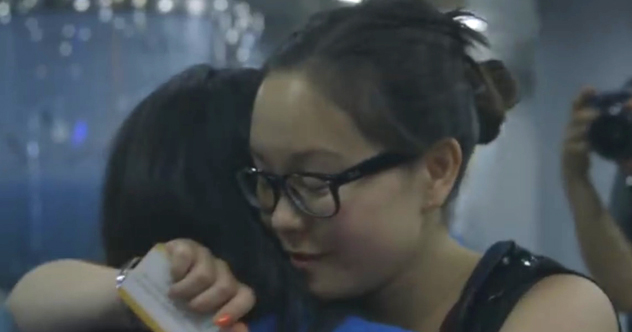
“Hey, I think we’re sisters.” After decades apart, DNA testing revealed they were full siblings. They eventually met in person at an airport in Seoul,
where years of questions turned into one long, emotional moment of recognition.
The coincidence isn’t just the matchit’s the way identity clicks into place. When you grow up without certain answers, you learn to live with gaps.
A single message can turn those gaps into a story you can finally read from the beginning.
If you’re searching for long-lost relatives, a few smart (and kind) guidelines
These stories are inspiring, but real-life reunions aren’t one-size-fits-all. If you’re exploring your own family connectionsthrough DNA, adoption records,
genealogy research, or social mediahere are a few principles that tend to help:
- Lead with consent. Not everyone is ready for contact right away. A gentle first message beats a surprise ambush.
- Expect mixed emotions. Joy can show up next to grief, anger, relief, and confusionsometimes all before lunch.
- Verify before you amplify. Confirm relationships with reliable evidence before telling extended family or posting publicly.
- Build a support system. A trusted friend, counselor, or support group can help you process the emotional “aftershocks.”
- Go slow. You can’t compress decades of distance into one weekend, even if the reunion hugs are Olympic-level.
500-word add-on: What reunions actually feel like (the part people don’t put on postcards)
If you only saw long-lost family reunions in highlight reels, you’d think the whole experience is a clean arc: search → match → hug → happily ever after.
Real life is messierand, weirdly, that’s what makes it so human.
First there’s the before: the quiet years when curiosity sits in the back of your mind like a browser tab you never close.
Some people describe it as a missing puzzle piece; others say it feels like reading a book with torn-out chapters.
You might be fine most days, and then a random detaila medical form asking for family history, a face that looks like yours, a holiday that emphasizes “bloodline”
stirs the question again. That question can carry hope, but it can also carry fear: What if I find them and it hurts? What if I don’t find them and it always hurts?
Then comes the moment of contact, which rarely happens when you’re calmly prepared in perfect lighting.
It happens at work, on a couch, in a parking lot, in a hospital hallway, between errands.
The message arrives and your brain tries to stay logical while your body immediately betrays you: shaking hands, racing heart, that surreal “I’m floating” feeling.
People often report a strange combination of certainty and disbelieflike your instincts are shouting “YES” while your mind is whispering “No, that’s too much.”
The first conversation can feel like speed-running intimacy. You might exchange basic factsnames, birthdays, locationswhile also scanning for echoes:
the same laugh, the same phrasing, the same stubbornness that you always thought was exclusively yours.
Sometimes it’s comforting. Sometimes it’s unsettling. It can be both, especially for adoptees or relatives separated by trauma,
because similarity doesn’t erase the grief of lost time. It just makes the loss more tangible.
And then there’s the after, which is where the real work lives. Reunions don’t automatically rewrite the past.
They create a new present that has to be negotiated carefullyboundaries, expectations, relationships with adoptive families, and the emotional whiplash of finally
seeing your own features reflected in someone else’s face. Many people describe it as a “roller coaster,” not because it’s bad, but because it’s intense:
joy on Monday, exhaustion on Tuesday, anger on Wednesday, gratitude on Thursday, and on Friday you’re crying because you both hold your coffee mug the same way.
The best reunions tend to be the ones that allow room for complexity. They don’t demand an instant family fantasy.
They build something realslowly, honestly, and with compassion for everyone involved. Coincidence can start the story, but patience is what helps it last.
Conclusion: coincidence is the sparkconnection is the choice
These ten stories prove something delightful: life can be absurdly, wonderfully specific. A shared workplace. A hallway. A holiday gift.
A phone call on New Year’s Eve. The coincidences grab headlines, but what makes these reunions meaningful is what happens nextpeople choosing curiosity over fear,
kindness over control, and connection over the easier option of “let’s pretend this isn’t happening.”