Most horror movies are already nightmare fuel on their own. But then the internet showed up, Reddit got involved, and suddenly every creepy scene has a 30-paragraph explanation that makes you sleep with the lights on. Horror movie fan theories don’t just fill in plot holes; they twist what you thought you knew and make familiar scares feel brand-new and way more disturbing.
From haunted hotels that might literally be Hell to slasher villains who may have started out in totally different movies, fans have spent years dissecting, connecting, and occasionally overthinking horror classics. Sites like Ranker, Looper, Screen Rant, WhatCulture, and even dedicated horror blogs and podcasts have helped collect the wildest and strangely convincing horror fan theories circulating online.
So if you’re the kind of horror fan who loves pausing mid-movie to say, “Okay, but what if…,” this is your happy place. Let’s dive into 12+ horror movie fan theories that make some already terrifying films even darker, weirder, and more unsettling.
Why Horror Fan Theories Hit So Hard
Psychologists who study fear point out that what really gets under our skin isn’t just jump scares it’s uncertainty and what we imagine might be lurking off-screen. When a story leaves gaps, the brain rushes to fill them in, and often those imagined explanations are scarier than anything the movie actually shows.
Fan theories basically weaponize that tendency. They take tiny details a line of dialogue here, an odd camera angle there and spin them into full-blown alternate readings of the film. Once a theory clicks in your head, it’s hard to unsee it. Suddenly, that “fun” slasher or supernatural flick becomes a psychological horror story about guilt, hell, or human evil.
With that in mind, here are some of the creepiest horror movie fan theories that will change the way you watch these films forever.
12+ Horror Movie Fan Theories That Make Them Even Scarier
1. “The Shining”: The Overlook Hotel Is Literally Hell
Plenty of viewers already find The Shining unnerving, but one long-running fan theory dials it up a notch: the Overlook Hotel isn’t just haunted it’s Hell itself. Some horror fans argue that Jack Torrance is either already dead when he arrives or becomes permanently trapped in a kind of personal hell loop. That final shot of Jack in the 1921 photograph? Evidence that time at the Overlook doesn’t move normally because it’s not part of the normal world.
Seeing the hotel as Hell reframes everything. The ghosts aren’t just spirits; they’re fellow damned souls. The elevator of blood and the repeating phrase “You’ve always been the caretaker” stop feeling symbolic and become literal: Jack belongs there, and there is no escape. It makes the movie less about cabin fever and more about cosmic punishment.
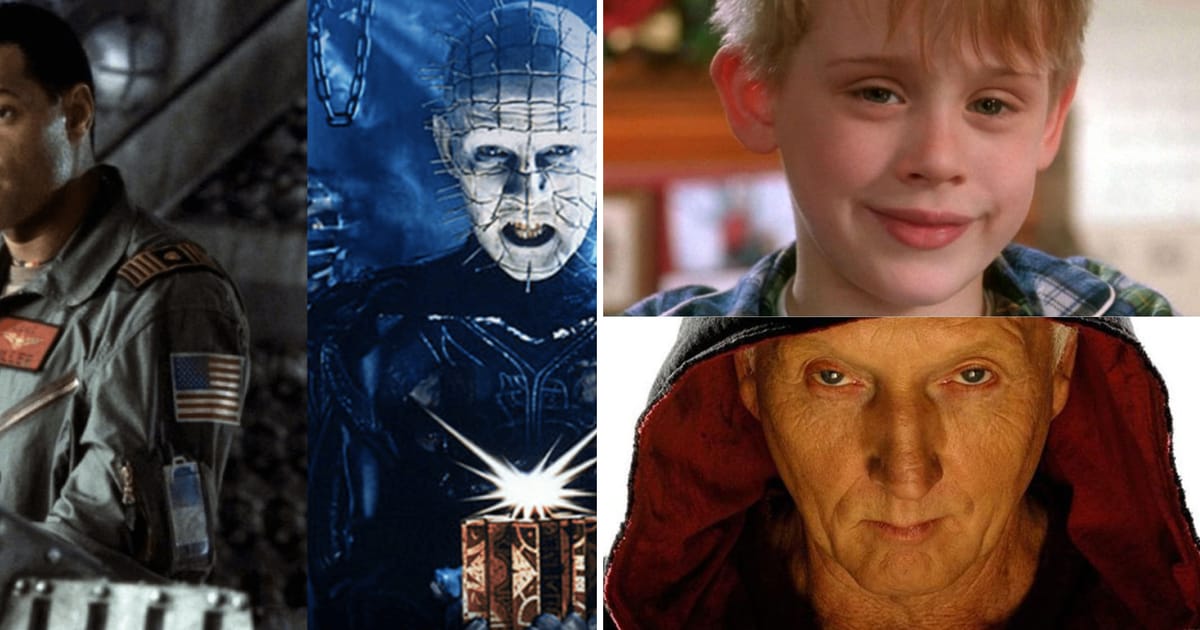
2. “Home Alone” and “Saw”: Kevin Grows Up to Be Jigsaw
File this one under “so cursed it kind of works.” A popular internet theory suggests that Kevin McCallister from Home Alone eventually grows up to become John Kramer, a.k.a. Jigsaw from the Saw franchise. Fans point to Kevin’s elaborate, sadistic traps, his eerie calm while watching people get hurt, and his clear enjoyment of outsmarting adults.
Of course, the timelines and locations don’t quite line up, but as a psychological headcanon, it’s chilling. Imagine Home Alone not as a goofy holiday comedy, but as the origin story of a man who grows up obsessed with “teaching lessons” through dangerous traps. Suddenly, the paint cans and blowtorch gag feel a lot less cute.
3. “The Blair Witch Project”: There Is No Witch
One of the darkest theories about The Blair Witch Project says the title is a complete misdirect: there is no witch. Instead, the documentary-style film is actually about a premeditated murder. According to this theory, Josh and Mike lure Heather into the woods under the guise of making a documentary and slowly terrorize her before finally killing her.
Supporters point out that Josh’s disappearance is never fully explained on-screen, the “witch” is never actually shown, and many of the spooky events could be staged by someone who knows the woods well. Watching the movie with this theory in mind turns it from supernatural horror into a brutal true-crime story about betrayal and gaslighting far more grounded, and arguably more horrifying.
4. “The Witch”: No Supernatural Evil, Just Poisoned Grain
Another unsettling “maybe nothing supernatural happened” theory surrounds Robert Eggers’ folk horror film The Witch. Some horror fans argue that the family isn’t cursed by a witch at all, but instead suffers from ergot poisoning a real-life fungus that can grow on grain and cause hallucinations, paranoia, and violent behavior.
If you buy this theory, Black Phillip isn’t the Devil; he’s just a goat. The “witch” in the woods is a shared hallucination fueled by isolation, starvation, and tainted food. Instead of a battle with supernatural evil, the film becomes a tragedy about a puritan family torn apart by fear, religious guilt, and a very real, very ugly form of poisoning.
5. “Halloween” and “Psycho”: Sam Loomis Is the Same Man
Here’s one for the cinematic universe lovers: some fans believe that Sam Loomis in Psycho and Dr. Sam Loomis in Halloween are actually the same person, or at least meant to be spiritually linked. The name isn’t an accident John Carpenter has openly referenced Hitchcock as an influence, and fan theorists ran with it.
According to the theory, Loomis’ experience chasing Norman Bates in Psycho leaves him so traumatized that, years later, he becomes obsessed with stopping another seemingly unstoppable killer: Michael Myers. This gives Loomis’ near-manic dedication in the Halloween franchise a disturbing context he’s a man reliving an earlier failure, terrified of letting history repeat itself.
Whether or not you accept the shared-universe angle, it makes Loomis’ desperate speeches about evil feel less theatrical and more like the paranoia of someone who has already stared into the abyss once.
6. “The Texas Chainsaw Massacre”: The Family Are Broken Ex-Cops
One of the more far-out but fascinating theories about The Texas Chainsaw Massacre suggests that the cannibalistic Sawyer family are actually former police officers who snapped after dealing with years of horrific crimes. A piece from WhatCulture highlights this theory as a way to explain their strange blend of familiarity with violence and warped sense of “order.”
In this reading, their brutality is not just random sadism but a twisted extension of what they once did “legally.” Instead of protecting people from monsters, they become the monsters. It adds a social horror angle: the people you trust to keep you safe could be the ones who have seen so much horror that they become desensitized and then start reenacting it.
7. “Evil Dead II”: Ash Is an Unreliable Narrator
Some horror writers and fans have suggested that Evil Dead II is less a strict sequel and more Ash’s own embellished version of events from the original film. Screen Rant has discussed the idea that Ash might be rewriting his trauma into a story where he’s braver, funnier, and more competent than he actually was.
This theory explains inconsistencies between the first and second movies and gives the franchise a darkly comic twist: we’re seeing a survivor cope by turning genuine horror into a gonzo splatter comedy. The more over-the-top the chainsaws and one-liners get, the more it feels like denial which, honestly, makes the films even sadder and creepier under the surface.
8. “Us”: The Tethered Were a Failed Social-Control Experiment
Jordan Peele’s Us practically begs for fan theories. One widely shared idea expands on the film’s backstory: the Tethered those underground doppelgängers weren’t just random clones, but were created as part of a government or corporate experiment to control people on the surface. When the project was abandoned, the Tethered were left to rot below, leading to their violent uprising.
Reading the film this way makes the story even more chillingly political. It becomes not just a home invasion tale, but a commentary on how marginalized groups are created and ignored by systems of power until they finally revolt. The Hands Across America imagery becomes a mocking echo of performative compassion that never reached the people underground.
9. “The Thing”: Both Men Are Infected at the End
John Carpenter’s The Thing has one of horror’s most famously ambiguous endings. MacReady and Childs sit in the snow, unsure whether the other is human, waiting to freeze. Fans have spilled an ocean of digital ink debating it, and one especially bleak theory says: they’re both already infected.
Discussions of the film’s final line “Why don’t we just wait here for a little while… see what happens?” in horror circles and genre coverage suggest that the real horror is the idea that there is no safe answer. If both men are Things, they’re simply biding time until a rescue team arrives, ensuring the alien organism spreads to the rest of humanity. The movie stops being about survival and becomes a quiet, cosmic extinction story.
10. “A Nightmare on Elm Street”: Nancy’s Dad Helped Freddy Walk Free
Ranker’s collections of horror fan theories include a particularly nasty one about Freddy Krueger. According to this theory, Nancy’s father a police officer was directly involved in botching Freddy’s original prosecution, either through mishandling evidence or violating his rights so badly that Freddy was released on a technicality.
That makes the parents’ vigilante justice feel less like moral outrage and more like guilt. They’re not innocent citizens avenging their kids; they’re adults trying to fix their own failure by burning Freddy alive. When Freddy returns in dream form, he’s not just a supernatural boogeyman he’s the consequence of systemic failure and a cover-up that went horribly wrong.
11. “Carrie”: Her Powers Are Demonic, Not Psychic
On the surface, Carrie is a story about a bullied girl with telekinetic powers snapping at prom. But some fan theorists argue that Carrie’s “gift” isn’t a neutral mutation or psychic ability at all it’s demonic in origin. In some horror fan lists, people point to her extremely religious upbringing, the iconography around her, and the almost apocalyptic scale of the destruction she causes.
If you accept that her powers are literally Hell-sent, Carrie stops being just a tragic figure and becomes an unwitting weapon of divine (or infernal) punishment. Her mother’s shrill warnings about sin suddenly look less like fanaticism and more like foreshadowing which somehow makes the story both sadder and more terrifying.
12. “Behind the Mask”: Eugene Is Billy from “Black Christmas”
In the clever mockumentary-style film Behind the Mask: The Rise of Leslie Vernon, Eugene is portrayed as a retired slasher mentor who helps the new killer plan his big night. A cult-favorite horror blog argued that Eugene is actually Billy, the unseen killer from the classic film Black Christmas.
The theory points to his age, demeanor, and history, plus the film’s meta attitude toward genre traditions. If true, it means the world of slasher movies is literally continuous: killers age, retire, and “train” the next generation. That makes Leslie’s rise less like a random spooky story and more like a sinister apprenticeship program for cinematic murderers.
13. Pennywise as a Cosmic Constant of Evil
Finally, we have a theory big enough to tie multiple horror stories together. Horror fans on Reddit and in articles from sites like CreepyBonfire and Screen Rant have speculated that Pennywise from It represents a recurring cosmic force of evil that could be connected, thematically or symbolically, to other seemingly unrelated monsters.
In this view, Pennywise isn’t just a scary clown; he’s one “avatar” of a universe-spanning entity that feeds on fear. The idea echoes across other horror universes mysterious creatures that thrive on terror, entities that predate humanity, patterns that repeat. Once you start looking for it, you see “Pennywise energy” everywhere, from demonic clowns to shape-shifting aliens. Whether or not the filmmakers intended it, this theory makes every horror monster feel like part of the same awful family.
How These Theories Change the Way You Watch Horror
So why do horror movie fan theories stick so hard? Part of it is the thrill of solving a puzzle, but there’s also something deeper at work. When you embrace one of these interpretations, the movie takes on a second life: the night-vision camera in Blair Witch feels more like a murder weapon, the snowy misery of The Thing becomes a doomed waiting room for the end of the world, and Kevin’s “pranks” in Home Alone start looking uncomfortably like early Jigsaw prototypes.
Fan theories also give horror incredible rewatch value. Instead of seeing the same kills again, you start noticing tiny details: a glance between characters, a line that suddenly sounds loaded, a background prop that hints at a connection to another film. That’s the joy of being a horror nerd every time you rewatch, you’re either confirming a favorite theory or finding new evidence for a different one.
Of course, not every theory is meant to be canon. Some are playful thought experiments, others are social commentary (“What if the real monster is the system?”), and a few are just pure tinfoil-hat fun. But in every case, they prove that horror fans aren’t just here for the jump scares. They’re paying attention probably more than anyone expected when these movies first hit theaters.
Real-Life Experiences: Watching Horror Movies with Fan Theories in Mind
Reading about horror fan theories is fun; watching a movie with one in mind is a whole different experience. Once you start bringing these ideas into your movie nights, you’ll notice how they change the vibe in the room and how people respond when their “comfort horror” suddenly doesn’t feel so comforting.
Picture this: you invite a group of friends over for a classic horror marathon. Someone suggests The Shining, because “it’s old, so it’s probably not that scary anymore.” You nod politely, hit play, and wait until the group is suitably relaxed. Then, right around the time Jack starts talking to the ghosts in the bar, you casually drop: “So, there’s this theory that the Overlook is actually Hell and Jack has been there forever.” You can practically feel the temperature in the room drop as people suddenly pay much more attention to that final photograph and the line about Jack always having been the caretaker.
The same thing happens with “safe” nostalgia picks. Throw on Home Alone in December and tell everyone you’ve got a fan theory that Kevin grows up to be Jigsaw. At first, people laugh and then you see them quietly watching how he sets up the traps, how gleeful he looks when the burglars get hurt, how unemotional he is about the whole ordeal. A movie they’ve seen a dozen times suddenly feels slightly sinister, especially when they realize how long he’s been left alone and how methodical he becomes.
If you’re a horror fan who likes to overthink things (and let’s be honest, you probably are), rewatching a film like The Blair Witch Project with the “no witch, just a murder plot” theory in mind is almost uncomfortably intense. Every argument in the woods sounds less like victims panicking and more like conspirators getting sloppy. The shaky camera stops feeling like found footage realism and starts feeling like a very calculated way to hide what’s really happening off-screen.
On the flip side, fan theories can also create a sense of community. Online, people trade their wildest interpretations, reference essays, podcasts, and YouTube breakdowns, and build on each other’s ideas. One person might point out a prop or line everyone else missed; another might connect two movies made decades apart. Theories about Us being a commentary on class, or Pennywise representing a recurring cosmic evil, don’t just make the movies scarier they make them richer, sparking conversations that last long after the credits roll.
Of course, not everyone in your life will thank you for this. Some viewers really do just want to scream, laugh, and then forget the movie the minute the lights come up. But if you’re the sort of person who enjoys debating whether both men in The Thing are already infected or whether Ash is lying to himself about what happened in that cabin, horror fan theories turn every watch party into a low-key film seminar with way more blood.
In the end, that’s the secret power of horror movie fan theories: they make you look twice, think harder, and maybe feel just a little less safe, even when the movie is over. And for true horror fans, that lingering unease is exactly the point.
Conclusion: Once You See It, You Can’t Unsee It
Horror movies work because they tap into our deepest fears of death, guilt, punishment, isolation, and losing control. Fan theories simply sharpen those fears, giving them names and structures that stick in your head. Whether it’s the idea that the Overlook Hotel is Hell, that there was never a Blair Witch, or that Kevin McCallister might be one bad day away from building a reverse-bear trap, these interpretations change how you watch. They transform familiar scares into fresh nightmares.
You don’t have to believe every theory to enjoy them. But the next time you sit down with a “comfort horror” classic, ask yourself: What if the fans are right? And if you suddenly find yourself checking shadows in the hallway after the credits roll… well, consider that proof that horror fans know exactly what they’re doing.