Note: This article explores documented history behind famous landmarks. It avoids sensationalizing tragedy while still uncovering the uncomfortable truths that make these places more meaningful than a pretty postcard.
Introduction: When Beautiful Places Have Very Messy Backstories
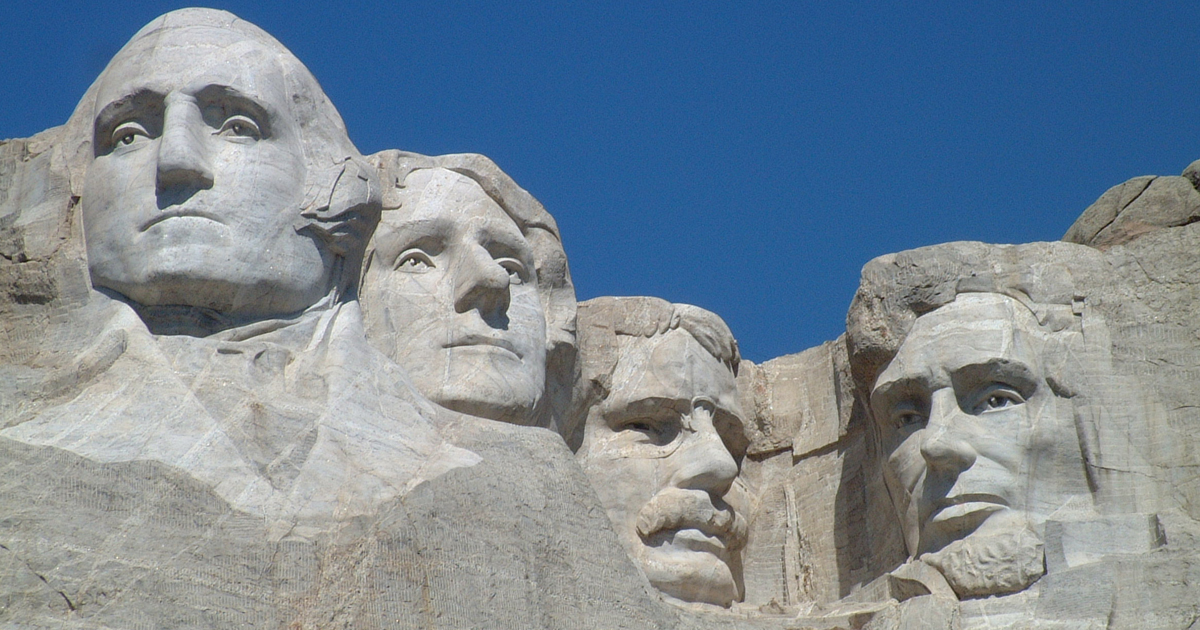
Some famous places are so photogenic that they seem designed by a tourism board with a suspiciously large lighting budget. The Colosseum glows at sunset. The White House looks crisp and presidential. Mount Rushmore stares out from the Black Hills like history has been carved into granite with excellent cheekbones. But behind many world-famous landmarks, there is another storyone that is darker, stranger, and much less likely to appear on a souvenir mug.
That is the fascinating thing about travel: a destination can be beautiful and unsettling at the same time. A grand monument may also be a reminder of forced labor. A famous prison may become a symbol of freedom. A romantic ruin may actually be the frozen record of sudden disaster. These famous places with dark secrets are not just “spooky spots” for dramatic Instagram captions. They are complicated historical sites where power, suffering, survival, injustice, and memory all stand in the same room, politely refusing to make small talk.
Below are 13 famous places with dark secrets in their past, each with a real historical background and a lesson that goes deeper than “don’t trust old castles after sunset.”
13 Famous Places With Dark Secrets In Their Past
1. The White House A Symbol of Democracy Built With Enslaved Labor
The White House is one of the most recognizable buildings in the world. It represents presidential power, American democracy, and the occasional awkward turkey-pardoning ceremony. Yet its origin story includes a painful truth: enslaved laborers helped build it.
During construction in the 1790s, enslaved workers quarried stone, transported materials, and worked alongside free Black laborers, white wage workers, and European craftsmen. The polished image of the Executive Mansion often hides the fact that the early federal capital was built in a slaveholding society. This does not make the White House less historically important; it makes it more honest. The building is both a national symbol and a reminder that democracy in America began with deep contradictions.
Today, that hidden history adds necessary weight to the building’s marble halls. The White House is not just a place where presidents live. It is also a place where the country’s unfinished argument with its own ideals is built into the walls.
2. Mount Rushmore A Monument Carved Into Contested Sacred Land
Mount Rushmore attracts millions of visitors with its massive presidential faces and dramatic mountain setting. On the surface, it looks like a stone tribute to American leadership. Under the surfacequite literallythe story becomes much more complicated.
The Black Hills, where Mount Rushmore stands, are sacred to the Lakota people. The 1868 Treaty of Fort Laramie recognized the Black Hills as part of the Great Sioux Reservation, but after gold was discovered, the U.S. government and settlers violated that agreement. The land was taken, and the later carving of U.S. presidents into the mountain became, for many Indigenous people, a symbol of dispossession rather than pride.
The dark secret here is not hidden in a locked room; it is right in the open. Mount Rushmore forces visitors to ask who gets remembered, who gets displaced, and who gets turned into scenery. The view is impressive, but the history behind it is not smooth granite. It has sharp edges.
3. Ellis Island The Gateway That Also Became a Place of Detention
Ellis Island is often described as the doorway to the American dream. Between 1892 and 1954, millions of immigrants passed through its inspection halls, hoping for a new life in the United States. For many families, it became a sacred place of arrival. For others, it was a place of anxiety, separation, and rejection.
Immigrants underwent medical and legal inspections. Some were detained for health concerns, paperwork issues, or suspicion that they might become a “public charge.” After immigration laws tightened in the 1920s, Ellis Island increasingly functioned as a detention and deportation center rather than a welcoming gateway.
That is the emotional complexity of Ellis Island. It was both a beginning and a barrier. The same halls that echoed with hope also heard the fear of families who did not know whether they would be allowed inor sent back across the ocean with their dreams packed in the wrong suitcase.
4. Alcatraz Island More Than a Notorious Prison
Alcatraz is famous as “The Rock,” the island prison in San Francisco Bay that housed notorious inmates and inspired decades of escape stories. But its dark history is layered like a very unfriendly onion.
Before becoming a federal penitentiary, Alcatraz served as a military fortress and military prison. Later, from 1934 to 1963, it became one of America’s most infamous federal prisons. Its isolation, cold waters, strict rules, and reputation for toughness made it a symbol of punishment. But Alcatraz also became a site of resistance when Indigenous activists occupied the island in 1969, helping energize the Native American civil rights movement.
So the “secret” of Alcatraz is that it is not just a prison story. It is a story about incarceration, military power, Indigenous activism, and the public’s fascination with punishment. Visitors may arrive for the escape legends, but they often leave thinking about justice, freedom, and why humans are so weirdly obsessed with locked doors.
5. Salem, Massachusetts A Tourist Town Built Around a Judicial Tragedy
Salem is now famous for witch-themed shops, October tourism, and enough black cats to make superstition feel underdressed. But the real history behind Salem’s fame is far darker than seasonal fun.
In 1692 and 1693, the Salem witch trials led to the execution of 19 people and the imprisonment of many more. The accusations spread through fear, religious tension, local conflict, and unreliable evidence. The trials later became one of America’s most famous examples of mass hysteria and legal injustice.
The strange modern twist is that Salem has turned this tragedy into a tourism identity. That does not mean visitors should avoid Salem; many museums and memorials work seriously to honor the victims. But it does mean the city asks an uncomfortable question: how do we remember injustice without turning it into a costume party? History can be educational and commercial at the same time, but it should never forget the people at the center of the story.
6. The Tower of London Royal Glamour With Prison Shadows
The Tower of London looks like something a medieval king would build after saying, “I want a home, but make it intimidating.” It has served as a royal residence, fortress, treasury, and home of the Crown Jewels. It also became one of the most famous prisons in history.
Hundreds of prisoners were held there over the centuries, including nobles, religious figures, political enemies, and unlucky people who got too close to the throne’s drama department. While legends sometimes exaggerate the number of executions inside the Tower, the site still carries a heavy association with imprisonment, fear, and royal power used as a weapon.
The Tower’s dark secret is not simply that people suffered there. It is that splendor and cruelty existed side by side. The same place could display jewels and confine prisoners. Apparently, medieval branding was all about mixed messaging.
7. The Colosseum Ancient Entertainment With a Brutal Price
The Colosseum in Rome is one of the world’s most admired ancient structures. It is an architectural masterpiece, a symbol of imperial ambition, and a must-see landmark for anyone who wants their vacation photos to include 2,000 years of drama.
But the Colosseum’s original purpose was not peaceful sightseeing. It hosted gladiator fights, animal hunts, public spectacles, and other events designed to entertain massive crowds. Many gladiators were enslaved people, prisoners of war, or condemned individuals forced into dangerous combat. The arena was a place where human suffering became public entertainment.
That is what makes the Colosseum so morally complicated. It is beautiful because Roman engineering was extraordinary. It is disturbing because that engineering helped organize violence as a civic event. The stones are impressive; the applause they once heard is harder to admire.
8. The Paris Catacombs A City’s Bones Beneath Its Streets
Paris is known for romance, art, pastries, and streets that make visitors feel underdressed even in nice shoes. But beneath the city lies one of its strangest historical sites: the Paris Catacombs.
In the late 18th century, Paris faced serious problems with overcrowded cemeteries and unstable ground. Authorities began transferring human remains into former limestone quarries beneath the city. Today, the Catacombs hold the remains of millions of people, arranged in long underground passages that are both solemn and surreal.
The dark secret of Paris is that its elegance rests above a vast reminder of mortality. The Catacombs are not just a creepy attraction. They are an urban solution to a public health crisis, a memorial, and a very firm reminder that even the most stylish city in the world has a basement it does not mention on first dates.
9. Pompeii A Preserved City Born From Sudden Disaster
Pompeii is famous because it gives visitors an extraordinary look at daily life in the Roman world. Streets, homes, shops, frescoes, and personal objects were preserved under volcanic material after Mount Vesuvius erupted in 79 C.E.
But Pompeii’s preservation came from catastrophe. The city was buried, and many residents could not escape. Modern plaster casts, created from voids left in hardened ash, have made the human cost of the disaster especially visible. Pompeii is therefore not just an archaeological treasure; it is a place where ordinary life was interrupted permanently.
The uncomfortable truth is that tourists admire Pompeii because disaster froze it in place. Its beauty is inseparable from loss. Every bakery, courtyard, and street corner says something about ancient lifebut also about how quickly normal can become history.
10. Chichén Itzá Sacred Architecture and Ritual Sacrifice
Chichén Itzá in Mexico is one of the most famous archaeological sites in the Americas. Its pyramid, El Castillo, is a masterpiece of Maya architecture and astronomical design. Visitors come for the scale, precision, and mystery of a city that once held major political and religious power.
Yet Chichén Itzá also has a darker ritual history. The Sacred Cenote, a natural sinkhole, was associated with offerings to deities, including valuable objects and human remains. Recent research has added new detail to the understanding of ritual sacrifice at the site, showing how deeply religion, power, and cosmology were connected in ancient Maya society.
This history should be handled carefully. It should not reduce the Maya civilization to sensational stereotypes. Chichén Itzá was a sophisticated urban center with advanced knowledge, trade, architecture, and belief systems. Its darker past is one part of a larger, more complex storynot the whole book, and definitely not the dust jacket.
11. Auschwitz-Birkenau A Place of Memory, Not Morbid Curiosity
Auschwitz-Birkenau in occupied Poland was the largest Nazi concentration and extermination camp complex. Today, it is one of the most important memorial sites in the world. It stands as evidence of the Holocaust and the mass murder carried out by Nazi Germany.
This is not a “dark secret” in the playful sense. It is a documented crime against humanity and must be discussed with seriousness. More than 1.1 million people were murdered at Auschwitz, most of them Jewish, along with Poles, Roma and Sinti people, Soviet prisoners of war, and others targeted by Nazi persecution.
For visitors, the most important lesson is respect. Auschwitz-Birkenau is not a backdrop for dramatic selfies or casual horror tourism. It is a place of remembrance, education, and warning. Its existence reminds the world what can happen when hatred becomes policy and human beings are stripped of rights, names, and dignity.
12. Chernobyl Exclusion Zone Disaster, Secrecy, and the Cost of Control
The Chernobyl Nuclear Power Plant became infamous after the 1986 reactor explosion in Soviet Ukraine. The disaster released radioactive contamination and forced the evacuation of nearby communities, including the city of Pripyat.
One of the darkest parts of Chernobyl’s history is not only the accident itself, but the secrecy surrounding it. Soviet authorities were slow to reveal the full scale of the disaster. Information was restricted, public messaging was controlled, and many people were left with incomplete knowledge of the danger.
Today, the Chernobyl Exclusion Zone has become a symbol of technological failure, government secrecy, and eerie abandonment. Empty schools, apartment blocks, and amusement rides remind visitors that disaster does not always look cinematic at first. Sometimes it looks like an ordinary town where everyone had to leave in a hurry and never fully come home.
13. Robben Island A Prison That Became a Symbol of Freedom
Robben Island, off the coast of Cape Town, South Africa, is best known as the prison where Nelson Mandela spent 18 years. But the island’s history stretches far beyond one famous prisoner.
Over several centuries, Robben Island was used as a prison, a hospital for marginalized groups, and a military site. During apartheid, it became a maximum-security prison for political prisoners. The government intended isolation to weaken resistance. Instead, Robben Island became a powerful symbol of endurance, education, and democratic struggle.
The dark secret of Robben Island is that oppression often misunderstands the people it tries to silence. Prisoners turned confinement into political learning and solidarity. Today, the island is not remembered only for suffering, but for the strength of those who refused to let injustice have the final sentence.
Why Dark Histories Make Famous Places More Important
It may be tempting to think of dark history as something that ruins a beautiful place. In reality, it often makes that place more meaningful. A landmark without context is just a nice view. A landmark with context becomes a conversation across time.
These tourist landmarks with tragic pasts show that history is rarely tidy. The same place can inspire pride and grief. It can be a wonder of architecture and a record of exploitation. It can attract millions of visitors while still carrying stories many people would rather ignore. That tension is exactly why these places matter.
Learning the hidden histories of famous places does not mean visitors must approach every trip like a final exam in sadness. You can still admire the engineering of the Colosseum, the skyline around Alcatraz, or the grandeur of Chichén Itzá. But admiration becomes deeper when it includes awareness. The goal is not to cancel beauty. The goal is to stop beauty from erasing truth.
Experiences Related to Visiting Famous Places With Dark Secrets
Visiting famous places with dark secrets in their past can be one of the most powerful travel experiences a person has, but it requires a different mindset from ordinary sightseeing. You are not just collecting attractions. You are stepping into places where real people lived, suffered, resisted, or were forgotten. That changes the way you walk, read signs, take photos, and even speak.
One of the first experiences many travelers describe is the feeling of contradiction. A place may be physically beautiful while emotionally heavy. At Mount Rushmore, the scale of the carving can be impressive, but learning about the Black Hills and the Lakota connection to the land can shift the experience from patriotic spectacle to historical reflection. At Pompeii, the ancient streets can feel charming at first, almost like a Roman neighborhood paused for lunch. Then the reality of the eruption comes into focus, and the same streets feel much quieter.
Another common experience is realizing that guidebooks often simplify history. A short brochure may describe Ellis Island as a gateway to opportunity, which is true for many families. But walking through exhibits about detention, medical inspection, and deportation adds emotional depth. The story becomes less like a golden door and more like a crowded waiting room where hope and fear sat shoulder to shoulder.
Respectful behavior matters at these sites. At solemn places such as Auschwitz-Birkenau, Robben Island, or memorial areas connected to the Salem witch trials, visitors should remember that these are not theme parks. Read the signs. Lower your voice. Avoid goofy poses. Take photos only where it is appropriate. A good rule is simple: if the people connected to the history could see you, would your behavior feel respectful? If the answer is “probably not,” put the phone down and let the moment breathe.
Dark tourism also teaches patience. Some histories are uncomfortable because they challenge what people were taught. The White House may represent democracy, but it also reflects the labor of enslaved people. The Tower of London may sparkle with royal treasures, but its prison history reveals how power can be used against rivals and dissenters. These truths do not destroy a place’s significance. They make the significance more complete.
The best experience comes when visitors move beyond shock and ask better questions. Who benefited from this place? Who paid the price? Who gets remembered in plaques and statues? Who is missing? Good travel does not only show you the world; it improves the questions you bring home.
In that sense, famous places with dark secrets are not just destinations. They are teachers with dramatic architecture. Some whisper. Some confront. Some make you laugh nervously because history has a habit of entering the room without knocking. But if you listen carefully, these places can turn an ordinary trip into a deeper understanding of power, memory, and human responsibility.
Conclusion: The Past Is Never Just Past
The world’s most famous places are often famous for a reason: they are beautiful, grand, unusual, or deeply connected to national identity. But history does not work like a postcard rack. It does not show only the flattering angles. Behind many iconic landmarks are stories of injustice, disaster, sacrifice, secrecy, or survival.
Exploring 13 famous places with dark secrets in their past reminds us that travel can be more than entertainment. It can be education. It can be remembrance. It can be a chance to see how societies choose to honor, hide, or argue with their own history. A landmark becomes truly unforgettable when we understand not only what happened there, but why it still matters.
So the next time a famous place looks too perfect, look closer. The shadows may be where the real story begins.