Some friends bring sparkle to a room. Others arrive with a spotlight, a fog machine, and a three-act monologue about why the barista misunderstood them. Being close to a friend who always needs attention can be exhausting, especially when every conversation, celebration, crisis, and group plan eventually becomes about them.
The good news is that you do not have to choose between becoming their full-time audience and ending the friendship in a dramatic season finale. With clear boundaries, direct communication, and a little emotional self-respect, you can decide whether the friendship can become healthieror whether it needs more distance.
What Does an Attention-Seeking Friend Really Look Like?
An attention-seeking friend is not necessarily loud, extroverted, or the person who tells the best story at dinner. Plenty of charismatic people are also thoughtful listeners. The problem begins when one person consistently turns every moment into a competition for sympathy, praise, urgency, or control.
For example, you might share that you got a promotion, only for your friend to immediately explain why their job is much harder. You might mention that you are having a rough week, and within two minutes you are comforting them about something only loosely related. You may notice that their emergencies always require an instant response, while your needs are treated like optional reading material.
Common signs include:
- They interrupt, redirect, or hijack conversations whenever the focus moves away from them.
- They become visibly upset when someone else receives praise, support, or attention.
- They expect constant texting, reassurance, invitations, or emotional availability.
- They create frequent crises but reject practical solutions.
- They use guilt when you are busy, unavailable, or spending time with other people.
- They minimize your good news, struggles, or boundaries.
- They perform friendship publicly but offer little support privately.
One behavior alone does not define a friendship. Everyone has insecure days. The key question is whether the pattern is ongoing and whether the relationship still has balance, respect, and room for your life.
Do Not Rush to Label Your Friend
It is tempting to diagnose someone after one particularly exhausting brunch. The internet has made it very easy to turn a difficult friend into a personality-disorder bingo card. Resist that urge.
Attention-seeking behavior can come from insecurity, loneliness, stress, learned family dynamics, poor communication skills, fear of rejection, or simply a habit that nobody has challenged. You do not need to identify the cause in order to address the impact.
Instead of saying, “You are narcissistic,” focus on what you can clearly observe: “When I share something important, the conversation often gets redirected before I finish.” That approach is more accurate, less inflammatory, and far more likely to lead to an adult conversation rather than an argument that deserves its own podcast episode.
Start by Getting Clear About What Bothers You
Before confronting your friend, take a moment to identify the exact behavior that is wearing you down. Vague frustration tends to produce vague conversations. Specific examples create useful boundaries.
Ask Yourself These Questions
- What happens repeatedly that leaves me frustrated or emotionally tired?
- When do I feel invisible, dismissed, or pressured?
- What do I need instead?
- What am I willing to offer in this friendship?
- What am I no longer willing to tolerate?
Maybe your friend sends ten urgent messages during your workday and gets offended when you do not answer immediately. Maybe they dominate every group dinner. Maybe they expect you to cancel plans whenever they feel lonely. These are different problems, so they need different boundaries.
A boundary is not a demand that controls another person. It is a statement about what you will do to protect your time, energy, privacy, and emotional well-being.
Have One Honest Conversation Before You Make a Final Decision
If the friendship matters to you and feels emotionally safe enough to discuss, choose a calm moment for a private conversation. Do not wait until you are already furious, trapped in a group chat, or holding a plastic fork over a birthday cake. Timing matters.
Use “I” Statements Instead of Character Attacks
Direct communication works best when you describe the behavior, explain its effect, and make a clear request. You do not need a courtroom presentation, complete with exhibits and a dramatic closing statement. A few concrete examples are enough.
Try phrases like these:
- “I care about our friendship, but lately I have felt like there is not much room for me to share what is going on in my life.”
- “When I do not reply right away and you send several messages asking if I am upset, I feel pressured. I need more space to answer when I am available.”
- “I am happy to support you, but I cannot have a heavy conversation every night.”
- “When I am talking and get interrupted, I feel dismissed. I need us to make more room for each other.”
- “I want to celebrate your good news, and I also need you to be able to celebrate mine without changing the subject.”
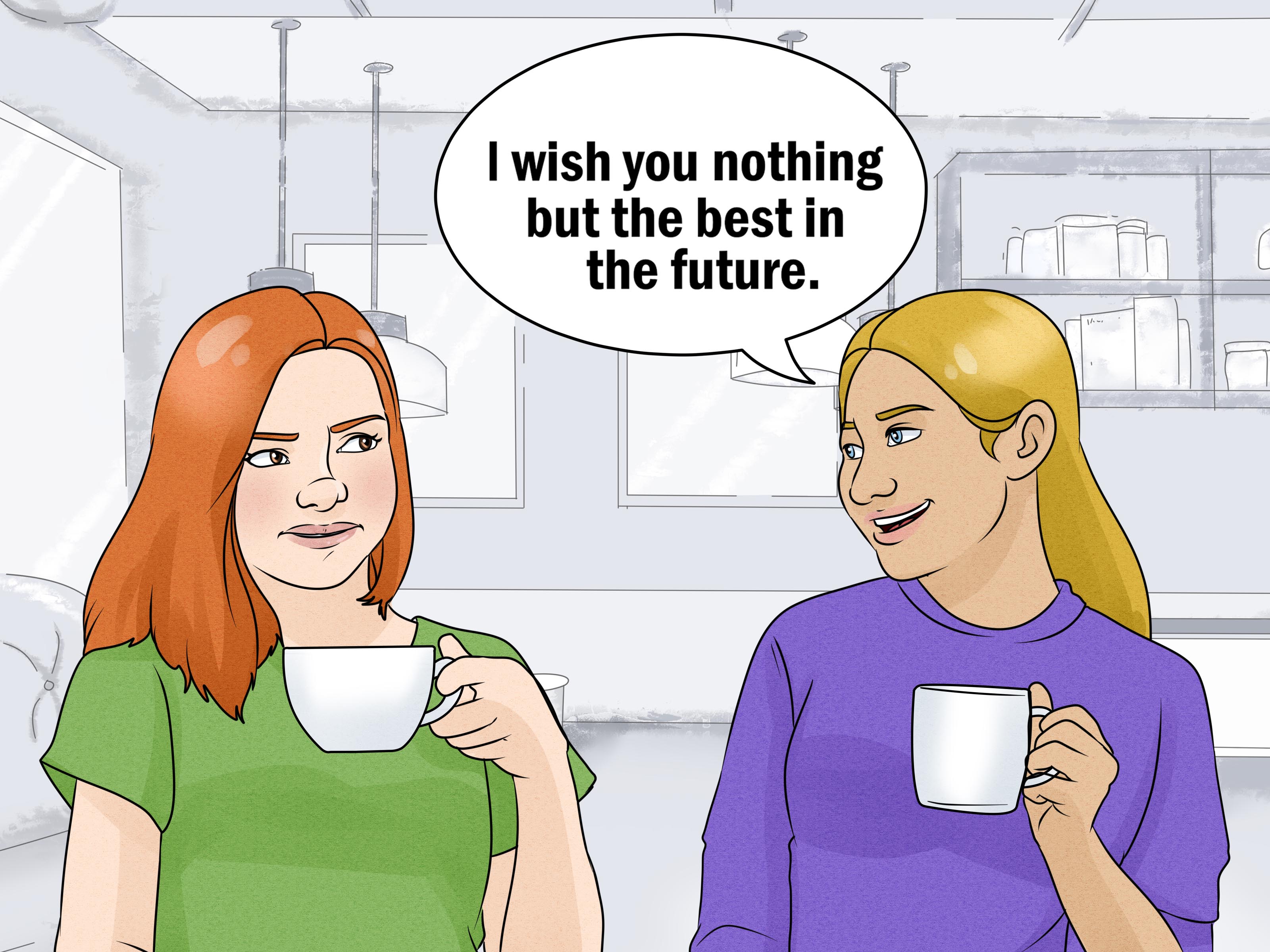
Keep your tone calm and matter-of-fact. Being kind does not require you to sound uncertain. You can be compassionate without presenting your boundary as a tiny apology wrapped in a larger apology.
Set Boundaries That Are Specific and Easy to Follow
“Please respect my boundaries” sounds healthy, but it is not very useful unless you explain what those boundaries are. The more specific you are, the easier it becomes to follow through.
Examples of Healthy Friendship Boundaries
- Texting boundary: “I do not check messages consistently during work. I will respond when I can.”
- Emotional boundary: “I can talk for twenty minutes tonight, but then I need to log off and rest.”
- Group boundary: “I am not comfortable being pulled into conflict between you and other friends.”
- Privacy boundary: “Please do not share my personal news without asking me first.”
- Availability boundary: “I cannot cancel plans every time there is a last-minute crisis.”
- Conversation boundary: “I want to finish what I was saying before we move on.”
Notice what these boundaries have in common: they are clear, calm, and focused on your choices. They do not say, “You must never be dramatic again.” They say, “I am not available to manage every emergency.” That is much more realistic.
Stop Feeding the Spotlight Without Being Cruel
Sometimes a friend keeps taking center stage because everyone around them has quietly learned to hand them the microphone. You can change the group dynamic without publicly humiliating anyone.
When they interrupt someone, gently bring the focus back: “I want to hear the rest of what Jordan was saying.” When they turn your problem into theirs, acknowledge briefly and redirect: “That sounds hard. I also want to finish explaining what happened with me.”
If they begin a familiar spiral, avoid becoming their unpaid emergency-response department. You can say, “I am sorry you are dealing with that. What support do you need right now?” This moves the conversation away from endless emotional looping and toward a practical request.
You can also limit your availability. Answer later. Decline a call. Make plans that have an end time. Choose one-on-one meetings only when you have the emotional bandwidth. Caring about someone does not mean providing twenty-four-hour customer support with no lunch break.
How to Respond When They Use Guilt, Tears, or Drama
Some friends do not respond well when the attention supply changes. They may become defensive, accuse you of being selfish, bring up old favors, cry, sulk, or suddenly announce that nobody cares about them. Their reaction may be genuine, but it does not erase your boundary.
Use the broken-record approach: calmly repeat your limit without arguing every side point.
- “I understand that you are disappointed. I still cannot talk tonight.”
- “I am not saying I do not care. I am saying I need space.”
- “I am willing to discuss this when we can both speak respectfully.”
- “I hear that this hurt your feelings. My boundary has not changed.”
You are not responsible for making every boundary feel pleasant to the other person. You are responsible for communicating it respectfully and following through consistently.
Know When the Friendship Needs More Distance
A healthy friendship can survive an uncomfortable conversation. In fact, it may become stronger when both people are willing to listen, apologize, and change. But not every friendship is built for repair.
Consider stepping back when your friend repeatedly ignores your limits, punishes you for having a life outside the friendship, spreads private information, humiliates you, manipulates you with guilt, or turns every disagreement into a crisis where you must rescue them.
Distance does not have to mean a dramatic breakup speech. You can reduce contact, stop sharing sensitive details, spend less time one-on-one, and invest more energy in friendships that feel mutual. A quieter friendship may be the healthiest version available.
If the relationship becomes threatening, abusive, controlling, or connected to threats of self-harm used to keep you engaged, take the situation seriously. Reach out to trusted people, encourage professional support, and do not carry the entire responsibility alone.
What Not to Do With an Attention-Seeking Friend
Even when you are frustrated, a few approaches usually make the situation worse.
Do Not Publicly Embarrass Them
Calling them out in front of a group may feel satisfying for approximately seven seconds. Then everyone is uncomfortable, the original issue becomes a public fight, and your friend may become even more focused on being the wounded main character.
Do Not Become Passive-Aggressive
Ignoring every message, making sarcastic jokes, or gossiping about them may temporarily release pressure, but it does not create a healthier friendship. Be direct when possible.
Do Not Over-Explain
A boundary is not a thesis defense. Long explanations often create more material for someone to debate, guilt-trip, or misunderstand. Simple is stronger.
Do Not Try to Fix Their Self-Esteem
You can be supportive, but you cannot permanently fill another person’s need for validation. That job belongs to them, and sometimes to a qualified mental health professionalnot to you and your rapidly declining phone battery.
Real-World Experiences: What People Often Learn When They Stop Being the Audience
The following are composite friendship situations based on common experiences, not individual client stories. They show how small changes can reveal whether a friendship has room to grow.
Experience One: The nonstop texter. Maya had a friend who expected instant replies from morning until midnight. If Maya was busy for two hours, she would receive messages such as, “Are you mad at me?” or “I guess you do not care anymore.” At first, Maya tried to explain every delay. She wrote long messages about meetings, errands, family obligations, and general life. The more she explained, the more her friend treated response time like a friendship performance review.
Eventually, Maya changed her approach. She said, “I care about you, but I cannot reply throughout the day. I will respond when I have time.” Her friend was unhappy at first. Maya did not argue. She simply began replying later, without apologizing for having a schedule. Within a few weeks, the friendship either had to adjust or reveal that it depended on constant access. In this case, it adjustedbut only because Maya stopped negotiating her basic right to be unavailable.
Experience Two: The conversation hijacker. Marcus noticed that every time anyone in his group shared good news, one friend had to top it. A promotion became a story about their promotion. A medical scare became a bigger medical scare. A birthday dinner became a personal grievance summit. Instead of criticizing the friend in front of everyone, Marcus began calmly redirecting the conversation. “Hold on, I want to hear the rest of Elena’s story.” It felt awkward the first few times, but it also gave the group permission to stop treating interruptions as inevitable weather.
Over time, the friend became more aware of the habit. Not perfectlynobody becomes a flawless listener overnightbut enough to pause, ask questions, and let other people finish. The lesson was simple: a group can reinforce better behavior without turning one person into a villain.
Experience Three: The permanent emergency. Talia had a friend whose every week contained a new disaster. Breakup panic. Work panic. Family panic. Social-media panic. Talia wanted to help, but the calls often lasted hours, repeated the same details, and left her too depleted to handle her own responsibilities. She began setting time limits: “I can talk for fifteen minutes.” She also asked, “Do you want to vent, or do you want help thinking through a next step?”
That question changed everything. Sometimes the friend wanted comfort. Sometimes they wanted a plan. Sometimes they wanted neither; they wanted an audience. When Talia stopped providing unlimited emotional attention, she learned that compassion works better when it has structure. Support should not require one person to disappear inside another person’s crisis.
Experience Four: The friendship that changed shape. Not every friendship returns to its old closeness. One person may continue to resist boundaries, complain about every limit, or make you feel guilty for growing. When that happens, stepping back can feel sad, even when it is necessary. But distance often creates room for calmer relationships, new connections, and the return of your own energy.
The deepest lesson is that mutual friendship should not feel like competing for oxygen. You deserve relationships where your stories are heard, your happiness is celebrated, and your boundaries are treated as part of knowing younot as an obstacle to someone else’s spotlight.
Final Thoughts: A Friend Is Not a Personal Audience
Dealing with a friend who needs to be the center of attention requires a blend of compassion and firmness. You can recognize that their behavior may come from insecurity while still refusing to let insecurity run the entire friendship.
Speak honestly. Set clear limits. Redirect conversations when needed. Stop over-explaining. Pay attention to how your friend responds when you have needs, good news, or boundaries of your own. Their response will tell you more about the health of the friendship than any dramatic speech ever could.
Good friendships make room for both people. You should not have to shrink your joy, postpone your needs, or become invisible just to keep someone else comfortable in the spotlight.