There are two kinds of people in this world: the ones who say, “Let’s go out tonight!” and the ones who stare at that text for 45 minutes like it’s a legal summons. If you’ve ever rehearsed a casual “sounds good” message, panicked over where to stand at a gathering, or pretended to be “super busy” when your only plan was spiraling privately on the couch, welcome. This article is for you.
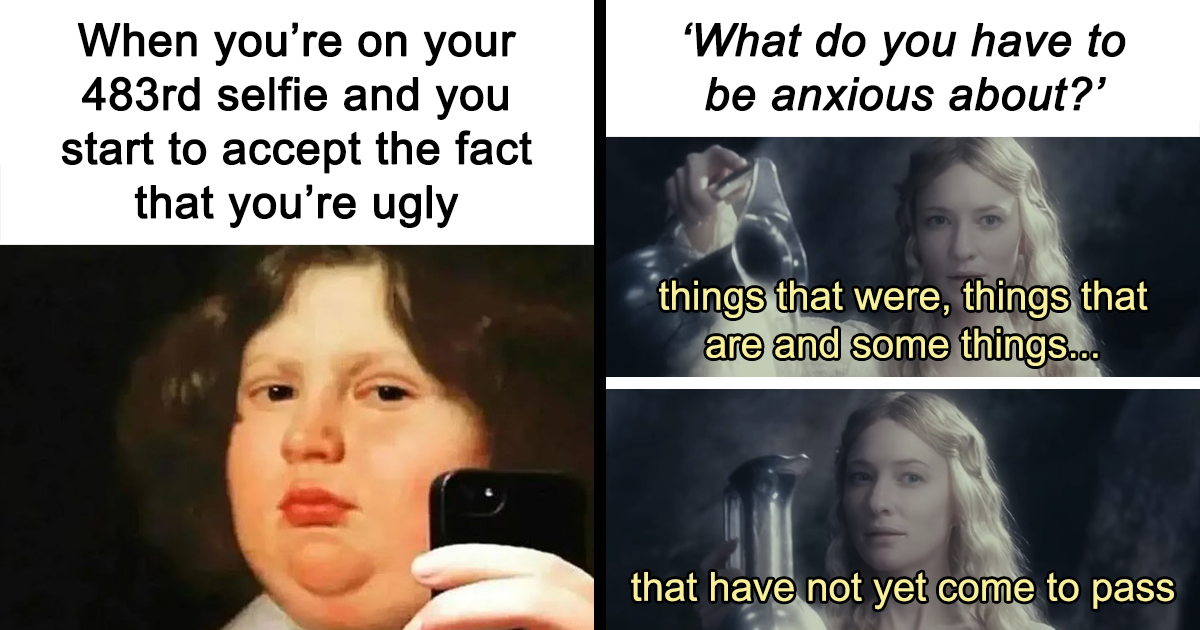
Social anxiety memes have exploded online because they turn a deeply awkward, lonely, and hard-to-explain experience into something instantly recognizable. One image, one caption, and suddenly thousands of people are nodding like, “Yes, exactly, that is what it feels like when I overthink saying ‘you too’ to the waiter.” The humor lands because the experience is real. For many people, social anxiety is more than shyness. It can involve intense worry about being judged, embarrassed, rejected, or simply taking up the wrong amount of space in the wrong room at the wrong time. Not dramatic at all, obviously.
That is why social anxiety memes can feel weirdly comforting. They create a tiny pocket of recognition in a very loud internet. They say, “You are not the only person who has mentally replayed a handshake from 2018.” At the same time, memes work best when they help people feel seen, not stuck. Laughing at the chaos is healthy; believing the chaos is your permanent personality is not.
Why Social Anxiety Memes Hit So Hard
Social anxiety memes are popular because they compress a big emotional experience into a small, funny moment. They capture avoidance, overthinking, physical tension, fear of judgment, and the classic internal split between wanting connection and wanting to vanish into drywall. They also help people say difficult things in a lighter way. It can be easier to send a meme that says “me before every social event ever” than to write a serious paragraph about dread, shame, and mental exhaustion.
Still, the best social anxiety humor does not mock people for struggling. It recognizes the absurdity of the mind’s alarm system when it treats a birthday party like a gladiator arena. That balance matters. A good meme says, “This is rough, and also kind of ridiculous.” A bad meme says, “This is all you’ll ever be.” We are aiming for the first one.
50 Social Anxiety Memes That Feel Way Too Accurate
- The Invitation Panic: “I’d love to come” translates to “I will now spend six hours regretting that sentence.”
- The Outfit Spiral: Trying on five outfits just to arrive in the first one and feel suspicious anyway.
- The Doorway Pause: Standing outside the venue like a Victorian ghost who cannot cross the threshold.
- The Parking Lot Negotiation: “Maybe I’ll go in after one more song.” Three playlists later, same situation.
- The Early Arrival Fear: Too early means awkward. Too late means noticeable. Perfect timing means impossible.
- The Name Game: Forgetting someone’s name one second after hearing it because your brain was busy panicking.
- The Handshake DLC: Handshake, wave, half-hug, nod, finger guns. Social interaction should not need bonus levels.
- The Beverage Shield: Holding a drink mostly so your hands have a job and stop acting suspicious.
- The Smile Buffer: Smiling just enough to seem friendly, not enough to look like a haunted statue.
- The Group Circle Problem: Every conversation circle looks closed when you are the one approaching it.
- The “What Do I Do With My Arms?” Classic: Somehow your own limbs become unfamiliar in public.
- The Tiny Mistake Documentary: You mispronounced one word and now your brain is releasing a full-length recap.
- The Laugh Timing Disaster: Laugh too early, too late, or too loud and suddenly you need a new identity.
- The Phone Refuge: Pretending to text so you do not look awkward, while definitely looking awkward.
- The Bathroom Intermission: Not crying, not hiding, just briefly relocating to a quieter dimension.
- The One-Sentence Replay: “Nice to meet you” seemed normal until you replayed it 19 times.
- The Compliment Short Circuit: Someone says you look nice and your reply becomes three unrelated syllables.
- The Food Table Strategy: Chips are not a snack, they are an emotional support activity.
- The Loud Room Meltdown: Half the stress is social; the other half is pretending you can hear anybody.
- The Exit Fantasy: Every event includes a mental map of at least two escape routes.
- The “I’m Fine” Face: Your face says calm. Your heartbeat says action movie chase scene.
- The Follow-Up Text Analysis: Reading “had fun tonight!” like it might contain hidden criticism.
- The Party Photo Fear: Nothing humbles you faster than being perceived in 0.5 camera mode.
- The Accidental Overshare: Say too little, seem cold. Say too much, invent a new personal regret.
- The Silence Panic: A two-second pause feels like the emotional equivalent of a car crash.
- The Intro Line Failure: You prepared three conversation starters and all of them vanished on contact.
- The RSVP Delusion: Saying yes because Future You seems much more socially competent than Present You.
- The “Maybe They Hate Me” Package: One neutral facial expression becomes a full rejection story.
- The Meeting Replay: Group hangout ends at 9; your internal review meeting begins at 9:03.
- The Sidewalk Encounter: Seeing someone you know in public and suddenly forgetting how humans greet humans.
- The Elevator Episode: Silence with strangers for 11 seconds can feel like a survival challenge.
- The Voice Volume Mystery: Either whispering like a period drama or shouting like a stadium announcer.
- The Eye Contact Puzzle: Too little looks distant. Too much looks like a duel.
- The Forced Icebreaker: “Tell us a fun fact about yourself” remains a crime in several states.
- The Open Office Horror: Existing within earshot of others should count as a competitive sport.
- The Group Chat Delay: Thinking of a funny reply two hours late and sending nothing instead.
- The Casual Hangout Myth: There is no such thing as “low pressure” once your brain joins the meeting.
- The Small Talk Marathon: “Crazy weather” deserves a loyalty award for carrying civilization.
- The Restaurant Order Rehearsal: Practicing your order in your head like it is an Oscar speech.
- The Wrong Name Nightmare: Calling someone by the wrong name and wanting to move to a remote cabin.
- The “Everyone Is Looking” Delusion: Rationally you know they are not; emotionally, you are on live TV.
- The Safe Person Search: Scanning the room for one familiar face like a sailor spotting land.
- The Last-Minute Cancellation Temptation: Suddenly cleaning your room feels urgent, necessary, and destiny-driven.
- The Walk-In Reset: Telling yourself “just be normal” right before becoming visibly less normal.
- The Compliment Replay: Somebody was kind to you and now you are suspicious, grateful, and confused.
- The “Did I Talk Too Much?” Post-Game: Socializing ends; the self-interrogation begins immediately.
- The “Did I Talk Too Little?” Sequel: Yes, your brain made this a double feature.
- The Host Goodbye Trap: Leaving requires finding the host, timing the goodbye, and surviving the exit spotlight.
- The Home Arrival Collapse: You made it through the event and now need two business days to recover.
- The Final Form Meme: “I wanted connection. I got adrenaline, awkward laughter, and one very committed beverage.”
Why These Memes Are Funny, but Also Kind of Honest
What makes these memes work is not just the joke. It is the recognition. Social anxiety often turns ordinary situations into high-stakes performances. A simple conversation can feel like an exam, a casual dinner can feel like a spotlight, and a party invitation can feel like an impossible choice between loneliness and discomfort. Memes translate those invisible experiences into shared language.
They also reveal something important: people with social anxiety are not necessarily antisocial. In many cases, they want connection very badly. They want to go, be relaxed, join in, laugh naturally, and leave without replaying every sentence like courtroom evidence. The tension is not “I hate people.” It is usually closer to “I want this to go well so badly that I panic.” That is a very different story, and memes help make that distinction clear.
When Memes Help
Memes can reduce shame, spark conversation, and remind people they are not uniquely broken. Humor can make it easier to talk about hard feelings, especially when direct language feels too vulnerable. A meme can open the door to a bigger truth: “This made me laugh because it is uncomfortably close to my real life.”
When Memes Stop Helping
Memes stop being useful when they turn your struggle into an identity you feel required to perform forever. If every joke ends with “guess I’ll just isolate forever,” the humor may stop feeling relieving and start reinforcing avoidance. Staying home once in a while is human. Letting fear quietly shrink your world is another thing. The goal is not to become the loudest person at the party. The goal is to feel freer, more grounded, and less ruled by dread.
What To Remember If These Memes Feel a Little Too Familiar
If these social anxiety memes feel less like comedy and more like documentary footage, it may help to treat that seriously and kindly. Social anxiety is common, treatable, and not a character flaw. Many people improve with practical support, especially approaches like therapy that help challenge anxious thought patterns, reduce avoidance, and build confidence through repeated real-world practice. Sometimes humor gets you through the day; sometimes you also need skills, support, and an actual plan. Both things can be true.
That means you do not have to choose between laughing at yourself and caring for yourself. You can do both. You can joke about rehearsing your coffee order and still decide that maybe it is time to stop letting fear direct the whole season of your life. Revolutionary concept, honestly.
Extra Experiences: What Social Anxiety Can Feel Like in Real Life
One of the strangest things about social anxiety is how physical it can feel. People often talk about it like it is “just nervousness,” but that phrase is far too tiny for the experience. Sometimes it starts hours before an event, with a low hum of dread in the background of your day. You try to answer emails, fold laundry, or watch a show, but the future social situation keeps blinking like a warning light. By the time you leave the house, your body may already be acting like something terrible is about to happen. Your stomach tightens. Your shoulders rise. Your breathing gets shallower. You become painfully aware of your own face, voice, posture, and hands, as if your body has turned into a complicated machine you no longer know how to operate.
Then there is the mental side. Social anxiety can make ordinary uncertainty feel loaded with meaning. A delayed text becomes proof you were annoying. A quiet moment in conversation becomes proof you are boring. Someone checking their phone becomes proof they regret speaking to you. The mind becomes an overenthusiastic detective with terrible evidence and unlimited confidence. It fills in blanks with worst-case interpretations, then presents them as facts. Even when part of you knows the logic is shaky, the emotional impact can still be very real.
Another common experience is grief over the version of yourself you wish could show up more easily. Many people with social anxiety are funny, observant, warm, and thoughtful when they feel safe. But in stressful situations, those qualities can get buried under self-monitoring. You may leave an event feeling frustrated because the person people met was not really you; it was the anxious, filtered, hyper-careful version of you. That disconnect can feel lonely. It can also make you avoid future gatherings because you start expecting disappointment before anything even happens.
And yet, there are moments that challenge the whole anxious script. The conversation that goes better than expected. The person who is kinder than your fear predicted. The event you nearly canceled but end up surviving, maybe even enjoying in flashes. Progress with social anxiety is rarely a movie montage where someone suddenly becomes fearless. It is usually messier and much more human. It looks like staying ten minutes longer. Speaking once in a meeting. Going to the dinner and leaving proud that you went at all. Sending the text. Asking the question. Letting your voice shake and doing it anyway.
That is why the funniest social anxiety memes often carry a quiet second message beneath the joke: this experience is exhausting, but it is also shared. And if it is shared, it can be understood. If it can be understood, it can be addressed. The party may still be awkward. You may still need a recovery blanket, a snack, and six hours of silence afterward. But you are not doomed to feel weird all day forever. Sometimes the first step is laughing because a meme gets it. The next step is believing your life can get bigger than the meme.
Conclusion
Social anxiety memes are popular for a reason: they make invisible stress visible, turn private overthinking into public recognition, and offer a little relief through humor. The best ones are funny because they are painfully specific, from fake-texting in the corner to replaying a conversation on the ride home. But beneath the jokes is a serious truth. Many people are not flaky, rude, or uninterested; they are overwhelmed, self-conscious, and trying to manage a nervous system that treats ordinary interaction like a high-wire act.
So yes, these memes may absolutely make you want to cancel that party. But they can also remind you that you are not the only one standing in the hallway, pretending to check your phone, wondering how everyone else learned to be relaxed. Whether you laugh, wince, relate, or feel called out by item number 43, let the humor be a bridge instead of a wall. It is okay to need comfort. It is okay to need support. And it is more than okay to believe that one day, the invitation text will feel less like a threat and more like a choice.