If your kitchen cabinets are tiny, your design standards are not, and your dream dinnerware sits somewhere between “museum-worthy” and “please actually survive Tuesday night pasta,” then the TC100 stackable dinnerware system is your kind of obsession. This is the rare tabletop classic that manages to look intellectual without being fussy, practical without being dull, and minimal without feeling like it was designed by a robot who has never eaten soup.
The TC100 is often described as Bauhaus-inspired, and that shorthand works, but the full story is even better. Designed by Hans “Nick” Roericht in 1959 as a diploma project at the Ulm School of Design in Germany, the TC100 belongs to a design lineage that carries forward Bauhaus ideasclarity, geometry, efficiency, and honest usefulnesswhile sharpening them into something more systematic and industrial. In other words, this is not dinnerware that merely looks modern. It behaves modern.
And that, frankly, is what makes it such a compelling object of design sleuthing. The TC100 is not just a pretty plate set. It is a disciplined design system disguised as tableware, and that is exactly why collectors, museum curators, small-space dwellers, and lovers of hard-working everyday objects still talk about it decades later.
What Is TC100 Dinnerware?
At first glance, the TC100 looks almost modest. White porcelain. Clean geometry. Stackable forms. No theatrical ornament, no decorative frills begging for attention, no “statement” glaze trying too hard to become the main character at brunch. But that restraint is the point. The set was developed as a stacking tableware system in glazed porcelain, and its power lies in how carefully each piece relates to the next.
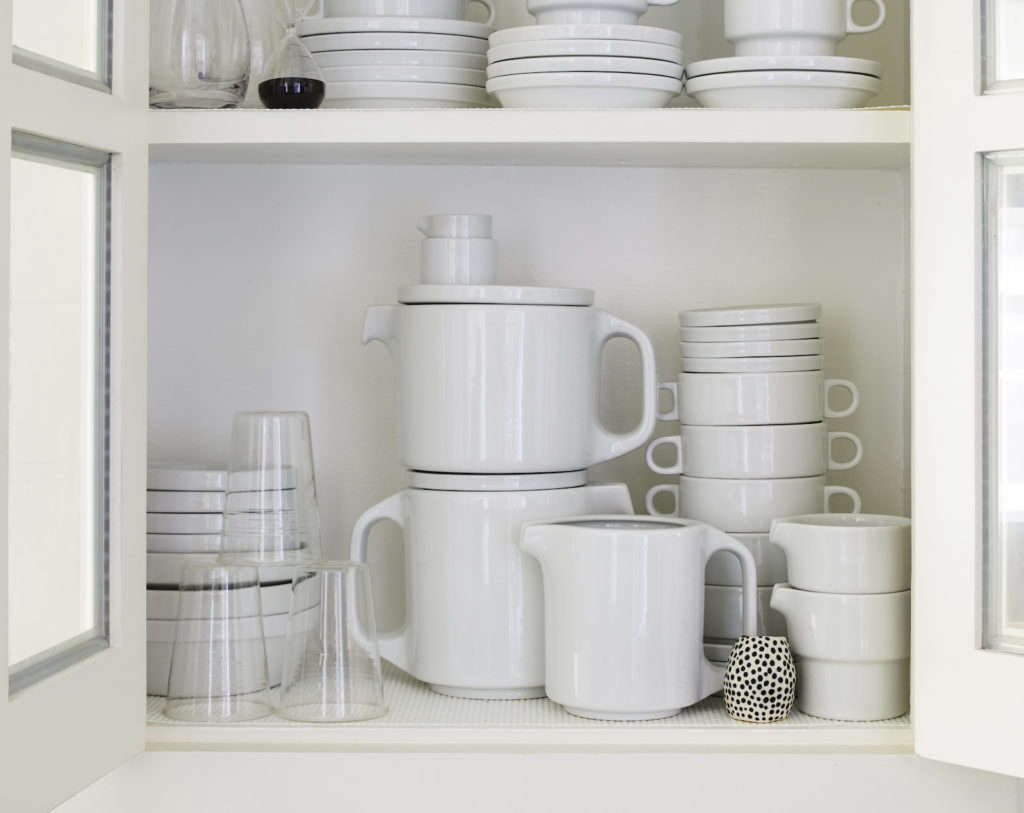
The collection includes core dining forms such as plates, cups, saucers, bowls, soup cups, and lidded components, all designed to stack cleanly and efficiently. The edges are shaped in a way that allows the pieces to nest and align with remarkable precision. This was not a side benefit. It was the central idea. Roericht was designing for order, repetition, storage, transport, and daily use all at once.
That is why the TC100 has always felt smarter than most dinnerware. Typical dish sets are collections of separate objects. TC100 is a system. It treats the cabinet, the cafeteria, the serving line, and the table as part of the same design problem. That is very Ulm. That is very modernist. And that is why it still feels fresh now.
Why People Call It Bauhaus-Inspired
Calling the TC100 “Bauhaus-inspired” makes sense because the Ulm School of Design was deeply connected to the Bauhaus legacy. The Bauhaus championed simple forms, practical use, and the idea that design should improve everyday life rather than just decorate it. Ulm inherited those ambitions but pushed them further into logic, analysis, and systems thinking. So if Bauhaus taught modern design to walk, Ulm taught it to organize the kitchen drawer, redesign the cafeteria, and file everything by function.
The TC100 captures that evolution beautifully. It has the visual calm of Bauhaus modernismbalanced geometry, clean surfaces, no excessbut it also has the tougher, more methodical intelligence associated with Ulm. This is not a romantic artisan tea service. It is a piece of industrial design thinking made domestic.
That distinction matters. The TC100 does not simply borrow the look of modernism. It embodies modernism’s most useful values: efficiency, clarity, repeatability, and restraint. It makes a strong case that the best design is not louder. It is better solved.
The Genius of Stackability
Let’s talk about the stack. Because the stack is the star.
In a world full of overdesigned kitchen products that promise “space-saving innovation” and then somehow require a larger cabinet, the TC100 feels almost suspiciously competent. The pieces stack tightly, neatly, and beautifully. The forms are rational enough to save room, yet elegant enough that a column of plates or bowls looks intentional rather than purely utilitarian.
This is one of the biggest reasons the dinnerware continues to appeal to contemporary homeowners. Today’s kitchensespecially in apartments, condos, and urban homesoften need objects that earn their keep. TC100 does exactly that. It reduces visual clutter, uses vertical space well, and makes storage feel less like an afterthought and more like part of the design experience.
And unlike many minimalist objects, it does not become sterile. The pleasure of TC100 is tactile and visual at the same time. You see the crisp profile of the rim, the calm silhouette of the bowls, the disciplined relationship between cup and saucer. Then you stack them and realize the beauty is structural, not cosmetic.
Small-Space Appeal That Feels Very 2026
One reason this mid-century system feels startlingly current is that modern life has finally caught up with it. Compact kitchens, open shelving, multi-use spaces, and design-aware storage have made people more interested in products that combine beauty with efficiency. The TC100 does not scream for attention, yet it photographs well, stores brilliantly, and works hard. That trifecta is catnip for design people.
Put another way: TC100 is the kind of object that looks equally right in a museum collection, a curated design shop, and a very organized Brooklyn or Chicago apartment where someone alphabetizes tea and owns one truly excellent lamp.
From Diploma Project to Design Icon
Lots of student projects are interesting. Very few end up in the permanent collection of the Museum of Modern Art in New York. The TC100 did. That alone tells you this was never just an academic exercise.
Roericht’s design was recognized early because it solved a real problem with unusual elegance. It was not merely stackable in the casual sense of “these bowls can sit on top of each other if you are careful.” It was conceived as a coherent family of forms. The result was durable, logical, and visually unifiedprecisely the kind of design that museums love because it proves good taste and good engineering do not have to be strangers.
It also moved into production through Thomas/Rosenthal and remained in production for decades, which is another excellent sign. The market, unlike design school critique panels, is not generally sentimental. If something stays around, it usually means the object was useful, desirable, or both. In the TC100’s case, it was both.
The Everyday Luxury of Restraint
There is a specific kind of luxury that the TC100 understands very well: the luxury of not needing to show off. It does not rely on hand-painted flourishes, precious detailing, or trendy color stories that age like milk. Instead, it offers proportion, utility, and consistency. That can sound severe on paper, but in practice it feels quietly sophisticated.
This is why design enthusiasts continue to hunt for vintage pieces and why the system still resonates in conversations about timeless dinnerware. The TC100 has what so many newer tableware lines desperately want: authority. It looks resolved. It knows what it is doing. It does not need a mood board.
Even better, its minimalism is not cold. The porcelain softens the geometry. The rounded forms prevent the set from feeling aggressively angular. The whole collection lands in that sweet spot where utility meets grace. If a filing cabinet and a tea set had an unusually elegant child, you would be in the neighborhood.
Why Collectors and Design Lovers Still Care
Collectors love the TC100 for obvious reasons: design history, museum recognition, strong authorship, and a silhouette that remains instantly identifiable. But ordinary users have their own reasons for falling for it. It is practical. It stores beautifully. It suits both daily meals and more considered table settings. And it gives a kitchen a sense of quiet intention.
There is also the emotional appeal of systems-based design. People enjoy objects that feel resolved because those objects make daily life feel a little more resolved too. A good stack of TC100 bowls communicates that someone thought carefully about how dinnerware should live in the world. That is satisfying in a way that is hard to fake.
Some owners display it on open shelves like sculpture. Others use it the way it was meant to be used: every day, with no drama. Both approaches are correct. In fact, the TC100 is one of those rare objects that becomes more convincing in use. The more often you reach for it, stack it, wash it, and return it to order, the more the design reveals itself.
How TC100 Fits Into Today’s Table Culture
Modern table culture has become more relaxed, but it has also become more design-conscious. People want dinnerware that can handle weekday leftovers, coffee with friends, an improvised soup night, and the occasional “I swear this is casual” dinner party. The TC100 fits that world almost perfectly.
It works because it does not force a theme. Rustic farmhouse? Not really. Cottagecore florals? Absolutely not. Hyper-luxe maximalism? Also no. Instead, it offers a disciplined baseline that plays well with linen napkins, sleek flatware, vintage glassware, and just about any food that looks good against white porcelain. Pasta behaves. Salad behaves. Cake behaves. Even takeout starts acting like it has ambitions.
And since stackability is part of the appeal, the set suits real homes where space matters. That remains one of its sharpest selling points. Good design is not simply about how an object looks when the table is set. It is also about where the object goes afterward. TC100 understands the after-party.
Design Lessons We Can Steal From TC100
1. Form Should Solve More Than One Problem
The TC100 is attractive, but its forms are doing real work. They organize storage, improve stackability, and create visual unity at the same time. That is a masterclass in efficient design.
2. Systems Age Better Than Gimmicks
Because the collection is based on relationships between parts rather than novelty, it still feels intelligent decades later. A good system can outlive trend cycles, social media aesthetics, and at least three rounds of “this year’s hottest neutral.”
3. Restraint Can Be Warm
Minimalism often gets accused of being sterile, but TC100 shows how proportion, material, and practicality can create warmth without ornament. It is calm, not clinical.
4. Everyday Objects Deserve Serious Thinking
Perhaps the biggest lesson is that ordinary domestic tools deserve extraordinary attention. A plate is not just a plate when it shapes how we store, serve, and live. The TC100 makes daily rituals feel considered, and that is one of design’s highest callings.
The Experience of Living With TC100-Style Dinnerware
What does a design like this actually feel like in daily life? The answer is surprisingly emotional for something so rational. There is a distinct pleasure in opening a cabinet and finding order instead of ceramic chaos. The pieces do not slump into each other. They line up. They make sense. They give you the tiny but powerful satisfaction of a home that is working with you rather than against you.
Imagine a small apartment kitchen on a busy weekday evening. You pull out bowls for soup, plates for toast, a cup for coffee, and nothing avalanches forward like it has been plotting your downfall since 8 a.m. The stack stays calm. You stay calm. Suddenly design has improved your mood before dinner even starts. That is not trivial. That is the whole point.
There is also a visual pleasure that grows over time. At first, TC100 may seem understated. Then you live with it. You notice how the rims align. How the stack creates a gentle rhythm on the shelf. How the shapes look good even when the table is not dressed for company. The set does not demand styling tricks. It brings its own composure.
For design-minded people, that composure can be oddly addictive. You begin to appreciate how the dinnerware cooperates with the rest of the kitchen. It does not fight the glassware. It does not compete with the wood cutting board or the stainless kettle. It behaves like a good ensemble actor: confident, disciplined, never chewing the scenery, always making the whole scene stronger.
There is a practical side to the experience too. Hosting becomes easier because the pieces are easy to store, easy to retrieve, and easy to reset after the meal. In a compact home, that matters more than any decorative flourish. A dinnerware system that stacks beautifully lets you spend less time wrestling with cabinets and more time paying attention to the actual humans in your kitchen. Revolutionary concept, really.
And then there is the subtle status of owning something that is genuinely well designed. Not expensive-for-the-sake-of-it. Not trendy-for-the-algorithm. Just good. The kind of object that quietly signals taste, not performance. People may not know the full history of Hans Roericht or the Ulm School of Design, but they tend to recognize when something feels resolved. TC100 has that effect. It looks inevitable, as if dinnerware should always have been designed this way.
Over time, the experience becomes less about collecting a famous object and more about trusting it. You trust it to work. You trust it to fit. You trust it not to date itself every two years. That kind of trust is rare in home goods, where so many products are engineered for impulse buys and fast aesthetic turnover. The TC100 earns permanence.
In that sense, living with TC100-style dinnerware is a small daily lesson in what modern design can still do. It can reduce friction. It can save space. It can make routine gestures feel cleaner, lighter, and a little more intelligent. And yes, it can make you absurdly happy about a stack of bowls. Which, honestly, sounds ridiculous until you experience it. Then it sounds like good design.
Conclusion
The TC100 stackable dinnerware system remains a design classic because it does not separate beauty from usefulness. It turns storage into part of the visual language. It turns repetition into elegance. It turns dinnerware into a case study in systems thinking.
That is why it still matters. In an age of crowded kitchens, compact homes, and endless product noise, the TC100 offers a cleaner answer: make fewer things, make them smarter, and let the form do real work. Bauhaus-inspired? Absolutely. Ulm-disciplined? Even better. The TC100 is the kind of object that proves great design is not just seen. It is lived with, stacked neatly, and reached for again tomorrow.