Trends come and goremember the brief but tragic reign of avocado appliances?but a traditional kitchen has serious staying power.
Instead of chasing fads, it leans on things that have worked for more than a century: solid craftsmanship, natural materials, and
details that feel warm and familiar rather than flashy and fleeting.
Designers in the U.S. consistently describe traditional kitchens as homey, functional spaces built around quality wood cabinetry,
stone countertops, classic lighting, and layouts that actually work for everyday cooking and gathering. They borrow from Victorian,
early-20th-century, cottage, and farmhouse influences, but the goal is always the same: create a kitchen that will still look good
when your kids are old enough to argue about who gets Grandma’s mixing bowl.
Below, you’ll find 32 traditional kitchen ideas that stand the test of time. Mix and match them to suit your space, your budget,
and your actual lifestyle (including midnight-snack raids). The result: a kitchen that looks timeless, not tired.
What Makes a Traditional Kitchen Truly Timeless?
Before we dive into specific ideas, it helps to understand what makes a traditional kitchen feel “classic” instead of just “old.”
Home design editors and builders typically point to three big themes: natural materials, balanced proportions, and thoughtful details.
Traditional kitchens often feature raised-panel or Shaker-style cabinets, hardwood floors, and stone countertops like marble, granite,
or quartz that age gracefully rather than screaming a particular decade.
Color is another key. Instead of high-contrast trendy palettes, timeless kitchens stick to neutrals: warm whites, creams, greige,
and muted blues or greens. These historical-style hues work beautifully with wood, brick, and stone and don’t feel dated when the
next “it color” rolls through social media.
Layout matters, too. Traditional kitchens prioritize functiongood work zones, plenty of storage, and paths that keep the cook from
playing bumper cars with the rest of the household. Symmetry around focal points like the range or sink instantly reads “classic,”
as do architectural details such as beams, coffered ceilings, and paneled range hoods.
Finally, traditional kitchens celebrate personality: glass-front cabinets, collected china, well-loved cookware on display, and a
mix of metals that looks curated rather than matchy-matchy. Think of it as the kitchen equivalent of a tailored blazer you’ve had
for yearsit just keeps working.
32 Traditional Kitchen Ideas That Age Beautifully
1. Build Around a Symmetrical Focal Point
Frame your range or main sink with matching cabinets, windows, or shelving to create visual balance. Symmetry instantly feels
formal and traditional, and it helps calm down a busy space filled with appliances, dishes, and family traffic.
2. Consider a Classic Galley Layout
In smaller homes and older floor plans, a galley kitchen is a workhorse. Parallel runs of cabinetry keep everything within reach
and naturally create a “work triangle” between sink, range, and fridge. Add Shaker cabinets and a runner rug for a timeless,
efficient space.
3. Swap the Island for an Antique-Style Table
Traditional kitchens often echo the days when furniture was freestanding. An antique farm table or vintage baker’s table instead
of a built-in island adds history, charm, and flexibilityyou can move it, refinish it, or even take it with you when you move.
4. Paneled Range Hoods with Classic Molding
A boxy stainless hood can feel ultra-modern; wrapping it in wood paneling with crown molding instantly softens the look. Paint it
to match your cabinets for a seamless feel or in a contrasting color to create a refined focal point.
5. Add a Little Old-School Glamour
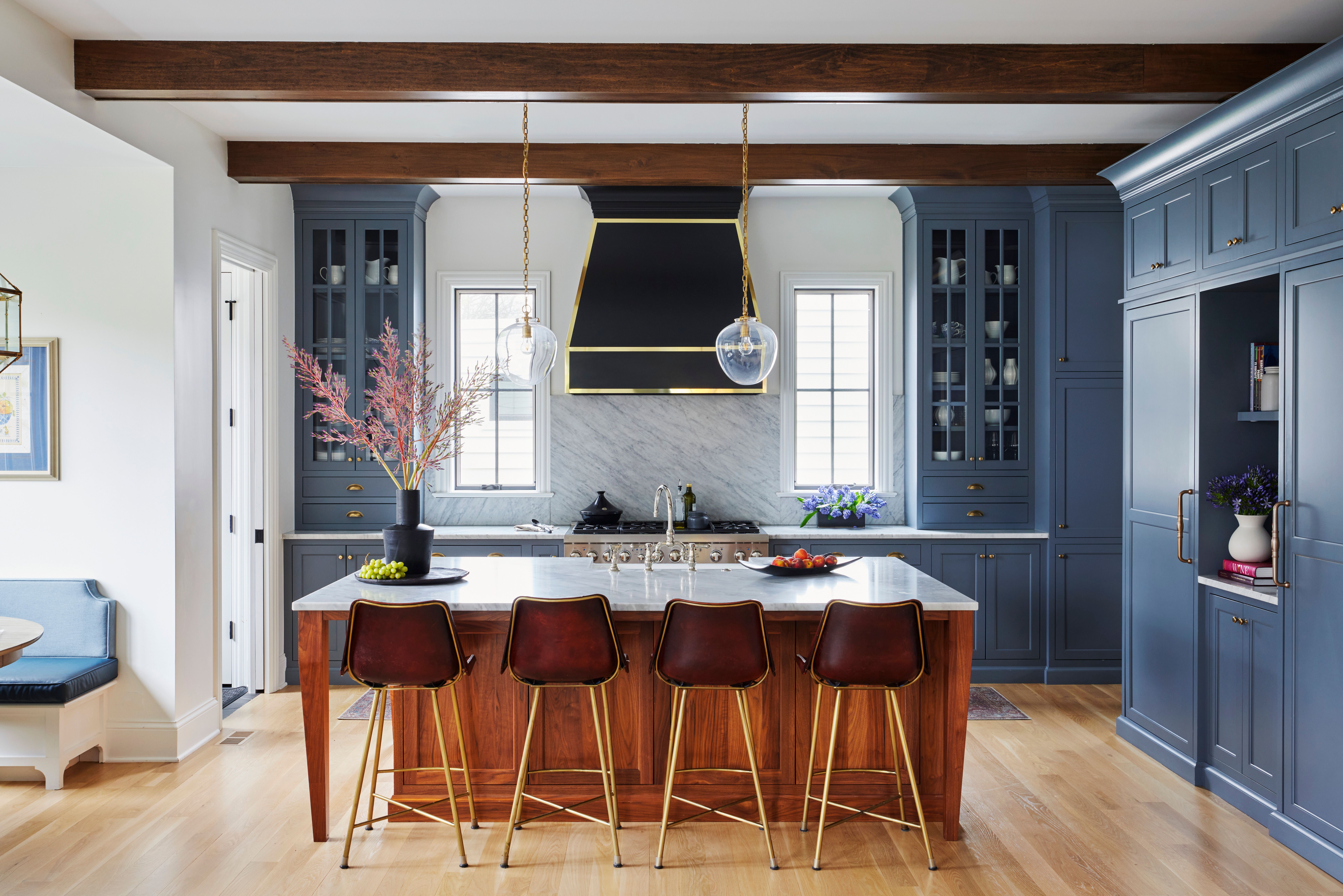
Traditional doesn’t mean boring. Bring in subtle glamour with a brass-accented range, leather barstools, or a richly stained wood
island. Pair those lux details with simple globe pendants and classic hardware so the room still feels grounded, not glitzy.
6. Highlight Historic Architectural Details
Exposed beams, beadboard ceilings, arched doorways, and chunky trim are all hallmarks of traditional kitchens. If your house
already has these features, show them off with soft paint colors and simple cabinetry so the architecture takes center stage.
7. Disguise or Coordinate Your Appliances
Panel-ready dishwashers and fridges let appliances disappear into the cabinetry, which keeps the room feeling elegant and
furniture-like. On a tighter budget, updating handles, knobs, or even using appliance paint or wraps can visually tie everything
together.
8. Embrace Natural Wood Cabinetry
Painted kitchens are popular, but natural oak, cherry, and walnut cabinets never really left the chat. Their warmth works
beautifully with stone counters, classic hardware, and traditional lighting. A clear or lightly stained finish lets the wood grain
add texture without feeling rustic.
9. Maximize Small Kitchens with Vertical Storage
Traditional homes often have compact kitchens, so think upward: add glass-front uppers to the ceiling, use plate racks, or hang a
pot rail. These tricks free up counter space and make even a small galley kitchen feel curated rather than cramped.
10. Layer in Classic Accessories
Warm runners, framed art, and iron or wood stools instantly soften hard surfaces. Think vintage oil paintings, still lifes, or
landscape prints instead of generic “Eat” signs. Traditional kitchens gain soul from pieces that look collected over time.
11. Go for a Bright White, But Character-Rich, Kitchen
White kitchens are timeless when they’re layered, not sterile. Combine white cabinets with beadboard, corbels, ceiling-height
backsplash tile, and chunky trim. The details keep the space from feeling like a blank rental and give that crisp-yet-cozy look.
12. Use Marble (or Marble-Look) Surfaces Thoughtfully
Marble has been used in kitchens for generations thanks to its cool surface and elegant veining. If real marble maintenance worries
you, consider quartz with a soft marble pattern on the island or backsplash for a similar timeless effect with less upkeep.
13. Display Blue-and-White China or Collected Pottery
Few things say “traditional kitchen” like a row of blue-and-white plates or a stack of transferware bowls. Whether heirlooms or
thrift-store finds, grouping them in open shelving, a hutch, or a plate rack adds instant history and color.
14. Install Glass-Panel Cabinet Doors
Glass-front cabinets break up solid runs of doors and visually lighten heavy uppers. Simple rectangular panes feel classic, while
decorative mullions or X-patterns lean more country or cottage. Use them to showcase everyday dishes or pretty glassware.
15. Take Your Tile Backsplash to the Ceiling
Subway tile has Victorian roots and never really goes out of style. Running tile from countertop to ceiling behind the range or
sink creates a traditional, “built-to-last” lookwhether you stick with white subway or choose a more decorative shape.
16. Choose Historic-Inspired Paint Colors
Instead of high-octane brights, opt for softened colors that look like they could have existed 100 years ago: muddied sages,
grayed blues, warm creams, and putty tones. These shades flatter natural materials and keep the space feeling calm and classic.
17. Use Traditional Lighting: Lanterns, Sconces, and Chandeliers
Swap ultra-modern fixtures for schoolhouse globes, lantern pendants, or candle-style chandeliers. Layer task lighting (under-cabinet
and over-island) with warm ambient light so the room feels as good for homework and wine nights as it does for breakfast.
18. Add a Coffered or Beamed Ceiling
A coffered ceiling or simple wood beams give the room architectural gravitas. Paired with classic white cabinets and traditional
hardware, overhead detailing makes even a newer build feel like it has stories to tell.
19. Paint Cabinets a Historically Inspired Color
Deep navy, muted forest green, and dusty French blue are all rooted in historic interiors. Painting your lowers or island in one
of these colors (and keeping uppers light) balances modern personality with classic sensibility.
20. Add More Glass-Front Storage for Light and Display
Consider flanking your sink or range with glass-door cabinets, or adding a glass hutch in a dining area. They bounce light around,
showcase your favorite pieces, and underline the “collected” feel traditional kitchens are known for.
21. Incorporate Custom Details on Islands and Hoods
Carved brackets, turned legs on an island, furniture-style toe kicks, and detailed range-hood trim all signal custom craftsmanship.
These embellishments are small in size but big in impact, taking you from “builder basic” to “instant classic.”
22. Rely on Shaker Cabinets for a Safe, Timeless Bet
Shaker-style doorsflat frame with a recessed center panelwork equally well in traditional, cottage, and transitional kitchens.
They’re simple enough to avoid trend fatigue but detailed enough to feel warmer than ultra-flat slab fronts.
23. Choose Hardwood Floors That Can Age Gracefully
Designers routinely list hardwood as a top pick for timeless kitchens. Oak, maple, or hickory in a medium stain hides daily wear,
can be refinished, and pairs beautifully with both painted and stained cabinets.
24. Invest in Stone Countertops
Granite, marble, and quartz are perennial favorites for traditional kitchens. Their natural patterning adds movement, and their
durability makes them a long-term win. Choose softer, less speckled patterns for a calm, classic look.
25. Stick to a Neutral Color Palette with Layers of Texture
Whites, creams, taupes, and soft grays are the backbone of many timeless kitchens. The trick is layering: combine painted cabinets,
wood accents, woven barstools, and stone or brick to keep all those neutrals from feeling flat.
26. Install a Farmhouse or Apron-Front Sink
The deep apron-front sink is a traditional workhorse that still looks charming today. It pairs perfectly with bridge faucets,
gooseneck spouts, and cross-handle taps, and it’s surprisingly practical for big pots, sheet pans, and “I cooked for twelve” cleanup.
27. Make the Range or Cooker the Modern Hearth
A substantial range or range cookergas, induction, or dual fuelfeels like the heart of a traditional kitchen. Frame it with a
mantel-style hood, tile niche, or flanking spice pullouts to create a focal point that will never feel dated.
28. Add a Built-In Hutch or Dresser
Built-in hutches mimic antique dressers and are perfect for storing dishes, glassware, and serving pieces. Glass doors on top and
closed storage below keep things practical while giving you a handsome, furniture-like piece in the room.
29. Choose Classic Hardware in Warm Metals
Cup pulls, simple knobs, and traditional latches in brass, bronze, or polished nickel are easy to love for decades. They’re also
one of the easiest things to update later, so you can tweak the mood without redoing the whole kitchen.
30. Bring in Cottage Details: Beadboard and Planked Ceilings
Beadboard backs of open shelves, planked soffits, and v-groove paneling on islands all nod to classic cottage kitchens. Painted in
the same color as your cabinets or trim, they add subtle texture and a lived-in feel.
31. Try a Classic White Kitchen with a Contrasting Island
If you love an all-white perimeter but want depth, paint your island a darker colornavy, charcoal, or deep greenand top it with
stone. This combo feels custom and enduring, especially when paired with traditional pendants and hardwood flooring.
32. Create a Cozy Breakfast Nook or Eat-In Corner
Built-in benches, a round pedestal table, and upholstered seat cushions transform an awkward corner into the most popular spot in
the house. In a traditional kitchen, a breakfast nook feels like a natural extension of the cooking space and encourages lingering.
Real-Life Lessons from Traditional Kitchens
Design rules are helpful, but lived experience is what really proves whether a “timeless” kitchen works. Homeowners who’ve lived
with traditional kitchens for years often say the same thing: the magic is in the mix of beauty and practicality.
For example, many people fall in love with bright white cabinets, then quickly realize their kids treat cabinet doors like
finger-painting canvases. The traditional fix isn’t to give up on white entirely, but to balance it with forgiving elements: a
medium-tone wood floor that hides crumbs, a subtly veined countertop that disguises small stains, and hardware finishes that don’t
show every fingerprint.
Others discover that open shelving looks gorgeous on day one and chaotic on day thirty. Traditional kitchens solve this by blending
storage typessome glass fronts or open shelves for pretty pieces, plenty of closed cabinets for cereal boxes and plastic tumblers.
You still get charm, but you’re not staging your dishes like a store display every week.
Another classic lesson: invest in the “bones,” experiment with the “dressing.” Quality cabinetry, good flooring, and solid
countertops are the elements you’ll still be living with 20 years from now. Meanwhile, lighting, barstools, paint colors, and
textiles are far easier to swap. Traditional kitchens lean into this fact; they rely on enduring materials for the core and use
accessories to scratch the itch for something new.
Finally, the most consistent feedback from people with traditional kitchens is that they age well emotionally. That carved island,
the hutch filled with holiday china, the patina on brass hardwarethese details become woven into family stories. Your kitchen
isn’t just a backdrop; it becomes the stage for birthdays, bake-offs, science projects, and late-night talks. That emotional
longevity might be the most “timeless” quality of all.