Note: This article is written in original wording and synthesized from publicly documented film-history sources, production interviews, entertainment reporting, box-office records, and archival movie references. Source links are not included in the publishable HTML for cleaner web use.
Few Christmas movies understand childhood chaos as perfectly as Home Alone. It is a holiday classic, a slapstick survival guide, a suburban fairy tale, and a very persuasive argument that no child should ever be left unsupervised with micro machines, tarantulas, hot irons, paint cans, and unlimited confidence. Released in 1990, the film turned Macaulay Culkin into one of the most famous child stars in the world and gave families a new December ritual: watching two grown men get outsmarted by an eight-year-old with the strategic mind of a tiny holiday general.
But behind Kevin McCallister’s scream, the Wet Bandits’ terrible career planning, and that gorgeous Chicago-area house is a treasure chest of production trivia. Some facts are sweet. Some are weird. Some make you wonder how Harry and Marv made it to the sequel with bones still located in the correct places. Below are 69 Home Alone facts for the mischievous kid inside you, carefully written for fans who still believe a cheese pizza can solve at least three emotional problems.
Why Home Alone Still Works
Home Alone is not just a movie about booby traps. It works because it balances fantasy with genuine emotion. Kevin gets every kid’s dream: the entire house to himself, no bedtime police, no older siblings, and full command of the grocery list. Then the movie sneaks in the part children rarely admit out loud: independence can be thrilling, but loneliness can arrive right after the ice cream. That mix of wish fulfillment, comedy, danger, and family warmth is why the movie remains one of the most beloved Christmas films ever made.
69 Home Alone Facts Every Mischief Maker Should Know
Production, Casting, and Creative Chaos
- Home Alone was released in the United States on November 16, 1990. It arrived just in time to become a holiday habit for millions of families.
- The movie was directed by Chris Columbus. Before this, Columbus had written family-friendly favorites and later became known for directing the first two Harry Potter films.
- John Hughes wrote and produced the film. Hughes was already famous for defining teen comedy and family comedy in the 1980s.
- The idea came partly from travel anxiety. Hughes reportedly imagined the nightmare of forgetting something important before a family trip, then pushed the idea to its funniest extreme: forgetting a child.
- The script came together remarkably fast. Multiple production histories note that Hughes wrote the first version in less than two weeks.
- Kevin McCallister was written with Macaulay Culkin in mind. Hughes had worked with Culkin on Uncle Buck and knew the kid could be funny, sharp, and oddly powerful on camera.
- Chris Columbus still auditioned many other children. Even though Culkin seemed perfect, Columbus wanted to be sure before handing a whole movie to a young actor.
- Culkin’s performance made him a global child star. His face-slap scream became one of the most recognizable images in holiday movie history.
- Kieran Culkin appears in the movie too. Macaulay’s real-life younger brother plays Fuller, the Pepsi-loving cousin Kevin does not want to share a bed with.
- Joe Pesci played Harry Lime. The role gave the Oscar-winning actor a chance to do broad physical comedy instead of his usual tougher criminal characters.
- Daniel Stern played Marv Murchins. His elastic facial expressions and legendary scream helped make Marv one of the funniest movie burglars ever.
- The Wet Bandits were originally called that because Marv leaves the water running. It is possibly the worst branding decision in criminal history.
- Catherine O’Hara played Kate McCallister. Her frantic airport scenes and emotional return home gave the movie its heart.
- John Heard played Peter McCallister. The film never clearly explains his job, which has fueled decades of fan theories about how the family afforded that house.
- Director Chris Columbus has suggested Kate’s fashion work helps explain the family’s wealth. The mannequins Kevin uses during his fake party are a clue hiding in plain sight.
- John Candy filmed his role very quickly. His memorable appearance as Gus Polinski, the Polka King of the Midwest, was completed in a marathon-style shoot.
- Much of John Candy’s dialogue was improvised. His warm, rambling energy made Gus feel like a real guy you might meet at 2 a.m. in an airport when your life is collapsing.
- Old Man Marley was not originally central to the story. His character was strengthened to add more emotion and give Kevin a meaningful lesson about family.
- Roberts Blossom played Marley with spooky tenderness. He begins as neighborhood folklore and becomes the film’s emotional secret weapon.
- Buzz’s girlfriend was not actually played by a girl. The production reportedly used a boy in costume for the photo gag to avoid embarrassing a young actress.
Filming Locations and the Famous House
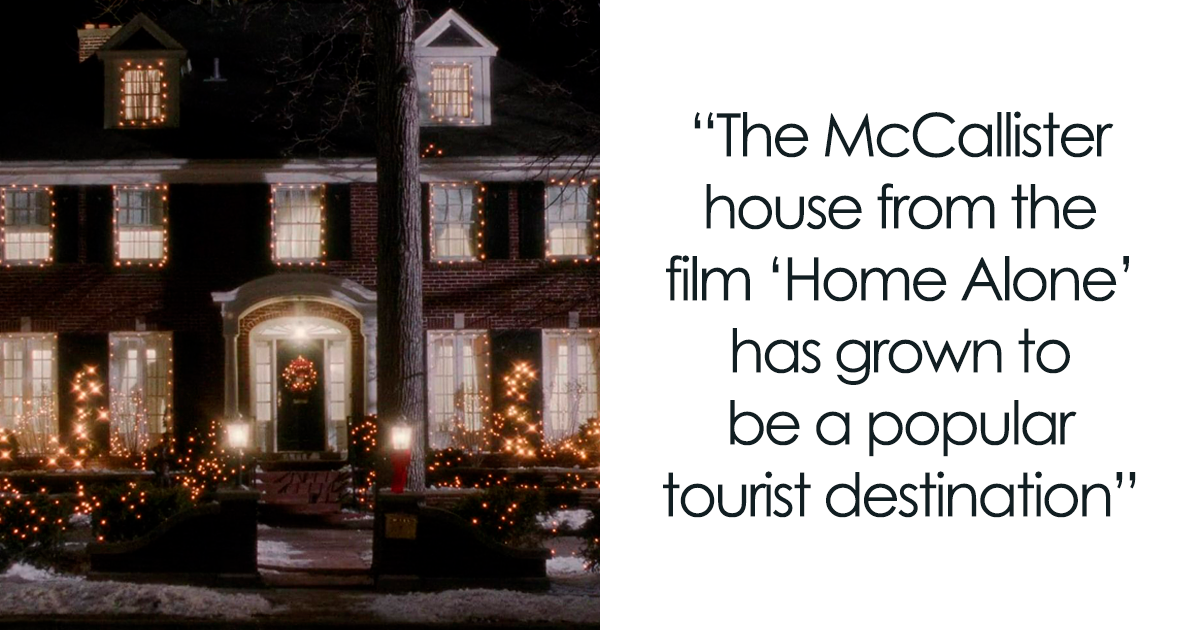
- The McCallister house is in Winnetka, Illinois. The famous exterior is located at 671 Lincoln Avenue.
- The house became one of the most famous private homes in movie history. Fans still visit the area, though it remains a residence and should be respected as private property.
- The house was built in the early 20th century. Its classic look helped create the cozy, wealthy, storybook atmosphere of the film.
- Not all interiors were filmed inside the real house. The real home was beautiful, but a film crew needs space for lights, cameras, cables, and people who say “rolling” with authority.
- Many interior sets were built at New Trier High School’s former west campus. The production used large spaces to recreate rooms and stage stunt-heavy scenes.
- The school location had a John Hughes connection. Hughes often liked filming around the Chicago area, and the region became part of his cinematic signature.
- The exterior of the house sells the fantasy. Before Kevin even sets a trap, the home looks like the ultimate Christmas playground.
- The staircase became iconic. Kevin sledding down the stairs and out the front door is pure childhood imagination, even if every parent watching quietly says, “Absolutely not.”
- Some nearby Chicago-area locations were also used. The film creates a suburban holiday world that feels both specific and universal.
- O’Hare Airport appears in the travel chaos. The airport scenes help make the family’s panic feel huge, noisy, and believable.
- The church scenes add warmth to the movie. Kevin’s quiet conversation with Marley gives the story a pause before the slapstick storm.
- The production used snow creatively. Real winter weather helped, while movie tricks enhanced the snowy look when nature did not cooperate.
- Potato flakes were reportedly used as fake snow. Magical on camera, less magical when melting into soggy starch.
- The house’s real owners experienced the film up close. The family who owned the home during production lived through the unusual process of seeing their house become a movie landmark.
- The Home Alone house later sold for millions. Its fame turned real estate into pop-culture mythology.
Props, Pranks, and Painful Slapstick
- The fake gangster movie is not real. Angels With Filthy Souls was created specifically for Home Alone.
- The sequel’s gangster clip was fake too. Angels With Even Filthier Souls appears in Home Alone 2, and yes, the titles are ridiculously perfect.
- The black-and-white gangster footage was designed to look authentic. Lighting, performance style, and editing helped trick viewers into thinking it came from an old crime film.
- Kevin’s aftershave scream became accidental movie magic. Culkin was supposed to remove his hands quickly, but keeping them on his cheeks made the moment legendary.
- The tarantula scene used a real spider. Daniel Stern allowed the spider on his face for one take, which is one more take than most people would allow.
- Stern’s scream during the tarantula scene was dubbed later. He had to mime the scream so he would not frighten the spider.
- The ornaments Marv steps on were not real glass. They were made of candy or breakaway material, because even movie burglars deserve basic foot safety.
- Daniel Stern wore protection for some barefoot scenes. The movie looks brutal, but the crew still used practical precautions.
- Joe Pesci accidentally bit Macaulay Culkin during rehearsal. Culkin has said the bite left a scar.
- Pesci tried not to become too friendly with Culkin on set. He wanted Kevin to seem genuinely wary of Harry.
- The stunt work was physically demanding. Harry and Marv fall, slip, burn, crash, and collide with the dedication of cartoon coyotes.
- The paint-can scene became one of the movie’s signature gags. It is funny because it is perfectly timed; it is terrifying because physics exists.
- Doctors and fans have often joked that the Wet Bandits would not survive Kevin’s traps in real life. The movie operates on holiday cartoon logic, not emergency-room logic.
- The icy stairs gag required careful stunt coordination. Slapstick looks effortless only when professionals make danger appear silly.
- Kevin’s battle plan is surprisingly organized. He maps the house, prepares each trap, and times the attack like a tiny commander in pajamas.
- The BB gun appears early and pays off later. Like many good comedy props, it is introduced before it becomes part of the chaos.
- The tar on the basement stairs is one of the nastiest traps. Marv’s foot meets a nail, and an entire generation learns to fear unfinished basements.
- The hot doorknob scene is pure cartoon violence. Harry’s burned hand is exaggerated, memorable, and impossible to forget.
- The blowtorch gag is one of the film’s most famous images. Harry’s flaming head is slapstick pushed to absurdity.
- The movie’s violence works because Harry and Marv are comic villains. They are threatening enough to create suspense but foolish enough to invite laughter.
Music, Box Office, and Cultural Legacy
- John Williams composed the score. His music gives the movie its magical Christmas glow.
- The score earned Academy Award recognition. Williams received nominations for the original score and for “Somewhere in My Memory,” written with lyricist Leslie Bricusse.
- “Somewhere in My Memory” became a holiday standard. It carries the emotional side of the movie, especially when Kevin misses his family.
- The film was a box-office phenomenon. It earned hundreds of millions worldwide and became one of the biggest comedy hits of its era.
- Home Alone stayed popular in theaters for months. Its long theatrical run helped turn it from hit movie into cultural event.
- The film helped redefine the modern Christmas comedy. It proved holiday movies could be sentimental, chaotic, and wildly profitable.
- Critics were not all immediately impressed. Some early reviews found it too broad or unbelievable, but audiences strongly disagreed.
- The movie became more beloved over time. Rewatching it is now a December tradition for families, millennials, Gen Xers, and anyone who enjoys seeing criminals lose to household objects.
- Home Alone was selected for the National Film Registry in 2023. That honor recognized its cultural, historical, and aesthetic significance.
- The film launched a franchise. Home Alone 2: Lost in New York reunited the core cast in 1992.
- The Talkboy from the sequel became a real toy. Fans wanted Kevin’s recorder so badly that the fictional gadget became a commercial product.
- Kieran Culkin later became an acclaimed adult actor. The Fuller kid grew into a major award-winning performer.
- Catherine O’Hara’s career only grew richer. New generations know her not only as Kevin’s mom but also from projects like Schitt’s Creek.
- Home Alone remains a comfort movie because it understands family frustration. Everyone is annoying, everyone is loud, and everyone still wants to be loved.
- The movie’s biggest fantasy is not defeating burglars. It is realizing that home matters most after you have briefly enjoyed having it all to yourself.
Why Kevin McCallister Is the Patron Saint of Mischievous Kids
Kevin is not perfect. In fact, the movie works because he is bratty, dramatic, and occasionally a menace to polite family life. He talks back. He complains. He wishes everyone would disappear. Then, when his wish seems to come true, he discovers that freedom is complicated. The refrigerator is yours, the TV is yours, the bed is yours, and somehow the silence becomes enormous.
That is why Kevin’s transformation feels satisfying. He does not become a different person; he becomes a braver version of himself. He learns to shop, clean, plan, apologize, and protect his home. He also learns that the scary old neighbor may simply be lonely, and that adults are often carrying stories kids do not see. For a comedy filled with pratfalls, Home Alone has a surprisingly gentle moral: courage is not the absence of fear; it is putting on a sweater, making a plan, and hoping your paint cans are tied securely.
The Experience of Watching Home Alone: A 500-Word Holiday Memory
Watching Home Alone feels different depending on your age. As a kid, it is pure wish fulfillment. Kevin wakes up and realizes the house is his kingdom. No one tells him to pack. No one calls him a disease. No one eats the last slice of cheese pizza while making direct eye contact like a sibling-shaped villain. He jumps on the bed, watches whatever he wants, eats junk food, and talks to himself like a CEO of childhood freedom. For young viewers, this is not a crisis. It is a promotion.
Then comes the deliciously mischievous part: the traps. Kids watch Kevin arrange micro machines, ice the steps, heat the doorknob, and swing paint cans with the breathless excitement of seeing imagination become architecture. The appeal is not really violence; it is competence. Kevin is small in a world run by adults, but for one magical night, he knows the house better than anyone. Every hallway becomes a battlefield. Every ornament becomes a strategy. Every ordinary object becomes proof that creativity can beat size.
As a teenager, the movie becomes funnier in a different way. You notice how chaotic the McCallister family is before the trip. There are too many people, too many bags, too many pizzas, and not nearly enough emotional regulation. You begin to understand why Kevin snaps. You may even sympathize with him when everyone piles on after the pizza disaster. Sure, wishing your family would vanish is dramatic, but so is traveling internationally with a small army of relatives before sunrise.
As an adult, however, Home Alone becomes almost a horror movie wearing a Christmas sweater. You watch Kate McCallister realize her son is missing, and suddenly the comedy pauses. Catherine O’Hara sells the panic so well that the entire premise becomes emotionally believable. Adults also start asking practical questions: Who paid for all those plane tickets? How did Kevin clean up that house so quickly? What kind of insurance covers “criminals defeated by household slapstick”? Why is Uncle Frank allowed indoors?
The best experience is watching it with a mixed-age group. Kids laugh at Marv screaming. Parents laugh at the family chaos because recognition is cheaper than therapy. Grandparents enjoy the music. Someone always quotes “Keep the change, ya filthy animal.” Someone else points out that Harry and Marv should have moved to another neighborhood after the first injury. And when Kevin looks out the window at Marley reuniting with his family, the room usually gets quieter. That moment is the secret ingredient. The movie gives us mayhem, but it leaves us with tenderness.
That is why Home Alone survives every generation. It lets the mischievous kid inside us run wild, but it also reminds us why we eventually want the noise back. The crowded kitchen, the embarrassing relatives, the imperfect parents, the annoying siblings, the holiday messall of it becomes precious once it is gone. Kevin thinks he wants peace and quiet. What he really wants is to be seen, heard, and loved. The paint cans are just a bonus.
Conclusion
Home Alone remains a rare holiday movie that can make viewers laugh, wince, hum along, and call their family afterward. Its behind-the-scenes stories only make it more charming: a fast-written script, a perfectly cast child star, a real tarantula, a fake gangster movie, a legendary house, and a score that wraps the whole thing in Christmas magic. These 69 Home Alone facts prove that the film is more than a seasonal rerun. It is a comedy machine built from childhood fantasy, family anxiety, slapstick precision, and just enough heart to make even the Wet Bandits look like part of the holiday décor.