Wedding planning has a magical way of revealing who understands the word celebration and who hears it as family reunion with mandatory emotional hostage-taking. In one viral family drama, a man preparing for a small, peaceful wedding found himself at the center of a much bigger question: when parents cross a line so badly that trust shatters, is going no contact cruel—or simply self-preservation?
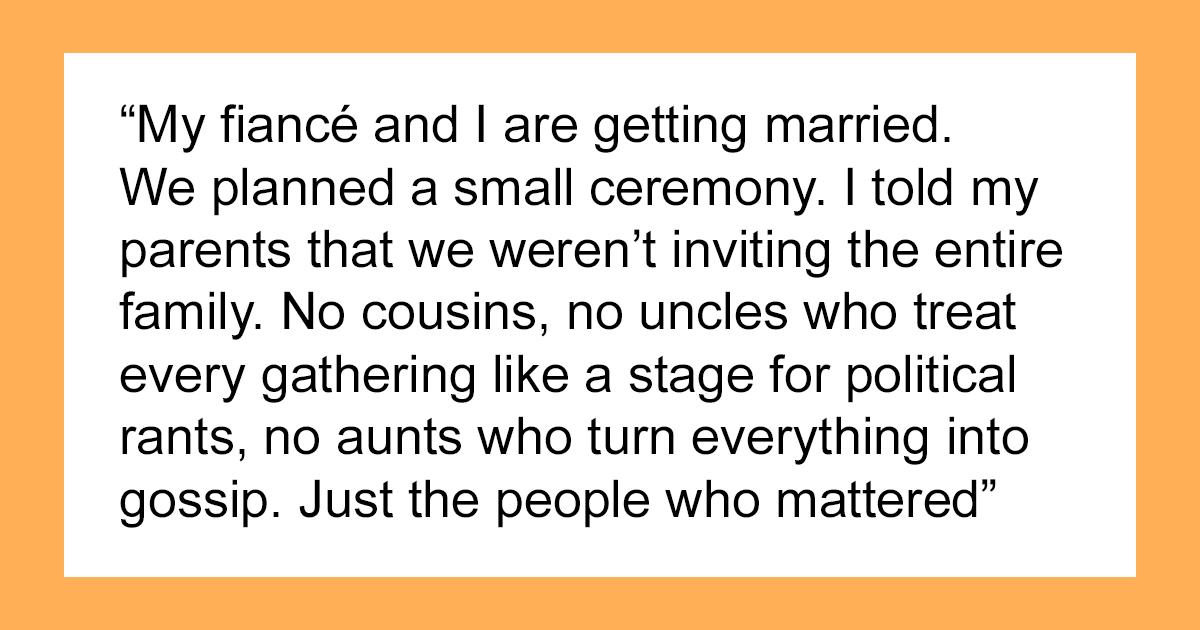
The story begins with a couple choosing an intimate wedding. Not a stadium event. Not a twelve-hour banquet featuring every cousin, uncle, aunt, and distant relative who once held the groom as a baby and has been dining out on that story ever since. Just a calm, meaningful ceremony with people who genuinely mattered to the couple.
His parents hated the idea. They believed a wedding was not just about the couple but about the entire family. They wanted the extended family invited, despite the couple’s limited venue, budget, and desire for a drama-free celebration. When the groom asked whether they would help cover extra food, seating, accommodations, and logistics, the answer was no. The demands, however, remained very enthusiastic. Funny how some people treat someone else’s wallet like a community garden.
But the conflict did not stop at complaints. According to the man’s account, his parents escalated from guilt trips and insults to something much more disturbing: they destroyed his treasured collection of limited-edition figures, signed pieces, and rare memorabilia that he had spent years building. When he saw the broken cabinet, shattered items, and garbage bags full of damaged collectibles, something in him changed. He did not scream. He did not argue. He simply went cold and quiet, packed what remained, left, and blocked them.
This is not just a story about wedding guest lists. It is about boundaries, control, family entitlement, emotional manipulation, and the painful moment an adult child realizes love cannot survive where respect has been evicted.
What Happened: A Small Wedding Turned Into a Family Power Struggle
The groom and his fiancée wanted a small wedding. Their reasons were practical and emotional: a smaller venue, a limited budget, and a desire to be surrounded by people who supported their relationship. That is not unusual. Modern couples often choose intimate weddings to avoid financial stress, reduce planning chaos, and make the day feel personal instead of performative.
His parents, however, saw the wedding differently. To them, the event was a chance to gather the entire extended family. Their son’s wishes became secondary to their image of what the wedding “should” be. Instead of treating the couple’s decision as final, they pressured him, insulted him, and suggested he was ungrateful.
That detail matters. Disagreement is normal. Parents may feel disappointed when they cannot invite everyone they imagined. They may have cultural expectations, family obligations, or a long list of people they feel must be included. But disappointment does not give anyone permission to punish the couple. A wedding invitation is not a court summons. Nobody is legally required to invite Uncle Rick just because he owns a suit and once bought a toaster.
The Collectibles Were Not “Just Toys”
One of the most important parts of the story is the destroyed collection. The groom had collected limited-edition figures, movie replicas, signed convention pieces, and rare items since he was a teenager. These were not random objects gathering dust. They represented memories, milestones, independence, and joy.
People often underestimate collections because they do not understand them. Sneakers, comics, vinyl records, dolls, sports cards, action figures, antique books, vintage cameras, signed posters—all of these can carry emotional and financial value. A collection is not childish simply because it is fun. Adults are allowed to have hobbies. In fact, adults desperately need hobbies, because otherwise life becomes taxes, laundry, and pretending to understand health insurance.
Destroying someone’s possessions to “teach them a lesson” is not discipline. It is control. It communicates, “If you do not obey us, we will hurt what you love.” Whether the items are worth ten dollars or ten thousand, the message is chilling. The damage is not only material; it is emotional.
Why the Internet Sided With the Groom
Online readers overwhelmingly supported the groom’s decision to cut ties. Many argued that his parents had crossed a line that could not be brushed away as wedding stress. Several people pointed out that the destruction appeared intentional, calculated, and directly tied to his refusal to invite the whole family.
That reaction makes sense because the parents’ behavior followed a familiar pattern: demand, guilt, escalation, punishment, and then family pressure to reconcile. When relatives later messaged him saying he should not abandon family, the groom’s response was simple: he did not abandon them; they pushed him out.
This is why the story resonated. Plenty of people have experienced a version of this dynamic. Maybe their parents ignored their wedding choices. Maybe in-laws tried to control the guest list. Maybe relatives treated boundaries as personal attacks. Or maybe someone destroyed, sold, donated, or mocked something deeply meaningful to them, then expected instant forgiveness because “family is family.”
Wedding Boundaries: Who Gets a Say?
Wedding etiquette can be complicated, especially when money is involved. If parents are contributing financially, many couples choose to give them some input, especially on guest lists, traditions, or rehearsal events. That can be reasonable when everyone communicates respectfully.
But contribution is not ownership. Helping pay for flowers does not mean you now control the marriage, the seating chart, the ceremony, the cake flavor, and the couple’s spiritual destiny. A wedding is not a corporate merger with parental shareholders.
In this case, the groom’s parents were reportedly not offering to pay for the extra guests they demanded. That weakens their position considerably. They wanted more people, more food, more seats, more accommodations, and more stress—but not more responsibility. The couple had every right to say no.
Healthy wedding boundaries may include:
- Setting a firm guest count based on budget and venue size.
- Giving each family a limited number of optional invitations.
- Making vendor passwords to prevent unauthorized changes.
- Keeping planning decisions between the couple first.
- Using a wedding planner or trusted friend as a neutral buffer.
- Refusing to reward tantrums, threats, or guilt trips.
The best wedding planning conversations happen early and clearly. Couples should explain the vision, budget, venue capacity, and non-negotiables. Parents can be invited to help in specific ways, such as planning a rehearsal dinner, researching vendors, or organizing family photos. Involvement can be meaningful without becoming control.
When Family Pressure Becomes Emotional Manipulation
Not every family disagreement is toxic. Sometimes people argue because weddings are emotional, expensive, and full of unspoken expectations. However, there is a difference between hurt feelings and manipulation.
In this story, the parents allegedly used guilt, insults, emotional pressure, and finally destruction of property. That is not ordinary disappointment. It is an attempt to force compliance by making the adult child feel fear, shame, or loss.
Emotional manipulation often sounds like:
- “After everything we did for you, this is how you repay us?”
- “You are tearing the family apart.”
- “Your wedding is our only chance to bring everyone together.”
- “If you loved us, you would do this.”
- “You are being selfish for wanting your own day your own way.”
These statements shift responsibility. Instead of respecting the couple’s decision, the manipulator reframes the boundary as cruelty. The goal is not understanding; the goal is surrender.
The Cold and Quiet Moment: Why People Finally Go No Contact
The phrase “I felt something inside me turn cold and quiet” is powerful because it captures a common emotional turning point. Many people imagine estrangement as explosive: screaming, slammed doors, dramatic speeches, maybe a rainstorm for cinematic effect. But often the final break is strangely calm.
It happens when the nervous system stops trying to negotiate. The person realizes the same conversation has been happening for years in different costumes. The wedding fight is not just about invitations. The broken collectibles are not just about objects. They are evidence of a relationship where love has been mixed with control for too long.
Going no contact is rarely someone’s first choice. Most adult children do not wake up one morning and think, “You know what would make Tuesday sparkle? Family estrangement.” Usually, distance comes after repeated boundary violations, failed conversations, and a painful acceptance that the other person may not change.
Was Cutting Off His Parents Too Harsh?
Based on the details shared, cutting contact appears understandable. The parents did not merely criticize the wedding. They allegedly destroyed valuable personal property as punishment. That kind of behavior raises serious concerns about safety, respect, and future escalation.
Could reconciliation ever happen? Possibly, but only under specific conditions. A meaningful repair would require accountability, not excuses. The parents would need to acknowledge what they did, apologize without blaming him, offer restitution for the destroyed items, stop pressuring him about the wedding, and respect his boundaries going forward.
Even then, reconciliation would be his choice. Forgiveness is not a coupon relatives can clip when consequences become inconvenient. Trust is rebuilt through behavior, not dramatic speeches about family unity.
What This Story Teaches About Adult Children and Parents
One reason this story spread so widely is that it reflects a growing cultural shift. Many adult children today are less willing to accept disrespect simply because it comes from a parent. Older family models often emphasized obedience, hierarchy, and keeping the peace at all costs. Newer models place more emphasis on emotional safety, mutual respect, and chosen boundaries.
That shift can feel threatening to some parents. They may interpret boundaries as rejection. They may believe their adult children owe them access, agreement, and obedience. But adulthood changes the relationship. A parent can offer love, wisdom, and support, but they cannot control their child’s wedding, marriage, home, hobbies, or guest list.
The healthiest parent-adult child relationships evolve. They move from command to connection. Parents who adapt often become trusted guides. Parents who demand control may find themselves outside the door, wondering why nobody wants to open it.
How Couples Can Protect Their Wedding From Family Drama
If you are planning a wedding and already sensing family turbulence, take the warning signs seriously. A little awkwardness is normal. Repeated pressure, guilt, threats, or sabotage is not.
1. Create a united front
The couple should agree privately before talking to relatives. Decide the guest count, budget, traditions, and non-negotiables together. When families sense division, they may try to negotiate with whichever partner seems softer. Love is beautiful; triangulation is not.
2. Put decisions in writing
Send clear messages about guest limits, deadlines, dress codes, and roles. Written communication reduces the chance of someone later saying, “But I thought you said I could invite my dentist and his pickleball league.”
3. Use vendor passwords
If relatives are pushy, ask vendors to require a password before making changes. This protects deposits, menus, flowers, seating charts, and sanity.
4. Do not reward tantrums
If someone reacts badly and you give them what they want, they learn that escalation works. Calmly repeat the boundary and end the conversation when it becomes disrespectful.
5. Protect sentimental belongings
If you have valuable items stored with relatives who are angry or controlling, move them as soon as possible. Important documents, keepsakes, collectibles, heirlooms, and financial records should be somewhere safe.
Why “Family Is Family” Is Not Enough
“Family is family” can be a beautiful phrase when it means loyalty, care, and showing up for one another. But it becomes dangerous when it means tolerating cruelty without consequence.
Family should not be used as a shield for bad behavior. If a friend destroyed someone’s collectibles to control their wedding, most people would call it unacceptable immediately. Parents do not get a special exemption from basic decency. Love may explain why the hurt runs deeper, but it does not erase the harm.
The groom’s choice to go no contact was not about punishing his parents for disagreeing. It was about protecting his peace after they showed they were willing to destroy what mattered to him. That distinction is crucial.
The Symbolism of the Wedding
A wedding marks the beginning of a new family unit. That is precisely why conflicts around weddings can become so intense. Parents may feel they are losing influence. Adult children may feel they are finally stepping into independence. The guest list becomes a battlefield for a much larger emotional war: who gets to decide what this new life looks like?
In this story, the groom’s parents appeared to treat the wedding as their event. The groom treated it as the start of his marriage. Only one of those views respects the couple.
His final vision for the wedding—quiet, calm, full of love, and free from control—is not selfish. It is the whole point. A wedding should not feel like a hostage negotiation with floral arrangements.
Related Experiences: When Wedding Drama Reveals the Truth About Family
Stories like this hit a nerve because many people have lived through similar moments, even if the details differ. One common experience is the parent who treats the guest list as proof of loyalty. A couple may want fifty guests, but a parent insists on inviting neighbors, coworkers, distant cousins, and old friends the couple barely knows. When the couple refuses, the parent cries betrayal. Suddenly, the wedding is no longer about marriage; it is about the parent’s social standing. The couple learns that their joy is acceptable only when it serves someone else’s expectations.
Another familiar experience involves sentimental belongings. Many adults remember parents throwing away childhood collections, journals, books, instruments, art, clothes, or keepsakes because they were considered useless, childish, or embarrassing. The object itself may not matter to outsiders, but to the owner it can represent identity. When someone destroys it, the message is not simply “I dislike this thing.” The message is “I do not respect the part of you that loves this thing.” That kind of wound can last for years.
Some couples also face family members who weaponize money. A parent offers to pay for part of the wedding, then uses the gift as a remote control. Suddenly, the couple must change the menu, invite extra guests, switch venues, include unwanted traditions, or tolerate rude behavior because “we are paying.” Financial help should reduce stress, not purchase authority over someone else’s marriage. When money comes with invisible strings, it is not a gift; it is a leash wearing a bow.
There are also cases where relatives recruit others to pressure the couple. After a boundary is set, the couple begins receiving calls, texts, and messages from siblings, cousins, grandparents, and family friends. These people may not know the full story. They may only hear that the couple is being cold or disrespectful. This “flying monkey” effect can make the couple feel isolated, but it also reveals who asks questions and who simply joins the guilt parade.
On the healthier side, some families handle disappointment with grace. A parent may say, “I hoped we could invite more people, but I understand this is your day.” They may ask how they can help within the couple’s limits. They may feel sad privately without turning that sadness into punishment. These families prove that boundaries do not destroy relationships. In many cases, boundaries protect relationships from resentment.
The biggest lesson from these experiences is simple: major life events reveal existing dynamics. Weddings do not usually create controlling relatives; they expose them. A guest list conflict, a dress disagreement, or a budget conversation can show whether a family respects the couple as adults. When respect is present, problems can be solved. When control is present, every decision becomes a loyalty test.
For anyone facing similar drama, the goal is not to win every argument. The goal is to build a marriage on peace, clarity, and mutual protection. Sometimes that means compromise. Sometimes it means a hard conversation. And sometimes, as painful as it is, it means walking away from people who keep confusing love with control.
Conclusion
The story of the man who cut off his parents after their wedding tantrum is dramatic, but the heart of it is painfully ordinary: an adult child set a boundary, and his parents tried to punish him for it. By destroying his treasured collection, they turned a disagreement into a rupture. They proved that their desire for control mattered more than his happiness, property, and peace.
Going no contact is not a light decision. It brings grief, confusion, and backlash. But in some situations, distance is the first breath of safety a person has had in years. The groom lost objects that mattered deeply to him, but he also gained clarity. His wedding will be smaller than his parents wanted, but perhaps much larger in the ways that count: love, calm, respect, and freedom.
Family can be beautiful. Family can also be complicated, messy, and occasionally more dramatic than a reality show reunion filmed during a thunderstorm. The difference between a difficult family and a harmful one is accountability. People who love you may disappoint you, but they should not destroy you to get their way.
Note: This article is an original editorial rewrite based on publicly discussed relationship themes, wedding etiquette principles, and family-boundary guidance. It is intended for informational and storytelling purposes and is not a substitute for legal, mental-health, or safety advice.