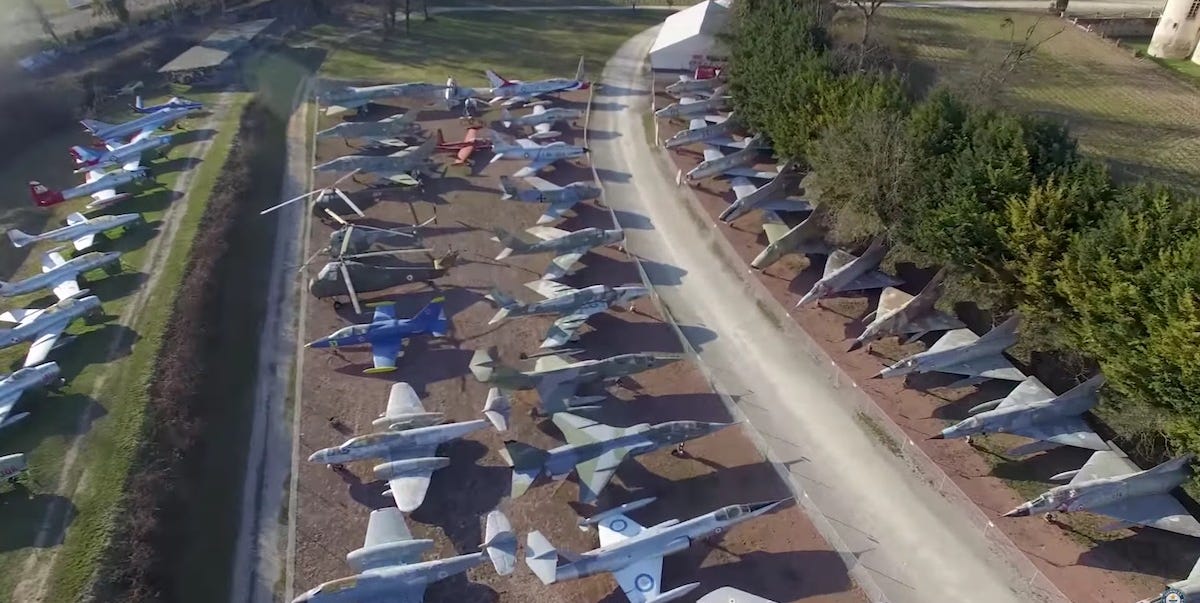
In Burgundy, France, visitors usually arrive expecting vineyards, medieval stone villages, and enough wine vocabulary to make a dictionary sweat. They come for Pinot Noir, Chardonnay, and rolling hills that look like they were designed by a painter with excellent taste. Then, somewhere near the village of Savigny-lès-Beaune, they see something that does not fit the postcard: fighter jets. Not one. Not two. A whole squadron’s worth of them, lined up on the grounds of a château like metal dragons taking a very long nap.
Welcome to the Château de Savigny-lès-Beaune, one of the strangest and most fascinating travel stops in France’s wine country. It is a 14th-century estate surrounded by vineyards, but its global claim to fame is not only wine. It is home to the world’s largest private collection of fighter jets, a record associated with French winemaker, former racing driver, and passionate collector Michel Pont. At its verified peak, the collection numbered 110 jet fighters, though current public descriptions often refer to around 100 aircraft because collections can change over time.
The result is a place where Burgundy elegance meets Cold War hardware. One moment, you are thinking about terroir and centuries-old cellars. The next, you are standing beside a Mirage, a MiG, or an American-built fighter and wondering if your travel itinerary accidentally wandered into an aviation museum with a wine habit.
A Château Where Wine Meets Wing Sweep
The Château de Savigny-lès-Beaune sits in the Côte de Beaune, a celebrated wine-growing area in Burgundy. The nearby town of Beaune is famous for wine auctions, historic architecture, and cellars that make oenophiles speak in soft, reverent tones. Savigny-lès-Beaune is part of that same landscape, with vineyards climbing gentle slopes and stone buildings glowing warmly in the afternoon sun.
That is what makes the aircraft collection so unforgettable. Fighter jets are normally associated with air bases, aircraft carriers, museums with polished hangars, or dramatic movie scenes where someone says, “We have incoming,” while staring at a radar screen. Here, they sit in the park of a château, near vines and old walls. The contrast is almost comedic, but in the best possible way. It feels like someone asked, “What would make this beautiful Burgundian estate even more memorable?” and Michel Pont replied, “A few dozen military jets, obviously.”
The aircraft are not flying. This is not a private air force tucked between the grapes. The jets are demilitarized display pieces, gathered from different countries and eras. They serve as monuments to aviation design, engineering ambition, and the intense military history of the 20th century. Some look sleek and predatory; others look chunky, experimental, or unmistakably of their time. Together, they tell a story about how fast aviation evolved after World War II.
Who Was Michel Pont?
Michel Pont was not a casual collector who picked up a few souvenirs and accidentally ended up with a yard full of aircraft. He was a winemaker, an ex-racing driver, and a collector with a rare appetite for machines that move, roar, or look as if they once could. His interests went far beyond planes. The château’s museums include Abarth racing cars, motorcycles, fire trucks, vineyard tractors, scale models, wine-making tools, and other mechanical treasures.
Pont’s aircraft collecting reportedly began in the mid-1980s. Over the years, he acquired old military jets from governments and other official sources. The planes came from many national traditions: French Dassault designs, Soviet MiGs, American fighters, British-linked aircraft, and more. The collection became so large and unusual that Guinness World Records recognized it as the largest private collection of jet fighters.
There is something wonderfully human about the whole story. Plenty of people collect stamps, coins, vinyl records, sneakers, or vintage postcards. Michel Pont collected fighter jets. That is not a hobby you explain casually at dinner. “I picked up a new bottle of wine today” is normal in Burgundy. “I picked up another jet fighter” requires a larger driveway.
What Aircraft Can Visitors See?
The collection contains aircraft from multiple countries and several decades of aviation history. Visitors may encounter French fighters such as Dassault Ouragan, Mystère, Mirage, and Étendard models, along with MiG aircraft associated with Soviet design. The lineup has also included American machines such as the F-100 Super Sabre, F-104 Starfighter, F-8 Crusader, and an F-16 Fighting Falcon. Depending on the display and preservation status, visitors may also see helicopters, cockpit sections, engines, landing gear, and other aircraft-related pieces.
For aviation fans, the thrill is in the variety. A Mirage IV, for example, reflects France’s Cold War-era strategic ambitions. MiG fighters tell a different story, shaped by Soviet engineering priorities and the global spread of Eastern Bloc military equipment. American fighters bring in another design language: speed, power, carrier operations, or high-altitude performance, depending on the model. Put them together, and the château grounds become a three-dimensional timeline of jet-age competition.
For non-specialists, the appeal is simpler: the planes look amazing. Even if you cannot tell a MiG-21 from a Mirage III, you can still appreciate the sharp noses, swept wings, air intakes, faded paint, and dramatic silhouettes. Fighter jets have a strange visual authority. They were built for speed and danger, yet here they are, parked peacefully in wine country, looking like retired superheroes who now spend their days enjoying the Burgundy weather.
Why Is This Collection in Wine Country?
That question is the magic of the place. The aircraft collection exists in Burgundy because Michel Pont had the passion, the property, and the determination to build it. The château’s park gave him the space to display large aircraft outdoors. The region’s tourism appeal brought visitors. The estate’s identity as a working wine property gave the whole museum an unexpected charm.
In a traditional aviation museum, planes are the expected main event. At Savigny-lès-Beaune, they feel like a surprise chapter inside a much larger story. The visitor does not just see aircraft; they see aircraft against the backdrop of a French château, vineyard culture, and rural heritage. That context changes the experience. A fighter jet in a hangar says, “Study me.” A fighter jet beside a vineyard says, “You may need a minute to process this.”
It also reflects a uniquely French blend of preservation and personality. France has deep traditions in aviation, engineering, wine, regional heritage, and private collecting. The château brings all of those threads together. It is not a sterile museum built to look perfect. It is eccentric, layered, and full of character. It feels less like a corporate attraction and more like the physical expression of one person’s lifelong curiosity.
More Than Fighter Jets: Seven Museums in One Estate
The fighter jets may be the headline, but they are not the only reason visitors go. The Château de Savigny-lès-Beaune is known for several museums dedicated to mechanical history. Depending on the current layout, the estate includes displays of motorcycles, Abarth race cars, fire engines, vineyard tractors, scale models, aviation equipment, and wine-making tools.
The Abarth car collection is especially notable. Pont was a former racing driver, and his passion for Abarth machines is visible in the sports cars and prototypes displayed in the château’s outbuildings. These cars bring a different kind of speed to the estate. Where the fighter jets represent military aviation, the Abarth collection represents racing culture: small, fierce, technical, and delightfully loud in spirit.
The motorcycle collection adds another layer, with vintage bikes showing how two-wheeled design changed through the early and mid-20th century. The fire trucks and vineyard tractors may sound less glamorous, but they help connect the estate to daily life, labor, and regional history. The tractors are especially fitting in Burgundy, where specialized vineyard machines are part of the agricultural landscape.
In other words, this is not just a fighter jet museum. It is a museum of motion. If it flew, raced, rolled, pumped water, carried tools, or helped cultivate vines, there is a decent chance Michel Pont found room for it.
Why the Collection Matters
The world’s largest private collection of fighter jets matters because it preserves machines that might otherwise vanish into scrap metal. Military aircraft are expensive to maintain, difficult to store, and often stripped or destroyed after service. When they survive, they become teaching tools. They show how nations solved engineering problems, how cockpit design evolved, how engines changed, and how military priorities shaped aircraft form.
They also make history physical. Reading about the Cold War is one thing. Standing beside aircraft designed during that era is another. The scale alone is educational. A fighter jet is not an abstract symbol when it is towering over you. You notice the intake size, the landing gear, the thin wings, the cramped cockpit, and the compromises engineers made to balance speed, range, weapons, and survivability.
Private collections can be controversial when they hide important artifacts from the public. Savigny-lès-Beaune is different because the collection is open to visitors. It turns one person’s obsession into a shared cultural experience. It invites aviation enthusiasts, families, road-trippers, wine tourists, photographers, and the simply curious to encounter machines they might never see up close elsewhere.
The Best Way to Understand the Place
The best way to understand the château is not to treat it like a standard museum with a perfectly linear path. It is better approached as an exploration. Walk slowly. Let the contrasts do their work. Look at the château walls, then look at the jets. Notice how the vineyards soften the scene. Think about the centuries represented on the grounds: medieval architecture, agricultural tradition, 20th-century warfare, racing history, and modern tourism all sharing the same address.
Visitors should also allow enough time. A quick stop may be enough for a photo, but not enough to absorb the scale of the collections. Aviation fans may want to identify individual aircraft. Car lovers may drift toward the Abarth displays. Families may find that children are fascinated by the sheer size of the jets, even if they have no idea what they are looking at. That is part of the fun. You do not need a pilot’s license to enjoy a row of dramatic aircraft parked in a château garden.
Because opening times and access details can change seasonally, travelers should check the official schedule before visiting. Burgundy rewards planning anyway. A day built around Beaune, Savigny-lès-Beaune, local vineyards, and the château museums can become one of those travel memories that feels too odd to be real, which is usually the best kind.
SEO Analysis: Why This Story Attracts Readers
The story of the world’s largest private collection of fighter jets in France’s wine country works so well online because it combines surprise, specificity, and strong visual contrast. Search engines favor content that clearly answers user intent, but readers favor content that makes them say, “Wait, what?” This topic does both. It answers questions about where the collection is, who built it, how many aircraft it includes, and why it is famous. At the same time, it offers a naturally clickable premise: fighter jets in Burgundy vineyards.
The main keyword, “world’s largest private collection of fighter jets,” should appear naturally because it is the central fact. Related keywords such as “Château de Savigny-lès-Beaune,” “Michel Pont,” “Burgundy wine country,” “fighter jet museum in France,” and “Savigny-lès-Beaune aircraft collection” support search relevance without stuffing. The article also benefits from semantic variety: aviation museum, military aircraft, French château, wine estate, Cold War jets, Abarth cars, and unusual travel destinations.
For readers, the strongest hook is not merely the record. Records are interesting, but context makes them memorable. The real appeal is the setting. A large jet collection would be notable anywhere. A large jet collection in a vineyard-covered château near Beaune becomes irresistible. It feels cinematic, eccentric, and very shareable. That is exactly the kind of topic that performs well for travel, aviation, history, and oddity-focused audiences.
Visitor Experience: What It Feels Like to Walk Among the Jets
Imagine arriving in Savigny-lès-Beaune on a quiet day. The road bends through Burgundy’s tidy landscape, where vineyards stretch in neat lines and the villages seem built from warm stone and good manners. You expect wine signs, cellar doors, and maybe a sleepy cat guarding a courtyard. Then the first aircraft appears. It is not subtle. Fighter jets are many things, but “subtle” is not one of them.
The experience begins with disbelief. Your brain tries to file the image under “airport,” but the château, the vines, and the village setting argue back. A jet parked near a medieval estate feels like a sentence assembled from three different books. Yet after a few minutes, the strangeness becomes the attraction. You start to move from aircraft to aircraft, noticing how each one has a different personality. Some look needle-nosed and elegant, as if designed with a ruler and a dare. Others are muscular, blunt, and practical. A few seem almost futuristic, even decades after they were built.
The outdoor setting changes how you experience the machines. In a hangar, aircraft can feel preserved behind an invisible museum barrier. Outside, they feel weathered, real, and slightly vulnerable. Paint fades. Metal catches the sun. Rain, wind, and time leave marks. That aging does not ruin the experience; it adds atmosphere. These were working machines, not showroom decorations. Their scars make them more believable.
For aviation enthusiasts, the visit becomes a treasure hunt. Spotting a MiG, a Mirage, a Starfighter, or a Crusader is like recognizing characters in a giant mechanical cast. Each model has a backstory involving engineering, politics, strategy, and national pride. For casual travelers, the joy is more immediate. The scale is impressive, the setting is beautiful, and the whole place has the wonderful energy of a passion project that got wildly out of hand.
There is also a rhythm to the visit. After walking among jets, you can shift to the cars, motorcycles, fire trucks, or wine-related exhibits. That variety keeps the experience from becoming one-note. A person who is not obsessed with aviation may still enjoy the racing cars. Someone who came for the château may be surprised by the tractors. Someone who came for wine may leave with photos of a Mirage on their phone and a new appreciation for collectors who dream in large objects.
The most memorable part may be the contrast between silence and imagined sound. The jets are still now, but they were built for thunder. Standing beside them in the calm of Burgundy, you can almost hear what they once represented: afterburners, runways, radio calls, and the nervous energy of the jet age. Then the moment passes, and you are back among vineyards. It is peaceful again. Somewhere nearby, someone is probably discussing a vintage. The aircraft remain where they are, retired from speed, promoted to wonder.
That is why the Château de Savigny-lès-Beaune is more than a quirky roadside attraction. It is a reminder that travel is at its best when it disrupts expectations. You go to Burgundy for wine country and discover the world’s largest private fighter jet collection. You arrive expecting elegance and leave with a story involving MiGs, Mirages, Abarth cars, medieval architecture, and grapes. Honestly, not every itinerary can pull off that kind of aerobatic maneuver.
Conclusion
The world’s largest private collection of fighter jets is not hidden in a desert hangar or behind the gates of a military base. It is in France’s wine country, on the grounds of the Château de Savigny-lès-Beaune, where Burgundy’s vineyard heritage meets a remarkable private aviation collection. Built by Michel Pont, the collection has been recognized for its extraordinary scale and variety, including French, Soviet, American, and other jet aircraft gathered over decades.
What makes the château unforgettable is not only the number of planes. It is the setting, the personality, and the sheer improbability of the experience. Fighter jets and fine wine should not make sense together, yet in Savigny-lès-Beaune they do. The result is one of Europe’s most unusual museums: part aviation history, part mechanical wonderland, part Burgundian dream, and part “please tell me I’m not the only one seeing fighter jets next to the vineyards.”
Note: This article was written using verified public information from record, travel, aviation, tourism, and museum sources. No outbound source links are included in the article body by request.