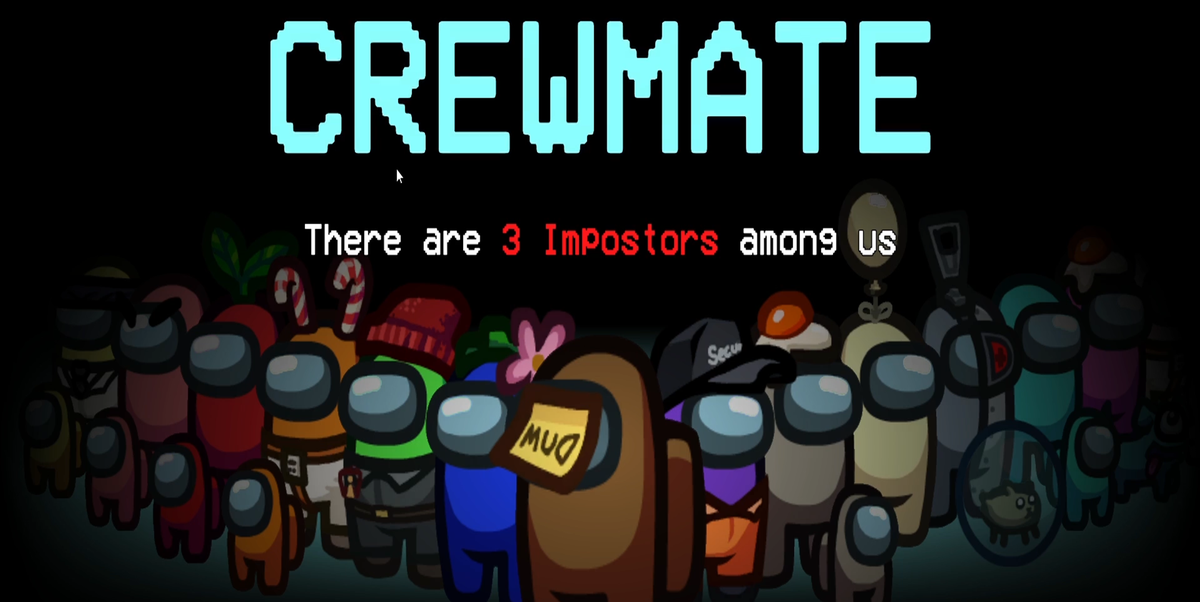
Most players look at Among Us and see cute little space beans, suspicious side-eyes, and friendships ending over one very convenient trip through a vent. A programmer looks at the same game and sees something else entirely: asset loading, frame timing, memory limits, build pipelines, platform compatibility, and the kind of code decisions that never make it into memes. That is what makes a behind-the-scenes peek at the game’s code so fascinating. It turns out that even a tiny cosmetic feature, like changing the color of a hat, opens the door to a much bigger story about how modern games are built.
The most interesting part is not that Among Us has code. Of course it has code. Every game does. The interesting part is which code got shown, and what that small example reveals. Instead of showing off some thunderous, galaxy-brain system that sounds like it was named by an exhausted engineer at 2:13 a.m., the programmer walkthrough focused on a practical method for changing hat visuals. That choice is perfect, because game development is rarely about cinematic genius in every line. Most of the time, it is about getting lots of small systems to cooperate without catching fire.
And that, honestly, is the real magic of Among Us. The game feels simple. The code reality is less “press button, bean gets hat” and more “convince multiple platforms, art assets, and performance constraints to behave like civilized adults.”
Why One Tiny Hat Function Says So Much
The code example that got attention was centered on a method that changes a hat’s color. On paper, that sounds almost aggressively unglamorous. No murder logic. No vote tally drama. No emergency meeting chaos. Just hat color. But that is exactly why it is such a good example of how game code really works.
A method like this is a compact lesson in game programming fundamentals. The game stores color choices as numeric IDs instead of written color names, because computers enjoy consistency far more than they enjoy poetry. The method takes that ID, translates it into the right visual data, and then kicks off additional work to load what the game needs so the final cosmetic appears correctly. In other words, the hat is not really “changing color” in one magical instant. The game is performing a series of organized little jobs that end in your bean looking fashionable.
That matters because it shows how much of game development is really data management in disguise. A player sees a banana hat and thinks, “Excellent. Peak art.” The code sees IDs, textures, view data, loading behavior, and asset references. The joke hat is sitting on top of serious engineering.
There is something wonderfully honest about that. The code behind a hit game often looks less like a Hollywood hacker montage and more like careful housekeeping with deadlines. The hat method is small, but it reflects a big truth: good game code is often invisible precisely because it works.
The Real Trick Is Not the Hat. It Is the Engine Room
The walkthrough also highlighted a Unity-style coroutine approach, which is the kind of technical detail that programmers love and everyone else can absolutely understand with one decent metaphor. Think of a coroutine as the game saying, “I need to do this task, but I do not want the whole app to freeze while I do it.” Instead of trying to complete everything in one breath, the game spreads work across frames so the experience stays smooth.
That is a huge deal in multiplayer games. Nobody wants their character to stop dead in a hallway because the game is busy deciding what shade of purple to apply to a festive hat. Coroutines help keep the illusion intact. The player keeps moving, suspicion keeps spreading, and somewhere under the hood the game is quietly fetching and applying the visual data it needs.
This is where the behind-the-scenes story gets more interesting than a basic coding explainer. It is not just about how Unity works. It is about how a small team uses the engine’s tools to make a lightweight party game feel effortless across different devices. That “effortless” part is always fake, by the way. It is beautifully fake. Software elegance is often just successful hiding.
The technical challenge gets even sharper once you remember that cosmetics are not free from a performance standpoint. Every extra asset increases pressure on memory, especially on older mobile devices. So yes, the hat is cute. It is also a tiny negotiation with device limits, loading strategy, and the eternal law of software engineering: every fun thing costs something somewhere.
Among Us Was Never Supposed to Be This Big
Part of what makes this code story so compelling is that Among Us was not built as a gigantic prestige product from day one. The game’s roots were much scrappier. The concept pulled from social deduction staples like Mafia and a dash of sci-fi paranoia, then evolved through multiple early ideas before landing on the now-familiar formula of tasks, meetings, and betrayal. Even the tasks changed during development because earlier versions were too stressful and did not leave enough room for the deduction and discussion that actually make the game fun.
That design history matters. It explains why the code behind Among Us feels like the code of a game that grew into itself rather than one that emerged fully formed from a five-year corporate roadmap. The original version was much smaller, built quickly, and first released as a more limited experience before online support expanded the game’s reach. That kind of growth story is charming when you tell it over coffee. It is slightly less charming when you are the programmer who has to scale the code afterward.
Still, that is one reason people love stories like this. They remind us that great games are often shaped through iteration, not destiny. The polished final version is usually the result of developers throwing out ideas that were too clunky, too stressful, too boring, or too expensive. Players remember the spaceship. Developers remember the roadblocks.
When Success Turns Cute Code Into Serious Infrastructure
Once Among Us exploded in popularity, the technical conversation changed fast. Suddenly the game was not just a clever social deduction hit. It was a live service challenge, a cross-platform product, a moderation problem, a server problem, an accessibility problem, and a player-expectation volcano. That is a lot to pile onto a game that started small.
One of the clearest signs of that pressure was the decision to cancel Among Us 2 and focus instead on improving the original game. The reason was brutally relatable to anyone who has ever inherited old code: the original codebase was outdated and not built for all the new content and complexity the team now wanted to add. So rather than walk away and start fresh somewhere else, the developers chose the harder route. They dug into the core game and reworked it while millions of players kept knocking on the door asking for more maps, more roles, more fixes, and approximately infinite new cosmetics.
That is the hidden theme of the whole behind-the-scenes look. The hat code is not important because hats are the center of the game. It is important because it shows how every seemingly small feature lives inside a much larger machine. When the game added bigger lobbies, cleaner art, extra colors, controller support, accounts, roles, and more platform reach, each change had to touch that machine without breaking what made the game feel familiar.
That is not glamorous work. It is high-wire plumbing. And in software, plumbing is destiny.
Cross-Platform Is the Part Players Barely Notice
One reason Among Us became such a social monster is that it lowers the barrier to getting a group together. Friends on mobile, PC, Switch, and later consoles can end up in the same messy little trust exercise. For players, that convenience feels natural. For developers, it means every update must survive a gauntlet.
The code walkthrough explained a process that sounds ordinary until you imagine it happening constantly: make a change locally, test it, push it into shared version-controlled files, generate builds for multiple platforms, and let QA test those builds before the update moves forward. That pipeline is the adult supervision behind the chaos. Without it, every harmless fix risks becoming a full-blown bean emergency.
Cross-platform development is especially sneaky because success looks like nothing happening. Nobody launches a game and says, “Wow, incredible, the cosmetic data loaded consistently across hardware targets.” But if it does not happen, people absolutely notice. Suddenly someone cannot join a lobby, a texture fails to load, or one platform gets the patch later and the whole friend group starts sounding like a stressed-out IT department.
This is why the code peek lands so well. It reveals that the game’s simplicity is partly a technical performance. Among Us works because the messy bits stay backstage.
Why Cosmetics Are a Technical Problem, Not Just a Fashion Choice
Cosmetics in Among Us are more than decoration. They are part of the game’s personality, part of its revenue model, and part of its technical burden. That is a three-headed beast right there. Players want more hats, visors, skins, and collab goodies because self-expression is fun. Developers like cosmetics because they can support the game financially without wrecking competitive balance. Hardware, however, would like everyone to calm down.
According to the behind-the-scenes explanation, the game has hundreds of hats, and each one brings asset-management concerns with it. Older mobile devices, in particular, can struggle when too many assets are loaded at once. So every silly accessory is also a memory question. Can this be loaded smoothly? Does it crash weaker devices? Does it create too much overhead when combined with everything else already happening in a live match?
That tension is one of the most revealing parts of the whole story. It shows that even playful content has to clear technical review. The bean wearing a sticky note on its head is not free. Somewhere, a programmer is doing math so that comedy can exist.
It also explains why the team has pushed beyond colors alone as the main way players identify one another. Accessibility and clarity matter. Once a game grows, visual identity cannot depend only on who is “the red one” and who is “the lime one.” The code and art both have to support a more readable game.
The Human Side of the Codebase
The phrase “behind the scenes” should never be limited to software architecture. It should also mean the humans carrying the project. One of the most consistent themes across interviews and official posts is that Among Us did not just become bigger; it became heavier. More players meant more technical issues, more demand, more legal and business complexity, more pressure to update faster, and more risk of burnout.
That context changes how you read the code story. The programmer walkthrough is not just a cute educational feature. It is also a reminder that games are maintained by people whose daily lives are full of testing, triage, platform support, bug hunts, and trade-offs. A codebase does not improve itself just because the internet wants new roles by Friday.
What is refreshing about Innersloth’s public comments is that they do not pretend otherwise. The team has talked openly about trying to grow in healthier, fairer ways, improve community systems, and avoid making decisions that look good in the short term but wreck the people doing the work. That honesty makes the technical side more relatable. Suddenly the hat method is not just a function. It is a function maintained by actual humans trying to keep a beloved game stable without turning themselves into ghosts.
Frankly, that might be the most valuable behind-the-scenes lesson of all. Good code matters. Sustainable teams matter even more.
What Players Can Learn From This Peek Behind the Curtain
If you are a player, the biggest takeaway is simple: games that feel easy are usually the result of hard decisions. Every smooth cosmetic swap, every stable patch, every cross-platform lobby, and every balance tweak sits on top of design revisions, technical compromises, and production workflows that most people never see.
If you are a beginner programmer, this story is strangely encouraging. The code that got attention was not some impossible wizard spell. It was a method doing practical work in a larger system. That is what most programming jobs really look like. You solve specific problems, connect systems, manage data, avoid freezes, and make sure the thing still works on Monday morning after QA pokes it with a stick.
And if you are both a player and a curious future developer, Among Us offers a useful kind of inspiration. It proves that a small, focused mechanic can grow into a cultural phenomenon, but only if the team keeps iterating, refactoring, and adapting. The glamorous moment may be the viral explosion. The lasting achievement is surviving it.
Extra: What It Feels Like to Watch a Small Game Turn Into a Giant Machine
There is a very specific feeling that comes from looking at a game like Among Us after seeing even one sliver of its code. The first feeling is delight, because the mystery gets cracked open just enough to be satisfying. You realize that the game is not powered by magic. It is powered by methods, assets, IDs, build systems, testing routines, and a lot of people doing careful work. That sounds less romantic than “magic,” but honestly, it becomes more impressive once you understand it.
The second feeling is empathy. A lot of players imagine game development as a straight line from clever idea to finished product. Behind-the-scenes stories ruin that fantasy in the best possible way. You start to picture what it must feel like to maintain a hit game after it blows up beyond its original scope. One day you are working on a party game with a small team. The next day millions of players are waiting for fixes, streamers are turning your mechanics into internet theater, and every tiny system you wrote now has to behave like enterprise software wearing a party hat.
That is what makes the Among Us code story relatable even to people who do not write games for a living. Plenty of students, hobbyists, and software beginners know the experience of opening old code and wondering which version of past-you thought this was a good idea. Now scale that feeling up, add multiple platforms, aging devices, live players, cosmetic content, moderation needs, and a global audience with opinions about bean colors, and suddenly the whole thing becomes both hilarious and heroic.
There is also a strange comfort in realizing that famous games are built from ordinary programming moments. A variable here. A method there. A workaround that becomes permanent because the workaround works and everyone is tired. A feature request that sounds easy until it collides with memory limits, UI readability, and platform certification. That is not a flaw in the story. That is the story.
For players, that awareness can make the game feel warmer. The next time a new cosmetic, role, or quality-of-life update arrives, it no longer feels like content drifting down from a giant faceless machine. It feels like the result of meetings, testing, bug lists, late-night fixes, and someone somewhere arguing passionately about whether the hat should load this way or that way. Suddenly the game has fingerprints.
For aspiring developers, there is a different kind of lesson. You do not need to start with a perfect codebase or a giant studio. You need a strong core idea, a willingness to revise, and enough discipline to keep improving the structure when success arrives and starts kicking the walls. Among Us is a reminder that what players remember most is usually the feeling of the game, not whether the first version of your task system was messy. But to preserve that feeling over time, someone still has to go backstage and clean up the mess.
That is why a behind-the-scenes look at the code matters. It does not make the game feel less special. It makes the achievement feel more human. And in a medium where people often talk about blockbuster spectacle first, there is something refreshing about being reminded that one of gaming’s biggest modern hits still depends on the humble art of making small systems behave.
Conclusion
The best thing about this peek behind the curtain is that it does not pretend game development is all fireworks. It shows the truth instead. A beloved multiplayer game can hinge on a deceptively small method, a smart loading strategy, a careful testing pipeline, and a team willing to keep rebuilding the plane while it is already in the air. That is the real story behind the code in Among Us.
So yes, players came for the lies, the vents, and the emergency meetings. But the reason the whole thing holds together is much less flashy and far more interesting. Under every funny hat is a stack of technical choices, production habits, and human effort quietly doing their jobs. The bean may be silly. The engineering absolutely is not.
Note: This is clean body-only HTML in English, with no source-link placeholders or oaicite artifacts.