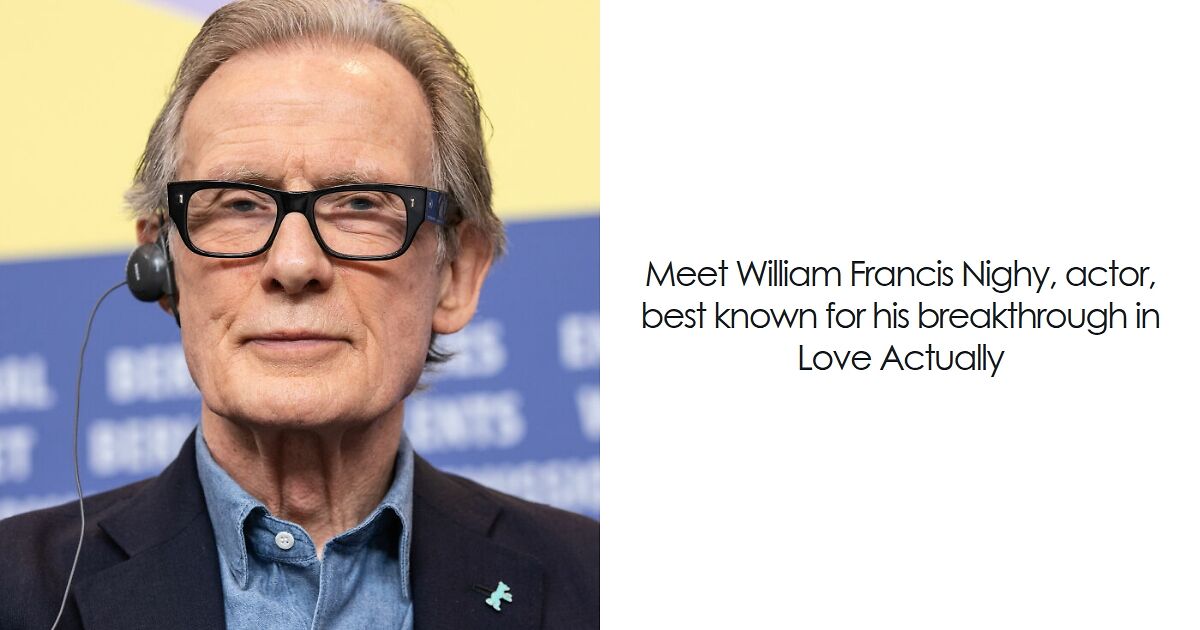
Note: This article is a fully rewritten, SEO-ready biography and career profile based on verified public information from reputable entertainment and awards sources.
Bill Nighy is the kind of actor who can steal a scene without appearing to raise his pulse. He does not need explosions, heroic speeches, or a cape that flaps in the wind like it has its own agent. Give him a sharp suit, a dry line, a pause long enough to make everyone nervous, and suddenly the room belongs to him. From British theater stages to Hollywood blockbusters, from Love Actually to Living, Nighy has built a career on elegance, eccentricity, restraint, and impeccable comic timing.
Born William Francis Nighy, the British actor has become one of the most recognizable performers of his generation. His filmography moves comfortably between romantic comedy, prestige drama, political thriller, fantasy, horror, animation, and pirate mythology involving tentacles. That range is not a mistake. It is the result of decades of stage discipline, a taste for intelligent writing, and a screen presence that can make even silence feel professionally tailored.
Early Life: From Surrey To The Stage
Bill Nighy was born on December 12, 1949, in Caterham, Surrey, England. Long before he became a BAFTA-winning actor and Oscar nominee, he was a young man fascinated by books, music, and the possibility of a more dramatic life. Like many future actors, he did not exactly arrive with a business plan. He has spoken over the years with characteristic humor about drifting toward acting rather than marching toward it with military certainty.
Nighy studied at the Guildford School of Acting, where he received formal training that would later support his long career across stage, television, radio, and film. His early professional years were shaped by theater, especially the Everyman Theatre in Liverpool, a place known for energetic, politically aware, ensemble-driven work. That environment gave him something more useful than celebrity: stamina, timing, and the ability to make language sound alive.
Theater Roots: Where The Nighy Style Was Built
Before he became a familiar face on movie posters, Bill Nighy was a serious stage actor. His early work included performances with the Everyman Theatre and later appearances at major London venues, including the National Theatre. He built credibility in plays by writers such as David Hare, Harold Pinter, Tom Stoppard, and Anton Chekhov. Those are not exactly writers who let actors coast. Their plays demand control, intelligence, rhythm, and the courage to stand still while the emotional floorboards creak beneath the scene.
Nighy’s stage résumé includes acclaimed work in Pravda, Betrayal, Arcadia, and The Seagull. His theater background explains much of his screen appeal. He often acts as though every word has been measured, polished, and slipped into place with tweezers. Even when playing flamboyant characters, he rarely wastes energy. That economy has become one of his signatures.
Broadway Recognition
Nighy also found success on Broadway. He appeared in David Hare’s The Vertical Hour and later earned a Tony Award nomination for his performance in the 2015 Broadway revival of Skylight. In that play, opposite Carey Mulligan, he played Tom Sergeant, a charismatic restaurateur whose reunion with a former lover becomes a battle of memory, politics, regret, and emotional unfinished business. It was exactly the kind of role Nighy does well: articulate, wounded, charming, and just dangerous enough to make politeness feel like a weapon.
Television Breakthroughs: Prestige Before Pop Stardom
Bill Nighy’s television work helped establish him as a performer of unusual intelligence and magnetism. In the 1990s, The Men’s Room gave him wider attention in the United Kingdom. But one of his most important television milestones arrived with the political thriller State of Play, where he played newspaper editor Cameron Foster. The role won him a BAFTA and showcased his gift for authority wrapped in wit.
He also delivered acclaimed performances in The Girl in the Café and Gideon’s Daughter. The latter won him a Golden Globe, confirming that American awards voters had noticed what British audiences had known for years: Bill Nighy could make emotional complexity look effortless. Later, he starred as Johnny Worricker in the political thriller trilogy Page Eight, Turks & Caicos, and Salting the Battlefield. In those films, he turned government anxiety, quiet suspicion, and moral exhaustion into something unusually stylish.
Film Career: From Character Actor To International Favorite
Nighy’s film career did not explode overnight. It accumulated, like a very good record collection. Early film roles in Still Crazy, Guest House Paradiso, and Blow Dry showed his comedic instincts and ability to play men who are slightly rumpled by life but still convinced they can bluff their way through the next five minutes.
Then came 2003, a year that changed everything. Nighy appeared as Viktor, the ancient vampire elder in Underworld, giving the fantasy-action franchise a deliciously severe presence. More importantly for mainstream audiences, he played Billy Mack in Richard Curtis’s holiday romantic comedy Love Actually. The performance became one of the film’s most beloved elements.
Why Billy Mack Worked So Well
Billy Mack could easily have been a one-joke character: an aging rock star recording a shameless Christmas version of an old hit. In Nighy’s hands, he became something better. He was rude, hilarious, vain, oddly honest, and somehow sweet without being sentimental. The character’s self-awareness made him lovable. He knew the song was ridiculous. He knew the publicity machine was ridiculous. He knew he was ridiculous. That is precisely why audiences trusted him.
The role won Nighy the BAFTA Award for Best Supporting Actor and pushed him into international fame. After years of respected work, he became the actor people recognized in airports, holiday movie marathons, and conversations that began with, “Wait, isn’t he the guy from…?”
Blockbuster Years: Vampires, Zombies, Pirates, And Wizards
One of the funniest things about Bill Nighy’s career is how naturally he moved into genre films without seeming to chase them. He played Viktor in the Underworld series, appeared in Edgar Wright’s zombie comedy Shaun of the Dead, and played Slartibartfast in The Hitchhiker’s Guide to the Galaxy. In each case, he brought seriousness to absurdity, which is often the secret ingredient that makes absurdity work.
His most visually spectacular blockbuster role came in the Pirates of the Caribbean franchise, where he played Davy Jones in Dead Man’s Chest and At World’s End. The character was created through performance capture and visual effects, but the menace, melancholy, and dry theatricality came from Nighy. Beneath the digital tentacles was a performance about betrayal, loneliness, and supernatural bad management.
Nighy later appeared in Harry Potter and the Deathly Hallows: Part 1 as Minister for Magic Rufus Scrimgeour. It was a relatively brief role, but a memorable one. He gave Scrimgeour the air of a man who has read the emergency report, disliked every sentence, and still intends to wear a good coat while civilization collapses.
Prestige Films And Ensemble Favorites
Alongside his blockbuster work, Nighy continued to appear in respected dramas and ensemble films. His credits include The Constant Gardener, Notes on a Scandal, Valkyrie, The Best Exotic Marigold Hotel, About Time, Pride, The Bookshop, Their Finest, and Emma. These films show how versatile he can be without making a fuss about versatility.
In About Time, he played a father whose warmth and eccentricity gave the film its emotional center. In The Best Exotic Marigold Hotel, he joined a powerhouse ensemble and turned quiet decency into a major character trait. In Emma, he brought nervous comic energy to Mr. Woodhouse, making hypochondria feel almost elegant. Nighy has a gift for giving supporting roles a full inner life, even when the screenplay only gives him a few scenes and a chair near the window.
Living: A Late-Career Triumph
In 2022, Bill Nighy delivered one of the defining performances of his career in Living, directed by Oliver Hermanus and written by Nobel Prize-winning novelist Kazuo Ishiguro. The film is an English-language reimagining of Akira Kurosawa’s Ikiru, centered on Mr. Williams, a reserved London civil servant who receives a life-changing diagnosis and begins to reconsider what it means to live with purpose.
Nighy’s performance is almost the opposite of showy. He does not chase big emotional fireworks. Instead, he works through posture, breath, hesitation, and the smallest shifts of expression. Mr. Williams is a man who has spent a lifetime becoming furniture in his own life. Nighy lets the audience watch him slowly become human again.
The role earned Nighy his first Academy Award nomination for Best Actor, as well as major recognition from BAFTA, the Golden Globes, and the Screen Actors Guild Awards. It was a beautiful late-career moment: not a comeback, because he had never gone away, but a reminder that subtle acting can still hit like thunder when done by a master.
What Makes Bill Nighy’s Acting So Distinctive?
1. His Timing Is Surgical
Nighy understands pauses better than many actors understand dialogue. He often lets a line land a fraction later than expected, creating humor or tension from the delay. It is not laziness. It is precision. His timing makes even simple responses feel loaded.
2. He Makes Stillness Interesting
Some actors need movement to command attention. Nighy can stand almost motionless and still make a scene vibrate. In dramas, that stillness suggests control or repression. In comedies, it makes his absurd lines even funnier because he delivers them as though they are perfectly reasonable.
3. He Blends Comedy With Melancholy
Many of his best characters are funny because they are sad, and sad because they are funny. Billy Mack jokes because he knows the joke is partly on him. Mr. Williams barely speaks because he has forgotten how to ask for joy. Nighy finds the emotional weather inside both men.
4. He Has Effortless Style
Bill Nighy’s style has practically become a supporting character in his public image. The dark suits, clean shirts, strong glasses, and understated elegance are not just fashion choices. They reflect the same qualities found in his acting: discipline, taste, restraint, and just enough mischief to keep things from becoming too tidy.
Career Highlights At A Glance
- Early stage work: Built his foundation through regional theater, the Everyman Theatre in Liverpool, and major London stage productions.
- Major theater roles: Appeared in works by David Hare, Harold Pinter, Tom Stoppard, and Anton Chekhov.
- BAFTA recognition: Won for State of Play and Love Actually.
- Golden Globe win: Won for Gideon’s Daughter.
- International breakout: Became globally famous as Billy Mack in Love Actually.
- Blockbuster success: Played Viktor in Underworld and Davy Jones in Pirates of the Caribbean.
- Broadway acclaim: Earned a Tony Award nomination for Skylight.
- Oscar nomination: Received a Best Actor nomination for Living.
Personal Image: The Gentleman Eccentric
Part of Nighy’s appeal is that he seems both glamorous and approachable, like a man who could attend a film premiere and then give serious advice about coat buttons. He has become known for his dry wit, modesty, love of music, and famously sharp dress sense. He is often described as cool, but not in the loud, sunglasses-indoors way. His coolness is quieter. It suggests good tailoring, good records, and leaving the party before people start making speeches.
He also has a rare ability to be self-deprecating without appearing insecure. In interviews, he often punctures the mythology of acting with practical humor. That quality makes him refreshing in an industry that can sometimes treat every role as if it were carved into a mountain by lightning.
Why Bill Nighy Still Matters
Bill Nighy matters because his career argues for patience. He did not become an international star at twenty-five. His fame grew through craft, consistency, and roles that made people lean forward. In a culture obsessed with instant breakthroughs, Nighy represents the long game. He reminds audiences that acting is not only about transformation, accents, or dramatic weight changes. Sometimes it is about listening, reacting, and knowing exactly when to blink.
His best performances also prove that supporting actors can become the soul of a film. Whether playing a washed-up rocker, a haunted bureaucrat, a supernatural sea captain, or a fussy father, he finds the human flaw that makes the character memorable. That is why viewers remember him even when he is not the lead. He brings the weather with him.
Experiences And Reflections: Watching Bill Nighy’s Career As A Lesson In Craft
One of the most rewarding experiences of following Bill Nighy’s career is noticing how quietly his performances improve the films around him. Some actors dominate a scene by turning up the volume. Nighy often does the opposite. He lowers the temperature, sharpens the rhythm, and somehow everyone else seems more interesting because he is there. Watching him is a useful reminder that charisma does not always shout. Sometimes it adjusts its glasses, pauses politely, and delivers the funniest line in the room as if it were a weather report.
For many viewers, the gateway performance is Billy Mack in Love Actually. It is the kind of role that could have aged badly in less careful hands. The character is outrageous, but Nighy gives him honesty. He never asks the audience to admire Billy. He simply lets us enjoy him. That distinction matters. It is why the character still works years later. He is not trying to be inspirational. He is trying to survive publicity, aging, loneliness, and a Christmas novelty record. Somehow, that becomes oddly moving.
Then, when a viewer moves from Love Actually to Living, the full range becomes clearer. In Living, Nighy removes almost everything that made Billy Mack loud and comic. He becomes contained, careful, and emotionally starved. The performance feels like watching a candle slowly remember it can produce light. It is not flashy, but it stays with you. That is the Nighy effect: the scene ends, the credits roll, and later you realize the performance has followed you into the kitchen.
There is also something encouraging about the shape of his career. Nighy’s biggest wave of global fame came after years of steady work. His Oscar nomination arrived after decades of professional excellence. That makes his career especially inspiring for artists, writers, actors, and anyone building something slowly. Not every path is a rocket launch. Some careers are more like excellent tailoring: measured carefully, adjusted over time, and finally admired because every line sits exactly where it should.
Another experience connected with Nighy is the pleasure of rewatching. His performances often reveal new details the second time around. A tiny grimace, a delayed answer, a hand movement, or a glance away from another character can change the meaning of a scene. He rewards attention. In a world of noisy entertainment, that feels almost luxurious.
Ultimately, Bill Nighy’s career highlights are not just a list of famous titles. They form a portrait of an actor who turned restraint into magnetism and eccentricity into elegance. He has played monsters, ministers, fathers, spies, rock stars, editors, romantics, and men quietly running out of time. Through all of them, he remains unmistakably himself: precise, funny, stylish, and deeply human.
Conclusion
Bill Nighy’s biography is a story of craft before celebrity, patience before global recognition, and style without vanity. From his stage beginnings to his BAFTA-winning television work, from Love Actually and Pirates of the Caribbean to his Oscar-nominated performance in Living, Nighy has built a career that feels both wonderfully eccentric and seriously accomplished. He is proof that great acting can be subtle, funny, wounded, elegant, and occasionally covered in digital tentacles.