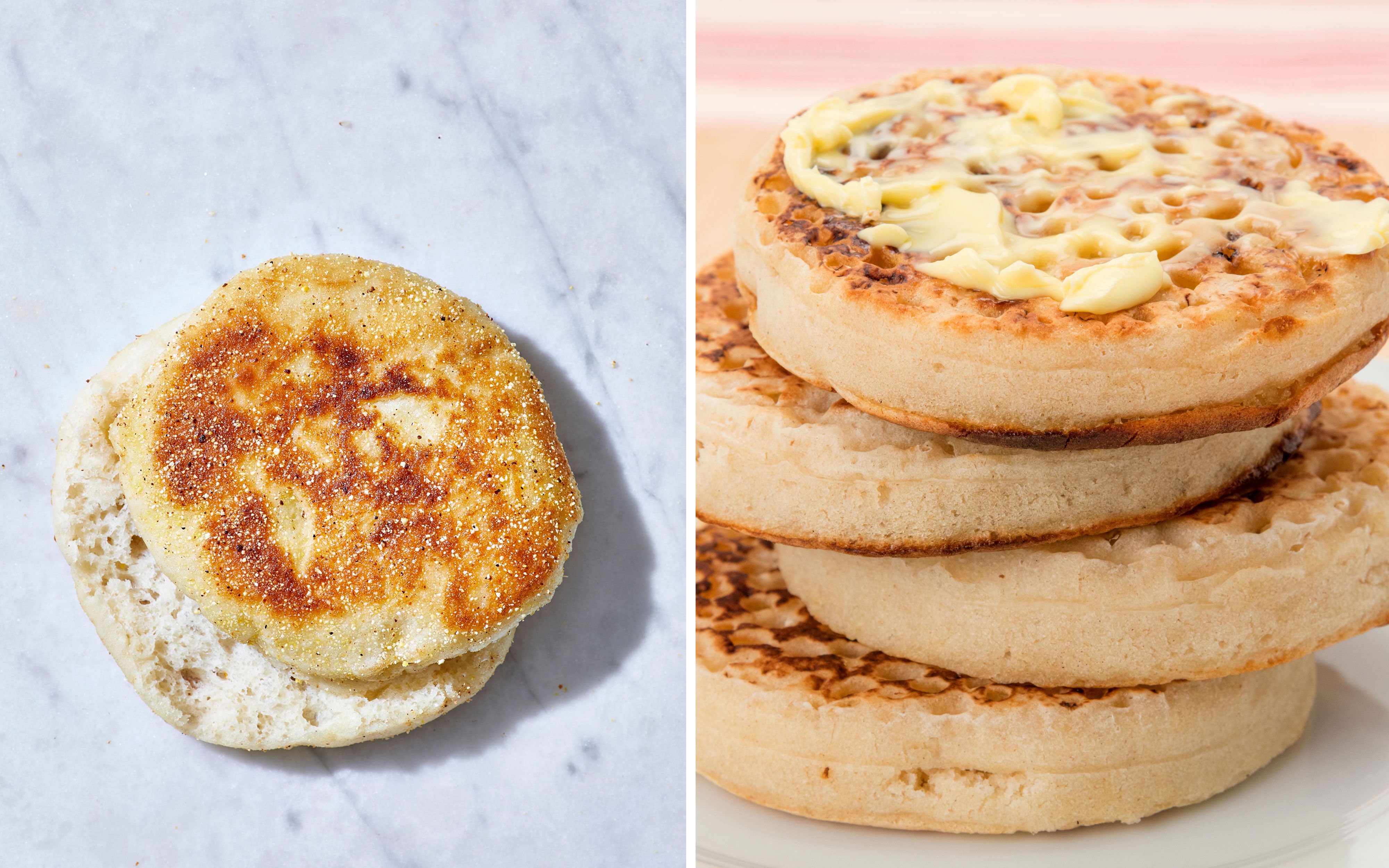
At first glance, crumpets and English muffins look like they were separated at birth and reunited at the toaster.
They’re both round, they both love butter, and they both have “holes” that seem engineered by breakfast scientists.
But here’s the twist: they’re not interchangeable twins. They’re more like cousins who show up to the same brunch
wearing similar outfitsthen spend the whole meal arguing about who’s “more authentic.”
If you’ve ever stood in the bread aisle thinking, “Is a crumpet just an English muffin with better PR?” (valid),
this guide breaks down the real differencesingredients, texture, cooking method, flavor, and the best ways to eat each.
Expect practical tips, a few buttery jokes, and enough detail to confidently answer that one friend who insists they’re the same.
Crumpet vs. English Muffin: The Quick Difference
- Crumpets are made from a loose batter, cooked in rings, and usually have visible holes on top designed to soak up butter like a delicious sponge.
- English muffins are made from a more structured dough, cooked on a griddle on both sides, and have “nooks and crannies” mostly insiderevealed when you fork-split them.
What Is a Crumpet?
A crumpet is a traditional British-style griddle bread made from a yeasted batter that’s thinner than pancake batter but
thicker than “oops-I-made-soup.” The batter is poured into round rings on a hot griddle or skillet. As it cooks, bubbles rise,
pop, and leave behind that signature honeycomb surface.
Crumpet texture and flavor
Crumpets are typically spongy, soft, and slightly chewy inside with a lightly crisp bottom.
The flavor is usually mild and a little yeasty, sometimes with a subtle dairy sweetness (many recipes use milk or dried milk).
The whole point is absorbency: crumpets aren’t just okay with butterthey’re basically butter’s preferred vacation rental.
How crumpets are cooked
Crumpets are commonly cooked mostly from the bottom while the top sets as steam and heat travel upward through the batter.
That’s why you often get one side that’s smooth and browned (the bottom) and one side that’s cratered and holey (the top).
Some home methods may briefly flip for color, but the classic crumpet identity is that porous top surface.
What Is an English Muffin?
Despite the name, the English muffin most Americans know best has strong ties to the United States. It’s a small,
round, yeast-leavened bread that’s cooked on a griddle (or skillet) until browned on both sides. Instead of a pourable batter,
English muffins start as a soft, workable dough shaped into rounds.
English muffin texture and flavor
English muffins are typically breadier and sturdier than crumpets, with a pleasantly chewy bite. When toasted,
they become crisp on the edges while staying tender in the middle. Their “nooks and crannies” aren’t usually visible on the outside
they appear when you split them open (ideally with a fork, not a knife, if you want maximum craggy texture).
How English muffins are cooked
Most English muffins are cooked on a griddle on both sides, which helps create a browned exterior top and bottom.
Many are also finished through gently cooking longer (sometimes covered or at low heat) so the centers cook through without burning the crust.
The result: a round that’s strong enough for sandwiches, but still full of airy pockets inside.
Crumpet vs. English Muffin: 8 Key Differences That Actually Matter
1) Batter vs. dough
This is the big one. Crumpets use batter, which is poured. English muffins use dough, which is shaped.
Batter creates an open, sponge-like interior with holes that travel upward; dough creates a more structured crumb with pockets hidden inside.
2) Where the holes live
Crumpet holes are the main characterlarge, visible, and mostly on the top surface. English muffin holes (the “nooks and crannies”) are
more like a fun surprise inside. You don’t see them until you split the muffin open.
3) Cooking tools: rings are common for crumpets
Crumpets are famously cooked in rings to keep the batter from spreading into one giant breakfast blob.
English muffins can be cut with a cutter or shaped by hand; rings can be used, but they’re not as essential because the dough holds its shape.
4) Cooking method and browning
Crumpets are typically browned mainly on the bottom, with the top setting as bubbles form and steam cooks through.
English muffins are cooked on both sides, giving you two browned faces and a more evenly structured exterior.
5) Texture: sponge vs. chewy bread
Crumpets lean spongy and tender. English muffins lean chewy and bread-like.
Toasting exaggerates the difference: crumpets become crisp on the bottom while staying plush and porous;
English muffins become crispy along the split edges while staying sturdy enough to hold fillings.
6) How you serve them (whole vs. split)
Crumpets are often toasted whole and topped on the holey side. English muffins are usually split
first (fork-splitting creates a jagged surface that toasts beautifully), then toasted as two halves.
7) Best uses: toppings vs. sandwiches
If you want toppings to sink in (butter, honey, jam, lemon curd), crumpets are excellent. If you want to build a breakfast sandwich
(egg + cheese + bacon, eggs Benedict base, mini pizzas), English muffins are typically the better structural choice.
8) Availability in U.S. stores
English muffins are common in nearly every U.S. grocery store. Crumpets are increasingly available but still more “special find,”
often near specialty breads or in the international section. If you can’t find them, homemade crumpets are surprisingly doablerings help,
but creative home cooks also use mason jar rings or biscuit cutters (lightly greased) in a pinch.
How to Choose the Right One for Your Breakfast Mood
Here’s a simple way to decide without overthinking it (because it’s breakfast, not a mortgage):
- Choose crumpets when you want a soft base that turns butter into a lifestyle.
- Choose English muffins when you want crunch, chew, and a bread that can handle being stuffed with eggs and cheese.
Toasting Tips: How to Get the Best Texture
How to toast crumpets
- Toast longer than you think: Crumpets hold moisture, so a deeper toast improves contrast (crisp edges + soft center).
- Top the holey side: That’s where the butter pools and slowly disappears like magic.
- Try a double-toast: Toast once, rest for a minute, then toast again for extra crispness without drying out the interior too much.
How to toast English muffins
- Fork-split, don’t knife-slice: A fork creates jagged surfaces that toast better and maximize nooks and crannies.
- Toast cut-side up: This helps the interior crisp while keeping the outer crust from becoming too hard.
- Don’t rush the toast: English muffins reward patience with better crunch and more aroma.
Topping Ideas That Play to Each Bread’s Strengths
Crumpet topping ideas
- Salted butter + honey (classic “why is this so good?” combo)
- Jam or marmalade (anything glossy and spreadable)
- Lemon curd + a pinch of salt (sweet-tart balance)
- Butter + shredded cheese (melted into the holes = excellent life choice)
- Poached egg on top (the yolk joins the butter in the holey pool party)
English muffin topping ideas
- Egg, cheese, and sausage or bacon (built for sandwiches)
- Peanut butter + banana (nooks and crannies = peanut butter storage)
- Avocado + everything seasoning (brunch-approved)
- Mini pizzas (sauce + cheese + toppings, broiled until bubbly)
- Eggs Benedict (the “English muffin was made for this” moment)
Can You Substitute One for the Other?
You can, but it changes the experiencelike swapping sneakers for dress shoes. You’ll still walk, but the vibe is different.
Swapping crumpets into English muffin recipes
Crumpets can work under eggs or even as a sandwich base, but expect a softer foundation. If you load them up with wet ingredients
(sauces, juicy tomatoes, runny eggs), the absorbent structure can turn from “luxuriously soaked” to “breakfast sponge situation.”
If you want to try it anyway, toast them deeply and keep fillings lighter or more spread-like.
Swapping English muffins where crumpets are expected
If you use English muffins for crumpet-style topping (butter + jam), the flavor is still greatbut you won’t get that dramatic
butter-sinking effect unless the muffin is well toasted and split in a craggy way. Fork-splitting helps.
Flavor and Ingredient Differences: Why They Taste Different
Beyond shape, the ingredient ratios matter. Crumpet batter often includes milk (or milk powder) and tends to be higher hydration,
which keeps the interior soft and encourages big bubbles. Many crumpet recipes also use a combination of yeast and a quick-acting leavener
(like baking soda or baking powder) to increase lift and hole formation.
English muffins are more firmly in “bread dough” territoryyeast does the heavy lifting, and the dough is shaped, proofed, and cooked into rounds.
Some versions use a slightly wetter dough to encourage airy pockets, but they’re still structured enough to pick up and hold.
Nutrition: Are Crumpets Healthier Than English Muffins?
In real life, it depends on the brand and serving size. Both are typically made from flour, water (or milk), yeast, and salt,
and both can range from refined-flour versions to whole-grain options with more fiber. The “healthiest” choice usually comes down to:
whole grains, lower added sugar, and reasonable sodiumplus what you pile on top (because butter counts, even when it’s emotionally supportive).
Practically: if you want a lighter-feeling base with dramatic topping absorption, crumpets may feel “lighter” in the bite.
If you want more chew and structureespecially for protein-heavy breakfastsEnglish muffins often fit better.
FAQ: Crumpets vs. English Muffins
Are crumpets just English muffins?
No. They share a general “griddle bread” vibe, but crumpets are batter-based with visible holes on top, while English muffins are dough-based
with interior nooks and crannies revealed when split.
Why do crumpets have holes?
The holes come from bubbles rising through a loose, yeast-based batter as it cooks in a ring. Heat sets the structure while bubbles pop,
leaving open pockets perfect for catching melted butter and spreads.
Why do people fork-split English muffins?
Fork-splitting creates a jagged, uneven interior surface. That rough texture toasts better and creates more nooks and crannies than a smooth knife cut.
Which one is better for eggs Benedict?
English muffins are the classic choice because they’re sturdy, split cleanly, and toast into a strong base for poached eggs and sauce.
Crumpets can work if toasted deeply, but they’ll be softer and more absorbent.
Real-Life Experiences: What It Feels Like to Eat Each One (and Why People Have Opinions)
If you’ve never tried a crumpet and an English muffin back-to-back, the difference can be surprisingly dramaticlike tasting two “similar”
coffees and realizing one is basically dessert and the other means business. A common first-time crumpet experience goes something like this:
you toast it, butter it, look away for one second, and suddenly the butter has vanished into the holes as if the crumpet is quietly paying rent
with dairy. That’s the crumpet’s superpower. People who love crumpets often talk about the butter-sink momentthe way the surface craters
fill up, then slowly soak down, leaving you with a warm, rich bite where the topping isn’t just “on” the bread; it’s in it.
English muffins, on the other hand, tend to win hearts through contrast. When you fork-split one, you don’t get neat, polite halvesyou get a rugged,
cliffside interior. After toasting, those craggy edges turn crisp, which makes every bite a mix of crunchy points and chewy bread. That texture is why
English muffins feel so reliable for breakfast sandwiches: they hold shape, don’t collapse under eggs, and give you crunch without needing to toast them
into oblivion. Many people’s “aha” moment with English muffins is realizing that the real magic isn’t the outsideit’s the inside, where butter, jam, or
melted cheese can cling to all those toasted ridges.
In everyday kitchens, crumpets often become the “slow breakfast” choice. They’re what you reach for when you’re not trying to build a handheld tower of
protein, and you want something cozy with tea or coffee. People describe them as comforting because they’re soft and warm and a little indulgent without
being overly sweet. A crumpet with butter and honey can feel like a snack and a dessert and a hug, all at once. They also encourage experimentation:
because the holes grab toppings so well, you can try savory spreads (cream cheese, shredded cheese, even a thin layer of pesto) and get a different result
than you would with a smoother bread.
English muffins tend to be the “busy morning” MVP. If you’ve ever toasted one while scrambling eggs and then assembled a sandwich you can eat on the go,
you’ve experienced what English muffins do best: structure and speed. They’re also a common freezer staple, which means many households have a familiar
routinegrab, split, toast, top. That routine creates strong opinions. Some people swear that a lightly toasted English muffin is a tragedy (too soft),
while others believe an over-toasted one turns into a jaw workout. And nearly everyone has a preferred topping style: jam people, peanut butter people,
egg-and-cheese people, and the brave souls who attempt to make mini pizzas on a weekday.
The funniest real-world detail is how these breads reveal personality. Crumpet fans often chase maximum soakmore butter, more syrup, more “let it melt.”
English muffin fans often chase maximum crunchmore toast, more crisp edges, more “listen to that bite.” If you try both with the same topping (say, butter
and strawberry jam), you’ll notice the crumpet turns it into a unified, gooey, glossy experience, while the English muffin keeps topping and bread more distinct,
with jam sitting in pockets and butter clinging to toasted ridges. Neither is “better.” They’re just different breakfast moods. And honestly, it’s kind of nice
that bread can offer choices beyond “toast or… other toast.”
Conclusion
Crumpets and English muffins may share a round shape and a love of toasting, but they deliver two different breakfast experiences.
Crumpets are batter-based, holey on top, and built to absorb butter and spreads like a champion.
English muffins are dough-based, browned on both sides, and designed for fork-splitting, crisp edges, and sturdy sandwiches.
If you remember just one thing: crumpets soak, English muffins stack. Choose accordinglyand keep butter nearby either way.