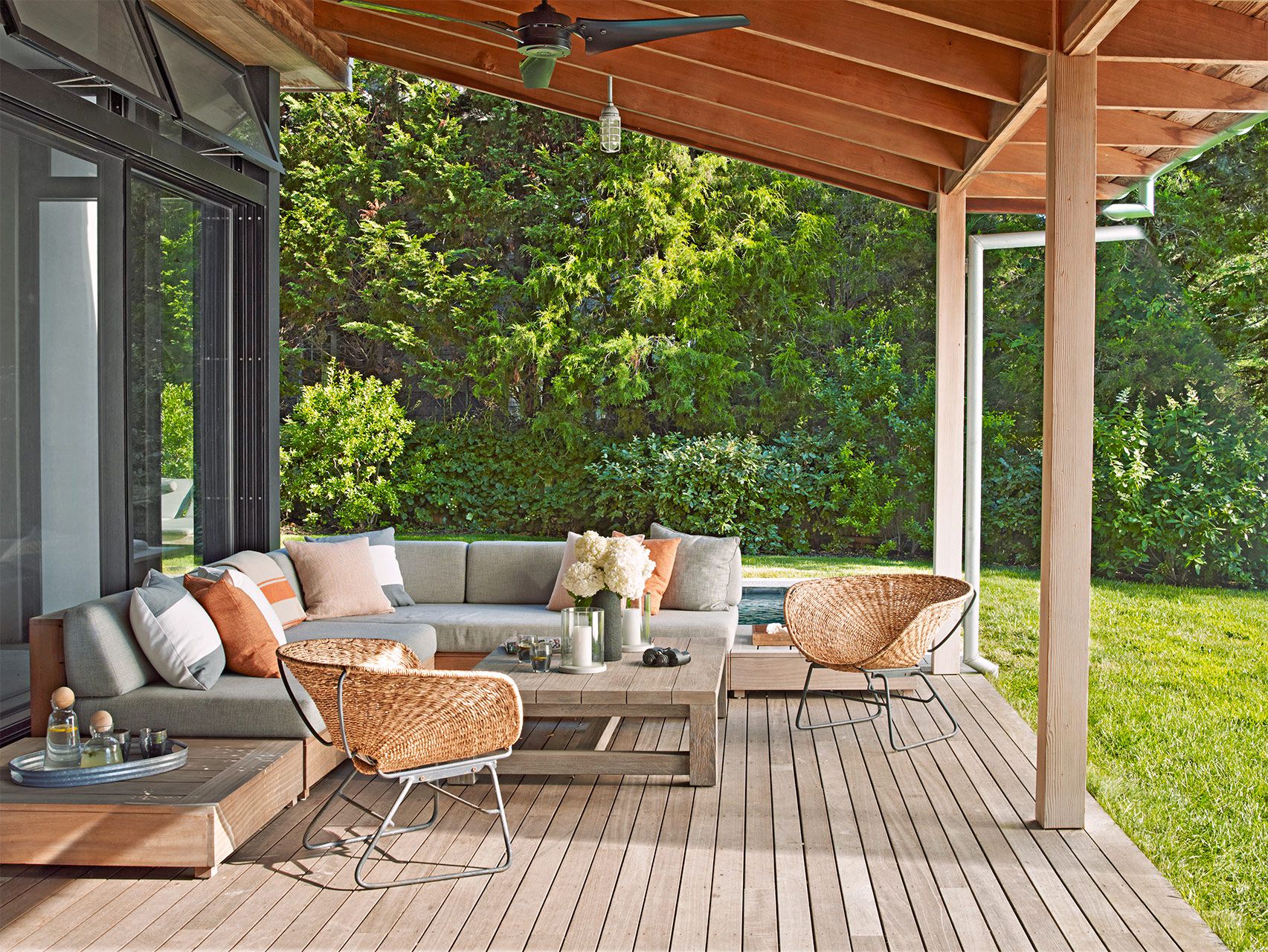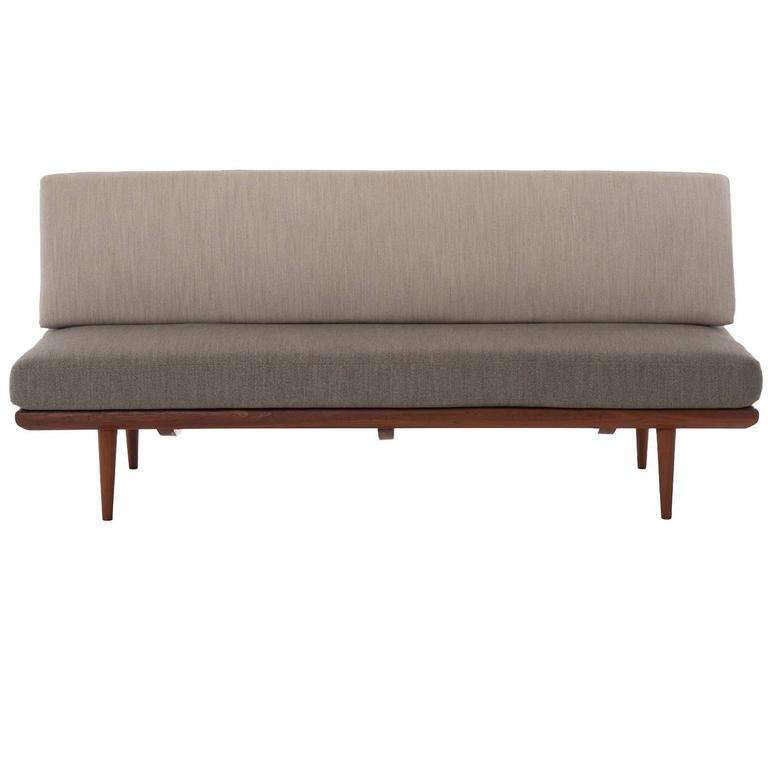
A Danish Modern daybed is what happens when a sofa, a bed, and a very well-dressed Scandinavian architect walk into a room and agree not to waste anyone’s space. It is slim, practical, warm, beautifully proportioned, and somehow able to make a living room look more intelligent. Not louder. Not flashier. Just smarter.
For homeowners, apartment dwellers, collectors, and design lovers, the Danish Modern daybed offers one of the rarest combinations in furniture: it looks elegant, works hard, and does not demand the square footage of a small royal palace. It can serve as a sofa during the day, a guest bed at night, a reading lounge on lazy Sundays, and an impressive conversation starter whenever someone says, “Wait, is that vintage?”
The charm of the Danish Modern daybed comes from the broader Danish Modern movement, which became internationally influential in the mid-20th century. Designers such as Hans J. Wegner, Børge Mogensen, Finn Juhl, Poul Kjærholm, Arne Jacobsen, and Kaare Klint helped shape a style built around craftsmanship, natural materials, human comfort, and clean forms. A daybed in this tradition is not just a place to nap. It is a compact design philosophy with cushions.
What Is a Danish Modern Daybed?
A Danish Modern daybed is a multifunctional piece of furniture inspired by Danish mid-century design. It usually has a low profile, a long horizontal frame, exposed wood or metal details, and a mattress-like cushion that allows it to function as both seating and sleeping furniture. Many vintage examples feature teak, oak, walnut, cane, wool upholstery, leather straps, or clever backrest mechanisms.
Unlike bulky sleeper sofas, a Danish Modern daybed typically avoids drama. There is no wrestling match with a metal pullout frame, no mysterious spring snapping at your ankle, and no cushion arrangement that requires a degree in engineering. Instead, the daybed relies on elegant simplicity. The form is already close to a bed, so conversion is often as easy as removing bolsters, lifting a backrest, or adding bedding.
The best examples feel light without being fragile. They often stand on tapered legs, floating frames, or open bases that let the floor remain visible. This creates the visual magic Danish Modern furniture is known for: a room feels furnished, but not stuffed.
Why Danish Modern Design Still Feels Fresh
Danish Modern furniture rose to fame during the 1930s through the 1960s, but it does not feel frozen in time. That is because the movement was never about decoration for decoration’s sake. It was about honest materials, good proportions, and furniture that made daily life easier. In other words, Danish designers were doing “user experience” before everyone started putting UX on their résumé.
Kaare Klint, often considered a foundational figure in modern Danish furniture, emphasized measured, human-centered design. Later designers expanded the language. Hans J. Wegner brought sculptural warmth and masterful joinery. Børge Mogensen focused on durable, democratic furniture for real homes. Finn Juhl introduced expressive, organic forms. Poul Kjærholm refined furniture into architectural objects using materials such as steel, leather, and stone.
A Danish Modern daybed borrows from this entire tradition. It is functional like Mogensen, graceful like Wegner, disciplined like Klint, and sometimes sculptural enough to make Finn Juhl smile from the great walnut-paneled lounge in the sky.
Key Features of a Danish Modern Daybed
1. Clean Lines and Low Profiles
The silhouette is usually long, lean, and low. This makes the daybed especially useful in smaller rooms, studios, guest rooms, offices, and open-plan living areas. It provides usable comfort without visually blocking the space. A chunky sofa can feel like a parked truck. A Danish Modern daybed feels more like a well-tailored blazer.
2. Natural Wood Frames
Teak is one of the most beloved materials in vintage Danish Modern furniture, especially pieces from the 1950s and 1960s. Oak, beech, rosewood, and walnut also appear frequently. The wood is often oiled rather than heavily lacquered, allowing grain, warmth, and texture to remain visible.
Vintage teak daybeds are popular because teak is durable, richly colored, and ages beautifully. The golden-brown tone pairs well with white walls, linen curtains, wool rugs, black lighting, and almost any houseplant brave enough to survive your watering schedule.
3. Cane, Leather, and Wool Details
Many Danish Modern daybeds include cane panels, leather straps, wool cushions, or saddle leather accents. These materials add texture without making the piece feel busy. Cane brings airiness. Leather adds structure and patina. Wool provides warmth and tactile comfort.
4. Multifunctional Design
The main attraction is flexibility. A Danish Modern daybed can be a sofa, bench, chaise, guest bed, reading nook, or hallway statement piece. In modern homes where rooms must do double or triple duty, this versatility is gold. Or teak. Teak is probably more accurate.
5. Exposed Craftsmanship
Danish Modern furniture rarely hides how it is made. Joinery, legs, rails, straps, and frames are often visible. This transparency gives the furniture integrity. You can see the logic of the object. There is no need for excessive ornament because the construction itself is beautiful.
Famous Danish Modern Daybed Designs
Hans J. Wegner and GETAMA Daybeds
Hans J. Wegner is best known for chairs, but his work with GETAMA also produced highly collectible daybeds and sofas. Models such as the GE-258 and GE-7 are often associated with 1950s Danish design. These pieces commonly feature long wooden frames, cane or upholstered backs, and proportions that make them useful as both seating and sleeping surfaces.
The appeal of a Wegner daybed is not only the name. It is the balance. Wegner had a gift for making furniture that felt carefully shaped but never precious. A Wegner-style daybed can sit in a room like it has nothing to prove, which is usually how you know it is winning.
Børge Mogensen BM0865 Daybed
Børge Mogensen’s BM0865 daybed, originally designed in 1958 and later reintroduced, reflects his idea of practical, modular living. The design uses a simple wooden base, cushions, leather straps, and flexible components. It feels relaxed and human rather than museum-stiff.
Mogensen believed in useful furniture for everyday life, and the BM0865 captures that spirit. It can work as a lounging surface, guest bed, or modular seating element. It is the kind of furniture that says, “Yes, I am beautiful, but please do sit down. I was not raised to be decorative only.”
Poul Kjærholm PK80 Daybed
The PK80 daybed, designed by Poul Kjærholm in 1957, is one of the most refined examples of Danish Modern furniture. Unlike many teak-framed daybeds, the PK80 uses a minimalist steel base and upholstered surface. It draws from historical daybed forms while stripping them down to a highly architectural expression.
The PK80 is elegant, spare, and serious in the best possible way. It is less “curl up with popcorn” and more “read an art monograph while pretending you always understand architecture.” Still, its quiet luxury makes it a design icon.
Peter Hvidt and Orla Mølgaard-Nielsen
Peter Hvidt and Orla Mølgaard-Nielsen are also important names in Danish Modern seating and convertible furniture. Their work often explored modularity, lightness, and refined wooden construction. Daybeds and sofa systems associated with their style remain desirable in vintage markets because they combine elegance with practical use.
How to Style a Danish Modern Daybed
Keep the Room Light and Balanced
A Danish Modern daybed thrives in a room that gives it breathing space. Avoid crowding it with oversized furniture. Pair it with a slim coffee table, a wool rug, a floor lamp, and a few thoughtful accessories. The goal is not to create a furniture showroom; it is to create a room where a person might actually drink coffee, read, nap, and occasionally remember to fold the throw blanket.
Use Natural Textures
Wood, linen, wool, leather, ceramic, jute, and stone all work well with Danish Modern furniture. These materials reinforce the organic warmth of the style. A teak daybed with a nubby wool cushion, a linen pillow, and a ceramic side table can look effortlessly composed.
Add Contrast With Modern Pieces
Danish Modern does not need to live in a perfectly mid-century room. In fact, it often looks better when mixed with contemporary art, modern lighting, or minimalist shelving. A vintage Danish daybed can soften a very modern space, while modern accessories can keep a vintage piece from feeling like it wandered in from a 1962 catalog shoot.
Choose Pillows Carefully
Because a daybed already has a clean horizontal shape, pillows should add comfort without creating cushion chaos. Two bolsters, two square pillows, or a long lumbar pillow may be enough. Too many pillows and the daybed becomes less “Danish Modern” and more “decorative pillow storage facility.”
Where a Danish Modern Daybed Works Best
Living Rooms
In a living room, a Danish Modern daybed can replace a standard sofa or complement lounge chairs. Its open profile helps maintain flow, especially in apartments or narrow rooms. It also works beautifully near windows, where it becomes a natural reading and napping spot.
Guest Rooms
A daybed is ideal for a guest room that doubles as an office. During the day, it keeps the room from looking like a spare bedroom no one really uses. At night, it becomes a proper sleeping surface for guests. Add high-quality sheets, a good pillow, and a warm blanket, and your guest may forgive you for not having a dedicated guest suite with a balcony and breakfast service.
Home Offices
In a home office, a Danish Modern daybed provides a place to read, take calls, or step away from the desk. It also signals that the room is not purely about work. This is important because nobody wants their home office to feel like a tiny tax audit chamber.
Entryways and Large Hallways
If you have enough space, a slim daybed can work as an elegant bench in an entry or wide hallway. It offers a place to sit while putting on shoes and instantly makes the area feel more intentional.
Buying a Vintage Danish Modern Daybed
Vintage Danish Modern daybeds are highly sought after, and prices vary widely depending on designer, condition, materials, provenance, and rarity. A documented Wegner or Mogensen piece will command more than an unattributed teak daybed, though both can be beautiful and functional.
Check the Frame
Look for cracks, loose joints, repairs, water damage, and signs of heavy structural stress. A little patina is normal and often desirable. A frame that wobbles like a nervous deer is less charming.
Inspect the Joinery
Good Danish furniture usually has clean joinery and thoughtful construction. Check where legs meet rails, where backs attach, and where any convertible mechanism operates. If a backrest lifts or folds, test it carefully.
Ask About Upholstery
Original upholstery can add value if it is in good condition, but many vintage daybeds have been reupholstered. That is not necessarily bad. Fresh foam and quality wool, linen, or leather can make the piece far more comfortable for daily use. The key is whether the reupholstery respects the original proportions.
Measure Everything
Measure your room, doorways, stairs, elevator, and the daybed itself. Many Danish Modern daybeds are slim, but they are still long. Nothing ruins the romance of vintage furniture faster than realizing your dream daybed cannot make the turn into your apartment.
Modern Reproductions and New Danish-Inspired Daybeds
Not everyone needs a rare vintage piece. Modern Danish-inspired daybeds can offer the same clean look with updated comfort, easier availability, and less anxiety about every coffee cup within a five-foot radius. New pieces may include removable covers, modern foam, certified wood, improved support, and delivery options that do not require negotiating with a vintage dealer in three time zones.
When shopping for a new Danish Modern daybed, look for honest materials, restrained lines, solid construction, and useful proportions. Avoid pieces that imitate the look but ignore the logic. Skinny legs and beige fabric alone do not make furniture Danish Modern. Otherwise, every sad waiting-room bench would qualify, and we simply cannot allow that.
How to Care for a Danish Modern Daybed
Wood Care
Dust regularly with a soft cloth. For teak or oiled wood, use appropriate wood oil sparingly and only when needed. Keep the daybed away from harsh sunlight, radiators, and extreme humidity. Wood is strong, but it is not emotionally prepared for being baked beside a window all summer.
Upholstery Care
Vacuum fabric cushions with an upholstery attachment. Rotate cushions when possible to even out wear. For wool, address spills quickly by blotting rather than rubbing. For leather, use a suitable leather conditioner and avoid harsh cleaners.
Cane and Rattan Care
If your daybed has cane or rattan, keep it away from overly dry conditions that can cause brittleness. Clean gently with a soft brush or cloth. Do not sit directly on cane backs unless the design specifically supports that use. Cane is beautiful, but it is not a trampoline.
Is a Danish Modern Daybed Worth It?
Yes, especially if you value furniture that combines beauty, flexibility, and long-term usefulness. A Danish Modern daybed is not a trend piece. It has already survived decades of changing tastes and still looks current. That is a strong résumé for anything with legs.
For small homes, it is a space-saving hero. For design collectors, it is a link to one of the most influential furniture movements of the 20th century. For everyday users, it is simply a comfortable and handsome place to sit, stretch out, or host overnight guests.
The key is to buy thoughtfully. Choose quality over labels alone. A famous designer name is wonderful, but comfort, condition, scale, and authenticity matter just as much. The best Danish Modern daybed is the one that fits your room, supports your lifestyle, and makes you happy every time you walk past it.
Real-Life Experiences With a Danish Modern Daybed
Living with a Danish Modern daybed is different from merely admiring one online. In photographs, it looks calm, architectural, and impossibly tasteful. In real life, it becomes part of your daily habits. It catches your coat when you come home. It becomes the place where you answer emails with suspiciously casual posture. It hosts afternoon naps that begin as “just five minutes” and end with you waking up unsure what year it is.
One of the most pleasant surprises is how easily a Danish Modern daybed changes the mood of a room. A standard sofa often tells the room what it is: a living room, full stop. A daybed leaves the room more open-ended. It can be a lounge, library, guest space, music corner, or quiet retreat. In small apartments, that flexibility feels luxurious. You are not adding furniture; you are adding possibilities.
The second surprise is how much people notice it. Guests may not know the difference between teak and walnut, or Wegner and Mogensen, but they can sense when a piece has good proportions. A Danish Modern daybed often gets compliments because it looks both simple and special. It does not scream for attention. It simply sits there with excellent posture until someone asks about it.
Comfort depends heavily on the cushion. Vintage daybeds can look gorgeous but feel tired if the foam has collapsed. Replacing old foam with a supportive cushion can completely change the experience. A beautiful frame with a bad cushion is like a sports car with a lawn-chair seat: technically impressive, emotionally confusing. Good upholstery makes the piece usable every day, not just photogenic.
Styling also takes a little restraint. The temptation is to dress the daybed with many pillows, throws, and decorative objects. But Danish Modern design rewards editing. A wool throw, one bolster, and two pillows may do more than seven cushions arranged like a soft obstacle course. The daybed should still look like a place to sit, not a puzzle your guests must solve before relaxing.
Maintenance becomes part of the relationship. You start noticing sunlight patterns. You become oddly protective of wood grain. You may find yourself saying things like, “Please use a coaster,” with the seriousness of a museum guard. This is normal. Danish Modern furniture encourages care because it feels built to last. It does not feel disposable, so you stop treating it that way.
The best experience, however, is the quiet usefulness. A Danish Modern daybed does not need a special occasion. It improves ordinary moments: morning coffee, evening reading, weekend lounging, unexpected guests, or the sacred art of staring out the window while pretending to think deeply. It proves that practical furniture can still be poetic. And if poetry comes with a nap option, all the better.
Conclusion
A Danish Modern daybed is more than a stylish piece of mid-century furniture. It is a smart solution for modern living, a tribute to Danish craftsmanship, and a reminder that practical design does not have to be boring. Whether you choose a vintage teak daybed, a collectible designer piece, or a contemporary Danish-inspired model, the right daybed can bring warmth, flexibility, and timeless elegance into your home.
Its lasting appeal comes from balance: beauty without excess, comfort without bulk, and function without fuss. In a world full of oversized furniture and overcomplicated solutions, the Danish Modern daybed remains refreshingly sensible. It gives you a sofa, a bed, a lounge, and a design statement in one graceful form. That is not just good furniture. That is furniture with manners.