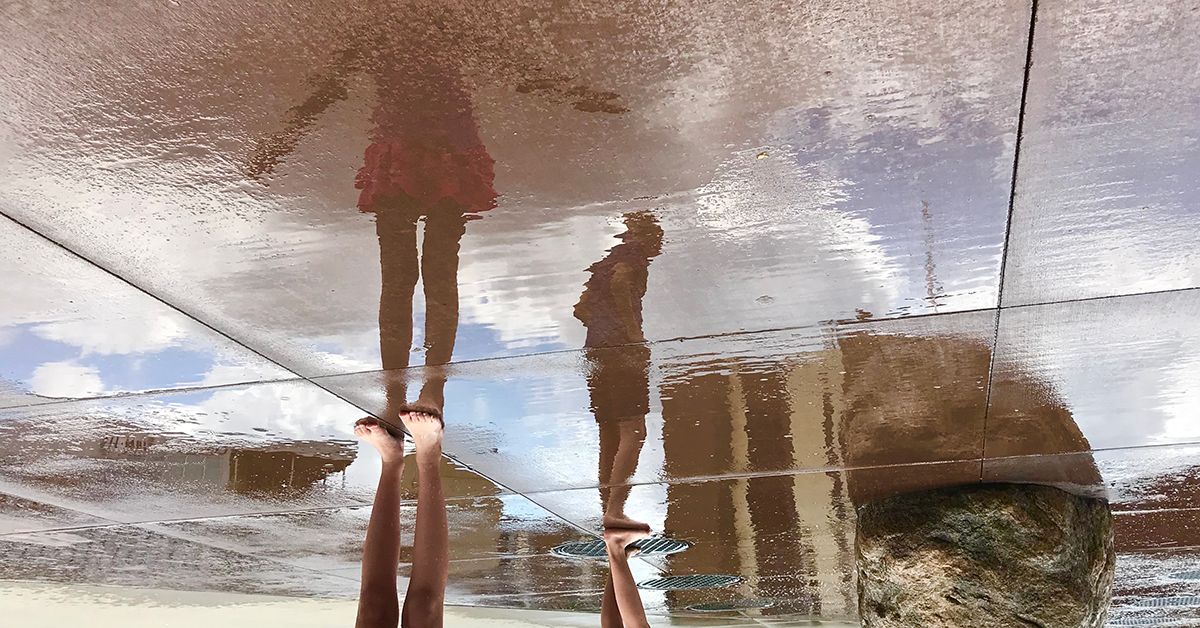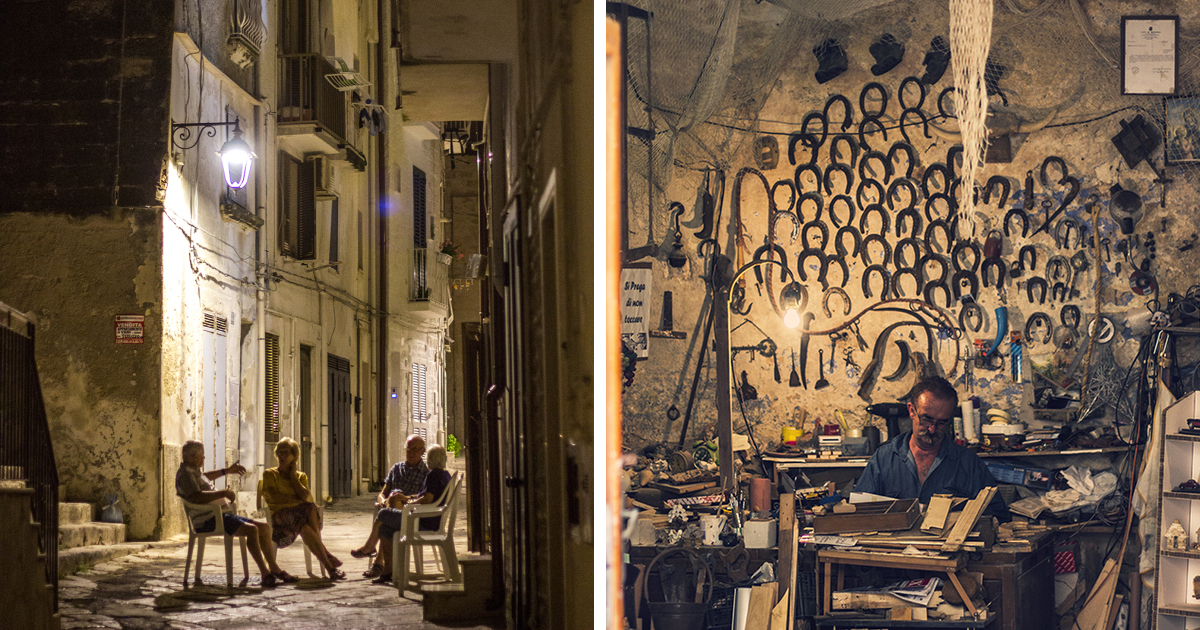
Some places ask politely to be photographed. Monopoli does not. Monopoli grabs your camera, points it toward the sea, and whispers, “Try not to mess this up.” For ten summers, I returned to this sun-bright coastal town in Puglia, Italy, chasing the same ingredients: salt in the air, laundry on balconies, fishing boats painted blue and red, limestone alleys glowing like they had a personal agreement with the sun, and the kind of late-afternoon light that makes even a plastic chair look emotionally significant.
This is the story behind 10 summers captured in 30 photos: not just a travel album, not just a love letter to southern Italy, and definitely not a humble brag disguised as “documentary photography.” It is a slow visual diary of Monopoli, a town on the Adriatic coast where history, sea, food, faith, and everyday life collide in the most photogenic traffic jam imaginable.
Over a decade, my lens found patterns: the old port before breakfast, the same stone walls changing color with the hour, children treating the sea like a second living room, grandmothers moving through narrow streets with Olympic-level grocery-bag discipline, and tourists discovering that cobblestones are charming until you wear the wrong shoes. These 30 photos became more than pretty frames. They became evidence that places change, people change, and summer has a memory longer than we think.
Why Monopoli Is a Photographer’s Dream
Monopoli sits in Puglia, the heel of Italy’s boot, roughly southeast of Bari along the Adriatic Sea. It has the key ingredients photographers secretly pray for: a compact historic center, a working old harbor, beaches within walking distance, churches and defensive walls, and enough texture to make every doorway feel like it has been waiting for its close-up since 1623.
The historic center, or centro storico, is a maze of whitewashed walls, honey-colored stone, tiny piazzas, religious shrines, potted plants, hanging laundry, and unexpected slices of blue sea. Around the edges, the seafront walls and old fortifications remind you that Monopoli was not designed as a backdrop for vacation selfies. It was a maritime town shaped by trade, defense, faith, fishing, and survival. The beauty is real, but it has muscle underneath.
That is what made photographing Monopoli over ten summers so rewarding. A quick visit gives you postcard images. A decade gives you rhythm. You learn when the light hits the harbor just right. You know which alley traps the smell of fresh focaccia in the morning. You recognize that the same fishing boat can look heroic at sunrise, sleepy at noon, and theatrical at sunset. Monopoli is not a one-shot destination. It is a place that rewards returning.
The 30-Photo Structure: How I Told the Story
For this photo essay, I chose 30 images from ten summers, three photos per year. That structure sounds tidy, almost mathematical, which is funny because photography in Monopoli rarely behaves. The light changes. People walk into your frame. A scooter appears where no scooter should physically fit. A cloud shows up, ruins your plan, and then accidentally makes the photo better.
Still, three photos per summer gave the project shape. Each year needed a beginning, a middle, and an aftertaste. I organized the collection around three recurring visual themes: the sea, the streets, and the people. The sea shows Monopoli’s identity. The streets show its architecture and daily rituals. The people show the pulse that keeps it from becoming a museum with better seafood.
Photos 1–10: The Sea as Main Character
The first ten images focus on the Adriatic. In Monopoli, the sea is not scenery. It is a neighbor. It glitters beside the old walls, fills the coves, carries fishing boats, cools the summer heat, and photobombs almost everything. Cala Porta Vecchia, one of the most recognizable in-town beaches, appears repeatedly in the series because it captures what makes Monopoli special: the old town rising directly behind swimmers, as if history decided to put on sunscreen.
One photo shows the water below the defensive walls in the hard brightness of July. The shadows are sharp, the swimmers look tiny, and the stone seems almost too warm to touch. Another frame catches the beach in early morning, before umbrellas multiply and before everyone’s towel claims diplomatic territory. A third shows the water at dusk, when the Adriatic shifts from turquoise to silver and the town begins to glow like it has been lightly buttered.
These sea images taught me patience. The best coastal photograph is not always the widest view. Sometimes it is a rope on wet stone, a pair of sandals abandoned near the water, or a swimmer’s head breaking the surface beneath ancient walls. Monopoli’s coastline is dramatic, yes, but its details are where the real story hides.
Photos 11–20: The Old Town in Motion
The next ten images move into the old town. Monopoli’s streets are narrow, bright, and wonderfully confusing. Every corner seems to offer a new composition: an archway framing a blue door, a staircase with plants in mismatched pots, a religious icon tucked into a wall niche, or a linen sheet moving in the wind like it has artistic ambitions.
Photographing the old town over ten summers revealed how much a place can repeat itself without becoming boring. The same alley looked different each year depending on paint, plants, people, season, and my own mood. In one frame, a bicycle leans against a white wall in harsh noon light. In another, the same street is softer after rain, with stone pavement reflecting window shutters and restaurant signs. In a third, a cat occupies the center of the image with the confidence of a small mayor.
The Cathedral Basilica of Maria Santissima della Madia became one of the emotional anchors of the series. Its history, tied to the legend of the Madonna della Madia arriving by sea on a raft, feels inseparable from Monopoli’s identity. Photographing the cathedral from outside, inside, and from nearby streets helped connect the town’s spiritual life to its maritime story. The church is not just a landmark. It is a reminder that in Monopoli, faith and the sea have been speaking to each other for centuries.
Photos 21–30: People, Rituals, and Summer Theater
The final ten images focus on human presence. Documentary photography works best when it respects ordinary life. In Monopoli, ordinary life is often spectacular if you wait long enough. Fishermen work around the old port. Families gather for evening walks. Children eat gelato with the seriousness of financial auditors. Restaurant staff rearrange tables in tiny piazzas. Friends lean against scooters and solve the world’s problems with hand gestures.
The old port, or Porto Vecchio, is the heart of this section. Its traditional boats, known locally as gozzi or vozz, are often painted vivid blue and red. They are small, sturdy, practical, and beautiful in a way that makes photographers behave irresponsibly with memory cards. Some carry names connected to fishermen, saints, or the Madonna, turning each boat into a floating personal history.
One of my favorite photos in the project shows three older men seated near the harbor at sunset. Nothing dramatic is happening. No one is leaping into the sea. No cathedral bells are exploding into cinematic symbolism. They are simply sitting, talking, and watching the light move across the boats. That image matters because it captures Monopoli as lived space, not just admired space.
What Changed Across 10 Summers
Ten summers is long enough to notice change. Monopoli has become more visible to travelers, especially as Puglia’s popularity has grown. Visitors come for the beaches, food, architecture, and the slower rhythm that feels different from Italy’s more crowded headline destinations. The town still feels authentic, but the balance between local life and tourism is more delicate than it once was.
In earlier summers, I photographed quieter streets and more spontaneous harbor scenes. Later, I found more restaurant terraces, more boutique stays, more polished storefronts, and more visitors arriving with phones already raised. That is not automatically bad. Tourism brings energy, jobs, restoration, and cultural exchange. But through the camera, you can see how attention changes a place. A hidden corner becomes a must-shoot angle. A quiet beach becomes a morning race for space. A simple alley becomes “content.”
This is where documentary photography becomes useful. It does not freeze a place in nostalgia. It records transition. The Monopoli of my first summer and the Monopoli of my tenth summer are not identical. The stones remain, the sea remains, the cathedral remains, but the rhythm has shifted. The 30 photos make that visible without needing a lecture, which is great because nobody wants a lecture while holding a melting gelato.
How I Photographed Monopoli Without Turning It Into a Postcard Factory
Travel photography can easily become a collection of pretty surfaces. Monopoli is dangerously pretty, so the temptation is real. My goal was to avoid photographing only the obvious. Yes, I shot the harbor. Yes, I shot the beach. Yes, I took enough golden-hour wall photos to concern a professional organizer. But I also tried to turn around, wait, and look for the second story inside the first.
Instead of only photographing Cala Porta Vecchia from the postcard angle, I watched how people used the space: towels drying on stone, children negotiating with waves, couples sitting on the wall after swimming, older locals walking past without treating the view like a miracle because, for them, Tuesday has always looked like this.
In the old town, I looked for layers: foreground shadows, midground people, background architecture. A good Monopoli image often needs all three. A doorway alone is nice. A doorway with a passing cyclist, a slice of sea, and a curtain moving above it becomes a story. The same applies to food photography. A plate of orecchiette is appetizing. A plate of orecchiette beside a sunlit glass, a paper placemat, and someone’s hand reaching in too early becomes a confession.
Food, Light, and the Serious Business of Summer Appetite
No photo essay about Monopoli would be complete without food. Puglia’s cuisine is rooted in simple, local ingredients: seafood, olive oil, vegetables, legumes, bread, burrata, and pasta such as orecchiette. Monopoli’s coastal identity adds fish soup, fried seafood, octopus, mussels, and port-side meals that make you question every sad desk lunch you have ever eaten.
Food photographs in the 30-image series are not styled like restaurant ads. They are part of the travel memory: a plate arriving after a swim, a paper cone of fried fish eaten too fast, a table under warm evening lights, a glass sweating in the heat, a final bite of focaccia that I absolutely meant to share but, tragically, did not survive.
Light is the secret ingredient. Morning light in Monopoli is clean and bright. Noon light is brutal, honest, and excellent for making photographers complain dramatically. Late afternoon is magic. Evening is when the town softens, conversation rises, and every street seems to become a stage. Over ten summers, I learned that Monopoli is best photographed before the day fully wakes and after the heat begins to surrender.
Why These Photos Matter Beyond Vacation Memories
At first, I thought I was documenting Monopoli because it was beautiful. Over time, I realized I was documenting return. Coming back to the same place every summer changes your eye. You stop hunting only for novelty and start noticing continuity. The same harbor wall becomes a timeline. The same beach becomes a seasonal ritual. The same alley becomes a test: What did I miss last year?
The 30 photos matter because they show how memory is built. Not in giant events, but in repeated details. A towel hanging from a balcony. A boat repainted. A restaurant chair moved to a new corner. A child who used to jump from the rocks now walking past with friends. A photographer, older and hopefully less terrible at exposure, learning to see slower.
Monopoli teaches that travel photography is not about collecting places. It is about building attention. The more carefully you look, the less a destination feels like a checklist and the more it becomes a relationship. And like all good relationships, it includes beauty, confusion, heat, hunger, bad footwear choices, and moments when you wonder why you packed three lenses but forgot water.
of Personal Experience: What Ten Summers in Monopoli Taught Me
The first summer I photographed Monopoli, I behaved like a person afraid the town might vanish by lunch. I photographed everything: doors, boats, plates, windows, cats, laundry, waves, strangers’ espresso cups, and one heroic lemon that deserved its own gallery wall. I was greedy with the camera because Monopoli felt almost unreal. The old port looked staged, the sea was too blue, and every alley seemed to end in either a church, a restaurant, or another alley that made me late for dinner.
By the third summer, I had calmed down. I stopped trying to capture all of Monopoli and started looking for small assignments. One morning was only for shadows. One evening was only for hands: hands steering boats, carrying bread, holding cigarettes, pointing during conversations, or lifting children from the water. Another day was only for blue. That was not difficult. Monopoli uses blue the way other places use punctuation.
By the fifth summer, the town had become familiar enough that I could notice emotional weather. Some days Monopoli felt festive and loud. Some days it felt private, especially early in the morning when shopkeepers opened doors and the harbor seemed to stretch before anyone else arrived. I learned to love those quiet hours most. The photographs from those mornings are not the most dramatic, but they are the most honest. They show the town before performance, before the daily choreography of visitors, menus, umbrellas, and sunset walks.
By the seventh summer, I understood that returning to a place does not make photography easier. It makes your standards higher. The obvious shots were already done. I had the harbor at sunrise, the beach at noon, the cathedral in glowing light. So I had to ask better questions. What does Monopoli sound like in a still image? How do you photograph heat? How do you show the feeling of walking back from the sea with salt on your skin and no urgent plan except dinner?
By the tenth summer, the camera felt less like a tool and more like a notebook. I took fewer photos, but I kept more of them. I waited longer. I let people pass through the frame. I stopped being disappointed when the perfect scene changed, because Monopoli had taught me that the imperfect scene usually has better timing. A crooked umbrella, a half-eaten gelato, a boat covered with an old blanket, a child crying because the beach day is endingthese are not ruined moments. They are the documentary truth of summer.
Looking back at the 30 selected photos, I do not see only Monopoli. I see ten versions of myself learning how to pay attention. I see summers when I arrived tired and left lighter. I see proof that beauty is not always found by moving faster. Sometimes it comes from returning, standing still, and letting the same place surprise you again.
Conclusion: A Decade of Salt, Stone, and Light
Documenting Monopoli: 10 Summers Captured In 30 Photos By Me is ultimately a story about looking closely. Monopoli is easy to admire quickly, but it becomes richer when seen slowly. Across ten summers, the town offered the same essential elementssea, stone, boats, food, faith, and communitybut never in exactly the same way twice.
The 30 photos are not meant to prove that Monopoli is perfect. They show something better: a real coastal town balancing history and tourism, tradition and change, work and leisure, sacred spaces and beach towels. They show how summer can be both temporary and deeply permanent when captured with care.
And if there is one lesson I carried home, it is this: the best travel photographs are not always the ones that shout, “Look where I went!” Sometimes they quietly say, “Look what I finally noticed.”