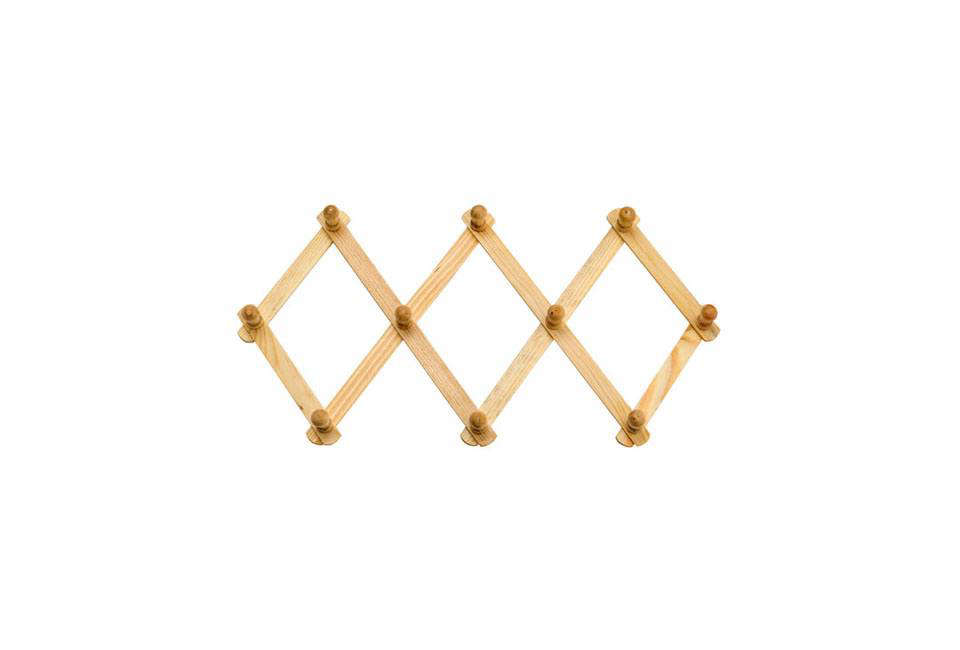
An expandable wooden wall rack is one of those home items that looks modest at first, then quietly becomes the household MVP. It does not beep, glow, sync to an app, or ask for a firmware update at 2 a.m. It simply hangs on the wall and says, “Give me your coats, hats, keys, tote bags, scarves, dog leashes, mugs, aprons, and that one mystery lanyard nobody claims.” In a world where storage furniture can be bulky, expensive, and slightly bossy, the expandable wooden wall rack offers a refreshingly clever solution: flexible wall-mounted storage with warmth, charm, and a little accordion-style personality.
Also known as an accordion wall hanger, expandable peg rack, wooden coat rack, or wall-mounted wooden organizer, this practical piece has earned a place in entryways, kitchens, bathrooms, laundry rooms, bedrooms, craft corners, and small apartments. Its expandable design allows it to stretch or compress depending on the available wall space. That makes it especially useful for homes where every square inch has already been negotiated like prime downtown real estate.
This guide explores what makes an expandable wooden wall rack so useful, how to choose the right one, where to install it, what to hang on it, and how to keep it looking intentional instead of “laundry day happened and nobody survived.”
What Is an Expandable Wooden Wall Rack?
An expandable wooden wall rack is a wall-mounted storage rack made with intersecting wooden slats that open and close like an accordion. Along those slats are pegs or hooks that create multiple hanging points. When compressed, the rack takes up very little space. When expanded, it spreads across the wall and offers more room between items.
Traditional versions often feature natural wood, stained wood, or painted finishes. Many vintage accordion racks include rounded pegs and mid-century-inspired lines, while newer designs may lean farmhouse, boho, minimalist, rustic, or Scandinavian. Some racks include 10 pegs, while larger models may offer 13, 17, or even more hanging points. Depending on the model, a rack may extend several feet wide, making it surprisingly capable for such a lightweight-looking object.
The beauty of the design is its adaptability. A fixed coat rack gives you one size forever. An expandable wooden wall rack gives you options. Need it narrow beside the front door? Compress it. Want it wide across a mudroom wall? Stretch it. Need it vertical for scarves or jewelry? Some models can be mounted that way too, assuming the hardware and structure allow it.
Why Expandable Wooden Wall Racks Are Popular Again
Home storage trends come and go, but wall hooks never truly leave. They just change outfits. Today’s renewed interest in expandable wooden wall racks comes from a few practical reasons: smaller homes, busier entryways, more appreciation for natural materials, and the ongoing human desire to stop throwing jackets over dining chairs.
They Save Floor Space
Floor-standing coat trees and hall trees can be useful, but they need room. In a narrow hallway or apartment entryway, even a small furniture piece can feel like a roadblock. A wall-mounted wooden rack uses vertical space instead. That means storage goes up on the wall, while the floor remains clear for shoes, pet bowls, baskets, or simply walking without performing an obstacle-course audition.
They Add Warmth Without Visual Clutter
Wood has a natural softness that metal or plastic storage often lacks. An expandable wood wall rack can make a practical zone feel more inviting, especially in an entryway where first impressions matter. Light pine or beech can brighten a room, walnut or dark-stained wood can add richness, and painted finishes can blend with cottage, farmhouse, or vintage decor.
They Work in Many Rooms
The classic use is coats and hats near the door, but that is only the opening act. In the kitchen, a wooden accordion rack can hold mugs, utensils, reusable market bags, or aprons. In the bathroom, it can hold towels, robes, or toiletry bags. In a bedroom, it can organize necklaces, caps, belts, and scarves. In a craft room, it can manage scissors, ribbons, fabric totes, and small tools. One rack, many personalities.
Best Places to Use an Expandable Wooden Wall Rack
The right location depends on your routine. The goal is not simply to fill empty wall space. The goal is to place the rack where clutter naturally lands. If coats pile on a chair, install the rack near that chair. If keys migrate across countertops like tiny metal tourists, create a landing zone near the door.
Entryway or Foyer
The entryway is the most obvious and often the most effective location. An expandable wooden wall rack near the front door can hold everyday jackets, hats, dog leashes, umbrellas, tote bags, and keys. For a polished setup, pair it with a small bench, a shoe tray, and a basket for gloves or mail. The result is a mini mudroom, even if your “mudroom” is technically a three-foot wall beside the light switch.
Kitchen
In the kitchen, an expandable wooden peg rack can be both decorative and functional. Use it for mugs, measuring cups, small baskets, aprons, oven mitts, or dried herbs. A wood rack looks especially charming in farmhouse, cottage, rustic, or vintage kitchens. Just avoid hanging very heavy cookware unless the rack is specifically designed and securely installed for that load.
Bathroom
A bathroom wall rack can hold towels, robes, loofahs, or toiletry bags. Wood adds warmth to tile-heavy rooms, but moisture matters. Choose a sealed or finished rack, keep it away from direct shower spray, and make sure the bathroom has decent ventilation. Wood is lovely; mildew is not invited.
Bedroom or Closet
Mounted inside a closet, behind a bedroom door, or along an empty wall, an expandable wooden rack can organize accessories that usually become drawer spaghetti. Think scarves, belts, hats, small handbags, jewelry, or outfit planning for the week. It is especially helpful for visual organizers who like seeing options instead of digging through bins.
Laundry Room or Utility Area
A laundry room rack can hold mesh bags, cleaning cloths, hangers, small brooms, or air-dry items. Because expandable racks can spread out, they are useful when you need temporary spacing. Hang a few items while laundry is in progress, then compress the rack visually when the room is back under control. Or at least when the laundry basket is pretending to be under control.
How to Choose the Best Expandable Wooden Wall Rack
Not all wall racks are created equal. Some are decorative, some are sturdy, and some are best suited for lightweight items only. Before buying, look beyond the pretty product photo and consider size, material, mounting hardware, peg shape, finish, and weight capacity.
1. Measure the Wall First
Expandable racks can vary widely in size. Some extend only a couple of feet, while larger accordion wall racks may stretch much wider. Measure the available wall area before buying. Also measure the compressed size if you plan to use the rack in a narrow spot. A rack that technically fits but blocks a door from opening fully will quickly become less charming.
2. Check the Number of Pegs
A 10-peg rack may be enough for hats, scarves, and keys. A 13- or 17-peg rack is better for families, shared entryways, or multi-purpose storage. More pegs do not always mean better organization, though. If every peg is overloaded, the rack can look messy and may put stress on the wall. Choose enough hanging points for daily essentials, not your entire winter wardrobe plus emotional baggage.
3. Look at the Wood Type and Finish
Solid wood generally offers better durability than thin composite materials, though construction quality matters just as much as the wood species. Common finishes include natural, walnut, white, black, honey, and distressed paint. For humid rooms, look for a sealed surface. For vintage racks, inspect for cracks, loose pegs, or worn joints before relying on them for heavier items.
4. Review Weight Capacity Carefully
Weight capacity depends on the rack, the pegs, the mounting hardware, and the wall. Product listings may give an overall load limit or a per-hook recommendation. Treat those numbers as guidelines, not dares. A rack holding lightweight hats and scarves has a very different job than one holding backpacks, wet coats, or tool bags.
5. Choose the Right Mounting Method
Secure installation is essential. Whenever possible, mount the rack into wall studs. If studs do not align with the rack’s mounting points, use appropriate drywall anchors rated for the expected load. For plaster, brick, concrete, or older walls, choose hardware designed for that surface. The rack should sit level, tight, and flush against the wall.
Installation Tips for a Secure Wall Rack
Installing an expandable wooden wall rack is usually straightforward, but “straightforward” should not mean “eyeballed while holding a drill and a sandwich.” A little preparation makes the rack safer and better looking.
Gather Basic Tools
You will likely need a tape measure, pencil, level, drill, screwdriver, stud finder, wall anchors, screws, and possibly a template. Some racks include mounting hardware, but included hardware is not always ideal for every wall type. If the rack will hold coats, bags, or anything heavier than decor, upgrade the hardware if needed.
Find the Right Height
For adult coats, a height around shoulder level usually works well. For children, mount the rack lower so they can actually use it. A kid-accessible rack has a magical effect: it turns “Mom, where does my backpack go?” into “Fine, I guess I can hang it up.” Results may vary, but hope is free.
Mark Before Drilling
Hold the rack against the wall, expand it to the desired width, and mark the mounting points. Use a level before drilling. Even a slightly crooked rack can look surprisingly dramatic, and not in a gallery-curated way.
Respect the Wall Type
Drywall, plaster, masonry, tile, and wood paneling all require different approaches. Drywall anchors can work for moderate loads, but studs are stronger. Tile requires special drill bits and careful pressure. If you are renting, check lease rules before drilling. Adhesive hooks may work for lightweight temporary storage, but they are not a reliable substitute for a properly mounted rack when coats, bags, or fragile items are involved.
Styling Ideas for an Expandable Wooden Wall Rack
A wall rack is practical, but it can also look beautiful. The trick is to style it like part of the room rather than a panic station for abandoned accessories.
Create an Entryway Drop Zone
Pair the rack with a narrow shelf, mirror, shoe basket, and small tray. The rack handles hanging items, the tray catches keys, and the mirror lets you check whether your hair has chosen rebellion. This setup works well in apartments and homes without a coat closet.
Use Repetition
Hang similar items together for a cleaner look. For example, keep hats on the outer pegs, coats in the middle, and bags on one side. In the kitchen, group mugs by color or size. In a bedroom, organize scarves from light to dark. This small visual order keeps the rack from looking like it lost a wrestling match with your belongings.
Leave Some Pegs Empty
Negative space is your friend. An expandable rack looks better when it can breathe. Leaving a few empty pegs makes the setup feel intentional and gives guests a place to hang something without performing a storage puzzle.
Match the Finish to the Room
A natural wood rack works well with white walls, woven baskets, linen fabrics, and plants. A dark walnut rack pairs nicely with leather, brass, black metal, and moody paint colors. A painted white rack can disappear into a cottage or coastal interior. A vintage rack with patina adds character to eclectic spaces.
What Can You Hang on an Expandable Wooden Wall Rack?
The short answer: many things. The better answer: many lightweight to moderate-weight things, depending on construction and installation. Here are practical examples by room.
Entryway Items
Use the rack for jackets, hats, scarves, umbrellas, reusable bags, dog leashes, keys on loops, and small backpacks. For heavy school bags or work totes, make sure the rack is mounted securely and the pegs are strong enough.
Kitchen Items
Hang mugs, aprons, oven mitts, tea towels, small baskets, measuring spoons, and lightweight utensils. Avoid overcrowding near a stove, and keep fabric items away from heat sources.
Bathroom Items
Robes, towels, shower caps, toiletry pouches, and washcloths can all work. Give towels enough room to dry. If everything is packed tightly, the rack may organize the bathroom while secretly creating a damp towel convention.
Bedroom Items
Jewelry, hats, belts, scarves, handbags, and tomorrow’s outfit can all find a home. For delicate necklaces, use smooth pegs and avoid rough or splintered vintage wood.
Expandable Wooden Wall Rack vs. Regular Coat Rack
A regular wall-mounted coat rack is stable, simple, and often strong. An expandable wooden wall rack is more flexible, more decorative, and more adaptable to changing needs. The better choice depends on your lifestyle.
Choose an expandable wooden wall rack if you want adjustable width, vintage charm, and multi-room versatility. Choose a fixed coat rack if you need a heavy-duty solution for bulky coats, backpacks, or high-traffic family use. In many homes, the two can work together: a sturdy fixed rack for heavy outerwear and an accordion peg rack for hats, scarves, bags, and lighter everyday items.
Care and Maintenance
Wooden racks are easy to maintain if you treat them kindly. Dust regularly with a soft cloth. For deeper cleaning, use a lightly damp cloth and dry the wood immediately. Avoid soaking the rack or using harsh cleaners. If the rack has moving joints, expand and compress it gently rather than yanking it open like you are starting a lawn mower.
Check the mounting screws every few months, especially if the rack holds frequently used items. Wood can shift slightly with humidity, and daily pulling can loosen hardware over time. If a peg becomes loose, repair it before using it again. A wobbly peg is not a charming antique detail; it is a warning sign wearing a tiny wooden hat.
Common Mistakes to Avoid
Overloading the Rack
The fastest way to shorten the life of an expandable wooden wall rack is to treat every peg like a gym-strength hook. Heavy backpacks, wet coats, and multiple bags can strain the joints and hardware. Spread weight evenly and keep heavier items closer to secure mounting points when possible.
Installing It Too High
A beautiful rack nobody can reach is basically wall art with responsibilities it cannot fulfill. Install it at a comfortable height for the people who use it most.
Ignoring Door Clearance
Before drilling, open nearby doors fully. Check cabinet doors, closet doors, bathroom doors, and entry doors. A rack loaded with coats can stick out farther than expected.
Forgetting About Style Balance
A wooden wall rack should support the room, not overwhelm it. If your entryway is narrow, keep the rack lightly styled. If your kitchen already has open shelves, use the rack for a curated selection rather than every mug you have owned since college.
Experience-Based Tips: Living With an Expandable Wooden Wall Rack
After using an expandable wooden wall rack in real daily routines, the first thing you notice is how quickly it changes behavior. Before the rack, items land wherever gravity and laziness agree: chairs, counters, doorknobs, stair rails, and occasionally the floor, because apparently the floor has excellent storage availability. After the rack, people suddenly have a visible destination. That matters. Good organization is not about perfection; it is about making the right action easier than the messy one.
In an entryway, the rack works best when assigned clear jobs. One peg for keys, two for everyday jackets, one for the dog leash, one for a tote bag, and one for seasonal accessories. Without assignments, every peg becomes “miscellaneous,” and miscellaneous is where organization goes to take a long nap. Labels are optional, but zones are helpful. Even a simple mental rule such as “left side for bags, right side for coats” can keep the rack from becoming visual soup.
Another useful lesson: do not expand the rack to its maximum width unless you actually need that space. A fully stretched accordion rack can look dramatic and airy, but it may also encourage overhanging. A partially expanded rack often looks better and feels sturdier. It gives items enough room without turning the wall into a wooden spiderweb. For small apartments, compressing the rack slightly keeps the entryway tidy while still offering plenty of function.
In a kitchen, the rack can become surprisingly decorative. A few white mugs, a linen apron, a small cutting board with a loop, and a woven market bag can make the wall feel styled without trying too hard. The secret is restraint. The rack should look like a useful display, not like the utensil drawer exploded upward. Keep frequently used items on the easiest pegs and decorative items toward the edges.
Bathrooms require a little more caution. A wooden rack can absolutely work for towels and robes, but moisture changes the rules. It is better for hand towels, robes, and dry accessories than for several wet bath towels packed tightly together. If the bathroom is small, leave extra space between items so air can circulate. A sealed finish helps, and occasional drying keeps the wood looking fresh.
For bedrooms and closets, the biggest benefit is visibility. Scarves, belts, hats, and jewelry are easier to use when they are not buried in drawers. An expandable wooden wall rack can turn accessories into decor, especially when colors and textures are arranged intentionally. However, delicate items need smooth pegs. If you buy a vintage rack, run your fingers over the wood first. Rough spots can snag fabric or jewelry, and nobody wants a scarf sacrificed to rustic charm.
The best experience tip is simple: edit the rack weekly. Take thirty seconds to remove items that do not belong. Return extra coats to the closet, move old mail, put away unused bags, and rescue anything that was hung “just for now” three weeks ago. A wall rack is visible storage, which means it rewards light maintenance. Ignore it long enough and it will start telling your life story in layers of tote bags.
Overall, an expandable wooden wall rack is one of the rare home organizers that is affordable, attractive, flexible, and genuinely useful. It does not solve every storage problem, but it solves the daily ones that make a home feel messy: the jacket with no home, the keys that vanish, the scarf pile, the kitchen towel shuffle, the bathroom robe dilemma. Small object, big impact. Not bad for a few wooden slats with ambition.
Conclusion
An expandable wooden wall rack proves that smart storage does not need to be complicated. With its adjustable accordion design, warm wood texture, and multi-purpose pegs, it can organize entryways, kitchens, bathrooms, bedrooms, closets, and laundry areas without stealing floor space. The best rack is one that fits your wall, matches your style, supports your daily routine, and is installed securely enough to handle real life.
Whether you choose a vintage accordion peg rack full of character or a modern wooden wall organizer with a clean finish, the idea is the same: use your walls wisely, keep essentials within reach, and give clutter fewer places to hide. Your chairs will thank you. Your floor will breathe easier. Your keys might even stop playing hide-and-seek.