When inclusive advertising meets an ordinary checkout problem, the result can be less “Just Do It” and more “Just Explain It.”
When a Powerful Image Raises a Practical Question
Nike has spent decades turning sports into cultural theater. A runner in slow motion, a basketball player floating toward the rim, a slogan that makes your couch feel personally attacked this is the company’s natural habitat. So when people saw Nike stores using mannequins with running blades, many viewed it as a strong step toward disability representation in sports retail.
For former Paralympian Stef Reid, the image meant something deeper. Reid, a medal-winning athlete and single-leg amputee, knows exactly how meaningful it can be for a young disabled person to see a body like theirs displayed in a mainstream sports store. Representation matters. It says, “You belong here.” It turns the mall window into a tiny billboard for possibility.
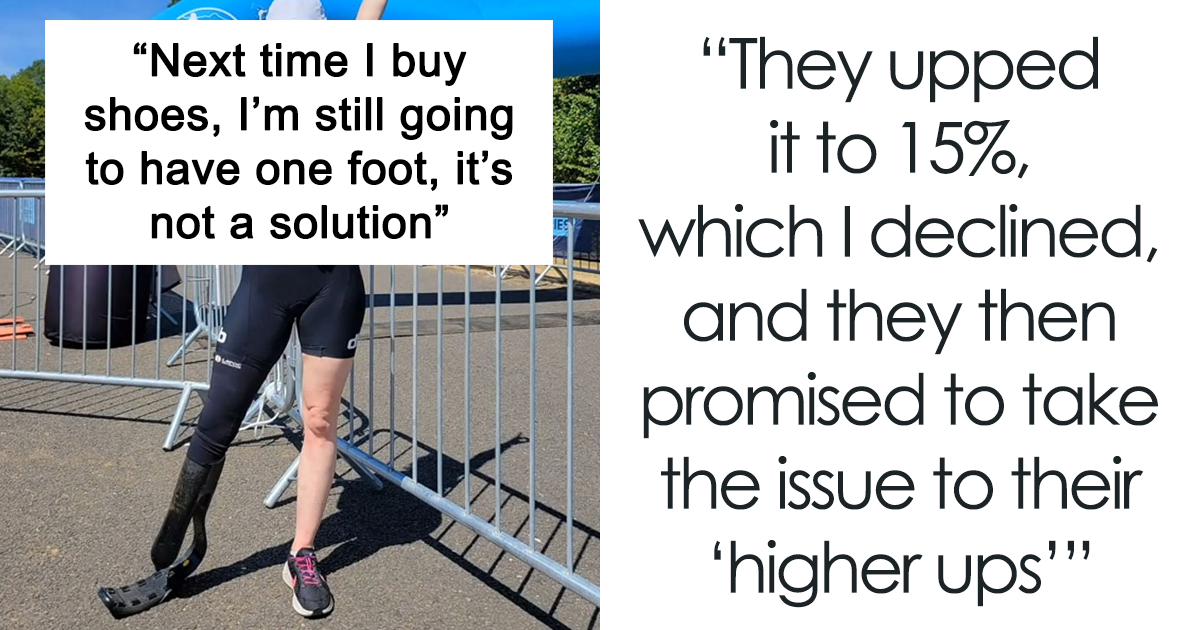
But Reid noticed a problem hiding behind the inspiring display. If a mannequin wearing a running blade was being used to sell athletic shoes, could an amputee runner actually buy just one shoe? That was not a philosophical question. It was a real shopping question. Reid reportedly wanted to buy a high-performance Nike running shoe, but because she runs with a carbon-fiber blade, she only needed one shoe for her biological foot.
The answer she received, according to public reporting and her own social media posts, was essentially no. Nike offered her a one-time discount on a pair, but Reid argued that a discount was not a policy. It did not solve the practical problem. Next time she bought running shoes, she would still have one foot. The extra shoe would still be unused. And the brand would still be showing amputee imagery while asking amputee customers to buy products in a format that did not fit their reality.
Why Stef Reid’s Nike Criticism Struck a Nerve
Reid’s criticism spread because it was simple, visual, and impossible to unsee. The issue was not whether Nike should include disabled athletes in advertising. Many people, including Reid, applauded that idea. The issue was whether inclusive marketing should be backed by inclusive systems.
In other words: if a brand is going to use the image of an amputee athlete, it should be prepared for amputee customers to show up and ask practical questions. Can I buy one shoe? Can I buy two different sizes? Can I find this option without searching through customer-service catacombs like I’m hunting for a mythical sneaker dragon?
That is why the phrase “feel-good marketing without the hard work” landed so sharply. It captured a larger frustration many disabled consumers have voiced for years: companies often love the emotional power of disability representation, but they are slower to redesign policies, websites, inventory systems, customer service scripts, and returns processes.
An advertisement can be approved in a meeting. A mannequin can be styled in an afternoon. A store window can be photographed and posted online with a few heart emojis. But building real accessibility into a business model is less glamorous. It involves logistics, budgets, staff training, product planning, and a willingness to admit that “standard” customers were never as standard as companies imagined.
Nike Has Done Real Work in Adaptive Footwear
A fair analysis needs to say this clearly: Nike is not a company with zero history in adaptive design. The brand’s FlyEase and EasyOn footwear lines have been promoted as products designed to help people get shoes on and off more easily. Nike has publicly described its EasyOn products as being developed with input from parents, kids, and the disability community.
Nike’s adaptive footwear story is often connected to Matthew Walzer, who had cerebral palsy and wrote to the company as a teenager asking for shoes he could put on independently. That kind of origin story is powerful because it shows what inclusive design can do when a company listens to a specific need and turns it into a broader innovation.
The Go FlyEase, Nike’s hands-free shoe, also showed how disability-centered design can create products useful for many people: disabled athletes, older adults, pregnant people, busy parents, travelers, and anyone who has ever tried to leave the house while carrying three bags, a phone, and the emotional weight of being late.
But the Go FlyEase rollout also became part of the accessibility debate. Critics argued that a shoe celebrated for accessibility was initially released in a way that made it difficult for some disabled customers to obtain. Limited access, sneaker hype, membership-first drops, and resale pricing created an awkward contradiction: a shoe praised for removing barriers appeared behind a few new ones.
That history matters because Reid’s criticism does not come out of nowhere. It fits into a pattern in which inclusive product ideas can be excellent, while the surrounding business systems still lag behind.
The Single-Shoe Question Is Bigger Than One Athlete
On the surface, the request sounds niche: one athlete wants one shoe. But the single-shoe issue is bigger than that. Many customers have different-sized feet. Some wear braces or orthotics. Some have limb differences. Some have one shoe that wears out faster than the other. Some may need a replacement after damage. Others simply do not want to waste money and materials on footwear they cannot use.
Reid has argued that the shoe industry treats matching feet as a default, even though human bodies are not manufactured in identical left-right pairs. Her comparison to contact lenses is especially useful: people routinely buy different prescriptions for each eye, and nobody panics in the optical aisle. The world does not collapse because one eye needs a different lens. Meanwhile, shoe customers are often expected to pretend both feet have submitted matching paperwork.
This is where inclusive design becomes smarter business, not charity. A single-shoe or mixed-size option could serve amputees, people with mobility differences, customers with asymmetrical feet, and anyone seeking less waste. It could also create loyalty among customers who have spent years feeling like their needs were treated as exceptions too inconvenient to support.
Some retailers have already shown that the idea is possible. Zappos Adaptive introduced a program allowing shoppers to purchase single shoes or shoes in different sizes. Nordstrom has also offered single-shoe and split-shoe services on select products. These examples do not mean every brand can instantly transform every warehouse overnight, but they do weaken the argument that the concept is impossible.
Why a Discount Is Not the Same as Inclusion
One of the most interesting details in the Nike amputee marketing debate is the discount offer. A discount sounds generous at first. It is better than a shrug. But Reid’s response highlighted the difference between a nice gesture and a durable solution.
A one-time discount says, “We are sorry this happened.” A policy says, “We understand this will keep happening, so we built a better way.” That distinction is the whole ballgame.
For a customer who repeatedly needs only one shoe, a discount on a pair still leaves waste, inconvenience, and the emotional labor of explaining the situation again. Nobody wants to turn every shopping trip into a TED Talk about limb difference. Customers want a clear option, a trained staff member, and a checkout process that does not make them feel like they are asking the moon to wear sneakers.
Good inclusive marketing invites people in. Good inclusive operations make sure they can actually buy, use, return, repair, and replace what is being advertised. The first gets applause. The second earns trust.
The Risk of “Inspiration” Without Infrastructure
Brands love inspirational disability imagery because it photographs well and tells a clean story: perseverance, strength, courage, movement. The problem is that real disabled lives are not just inspiration montages. They include customer service chats, insurance forms, inaccessible websites, awkward return policies, limited product ranges, and the occasional moment when someone has to ask, “Can I please buy the thing you are using my image to promote?”
That gap can create what critics call performative inclusion. It is not always intentional or malicious. Often, it happens because marketing departments move faster than operations departments. The campaign says “every body is welcome,” while the sales system quietly replies, “Please select a standard pair.”
For consumers, the mismatch can feel personal. If a company celebrates your body in public but cannot serve your body in practice, the representation starts to feel borrowed. It becomes a brand asset rather than a customer commitment.
That is why Reid’s callout resonated far beyond footwear. It touched a larger question for modern brands: are you prepared to serve the people you feature?
What Nike Could Do Next
Nike has acknowledged in public statements that it has a U.S.-based One Shoe Bank offering select single shoes through its Memphis distribution center, with hopes to expand learnings to more locations. That is important, but Reid’s criticism suggests the current approach is not visible, broad, or easy enough for many consumers.
A stronger system would be simple to understand. Nike could create a clear “single shoe” and “mixed-size pair” page on its website. It could explain which models are eligible, how pricing works, where the service is available, and how customers can request support. Store employees could be trained to handle the request without confusion. Product pages could include an accessibility note for shoes commonly used by amputee runners or people with braces and orthotics.
The company could also collaborate directly with amputee athletes, prosthetists, adaptive runners, and disability-led organizations to identify which shoes matter most. High-performance models are especially relevant because athletes choosing them are not buying fashion props; they are buying tools for training, joint protection, speed, and comfort.
Nike does not need to be perfect to improve. But it does need to close the distance between the inclusive image and the customer experience. That is where the real credibility lives.
What Other Brands Should Learn From the Backlash
The lesson for other companies is not “avoid disability representation.” That would be the worst possible takeaway, like watching a cooking show and deciding the problem is food. Disabled people should be visible in advertising, sports, fashion, beauty, tech, travel, and every other consumer category.
The real lesson is: do not stop at the photo shoot. Before launching an inclusive campaign, brands should ask practical questions. Can customers represented in this ad actually use the product? Can they buy it easily? Can they afford it? Can they access customer support? Are employees trained? Are return policies flexible enough? Is the website accessible? Are disabled people involved beyond the campaign image?
Inclusive marketing should be a doorway, not a stage set. A doorway leads somewhere. A stage set looks nice until someone leans on it and the whole thing wobbles.
Brands that get this right can build unusually strong trust. Consumers notice when a company makes life easier without turning the customer into a special case. They notice when accessibility is not hidden in a dusty FAQ. They notice when inclusion appears in product design, pricing, staff training, and everyday service.
The Sustainability Angle: One Shoe Less, One Problem Solved
Reid’s campaign also connects to sustainability. If a customer only needs one shoe, forcing them to buy two creates unnecessary waste. That unused shoe may sit in a closet, get thrown away, or become part of a donation system that may or may not find the right match. It is not exactly the circular economy wearing a cape.
Footwear production requires materials, energy, packaging, shipping, and storage. A single-shoe option would not solve the entire environmental footprint of the sneaker industry, but it would address a clear inefficiency. It would also show that sustainability can be practical instead of abstract.
Many companies talk about reducing waste. Here is a direct chance to reduce waste while helping customers. That combination is rare and valuable. It is not a moonshot. It is a shoe shot. Technically, half a shoe shot.
Experiences Related to the Topic: When Inclusion Feels Real Versus Decorative
The Nike amputee marketing debate feels familiar because many people have experienced some version of the same gap between a brand promise and real-life service. Maybe it was not about a running shoe. Maybe it was a restaurant that advertised itself as “welcoming to all” but had a step at the entrance and no ramp. Maybe it was a website that praised accessibility while its checkout buttons could not be used with a keyboard. Maybe it was a clothing brand that celebrated body diversity in ads but stocked limited sizes in stores. The pattern is the same: the message says yes, but the system says not really.
For disabled consumers, these moments can be exhausting because they require constant explanation. A customer may walk into a store wanting a normal errand and end up educating the staff, defending their request, waiting for a manager, or being offered a workaround that does not actually work. That turns shopping into labor. It also changes the emotional experience of the brand. The customer is no longer thinking, “This company sees me.” They are thinking, “This company saw someone like me in a campaign deck but did not prepare for me at the register.”
A better experience feels almost boring, and that is the point. A single-shoe service should not require a viral video. It should feel as ordinary as selecting a size, choosing a color, and paying. A mixed-size shoe option should not feel like a secret menu item at a sneaker speakeasy. It should be visible, simple, and respectful. The best accessibility often disappears into convenience. People do not celebrate the ramp every time they enter a building; they simply enter the building.
This is also why representation still matters. Seeing an amputee mannequin in a Nike store can be meaningful. For a teenager with a limb difference, that image might be the first time a global sports brand visually says, “You are part of this world.” But representation becomes stronger when it is connected to action. The mannequin should be the beginning of the relationship, not the entire relationship.
Brands can learn from the customers who call them out without treating criticism as betrayal. Reid has repeatedly made the point that the issue is not hatred of Nike. In fact, the criticism lands harder because Nike has done meaningful work in adaptive sports and footwear. Customers often push brands because they believe the brand has the resources, influence, and design talent to do better.
The experience lesson is simple: inclusion is not a mood board. It is a process. It shows up in what happens after the campaign launches, after the customer clicks “buy,” after the employee hears an unfamiliar request, and after the company realizes that a small group of customers may reveal a much bigger design opportunity.
In the end, Reid’s question was not complicated. She did not ask for a stadium, a statue, or a sneaker named after her left foot. She asked whether she could buy one shoe because she only needed one shoe. That tiny, practical question exposed a huge truth about modern marketing: people do not just want to be represented. They want the systems behind the representation to work.
Conclusion: Inclusive Marketing Has to Keep Its Receipts
Stef Reid’s Nike callout became a larger conversation because it was not really about one shoe. It was about the distance between being seen and being served. Nike’s amputee mannequins sent a powerful message of visibility, but the reported difficulty of buying a single shoe showed how quickly representation can feel incomplete when the business behind it has not caught up.
The strongest brands of the future will not be the ones that simply feature diverse bodies in campaigns. They will be the ones that build policies around those bodies, listen when customers explain friction, and treat accessibility as a design advantage instead of a customer-service exception.
Feel-good marketing can open the door. The hard work is making sure everyone can actually walk, roll, run, or blade through it.