If your ideal TV night involves a murder board, a deeply inconvenient secret, and at least one person staring moodily out of a rain-streaked window, Winter may already have your number. ITV’s new crime drama has all the ingredients that make thriller fans cancel plans with suspicious speed: a brilliant but damaged lead, a sharp detective partner, a chilly emotional undercurrent, and the kind of long-buried trauma that practically begs to be unpacked over six tense episodes.
What makes Winter particularly intriguing is the way it seems designed to appeal to two very different but oddly compatible audiences. On one side, you have the Harlan Coben crowd: viewers who love twisty mysteries, unreliable loyalties, family secrets, and the sense that every pleasant kitchen hides a psychological sinkhole. On the other, you have the The Split audience: people who want character tension, emotional intelligence, and relationships messy enough to require a legal disclaimer. Put those two energies in the same room, dim the lights, and suddenly Winter starts looking like one of ITV’s most promising crime dramas in years.
What is Winter actually about?
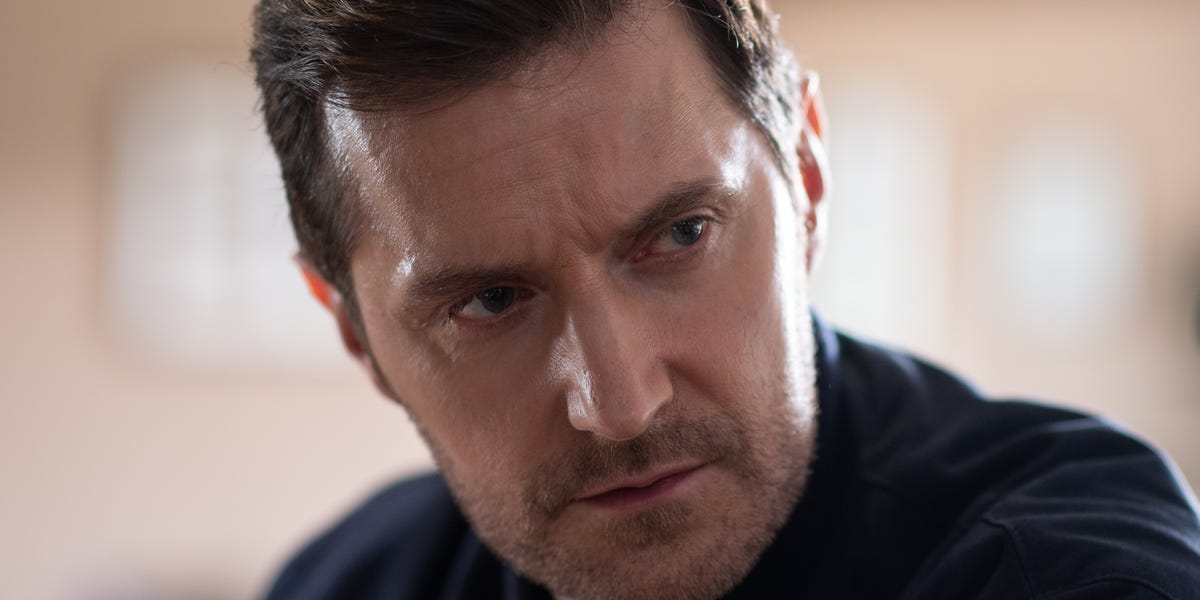
At the center of the series is Dr. Ethan Winter, a forensic pathologist who is not your standard lab-coat wallpaper. He is brilliant, analytical, and apparently capable of the kind of deductive reasoning that makes ordinary mortals feel like they are trying to solve murder with a grocery receipt and a hunch. But Ethan is not just solving crimes. He is also carrying around a personal wound: the unsolved murder of someone close to him. That trauma runs beneath the surface of the whole season, giving the show a serialized emotional engine rather than a simple case-of-the-week format.
Opposite him is DI Lauren Bell, a no-nonsense detective who sounds like the exact kind of person you would want in charge when chaos starts tap-dancing across a crime scene. She is meticulous, driven, and refreshingly unimpressed by genius for genius’s sake. In other words, she appears to be the ideal counterweight to Ethan’s brilliance and instability. This is where Winter gets interesting fast: not just in who did it, but in how these two very different professionals collide, collaborate, and probably grind each other’s nerves into fine dust.
The structure also sounds built for bingeing. Each episode reportedly delivers its own self-contained crime story, while the larger mystery of Ethan’s personal loss threads through the season. That gives Winter the best of both worlds. Casual viewers can enjoy the weekly puzzle. Obsessive viewers can start connecting emotional breadcrumbs by episode two and pretend they are not checking theories at 1:13 a.m.
Why the “Harlan Coben meets The Split” comparison works
The Harlan Coben side: paranoia, pace, and secrets with good lighting
The Harlan Coben comparison is not random clickbait wearing a trench coat. Richard Armitage has become one of the most recognizable faces in the modern Coben adaptation universe, thanks to roles in shows like The Stranger, Stay Close, Fool Me Once, and Missing You. That history matters because Armitage now arrives with built-in thriller credibility. When he shows up looking troubled, audiences do not think, “Oh, that man needs a nap.” They think, “Good grief, what dark secret is under the floorboards?”
Coben thrillers thrive on buried histories, emotional fallout, and fast-moving revelations that turn ordinary domestic life into a trapdoor. Winter seems cut from adjacent cloth. Ethan is haunted by an unresolved murder. The show promises stand-alone investigations layered over a deeper private obsession. There is pain, there is mystery, and there is every chance someone will be revealed to have been lying for a very long time in an extremely polished kitchen.
What sets Winter apart, though, is that it appears less interested in pure shock-value plotting than in using suspense as an extension of character. That could make it feel more emotionally grounded than a whiplash-heavy streaming thriller. In short, it may have Coben-style hookiness without relying on a twist every seven and a half minutes like it is trying to win a carnival prize.
The The Split side: smart drama, adult friction, and emotional bruises
The The Split half of the comparison lands because of Annabel Scholey. For a lot of viewers, Scholey is forever linked to that slick, emotionally charged legal drama about love, marriage, betrayal, and the quiet collapse of people who still own excellent coats. Her presence in Winter signals something important: this is unlikely to be a dry procedural where the leads only discuss evidence, rainfall patterns, and whether someone had time to poison a millionaire before lunch.
Scholey brings bite, poise, and emotional nuance. If Lauren Bell is written as sharply as she sounds, then Winter will not just live or die on murder plots. It will breathe through the friction between two adults who are highly competent, personally guarded, and probably allergic to saying what they actually feel until the worst possible moment. That is very The Split, even if the briefcases have been replaced by autopsies.
In other words, the show has the potential to be both a crime drama and a relationship drama. Not romance, exactly. More like the complicated chemistry of two people forced into close professional orbit while grief, ego, and instinct all elbow for space. That kind of tension can be more gripping than any car chase, mostly because car chases rarely involve unresolved emotional damage and immaculate verbal side-eye.
The haunting twist is not just spooky garnish
Describing Winter as having a “haunting” twist is especially apt because the haunting here seems emotional before it is narrative. Ethan is not merely an eccentric genius with a tragic backstory slapped on for decoration. His unresolved loss appears to shape how he sees victims, how he processes evidence, and how he relates to the living. That is a richer setup than the standard “difficult man solves crimes while refusing therapy” formula.
The forensic angle also matters. Crime dramas often center detectives, lawyers, or assorted brooding outsiders with trust issues. A pathologist lead offers a different point of entry. It makes the body itself part of the storytelling grammar. Death is not simply the opening incident. It is a text to be read. A clue system. A final testimony. When a show leans into that perspective, it can feel more intimate and more unsettling at the same time.
And because Winter is adapted from Balthazar, there is already a proven blueprint for balancing dark crime, eccentric intelligence, and partner chemistry. The question is not whether the format works. The question is whether this version can give the material a distinctly British emotional texture: sharper restraint, drier wit, and enough simmering pain to power a small village for the winter season. Pun absolutely intended.
Cast, creators, and why the production team matters
A strong crime drama usually lives or dies on tone. The premise can be excellent, but if the execution feels generic, viewers vanish faster than a suspect with a fake passport. On paper, Winter looks well protected from that fate. Richard Armitage and Annabel Scholey are an appealing central pairing because they bring different screen energies. He tends to play intensity with a restrained burn. She often excels at intelligence with an edge. Together, that creates a very promising dramatic weather pattern.
The supporting cast also adds depth, and the involvement of Eagle Eye Drama suggests a polished, internationally minded production. The series is adapted by David Allison and Mark Greig, with direction from Dries Vos and Kaat Beels. That lineup hints at a stylish, character-forward procedural rather than a bland conveyor belt of crime scenes and exposition. Even the visual promise of forensic pathology as a “different visual grammar” suggests the makers understand that a modern crime show needs more than just a corpse and a flashlight.
The Bristol setting helps too. British crime TV has long understood the value of location as mood. Cities and coastlines do not merely host the story; they become accomplices. Bristol offers grit, elegance, history, and the kind of visual contrast crime dramas love. If the show uses the city well, Winter could end up feeling textured and atmospheric instead of anonymous, which is increasingly rare in a genre crowded with interchangeable police stations.
Can Winter become ITV’s next breakout crime hit?
It certainly has the ingredients. Crime audiences want puzzle-box plotting, but they also want emotional payoff. They want characters who feel smart but not robotic, vulnerable but not exhausting, stylish but not absurdly moisturized for murder investigations. Winter appears to understand that balance. Its self-contained stories can pull in procedural fans, while the season-long grief thread should give serial-drama devotees something meatier to chew on.
The timing works in its favor too. Viewers are hungry for crime shows that do not just imitate Scandinavian gloom, Netflix velocity, or cozy mystery comfort. Winter seems to be aiming for a middle lane: emotionally intelligent, narratively tense, and sleek enough to feel premium without becoming so self-serious that the audience needs a nap after episode one.
The real test will be chemistry. If Armitage and Scholey spark the way the setup suggests they might, Winter could become one of those shows people recommend with slightly unhinged enthusiasm: “You need to watch this immediately, and no, I will not explain the twist because I value your happiness.” If the relationship dynamic clicks, the crimes will have a stronger heartbeat. If the crimes click too, ITV may have found a drama that satisfies both mystery addicts and character-driven drama fans in one neat, slightly haunted package.
The viewer experience: what watching Winter is likely to feel like
There is a particular pleasure in settling into a crime drama that knows exactly what kind of evening companion it wants to be. Winter looks poised to become that kind of series: the one you start casually after dinner and then realize, three episodes later, that you have not checked your phone, folded your laundry, or remembered your own name. The experience promised here is not just suspense. It is immersion.
For fans of twisty thrillers, the pleasure will likely come from the constant low hum of suspicion. Every conversation should feel like it contains a trapdoor. Every glance might mean too much. Every tragic detail could be either a clue or a very elegant distraction. That is catnip for viewers who enjoy trying to solve the mystery before the characters do, only to discover they have been confidently wrong in the most entertaining way possible. Crime drama, at its best, lets the audience feel clever and humbled in the same breath. That is a rare talent. It is also wildly addictive.
For fans of character drama, the experience is different but just as potent. The appeal is not simply in asking who committed a crime. It is in asking what grief does to a person over time. How much damage can intelligence hide? What happens when competence becomes armor? How long can two people work side by side before professional respect mutates into emotional dependence, irritation, admiration, or some chaotic cocktail of all three? That is where Winter has the chance to be more than efficient genre television. It can become emotionally sticky. The kind of show that lingers after the credits because the people feel unfinished in the best possible way.
There is also something uniquely satisfying about a procedural anchored by a forensic pathologist. Detectives interview. Lawyers argue. Pathologists interpret silence. That gives the viewing experience a quieter, more intimate kind of tension. Instead of just chasing suspects, the show can pause and let evidence speak. That may sound clinical, but in practice it can be deeply human. Bodies tell stories. Injuries tell stories. Absence tells stories. A show built around reading those stories can feel haunting without ever becoming melodramatic.
Then there is the emotional weather. Some crime dramas hit you like a thunderstorm. Others settle like fog. Winter looks more like fog: creeping, elegant, disorienting, and somehow all the more effective because it does not need to scream. The haunting quality here seems likely to emerge from atmosphere as much as plot. Viewers may not remember every clue in detail, but they will remember the feeling of the show: cool, tense, sorrowful, and quietly dangerous.
And finally, there is the joy of watching two actors with very different energies test each other scene after scene. That is often the secret sauce in crime television. You come for the murders, and you stay because the lead partnership becomes its own unsolved case. Will they trust each other? Will they clash? Will they reveal too much? Will they say one dry sentence that somehow carries the emotional weight of an entire monologue? If Winter gets that rhythm right, watching it will feel less like consuming content and more like being invited into an elegantly tense argument that happens to include homicide.
In practical terms, the viewing experience may be simple: tea goes cold, lights stay low, and “just one more episode” becomes a legally questionable phrase. In emotional terms, though, Winter could offer something richer. It could give audiences the double thrill of mystery and meaning. A show that grips the brain while quietly bruising the heart tends to last in memory. That is the sweet spot. Or, since this is Winter, let’s call it the cold spot.
Final thoughts
Winter has not even aired yet, and it already sounds like a carefully engineered hit for viewers who like their crime dramas stylish, emotional, and just unstable enough to keep everyone honest. The Harlan Coben comparison sells the twisty danger. The The Split comparison sells the human complexity. Together, they suggest a series that could be as interested in emotional fallout as forensic evidence.
If ITV delivers on that promise, Winter will not just be another procedural in a crowded field. It will be the kind of crime drama that understands why audiences keep coming back to this genre in the first place: not only to solve a mystery, but to watch smart, wounded people search for order in the aftermath of chaos. Throw in Richard Armitage, Annabel Scholey, a season-long haunting secret, and a format already proven by Balthazar, and this series starts to look less like a maybe and more like a must-watch.
Note: This article is intentionally formatted as clean web-ready HTML body content and removes unnecessary citation-placeholder clutter for publishing.