Burn marks on a stove have a special talent: they show up right before guests arrive, during a busy week, or immediately after you proudly cooked “just one quick meal.” The good news? Most burn marks can be removed. The less-fun news? Some “burn marks” are actually baked-on residue, mineral deposits, or permanent etchingand each one needs a different fix.
In this guide, you’ll learn how to remove a burn mark from a stove safely, without turning a small mess into a scratched, cloudy, warranty-questionable disaster. We’ll cover glass and ceramic cooktops, stainless steel and enamel surfaces, gas grates, and electric coil topsplus what not to use (because steel wool and optimism are not the same thing).
Before You Start: Identify the Type of “Burn Mark”
The phrase burn mark on a stove can mean several things, and the best cleaning method depends on what you’re actually dealing with:
- Baked-on food residue: Usually brown/black, slightly raised, and can be scraped or softened.
- Grease scorch: A dark film that smears slightly when wet and may need degreasing + gentle abrasion.
- Mineral or metal marks: White/cloudy rings or gray streaks (common on glass cooktops).
- Etching/pitting: Permanent surface damage, often from sugary spills or melted plastic on hot glass.
- Heat discoloration on metal: Rainbow, bronze, or brown tint on stainless steel from high heat.
If the surface is cracked, chipped, or pitted, cleaning may not solve it. You can often improve the appearance, but true damage may be permanent.
Safety First (Seriously)
Basic Safety Checklist
- Turn all burners off and let the stove cool (unless cleaning a hot sugary spill on glasssee special note below).
- Read your owner’s manual for approved cleaners and tools.
- Use gloves if working with cleaners or hot water.
- Never mix bleach and ammonia. Ever.
- Test new cleaners on a small area first, especially on enamel or painted surfaces.
Important exception for glass cooktops: Sugary spills (like syrup, candy, jam, caramel, or melted chocolate) and melted plastic can permanently damage/pit glass cooktops if left to harden. Those should be removed carefully while still hot using the proper scraper and heat protection. If that sounds terrifying, it kind of isso move slowly and use an oven mitt.
Tools and Supplies You’ll Actually Need
You do not need a chemistry lab. Most stubborn stove burn marks can be handled with a few reliable tools:
- Microfiber cloths or soft towels
- Non-abrasive scrubbing pad or sponge
- Cooktop cleaner (for glass/ceramic surfaces)
- Dish soap
- White vinegar
- Baking soda
- Single-edge cooktop scraper / razor scraper (for glass cooktops only, used correctly)
- Soft-bristle brush or toothbrush (for burner crevices)
- Warm water
What Not to Use on Glass/Ceramic Cooktops
- Steel wool
- Abrasive powders or harsh scouring pads
- Bleach
- Rust remover
- Ammonia (unless your manual specifically allows itmany do not)
- Rough sponges or scrubbers that can scratch
How to Remove a Burn Mark from a Glass or Ceramic Stove Top
This is the most common scenario. Glass and ceramic cooktops look sleek, but they can trap burnt-on residue in a way that makes you question your life choices. The trick is to soften, scrape gently, and polishwithout scratching.
Method 1: For Light to Moderate Burn Marks (Residue, Grease, Film)
- Let the cooktop cool completely (or until just warm, if your manufacturer allows scraping while warm). A cool surface is safer and reduces streaking and product bake-on.
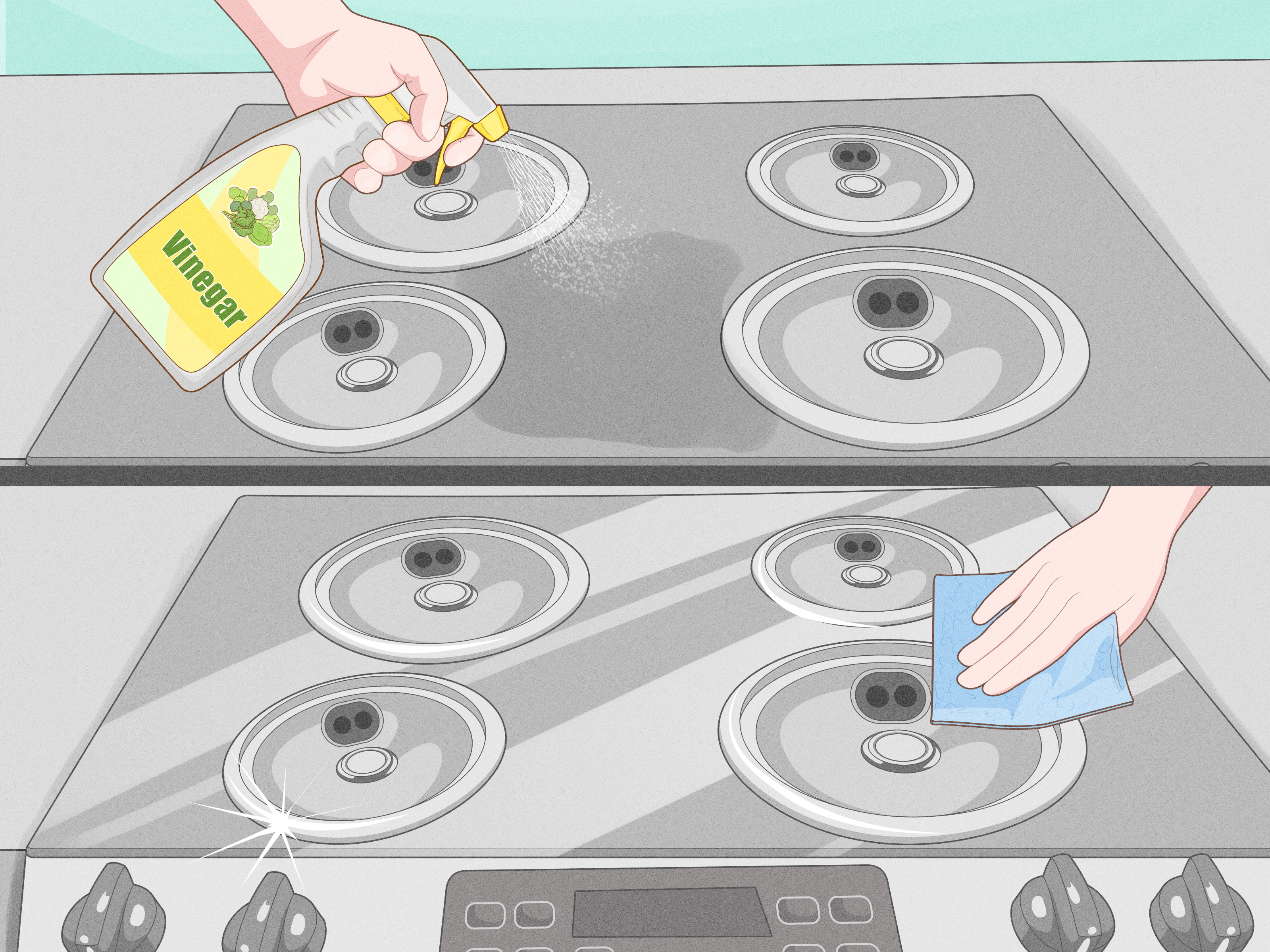
- Apply a cooktop cleaner or a baking soda/vinegar combo. Use a glass/ceramic cooktop cleaner for best results. If you’re going the pantry route, sprinkle baking soda and mist vinegar.
- Use a hot, damp towel compress. Lay a hot (not dripping) towel over the stained area for 10–15 minutes. This helps soften cooked-on residue.
- Wipe with a non-abrasive pad. Work in gentle circular motions. Add a little more cleaner if needed.
- Rinse and buff dry. This matters more than people think. Cleaner residue can bake onto the surface later and create fresh haze or marks.
Pro tip: If the “burn mark” fades but doesn’t disappear, it may be a mineral or metal mark instead of burnt food. Try a little white vinegar and a soft cloth before escalating to scraping.
Method 2: For Heavy Burned-On Residue (The “What Happened Here?” Stage)
- Soak the area first. Apply approved cleaner and let it sit for several minutes (sometimes 10–20 minutes helps).
- Use a cooktop scraper at a low angle. Hold it around a 30–45° angle and scrape slowly and carefully. Keep the blade flat-ish, not upright. A steep angle increases the risk of scratching or cracking.
- Use a fresh blade. A nicked, dull, or damaged blade can scratch the surface.
- Repeat in layers. Scrape a little, wipe, reapply cleaner, and repeat. Think “peel and polish,” not “attack and regret.”
- Finish with cooktop cleaner and buff dry. This restores shine and helps remove haze.
Method 3: Burn Mark from Sugar, Syrup, Candy, or Melted Plastic (Urgent Care for Cooktops)
If the spill is sugary or plastic-based, treat it differently. These can bond to hot glass and cause pitting or permanent damage.
- Turn off the burner immediately.
- Remove the pan and protect your hand with an oven mitt.
- Use the scraper to move the spill to a cooler area of the cooktop.
- Wipe up what you can with paper towels.
- Let the remaining residue cool, then clean normally with cooktop cleaner.
If pitting has already happened (tiny craters, rough spots, indentations), that’s typically permanent. Cleaning can improve residue, but it won’t “heal” the glass.
How to Remove Burn Marks from Stainless Steel Stove Surfaces
Burn marks on stainless steel stove tops (common around burners or on trim) are often heat discoloration, grease scorch, or cleaner residue that baked on. Start gentle, because stainless scratches faster than people admit on the internet.
Steps for Stainless Steel
- Cool the surface completely.
- Wash with warm water + dish soap. Use a soft microfiber cloth.
- Apply a baking soda paste (baking soda + a little water) to the mark for 10–15 minutes.
- Wipe with the grain of the stainless steel, not against it.
- Rinse and dry immediately to avoid water spots.
- Use a stainless-safe cleaner/polish if discoloration remains.
What to Avoid on Stainless
- Steel wool (it can leave rust-prone metal particles)
- Chlorine bleach
- Harsh abrasives
- Scraping with blades unless your manufacturer specifically allows it
If the mark is actually heat tint (gold/blue/brown discoloration), it may improve with a stainless-safe cleaner but not fully disappear. That’s cosmetic, not usually functional damage.
How to Remove Burn Marks from Enamel Stove Tops
Enamel can chip if treated too aggressively, so no “I saw a hack on social media” experiments here.
Gentle Enamel Cleaning Method
- Cool the stove and remove loose crumbs.
- Apply warm, soapy water with a sponge and let it sit for a few minutes.
- Use baking soda paste on stubborn burn marks. Let sit 10–20 minutes.
- Wipe gently with a soft sponge or cloth.
- Use vinegar to cut greasy film if needed, then rinse and dry.
Do Not Use on Enamel
- Metal scrapers
- Abrasive powders
- Very aggressive scouring pads
- Anything that can chip the coating
How to Remove Burn Marks from Gas Stove Grates and Burner Caps
Sometimes the “burn mark on the stove” is actually on the grates, burner caps, or around the burner wells. These parts can usually be cleaned more aggressively than a glass topbut only if your manual says it’s okay.
For Grates and Burner Caps
- Let everything cool completely.
- Remove grates and caps.
- Soak in warm, soapy water to loosen grease and burnt-on residue.
- Scrub gently with a sponge or soft brush (use a nonabrasive brush for burner slots).
- Rinse and dry fully before reinstalling.
For very stubborn buildup, some homeowners use a sealed-bag ammonia-fume method on removable grates/burners. If you try that, use excellent ventilation, never mix chemicals, and follow your appliance manufacturer’s guidance. In many cases, a long soak, dish soap, and patience are safer and good enough.
Common Mistakes That Make Burn Marks Worse
1) Scrubbing Too Hard, Too Soon
Burn marks look personal, but they are not. If you go in with a rough pad and anger, you can scratch the surface and create a bigger problem than the stain.
2) Using the Wrong Cleaner
Some general kitchen cleaners, abrasive products, and rough sponges can damage glass cooktops. Specialty cooktop cleaners exist for a reason.
3) Leaving Cleaner Residue Behind
If you don’t fully remove cleaner and buff dry, leftover product can bake on the next time you cookbasically creating a brand-new mystery mark.
4) Waiting Too Long
Fresh spills are dramatically easier to clean than carbonized “kitchen fossils.” A quick wipe after cooking saves a deep-clean later.
5) Assuming Every Mark Is Removable
Some marks are permanent etching, pitting, or discoloration. Cleaning can improve appearance, but if the glass is indented, chipped, or cracked, it may need service or replacement.
How to Prevent Burn Marks on a Stove
- Wipe spills after each use (once safe/cool).
- Use clean, dry cookware bottomswet or dirty pans can leave deposits.
- Don’t slide rough-bottom pots across glass cooktops.
- Keep a cooktop scraper and microfiber cloth nearby for quick cleanup.
- Use approved cleaners for your stove type.
- Treat sugary spills and melted plastic as urgent cleanup jobs on glass tops.
When to Call a Pro (or Stop Scrubbing)
It’s time to stop DIY cleaning and consider service if:
- The glass cooktop is cracked, chipped, or visibly pitted.
- Melted plastic appears bonded into the glass surface.
- Touch controls stop responding after residue buildup or heat damage.
- Burner flames look uneven after cleaning (possible burner head blockage or improper reassembly).
- You’re unsure which products are safe for your exact model.
Conclusion
Removing a burn mark from a stove is usually less about brute force and more about the right method for the right surface. For glass and ceramic cooktops, that means softening residue, using a nonabrasive cleaner, and scraping at a low angle with care. For enamel and stainless steel, gentle cleaning and the right products go a long way. For gas grates and burner caps, soaking and patient scrubbing usually win.
The biggest secret? Clean sooner than later. Burn marks become “legendary” when spills sit, harden, and bake on over multiple meals. A two-minute wipe-down today saves a 45-minute cleanup session tomorrowand protects your stove from scratches, pits, and permanent damage.
Experiences and Lessons Learned: Real-World Burn Mark Cleanup Stories (Extra)
Experience #1: The Tomato Sauce Ring That Looked Permanent
A common situation is a pot of pasta sauce bubbling over on a glass cooktop during a busy dinner. The spill gets wiped later, but not all the way, and after another cooking session, it turns into a dark ring that looks like a permanent burn mark. What usually works best here is not aggressive scrubbing firstit’s a reset. Apply cooktop cleaner (or baking soda + vinegar), place a hot damp towel over the area, wait 10–15 minutes, then wipe and inspect. In many cases, the “burn mark” is layered residue, not damage. A careful pass with a scraper at a low angle removes what the towel softened, and a final buff makes the surface look dramatically better. The lesson: if a stain looks impossible, it may just be a stacked mess.
Experience #2: The Mystery White Burn Mark That Wasn’t Burnt Food at All
Another frequent complaint is a cloudy white ring on an induction or glass-top stove after boiling pasta or soup. Many people assume it’s a heat scar and start scrubbing with the wrong tools. But often, it’s mineral residue from water or a pan boiling over. A gentle vinegar wipe can improve it quickly, and a cooktop cleaner can polish away the haze. In some homes with hard water, these marks come back unless cookware bottoms are dried and spills are cleaned quickly. The lesson: not every mark needs “heavy-duty” treatment. Identifying the stain correctly can save the surface from unnecessary scratching.
Experience #3: The Caramel Disaster (a.k.a. The Five-Minute Window)
Sugar spills teach fast, expensive lessons. Picture melted caramel dripping onto a hot glass cooktop during holiday baking. If it’s left to cool, it can harden and bond to the surface. People often try to chip it off later and end up damaging the cooktop. The better approach is immediate, cautious action: turn off the burner, remove the pan, wear an oven mitt, and use the scraper to move the sugary spill to a cooler area before wiping what you safely can. After it cools, clean the rest normally. The lesson: sugar and melted candy are not “clean it later” messes.
Experience #4: Gas Grates That Looked Ruined but Weren’t
Burn marks on gas stove grates often look worse than they are because grease and carbon build up unevenly. One practical approach is a long soak in warm, soapy water, followed by gentle scrubbing and a second soak if needed. Rushing the process usually means harder scrubbing, and harder scrubbing can scratch coated grates. People are often surprised by how much comes off after soaking alone. The lesson: time is sometimes the best cleaning tool.
Experience #5: The “I Cleaned It… and It Still Looks Dirty” Problem
This one happens when the stain is gone, but the stove still has streaks, haze, or rainbow-like patches. The culprit is often cleaner residue or wiping with a dirty cloth. A final rinse/wipe with a clean damp cloth and a dry microfiber buff can completely change the result. It sounds minor, but finishing steps matter. The lesson: cleaning is a three-part jobremove residue, rinse, and buff dry.