Note: This article is based on real preservation guidance and rewritten in original language for web publication.
Books are patient little roommates. They do not eat your leftovers, they do not steal your charger, and they rarely complain. But they do have standards. Leave them in a damp basement, roast them in an attic, or park them in full sun like they are on a beach vacation, and they will absolutely fall apart in slow motion. If you want your books to stay clean, straight, readable, and pleasantly un-crunchy, proper storage matters more than most people think.
Whether you are protecting a beloved paperback collection, a wall of hardcovers, family heirlooms, or a few rare books you guard like tiny paper dragons, the rules are surprisingly practical. Keep books cool, dry, clean, supported, and away from wild environmental mood swings. That is the big picture. The rest is just smart housekeeping, gentle handling, and resisting the urge to “fix” a damaged binding with tape like a chaotic raccoon with office supplies.
Why Book Storage Matters More Than People Realize
Books are made from materials that react to their surroundings. Paper absorbs and releases moisture. Cloth and leather age. Adhesives weaken. Dust settles into edges. Sunlight fades covers and speeds deterioration. Excess humidity invites mold and pests. Very dry air can make paper and bindings brittle. And quick changes in temperature or moisture are especially rude, because they force materials to expand and contract over and over again.
That means bad storage does not always create instant disaster. More often, it causes quiet damage that sneaks up on you: yellowing pages, warped boards, detached covers, foxing, mildew smells, brittle paper, and that sad moment when a book feels less like a book and more like a pastry with trust issues.
The Ideal Place to Store Books
Choose a Cool, Dry, Stable Room
If you remember one rule, make it this one: books like stability. A normal living space is usually far safer than an attic, garage, shed, or basement. The best home environment is one with moderate temperature, reasonable humidity, and very little fluctuation. In plain English, store your books where you would personally feel comfortable for long stretches of time without sweating, shivering, or developing suspicious wall fungus.
Spare bedrooms, offices, hall libraries, and interior rooms are usually better than storage rooms with poor airflow. Stability matters more than chasing some fantasy museum number with a thermostat that lives for drama. If a room swings from hot and dry in the afternoon to damp and chilly at night, your books are doing weather survival training they never signed up for.
Avoid These Trouble Spots
Some locations are practically designed to ruin books. Skip them whenever possible:
- Basements: often damp, prone to leaks, mold, and pests.
- Attics: famous for extreme heat, dryness, and wild seasonal changes.
- Garages: vulnerable to heat, humidity, dust, insects, and water intrusion.
- Rooms with direct sun: especially shelves beside bright windows.
- Areas near vents, radiators, fireplaces, or heaters: localized heat dries and stresses materials.
- Spots under plumbing or near exterior leaks: because gravity and water both enjoy ruining paper.
Interior walls are often a better choice than exterior walls because they usually experience fewer temperature and humidity shifts. That simple placement decision can make a real difference over time.
How Light Damages Books
Light is not just a cosmetic problem. Yes, sunlight fades dust jackets and bleaches colorful spines until your once-vibrant shelf turns into fifty shades of regret. But light also weakens materials over time. Both ultraviolet light and visible light contribute to damage, especially with long exposure.
If you display books in open shelving, keep them out of direct sunlight. Use curtains, blinds, or UV-filtering film if needed. In brighter rooms, rotate rare or sentimental books off display and into protective boxes. Think of it this way: books can tolerate a little light, but they should not live like sunbathing lizards.
The Right Way to Shelve Books
Store Most Books Upright
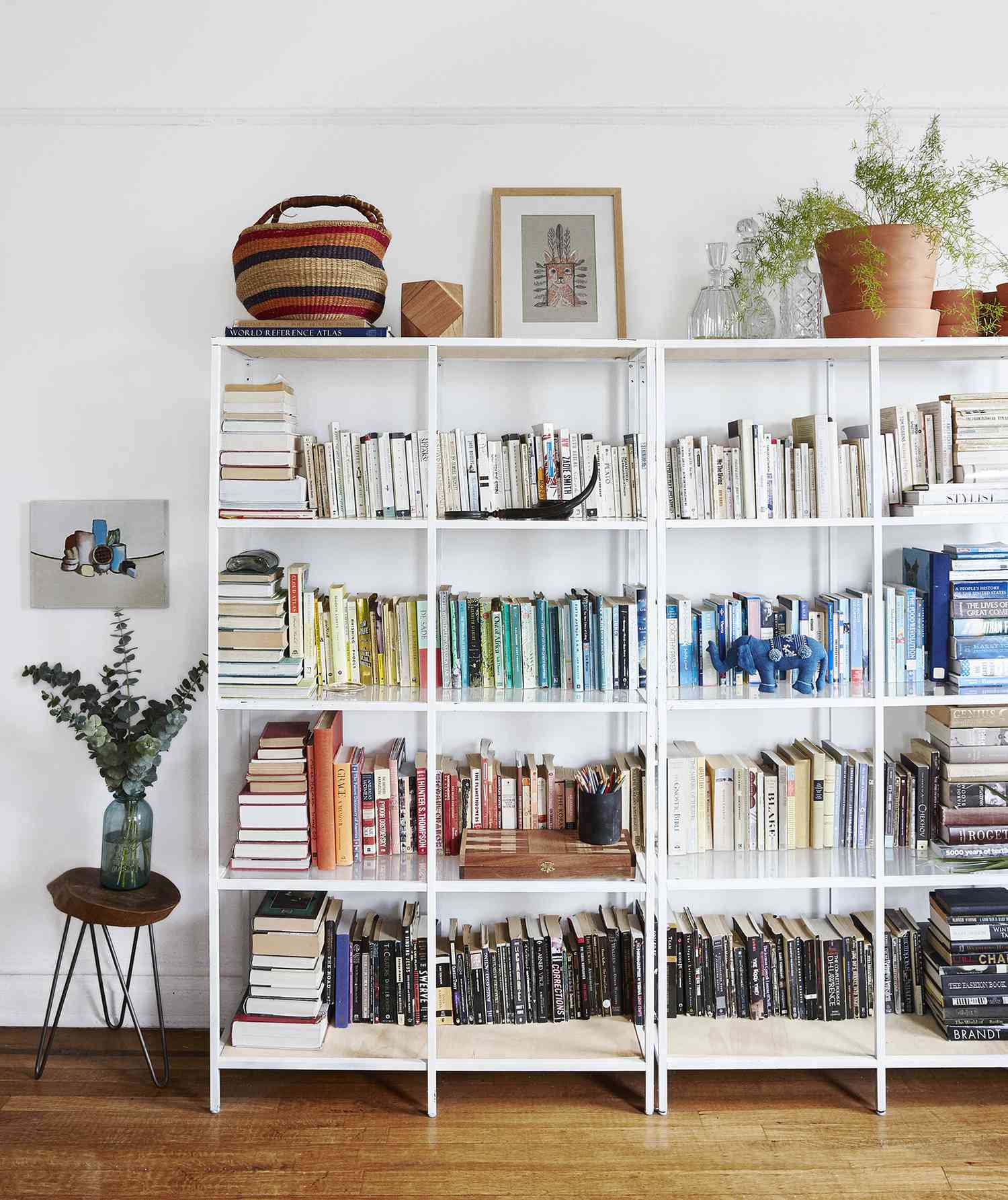
For standard small- to medium-sized books, upright shelving is usually best. Books should stand straight, not lean like exhausted commuters on a late train. Use sturdy, smooth bookends if a shelf is not full. Leaning causes distortion over time, especially in hardcovers and taller paperbacks.
Try to shelve books of similar size together so they support one another. When a tiny paperback gets wedged beside a giant hardcover, the smaller book cannot provide meaningful support, and the larger one may warp or slump. Your shelf should look organized, not like a group project where one person is doing all the work.
Store Oversized and Heavy Books Flat
Large, heavy books such as atlases, art books, and oversized reference volumes should usually be stored flat. If they stand upright, their weight can pull against the binding and text block over time. Flat storage gives them better overall support.
Do not stack these books into a skyscraper of bad decisions. A short stack is better than a towering pile. Keep it manageable so removing one book does not turn into a game of hardcover Jenga.
Never Store Books Spine-Up
If a book is too tall for the shelf, do not wedge it in with the spine facing upward. That can cause the text block to pull away from the binding under its own weight. In home storage, the safer move is simple: rearrange the shelf or store the book flat.
How Tight Is Too Tight?
Books should not be packed so tightly that you have to yank them loose with the determination of a medieval sword-puller. Tight shelving damages covers, joints, and page edges. But books also should not be so loose that they slump and deform.
A good shelf lets you remove a book without wrestling the entire row. There should be enough support to keep books upright and enough breathing room to remove them gently. It is a balance, not a compression test.
Dust, Dirt, and Airflow: The Boring Heroes of Book Preservation
Dust seems harmless until you realize it attracts moisture, holds pollutants, and settles into the tops and edges of books like gritty confetti. Regular light cleaning helps prevent long-term grime buildup and makes shelves less appealing to pests.
Here is the safe approach:
- Dust shelves and books regularly with a soft, dry cloth or microfiber cloth.
- Keep books closed while dusting the covers and edges.
- If you vacuum, use a soft brush attachment gently.
- Keep shelves and surrounding floors clean.
- Do not store books directly on the floor.
Good airflow matters too. Books do not need a wind tunnel, but they should not be trapped in stagnant, damp pockets of air. Leave a little space between shelving and problem walls if the room is prone to moisture. Closed cabinets can work, especially for protection from dust and light, but they should not become stuffy little weather systems.
Protective Boxes and Enclosures: When Books Need Extra Help
Some books deserve more than a regular shelf. Damaged books, rare books, sentimental family volumes, leather bindings, oddly shaped books, and fragile editions often benefit from archival enclosures. A good preservation-quality box protects against light, dust, abrasion, and rough handling while adding structural support.
If you are storing valuable books long term, archival boxes are often one of the smartest investments you can make. They are especially useful for books with detached covers, weak joints, or decorative bindings that you do not want rubbing against neighboring volumes.
Use quality materials. Acid-free, lignin-free enclosures are the safe choice. Avoid flimsy bargain-bin containers that smell strongly chemical or shed mystery particles. If a storage supply looks like it was manufactured in a cave by goblins, keep shopping.
How to Handle Books Without Slowly Destroying Them
Storage and handling are a team sport. You can create the perfect shelf, then undo the good work by grabbing books by the top of the spine every day. That common habit damages the headcap and weakens the binding.
Instead, remove a book by pushing the neighboring books back slightly and grasping the book at the middle of the spine or by gently tipping it out. Support large books with both hands. When reading, use a bookmark instead of folding corners. Avoid paper clips, thick objects, and random receipts stuffed between pages like literary fossils.
And when a book is damaged, skip the tape. Pressure-sensitive tape, white glue, rubber cement, and homebrew repair experiments often cause more harm over time. Leather dressings and oils are also not the miracle cure people imagine. If a book is valuable or sentimental, consult a professional conservator instead of launching a DIY rescue mission with school supplies.
Protecting Books From Water, Mold, and Pests
Water Is the Fastest Villain
Even beautiful shelves become a tragedy if they sit below a leaky pipe or next to a window that loves to drip during storms. Keep books away from plumbing risks, roof leaks, damp floors, and flood-prone zones. If you must store books in boxes, place them on shelves or pallets rather than directly on the floor.
Water damage is not only about soaking. Chronic dampness is enough to invite mold and insects. If a room smells musty, that is your clue that your books probably do not want to live there either.
Pests Love Neglect
Silverfish, cockroaches, rodents, and other pests are not passionate readers. They are just very committed to ruining your library anyway. Keep food and drinks away from storage areas. Vacuum regularly. Check dark corners and shelf backs. Inspect books if you bring them in from flea markets, yard sales, or inherited collections.
A clean room with good airflow and stable humidity is much less attractive to mold and pests than a cluttered, damp area. Book preservation is not glamorous, but it does occasionally require thinking like a very organized enemy of mildew.
Long-Term Storage Tips for Collectors and Home Libraries
If you are storing books for months or years, be more intentional. First, decide which books are everyday reading copies and which ones are sentimental, collectible, or hard to replace. The valuable group should get the best location, best shelving, and extra protection.
For long-term storage:
- Prioritize stable indoor rooms over utility spaces.
- Use archival boxes for fragile or valuable books.
- Keep an eye on humidity with a simple hygrometer.
- Inspect shelves a few times a year for dust, insects, or moisture.
- Rearrange overcrowded shelves before books become distorted.
- Do not trap books in sealed plastic without understanding the moisture risk.
Collectors also make a smart habit of checking vulnerable books seasonally. If a shelf suddenly smells odd, a board starts to warp, or a dust jacket fades unevenly, that is not your imagination. It is the early-warning system doing its job.
Common Mistakes That Ruin Books
Most book damage does not come from dramatic disasters. It comes from ordinary habits repeated for years. Watch out for these common mistakes:
- Storing books in attics, basements, or garages.
- Displaying books in direct sunlight.
- Overpacking shelves or letting books lean for long periods.
- Stacking heavy books carelessly.
- Pulling books from the shelf by the top of the spine.
- Using tape, glue, or leather dressing for repairs.
- Letting dust, food crumbs, and clutter build up around shelves.
- Ignoring signs of mustiness, insect activity, or water exposure.
The good news is that nearly all of these mistakes are preventable. Book care is less about perfection and more about not making the same bad decision in the exact same spot for ten years.
Real-World Experiences: What People Learn the Hard Way About Storing Books
Ask anyone who has kept books for a long time, and they usually have at least one cautionary tale. It might be the childhood novels stored in cardboard boxes in a basement, only to emerge years later smelling like old socks and thunderstorms. It might be the gorgeous set of hardcovers displayed beside a sunny window until the spines faded so badly they looked like they had served a tour on the surface of Mercury. Sometimes the damage is subtle at first. A shelf starts to lean. A favorite cookbook no longer closes neatly. A family Bible develops wavy pages after one season in a room with poor climate control. Then one day the owner realizes the problem was not age alone. It was storage.
One of the most common experiences is discovering that “out of the way” is not the same as “safe.” People often move books to attics, garages, and basements because those spaces feel practical. There is room, there are boxes, and nobody trips over anything. A year later, the books come back warped, dusty, insect-nibbled, or carrying a musty odor powerful enough to start its own zip code. The lesson is brutal but useful: convenience for humans is not always preservation for books.
Another frequent experience comes from overstuffed shelves. At first, a tightly packed bookcase feels satisfying, like winning at organization. Then removing one novel becomes a strength exercise. Covers scrape. Dust jackets tear. The top of the spine gets tugged a little too often. Eventually, books that looked fine from across the room start splitting at the joints. People are often shocked to learn that a shelf can be too full and too empty at the same time. Too full causes abrasion and rough removal. Too empty allows leaning and distortion. Books, apparently, are fans of boundaries and emotional support.
Large art books and atlases teach their own lesson. Many people store them upright because that is how books are “supposed” to live. Then gravity begins its slow and patient sabotage. Bindings strain, text blocks sag, and the whole book becomes awkward to handle. Once people switch to flat storage for oversized volumes, the difference is obvious. The books sit more naturally, feel more stable, and stop acting like they are one bad lift away from a structural complaint.
There is also the universal moment of regret involving DIY repair. Nearly every lifelong reader has either used tape on a torn page or seriously considered it. It feels practical in the moment. Years later, the tape yellows, stiffens, leaves residue, and becomes the villain of the story. The same goes for stuffing receipts into books, folding page corners, or using random objects as bookmarks. Those little habits seem harmless until the accumulated wear begins to show.
The most useful experience, though, is the realization that good book storage does not require a museum budget. People get better results simply by moving shelves away from windows, choosing a stable room, cleaning more regularly, and handling books with a little patience. In other words, books do not demand luxury. They just want you to stop storing them like camping gear.
Final Thoughts
If you want to store books without ruining them, think less about decoration and more about environment. A safe room, low light, proper shelf support, regular dusting, and gentle handling will protect most personal libraries remarkably well. Add archival boxes for fragile or valuable books, and you are already far ahead of the average household shelf strategy.
Books are sturdy enough for normal life, but they are not indestructible. Treat them like the long-term companions they are. Give them a stable home, keep them out of danger, and resist impulsive repair techniques worthy of a late-night craft disaster. Do that, and your library will age with character instead of chaos.