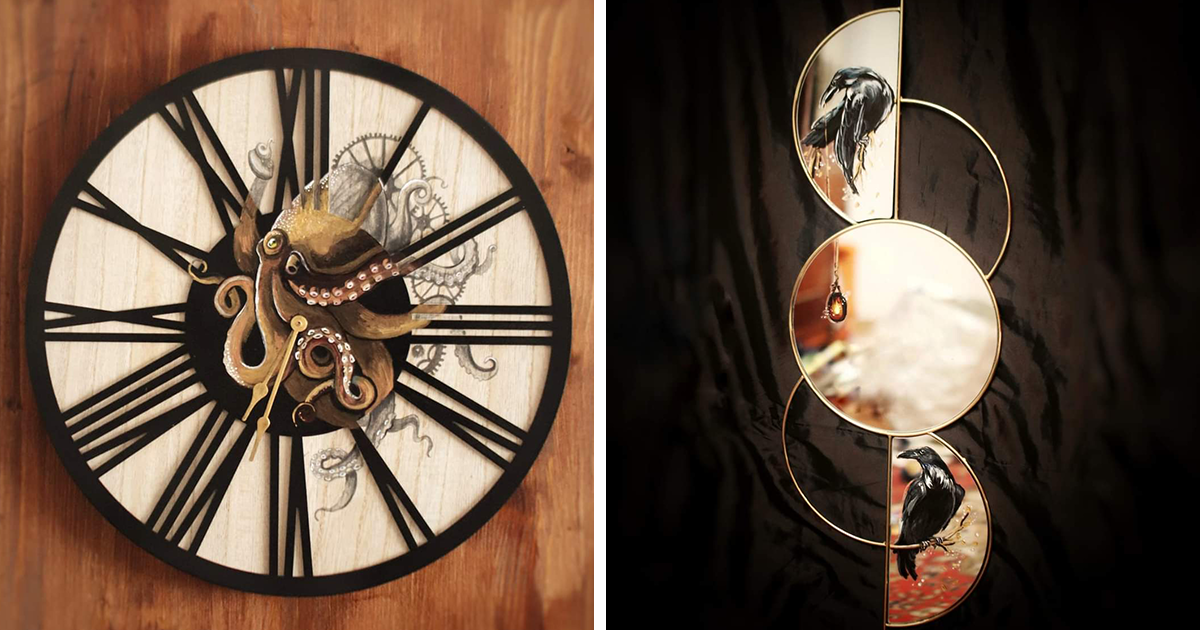
I used to think “functional art” meant a chair that looks like it’s judging you.
Then I started painting the stuff already sitting around my housethings like a beat-up stool, a boring trash can,
and the mug that’s somehow always in the sinkand suddenly my home felt less “big-box beige” and more “tiny museum,
but you can also put snacks on it.”
Here’s the deal: everyday objects are already designed to be held, touched, bumped, washed, and occasionally dropped in slow motion.
When you paint them with intention (and seal them like you mean it), they become usable artworkspieces that do their job
and make you grin like you’ve gotten away with something. Which, honestly, you have.
Why Painted Objects Hit Different
Wall art is great, but it mostly just… hangs out. Painted objects have to perform.
A hand-painted side table has to survive keys, coffee, elbows, and the existential dread of hosting.
A painted planter has to deal with water, sun, and that one friend who “just wants to check the soil” with a fork.
That’s what makes this genre so satisfying: you’re blending design, craft, and practicality.
You’re also giving old things a second life, which is a fancy way of saying you’re saving money and rescuing perfectly good stuff
from the sad corner of a thrift store shelf.
The Golden Rules of Turning “Random Object” Into “Gallery-Worthy”
1) Prep like you’re auditioning for a home makeover show
Paint is picky. It wants a clean, slightly rough surface to cling to, like a cat choosing a lap.
Wash off grime and oils, scuff-sand glossy finishes, and wipe away dust. Most peeling disasters start with “I skipped prep because I was excited.”
(Relatable. Still illegal in the paint universe.)
2) Pick the right paint for the object’s real life
- High-touch items (handles, stools, trays): durable acrylic enamel or furniture paint.
- Metal: a metal-friendly primer first; then paint; then a protective topcoat.
- Plastic: bonding primer or paint formulated for plastic is your best friend.
- Ceramic/glass: choose specialty paints and expect extra curing time.
- Outdoor pieces: use exterior-rated products and seal like weather exists (because it does).
3) Seal it for the lifestyle it’s about to endure
If the object will be cleaned, handled, or splashed, a protective topcoat matters.
Think of it as sunscreen for your paint jobexcept it also protects against “someone set a wet cup on it again.”
Food-contact note: For mugs, plates, cutting boards, or anything that touches food or mouths,
use finishes that are specifically labeled food-safe and follow curing instructions exactly.
When in doubt, keep paint on non-contact areas (like the outside of a mug) and let the functional surface stay unpainted.
20 New Pics: Painted Everyday Objects That Became Usable Artworks
Below are 20 fresh transformationseach one starts with something ordinary and ends with a piece you’ll actually use.
Consider these “photo captions with personality,” ready for you to recreate, remix, or steal shamelessly (artistically, of course).
Pic #1: The “Grocery-Store Bouquet” Vase (a pasta sauce jar)
Perfect for flowers, pens, or pretending you’re organized.
Pic #2: The Mood-Lifting Trash Can (yes, really)
The trash remains trash, but now it’s surrounded by culture.
Pic #3: The “Fancy Hotel” Tissue Box (a plain cardboard one)
Pic #4: The Thrifted Wooden Stool That Thinks It’s Italian
It’s still a stool, but now it has opinions about espresso.
Pic #5: The Retro Bread Box Revival
Seal it for wipeabilitycrumbs happen.
Pic #6: The “Not a Toy” Tool Caddy (plastic bin)
Handles get extra topcoat because hands are relentless.
Pic #7: The Statement Watering Can
Seal it so it can handle splashes and sunshine without throwing a tantrum.
Pic #8: The “Art School” Cutting Board (display-only edition)
It’s the easiest way to make your kitchen feel curated in under an hour.
Pic #9: The Coffee Tray That Solves Nothing (But Looks Great)
Topcoat for hot mugs and daily wipingfunction meets flair.
Pic #10: The “New Apartment” Light Switch Plate Glow-Up
Keep edges clean and cure fully before reinstalling.
Pic #11: The Plant Pot That Looks Hand-Thrown (but isn’t)
Seal the outside for water resistance; leave drainage functional.
Pic #12: The “Gallery Gift” Mug (outside-only paint)
It’s the kind of gift people pretend they don’t want to use because it’s “too pretty.”
Pic #13: The Boring Lamp Base That Became a Conversation Starter
Seal it so dusting won’t slowly erase your masterpiece.
Pic #14: The “I Actually Fold Laundry” Basket (metal wire)
Add painted color-dips on the rim for a designer vibe.
Pic #15: The Catchall Bowl (ceramic) With a Secret Pattern
Perfect for keys, jewelry, or the tiny screws you swear you’ll remember later.
Pic #16: The Clipboard That Makes You Look Like You Have a Plan
Seal it so it survives constant clipping.
Pic #17: The “Main Character” Phone Stand (wood scrap)
It’s the easiest way to make your workspace feel designed, not accidental.
Pic #18: The Reborn Picture Frame (thrift-store special)
Suddenly it’s not “old frame,” it’s “collected vintage piece with character.”
Pic #19: The Step Stool That’s No Longer an Eyesore
It can handle daily use without looking like it’s been through a war.
Pic #20: The “Wait, You Made That?” Storage Box
Ideal for entryway clutter, craft supplies, or hiding snacks from yourself.
How I Make Painted Objects Durable (So They Stay “Usable”)
If you want painted everyday objects to hold up, durability is a strategy, not a wish.
My approach is simple: prep, prime when needed, build thin layers, cure, then protect.
Thin coats beat thick coats because they dry more evenly and resist chipping.
My durability checklist
- Scuff-sand glossy surfaces so paint can grip.
- Use a primer matched to the material (especially metal and plastic).
- Let layers dry properly before the next coatrushing causes tackiness and fingerprints that live forever.
- Choose the right topcoat: water-based options for low odor and easy cleanup; tougher finishes for high-touch items.
- Respect curing time: “dry to the touch” is not the same as “ready for daily life.”
Design Tricks That Make It Look Intentional (Even If You Panicked Midway)
Here are a few ways to get that “yes, I planned this” energy:
- Repeat a shape (arches, dots, stripes) across multiple objects for a cohesive set.
- Pick a limited palette (two to four colors). Too many colors can look accidental, like a toddler’s cupcake frosting plan.
- Leave breathing room: negative space makes hand-painted work feel modern and clean.
- Use tape like a pro: crisp edges make any pattern look higher-end.
- Add one “tiny flex” detail: a thin outline, a surprise color inside, or a small hand-painted icon.
Extra: My Real-Life Experience Turning Ordinary Stuff Into Functional Art (About )
The first object I ever painted wasn’t glamorous. It was a cheap metal step stool that had been living in my closet like a guilty secret.
I told myself it was “fine,” but every time I saw it, it felt like my home was quietly apologizing. So I cleaned it, scuffed it, primed it,
and painted it with big, bold blocks of color that looked like a modern mural fell onto it by accident. When I finally sealed it and put it back
in the kitchen, it didn’t just disappear into the backgroundit became part of the room’s personality. That’s when it clicked: functional objects
don’t have to be invisible.
Since then, I’ve painted everything from thrift-store frames to planters to a trash can (which, yes, is still emotionally complicated).
The biggest lesson I’ve learned is that the “art” part isn’t just the patternit’s the choices you make for how the piece will live.
A tray needs a finish that can handle hot mugs and quick wipe-downs. A planter needs protection from splashes.
A high-touch handle needs extra love because hands are basically sandpaper with opinions.
Once I started designing for use, my painted pieces stopped looking like fragile craft projects and started feeling like real decor.
I also learned that mistakes are unavoidableand weirdly helpful. One time I tried a perfectly straight stripe design on a curved watering can.
The tape fought me, the lines wobbled, and I was one deep breath away from throwing the whole thing into the sun.
But when I leaned into the wobble and added a hand-drawn outline to “own” it, the watering can suddenly looked handmade in the best way.
People complimented it like I’d planned the charm from the beginning. I did not. I simply survived it.
Another time, I painted a glass jar and forgot that “dry” isn’t the same as “cured.” I proudly used it immediately, washed it,
and watched the finish get cloudy like it was trying to ghost me. Now I build in curing time like it’s part of the design.
If I can’t wait, I work on a second object while the first one cures. That’s how a single painted jar becomes a painted jar,
a matching catchall dish, and a “how did you suddenly get taste?” moment for your whole space.
The best part is how these objects change the way you see your environment. You start noticing shapes.
You start seeing potential in the “meh” stuff. And you stop buying decor just because it’s on salebecause you realize you can make
something personal, practical, and genuinely cool with what you already have. Also, you will start saving jars.
Accept this. It’s your life now.
Conclusion
Painting everyday objects into usable artworks isn’t about perfectionit’s about turning the things you already touch every day into pieces that
feel like you. With the right prep, smart paint choices, and a finish that matches real life, you can make functional art that holds up
to actual use (and actual people). Start small, seal well, and remember: if a trash can can have a glow-up, so can anything.