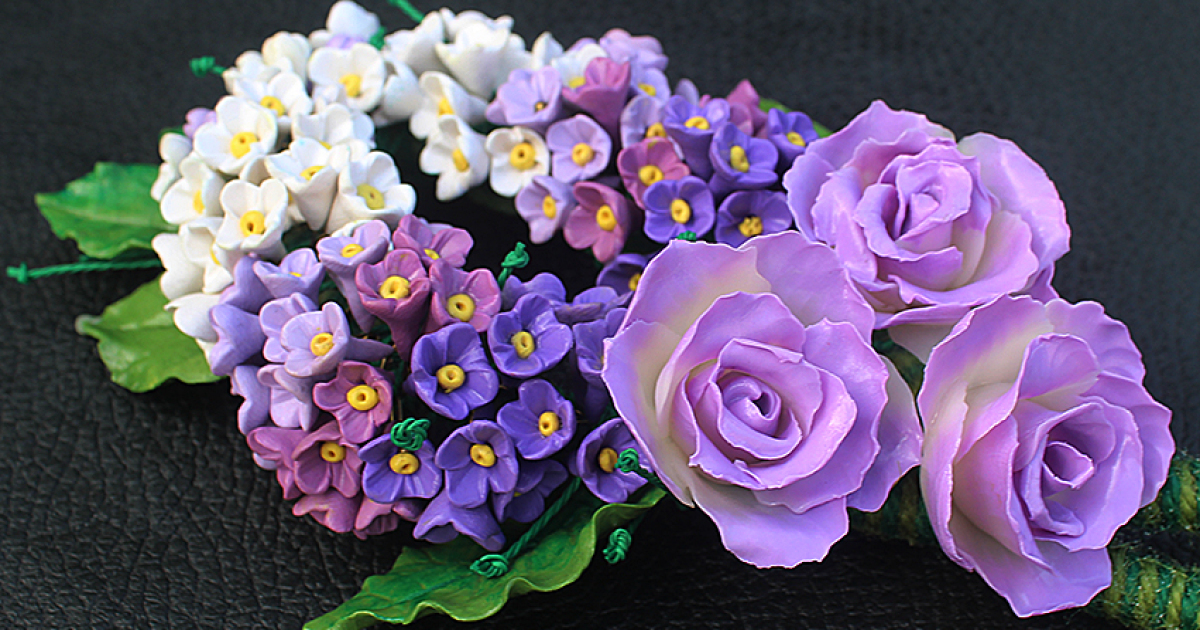
I make flowers that never wilt, never need water, and never get offended if you forget them in a drawer for three months.
They’re also small enough to sit on your earlobes like tiny botanical bodyguards. That’s the magic of polymer clay floral jewelry:
you get all the romance of a bouquet, plus the practical benefit of not cleaning up dead petals from your car cupholder.
If you’ve ever looked at a pair of floral earrings and thought, “How is that even possible?”welcome. Polymer clay is basically
the craft world’s cheat code: soft and blendable when you want it to be, strong when cured correctly, and ridiculously good at holding
detail. And flowers? Flowers are the perfect excuse to play with color gradients, delicate shapes, and textures that look fancy even when
you made them in sweatpants.
Why Polymer Clay + Flowers Is a Perfect Match
Flowers are built from repeating shapespetals, buds, leaves, little centersand polymer clay loves repeatable shapes. You can build a daisy
with five quick petals, or go full “I watched one nature documentary and now I’m an orchid expert” with layered ruffles and veining.
Either way, polymer clay gives you control: you can make petals paper-thin, blend colors smoothly, and customize every bloom to match a season,
an outfit, or a mood (including “I need serotonin, but make it wearable”).
There’s also a design bonus: floral jewelry can be realistic or stylized and still look intentional. Realistic blooms feel like tiny sculptures.
Stylized blooms read as modern, playful, and graphic. Either style works because flowers have universal “yep, that’s a flower” recognition,
even when you simplify them into shapes and color blocks.
A Quick, Non-Boring Polymer Clay Primer
Polymer clay is an oven-bake modeling material that hardens (cures) with heat. Before baking, it’s soft enough to condition, roll, cut, stamp,
and sculpt. After baking, it becomes a durable plastic-like materialmeaning it can handle daily wear as jewelry when you cure it properly and
build it with smart thickness and reinforcement.
The key word is cure. Polymer clay doesn’t “dry,” it cures. Air-dry clay is a different creature entirelymore like paper-mâché’s
cousin. Polymer clay is more like the superhero version that needs an oven to activate its powers. (No cape included. You provide the drama.)
Tools and Materials I Actually Use (Not the Fantasy List)
You can start simple, but floral jewelry gets easier and cleaner when you use the right handful of tools. Here’s what earns a permanent spot
on my workspace.
Polymer clay: pick for strength, not just vibes
Not all polymer clay lines behave the same, especially in thin pieces like petals or earring components. For jewelry, I prioritize clays known
for strength and flexibility after baking. A clay that looks great but snaps like a potato chip is a heartbreak I do not need.
- Durable clay lines: great for thin petals, dangles, and everyday wear.
- Softer/brittle lines: can be fine for thicker charms, but risky for delicate floral parts.
My practical approach: if I’m making anything thinpetal layers, small leaves, slender danglesI choose a stronger clay and cure it correctly.
If I’m making chunky statement pieces, I can be more flexible, but I still avoid underbaking like it’s cursed.
Essential shaping tools
- Pasta machine or acrylic roller: for smooth slabs and consistent petal thickness.
- Tissue blade/craft blade: for clean cuts (a dull blade = ragged petals = emotional damage).
- Ball stylus tools: for cupping petals and thinning edges.
- Silicone shapers: for smoothing seams and nudging tiny details.
- Texture tools: veiners, toothpicks, dotting tools, and the occasional real leaf (nature is generous).
Jewelry hardware and assembly supplies
- Earring posts, jump rings, hooks, and chains: choose quality metal components that won’t bend easily.
- Pin vise or small drill bits: for clean holes after baking (or pre-bake if your design allows it).
- Strong adhesive or embedding method: for posts and findingsmore on this in the assembly section.
Finishing supplies
- Wet/dry sandpaper: for smoothing fingerprints and edges.
- Soft cloth or buffing wheel: for a satin sheen without adding a topcoat.
- Optional sealant: only when needed (some finishes look best unsealed).
My Process: From “Flower Idea” to Wearable Bouquet
1) Start with a tiny plan (so the chaos has direction)
I don’t always sketch, but I always decide three things before I touch clay:
(1) What flower am I making? (2) What’s the color story? (3) How is this attaching to jewelry hardware?
That last question matters because the cutest flower in the world still needs to survive gravity and human life.
2) Condition and mix colors like a painter, not a printer
Conditioning is basically warming and kneading the clay until it’s smooth and workable. I use a pasta machine to save my wrists and my dignity.
Then I mix colors intentionally: instead of grabbing a bright “pink,” I’ll mix a base pink with a touch of translucent or a whisper of brown
to make it look more natural. Real petals aren’t flat colorthey’re gradients, shadows, and tiny mood swings.
For floral realism, translucent clay is your secret weapon. It softens colors, creates depth, and helps petals look less like candy and more like
something that might actually photosynthesize if you believed hard enough.
3) Build petals (three reliable methods)
Method A: Cut-and-cup petals (fast, clean, beginner-friendly)
Roll a thin slab, cut petal shapes with cutters or templates, then use a ball tool to thin and cup the edges. This gives you quick dimension.
Add veining with a texture tool or a mold. If you’re making a daisy or a simple blossom, this method is the workhorse.
Method B: Molded petals (consistent and speedy for sets)
Molds are great when you want uniform petals for multiple earrings. Press clay into the mold, pop out petals, and refine edges with a ball tool.
The trick is not to overstuff the moldclean edges make everything look more professional.
Method C: Petal canes and slices (for blossoms with built-in pattern)
Cane techniques let you build a patterned “log,” then slice it into repeating petal shapes. It’s fantastic for blossoms where you want a stylized,
graphic lookor for playful millefiori-inspired florals. It’s also the method that makes people say, “Wait… how did you DO that?”
(Answer: slicing and patience. Also maybe snacks.)
4) Assemble the flower in layers (the “tiny sculpture” moment)
Most flowers look best when built in layers: small inner petals, medium petals, then larger outer petals. I start with a small center,
then add petals around it in a staggered pattern so seams don’t stack in a single weak line. I gently blend attachment points so petals feel
“grown” rather than “glued.”
For extra realism, I vary petal sizes slightly. Real flowers aren’t perfectly symmetrical; they’re charmingly imperfectlike us, but with fewer emails.
5) Cure properly (because underbaked clay is a scam)
Curing is where floral jewelry either becomes durable art or becomes a very pretty lesson in disappointment. I always use an oven thermometer,
preheat fully, and follow the brand’s temperature/time guidance. Many polymer clays cure around the mid-200s °F range, often based on thickness.
Some brands cure at different temperatures, so I don’t “average” instructionsI pick the correct settings for the clay I used.
I also protect pieces from scorching by tenting them with foil or placing them under an inverted pan/cover. It helps prevent shiny dark spots and keeps
delicate petals from browning at the tips. Think of it as sunscreen for your earrings.
Safety note (the responsible part): don’t overheat polymer clay. An accurate oven and thermometer matter. If clay burns, it can release irritating fumes.
Translation: keep your temperature controlled, ventilate if needed, and do not “just crank it” because you’re impatient. That’s how crafts become chaos.
6) Attach findings in a way that survives real life
Floral pieces are often small, layered, and lightweightperfect for earringsbut attaching hardware needs strategy. Here are dependable approaches:
-
Embed hardware in clay: For studs, embedding the post base into a small clay backing (then curing) can be stronger than relying on glue alone.
This works especially well when you design a clean backing that looks intentional. -
Mechanical connection: For dangles, I prefer jump rings through holes (drilled after baking or formed before baking) over glued bails.
Metal-through-hole connections handle movement better. -
Adhesive support: When glue is necessary, I use an adhesive appropriate for non-porous materials and prep surfaces so they bond well.
Lightly roughing the contact area can help.
My rule: if the earring is meant to swing, it needs a hardware connection designed for movement. If it’s meant to sit still (like a stud),
it needs a broad, stable base. Tiny contact point + daily wear = eventual heartbreak.
7) Finish like you mean it
Finishing is where polymer clay floral jewelry goes from “cute DIY” to “wait, you made that?” I remove fingerprints and smooth edges with wet/dry sandpaper,
then buff for a soft sheen. If I want a gloss looklike dewy petalsI’ll use a compatible finish sparingly and test first.
Not every piece needs a sealant. In fact, some finishes can get tacky if they don’t play nicely with polymer clay. I treat sealants as optionalnot mandatory
and I always test on a scrap bake because I refuse to be emotionally surprised by a sticky earring.
Floral Jewelry Ideas That Work Beautifully (and Wear Comfortably)
Daisy studs
Classic, cheerful, and fast. A small center, five to eight petals, a gentle cup shape, and you’re done. These are great for experimenting with color:
soft cream for vintage vibes, bright white for crisp modern, or pastel ombré for “spring is my personality.”
Cherry blossom dangles
Blossoms with tiny centers and subtle gradients look incredible as dangles. Keep the petals thin, add delicate veining, and use small jump rings so the movement
feels airy instead of clunky.
Rosebud charms
Rosebuds are basically stacked petals with a spiral story. They look fancy, but the technique is repeatable: thin petals, wrap around a center, flare edges slightly.
Make them tiny and you’ll get “elegant.” Make them big and you’ll get “statement piece that demands compliments.”
Wildflower mix-and-match sets
One of my favorite things is making sets that don’t match perfectly but still feel coordinated: a tiny daisy in one ear, a mini lavender sprig in the other,
and suddenly you look like a curated meadow. The trick is consistent color palette and consistent metal hardware.
Common Problems (and How I Fix Them Without Crying)
“My piece snapped!”
The usual suspects: underbaking, clay choice, or thin areas without support. I fix it by curing properly (time and temperature), using a stronger clay line for thin jewelry,
and adding subtle reinforcementlike a thicker center, a backing layer, or a better hardware connection.
“My petals browned or got shiny spots.”
Oven hotspots, sitting too close to the heating element, or temperature spikes. I use an oven thermometer, preheat, and shield pieces with foil tenting or a covered bake setup.
Also: lighter colors show scorching faster, so they deserve extra protection.
“Fingerprints everywhere.”
Classic. I smooth with a soft tool, keep a little rubbing alcohol handy for surface cleanup (used carefully), and sand after baking.
Sometimes I intentionally add texturebecause if everything is textured, nothing is fingerprinted. That’s not denial. That’s design.
“My finish turned sticky.”
Some coatings don’t like polymer clay chemistry. My fix is to test finishes on scrap pieces and choose finishes known to behave well with polymer clay.
When in doubt, buffing can be a beautiful no-topcoat finish.
Care Tips So Your Tiny Bouquet Lasts
- Store gently: Keep pieces from rubbing against sharp metal jewelry in a pile.
- Avoid high heat: Don’t leave earrings baking in a hot car like they’re a dashboard croissant.
- Clean softly: Wipe with a damp cloth; avoid harsh chemicals unless you’ve tested your finish.
- Mind the hardware: Jump rings can be tightened; posts can be checked; small maintenance keeps pieces wearable for years.
of Real Experience: What Making Floral Polymer Clay Jewelry Has Taught Me
The first thing polymer clay floral jewelry taught me is that “small” doesn’t mean “easy.” Tiny petals are basically drama queens: they show fingerprints,
they curl if you look at them wrong, and they will absolutely expose every shortcut you tried to take. Early on, I assumed I could rushroll clay, cut petals,
stick them together, bake, done. Then I snapped a petal off a finished piece while attaching hardware and realized I’d made a very cute, very fragile mistake.
That’s when I learned to respect curing time and thickness. Now, when I make petals, I think like an engineer disguised as a florist.
I also learned that color is the difference between “toy flower” and “wow, that’s actually pretty.” Real petals aren’t one flat shade. Even a simple daisy has
shadows near the center and lighter edges. So I started mixing colors instead of using them straight. I’ll add a touch of translucent to soften a bright color,
or a speck of brown to make pink feel more botanical and less bubblegum. The funniest part is that nobody notices the “recipe,” but everyone notices the result.
People don’t say, “Ah yes, excellent color mixing.” They say, “That looks expensive.” I accept this compliment and do not correct them.
Another experience: if you want jewelry to last, you can’t treat hardware as an afterthought. I used to glue posts and hope for the best. Hope is not an adhesive.
What worked better was designing the back of the piece to support the posteither by embedding it into a clay backing or creating a broader, sturdier base.
For dangles, I stopped trying to “glue” movement into existence and started building mechanical connections: holes, jump rings, and proper assembly.
That’s when my breakage rate dropped and my confidence went up.
Finally, making flowers over and over taught me something unexpectedly calming: repetition is a skill-builder and a stress reliever.
A petal is just a shape. Then it’s five shapes. Then it’s a bloom. Then it’s a pair of earrings that look like you stole them from a fairy garden.
When I’m in the middle of itrolling, cutting, cupping, layeringmy brain gets quiet. It’s like the craft version of meditation, except at the end
you get jewelry instead of enlightenment. And honestly? Jewelry is easier to wear.
Wrap-Up
Polymer clay floral jewelry is part sculpture, part design, and part “let’s see if I can make something adorable that survives reality.”
When you choose a strong clay, cure it properly, build flowers in smart layers, and attach findings with intention, you end up with wearable art that feels personal,
giftable, and genuinely impressive. And the best part? Your bouquet will never die. It just keeps showing upon your ears, on your necklace, and occasionally
in your craft box, judging you silently until you make its matching pair.