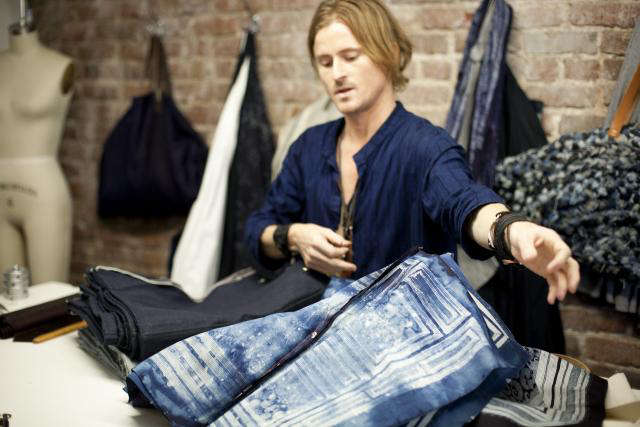
San Francisco has never been shy about its love affair with people who make things by hand. This is a city where sourdough has a résumé, coffee has a philosophy, and a perfectly worn apron can look more intentional than a boardroom suit. So it makes perfect sense that Matt Dick, the designer and creative director often known as “Indigo Matt,” became one of the Bay Area’s most quietly fascinating craft figures: a maker with blue-stained hands, a global textile education, and a taste for workwear that looks as if it has stories tucked into every seam.
The phrase “Indigo Matt in San Francisco” points to more than a nickname. It captures a small but vivid chapter in the city’s design culture, where Japanese dye traditions, durable uniforms, handmade textiles, and slow fashion met inside studios, cafés, restaurants, galleries, and creative workshops. Matt Dick’s work through Small Trade Company helped translate the beauty of labor into clothing and objects that felt useful, poetic, and tough enough to survive a full day of actual work. Imagine a chef’s apron that could discuss architecture, a tote bag that has read several design magazines, and a denim garment that has strong opinions about fermentation. That is the neighborhood we are walking into.
Who Is Indigo Matt?
Indigo Matt is the affectionate design-world shorthand for Matt Dick, a San Francisco-based designer associated with Small Trade Company, natural indigo textiles, and refined workwear. His reputation grew around a style that was never loud but always deeply considered: indigo-dyed cloth, smocks, aprons, bags, tunics, kurtas, and uniforms with a rare balance of utility and grace.
Dick’s work has often been described through the language of craft rather than trend. He was not chasing the fast-fashion carousel, where a shirt can go from “must-have” to “laundry guilt” in seven business days. Instead, he focused on garments and objects that respected material, process, and use. His designs looked at the way people work: baristas, cooks, farmers, shopkeepers, hotel staff, artists, and makers. In his world, clothing is not decoration layered over labor. Clothing is part of labor’s rhythm.
Small Trade Company, the studio associated with Dick’s San Francisco period, became known for workwear that felt both humble and luxurious. That combination may sound contradictory, but it is exactly where the magic sits. A canvas apron can be plain, but the right cut, fabric weight, pocket placement, dye treatment, and hand-feel can turn plain into quietly magnificent. It is the difference between “I found this in the garage” and “a Japanese master dyer, a textile historian, and a minimalist architect may have quietly nodded at this.”
Why Indigo Became His Signature
Indigo is not just a color. It is a process, a history, and a minor miracle that happens when cloth meets chemistry and oxygen. Natural indigo dye has been used across cultures for centuries, from Japan and India to West Africa and the Americas. Its beauty comes from depth: the blue can be dusty and pale, dark as midnight, or somewhere between denim and storm cloud. The color changes with repeated dips, fiber type, vat condition, and time. In other words, indigo refuses to behave like a flat paint chip. It has personality. It also has commitment issues until oxygen gets involved.
Unlike many dyes that dissolve directly in water, indigo must be reduced in a dye bath so it can penetrate fibers. When the fabric is pulled from the vat and exposed to air, oxidation turns the cloth blue. That moment is almost theatrical: greenish-yellow fabric slowly transforms into blue before your eyes. For a designer interested in labor, patience, and transformation, indigo is practically a coauthor.
Matt Dick’s connection to indigo deepened through study in Japan. During his early creative life, he spent time at the Nakajima Konya dye works in Saitama, learning traditional methods connected to Japanese stencil cutting, resist processes, mulberry and persimmon resins, and natural dye vats. This experience shaped his eye for material authenticity. It also gave his San Francisco work a bridge between Bay Area experimentation and Japanese craft discipline.
San Francisco as the Perfect Backdrop
San Francisco is a city of hybrids. It is tech and fog, Victorian houses and raw concrete, Mission burritos and museum openings, old manufacturing buildings and new creative campuses. For Indigo Matt, the city offered exactly the right ecosystem: curious restaurants, independent shops, design-savvy customers, artists, textile people, ceramicists, and makers who understand why a pocket can be a philosophical statement if you place it correctly.
Small Trade Company’s San Francisco presence connected with local names and spaces that valued craft. Dick’s work appeared in the orbit of Heath Ceramics, Blue Bottle Coffee, Tartine Bakery, and other businesses where atmosphere matters as much as product. These were not uniforms meant to disappear. They helped shape the visual identity of hospitality and retail spaces. A good apron tells the customer, “Someone here knows what they are doing.” A bad apron tells the customer, “There may be soup on the floor.”
The Mission District, where many creative studios and food businesses have long overlapped, made particular sense for this kind of work. The neighborhood’s industrial texture gave handmade design a practical home. In that environment, a designer could think about cloth not as runway fantasy but as a working surface: something that catches flour, coffee, clay dust, dye splashes, pencil marks, and the occasional existential crisis.
The Small Trade Company Aesthetic
Small Trade Company’s design language can be summed up in four ideas: utility, restraint, texture, and story. The garments and objects associated with the studio were not flashy. They were built around proportion, fabric, and use. A smock might have a simple silhouette but a memorable drape. A tote might seem straightforward until you notice the stitching, the cloth origin, the handle placement, and the way the indigo tone deepens at the fold.
Dick’s interest in “small trades” reflects a broader admiration for people dressed for their work. Historically, tradespeople wore clothing that communicated function: the butcher’s apron, the gardener’s coat, the baker’s whites, the mechanic’s jumpsuit, the fisherman’s jacket. These garments were not designed for a seasonal trend report. They were designed because someone had to carry tools, stay protected, move freely, and get through the day.
Indigo Matt reinterpreted that logic with elegance. His workwear did not costume labor; it honored it. Aprons, tunics, and bags became modern artifacts of use. They looked at home in a café, a ceramic studio, a flower shop, a design showroom, or a kitchen where someone owns both a carbon-steel pan and very strong opinions about olive oil.
Japanese Influence Without Costume
One of the most interesting aspects of Matt Dick’s style is the way Japanese influence appears without feeling like imitation. His clothing and textile work often referenced kimono logic, work coats, kurtas, shibori, katazome, and the beauty of repeated daily use. But the results belonged to contemporary California design, not a museum display or a costume rack.
This distinction matters. Japanese craft traditions are rich, technical, and culturally specific. A thoughtful designer studies them with humility. Dick’s work showed respect for process: the patience of dyeing, the intelligence of a garment cut, the importance of handwork, the beauty of natural fibers, and the dignity of repair. His San Francisco pieces carried that influence into a local design vocabulary: relaxed, functional, coastal, urban, and quietly exacting.
Indigo, Denim, and the Beauty of Wear
Denim plays a major role in the indigo story. The world’s most familiar blue fabric owes its character to the way indigo sits on fiber and fades with friction. That is why a pair of jeans can become a diary written in creases. Wallet marks, knee fades, cuff lines, and worn pockets are not flaws; they are evidence of life.
Matt Dick’s projects included denim bags, braided recycled denim, and collaborations connected to Levi’s Made & Crafted. This makes sense in San Francisco, a city deeply tied to denim history through Levi Strauss & Co. The link between indigo, labor, and denim is almost too perfect: workwear born from necessity, elevated by design, and made more beautiful by use. Indigo Matt understood that a textile does not need to stay pristine to stay valuable. Sometimes the best thing that can happen to a garment is a little honest wear.
That idea runs against the disposable habits of modern fashion. Fast fashion often trains buyers to treat clothing as temporary entertainment. Indigo workwear invites the opposite: buy less, wear longer, notice more. It is not anti-style. It is style with a spine.
Why His Work Still Feels Relevant
The appeal of Indigo Matt in San Francisco has only grown as consumers become more interested in sustainability, craft, and transparency. People want to know where things come from, who made them, what materials were used, and whether an object has a life beyond the checkout screen. The rise of slow fashion, circular design, repair culture, and local making has made Dick’s approach feel less like a niche and more like a blueprint.
A well-made apron, tote, coat, or smock can serve for years. It can be repaired. It can fade beautifully. It can move between work and daily life. It can develop character instead of merely losing novelty. That is a powerful argument in a market crowded with synthetic fabrics, rushed production, and designs that seem to expire emotionally before the return window closes.
The modern relevance of Indigo Matt also lies in his refusal to separate beauty from use. Many luxury objects ask to be admired from a respectful distance. Dick’s best-known work invites use. It wants to be tied around a waist, folded over a chair, slung over a shoulder, or worn until the fabric remembers the body. This is luxury without fussiness, and frankly, it is refreshing. Not every beautiful thing needs to behave like a nervous museum vase.
The Craft Details That Make Indigo Matt Stand Out
1. Fabric With a Backstory
Dick has been associated with fabrics sourced from places known for textile tradition, including Japan, India, Italy, China, and regions of Southeast Asia. The point was not exoticism; it was specificity. Cloth carries the memory of where and how it was made. A handwoven textile behaves differently than a mass-produced one. A naturally dyed fabric ages differently than a synthetic quick-fix color. A limited cloth asks the designer to pay attention.
2. Tools as Creative Companions
Anyone who has seen a serious maker’s studio knows that tools have personalities. Scissors, shears, thread clips, needles, rulers, cutting tables, lamps, and baskets become part of the creative environment. Dick’s studio culture reflected this. His work was not only about finished objects; it was about the disciplined mess of making them. If you have ever owned one good pair of scissors and threatened your family for using them on tape, you understand the emotional stakes.
3. Uniforms With Character
Uniform design can easily become dull, but Small Trade Company treated uniforms as identity. For cafés, restaurants, shops, and hospitality spaces, staff clothing helps create mood. A beautifully cut apron or smock can make a business feel grounded, thoughtful, and human. It suggests care before a single latte is poured.
4. Natural Color and Imperfection
Indigo’s small variations are part of its charm. Slight unevenness, tonal shifts, and fading patterns create individuality. In a world obsessed with identical production, this feels almost rebellious. The fabric says, “I am not a spreadsheet.” Good for the fabric.
Indigo Matt and the San Francisco Design Scene
San Francisco’s design scene has always had a practical streak. Even at its most refined, Bay Area design tends to like things that work: furniture that survives dinner parties, ceramics that can handle daily use, clothing that moves, and spaces that welcome people rather than intimidate them. Indigo Matt fit into that culture naturally.
His work touched multiple creative worlds: fashion, interiors, retail, food, hospitality, craft, and art. He was connected to conversations about how objects are made and how they are used. Events such as maker programs and studio visits helped position him not merely as a clothing designer but as a cultural translator between craft knowledge and contemporary life.
This is why “Indigo Matt in San Francisco” continues to be a useful search phrase. It is not simply about one person wearing blue. It is about a moment when local craft, Japanese technique, slow design, and San Francisco’s appetite for thoughtful making all came together in a way that still feels instructive.
How to Bring the Indigo Matt Spirit Into Your Own Style
You do not need a studio above a ceramics factory or a collection of rare Japanese shears to learn from Indigo Matt’s approach. You can start with a few practical ideas. Choose natural fibers when possible. Look for garments with clean construction. Buy fewer things, but buy things you want to repair rather than replace. Pay attention to how clothing feels when you move. Notice whether a bag, apron, jacket, or shirt solves a real problem.
Indigo pieces are especially rewarding because they evolve. A dark indigo overshirt, denim tote, chore coat, or cotton scarf may begin as a simple blue object and slowly become personal. The fading happens where your life happens: elbows, cuffs, straps, pockets, and seams. That is not damage. That is collaboration.
For home design, the Indigo Matt spirit can appear through textiles: indigo-dyed cushions, table runners, wall hangings, quilts, or throws. Keep the palette natural. Let blue mix with cream, clay, black, warm wood, steel, and worn leather. The result feels relaxed but intelligent, like a room that can recommend a good book and also help you move a table.
Experiences Related to Indigo Matt in San Francisco
To experience the world suggested by Indigo Matt in San Francisco, start by imagining a slow walk through the city’s maker landscape. The day might begin in the Mission, where old industrial buildings still hold the memory of production. You step into a studio or showroom where fabric is stacked in quiet piles, not screaming for attention but clearly aware of its own importance. There are scissors on the table, maybe more scissors than one person strictly needs, but who are we to judge greatness? Indigo cloth hangs from a rail, and the blue is not one blue. It is a family reunion of blues: smoky navy, soft washed denim, deep ink, and the kind of near-black shade that makes minimalists whisper, “Finally.”
The first thing you notice is texture. Handmade and carefully sourced textiles do not behave like flat images on a shopping website. They have weight, grain, irregularity, and temperature. A cotton smock feels different from a canvas apron. A denim bag has structure before it has attitude. A hand-dyed piece may show slight variation along the fold, edge, or seam. These are the details that make the experience human. You are not just looking at fashion; you are looking at decisions.
Then comes the San Francisco context. Outside, the air might be cool even when the calendar insists it is summer, because San Francisco enjoys meteorological comedy. Inside, the studio feels warm with material intelligence. This is the kind of place where a person can talk about coffee, ceramics, indigo vats, Japanese stencil paper, restaurant uniforms, and the correct pocket depth without changing emotional altitude. The city’s food and design communities make that possible. In another place, an apron might be an apron. In San Francisco, it can become a conversation about labor, hospitality, identity, sustainability, and whether the staff at your favorite café looks effortlessly cool or merely over-caffeinated.
A personal experience with Indigo Matt’s style is less about buying one specific object and more about learning to see. After encountering this kind of work, you start noticing uniforms everywhere. The butcher’s coat, the florist’s smock, the barista’s apron, the ceramicist’s clay-marked shirt, the gardener’s faded jacket: suddenly these garments look like portraits. They show what people do, what tools they carry, and how their bodies move through a day. Indigo Matt’s contribution is that he helped make this ordinary beauty visible.
The experience also changes how you think about aging. Many modern products are designed to look best at the moment of purchase. After that, the plot gets gloomy. Indigo textiles, by contrast, often get better with time. The first fade is not a tragedy; it is the opening chapter. A crease becomes a memory. A softened edge becomes comfort. A repaired seam becomes proof that the object mattered enough to save. This is especially powerful in a city like San Francisco, where creative people often live in small spaces and need objects to earn their keep. A beautiful, durable, useful thing is not a luxury because it is expensive; it is a luxury because it stays in your life.
The best way to carry the Indigo Matt experience home is simple: choose one object with intention. It might be an indigo-dyed scarf, a well-cut apron, a denim tote, or a work jacket. Use it. Do not preserve it like a rare orchid with anxiety. Let it go to the market, the kitchen, the studio, the train, the café, the desk, and the messy parts of real life. Over time, the object will become less perfect and more yours. That is the quiet lesson of Indigo Matt in San Francisco: good design does not end when something is finished. Sometimes it begins when you put it to work.
Conclusion
Indigo Matt in San Francisco is a story about craft, but it is also a story about values. Matt Dick’s work with Small Trade Company showed how indigo dye, Japanese textile knowledge, workwear traditions, and Bay Area creativity could become something modern without becoming disposable. His designs remind us that clothing can be useful, beautiful, durable, and deeply personal. They also remind us that blue hands are not always a problem. Sometimes they are a professional credential.
In a culture that often rewards speed, Indigo Matt’s work celebrates slowness. In a market that favors sameness, it welcomes variation. In a fashion cycle built on replacement, it argues for attachment. That is why the phrase still matters. It evokes a San Francisco design moment worth remembering and a way of making that still feels fresh: thoughtful, tactile, quietly funny, and as deep as a vat of natural indigo.
Note: This article is an original synthesis based on publicly available information about Matt Dick, Small Trade Company, San Francisco craft culture, indigo dye traditions, workwear design, and sustainable textile practices.