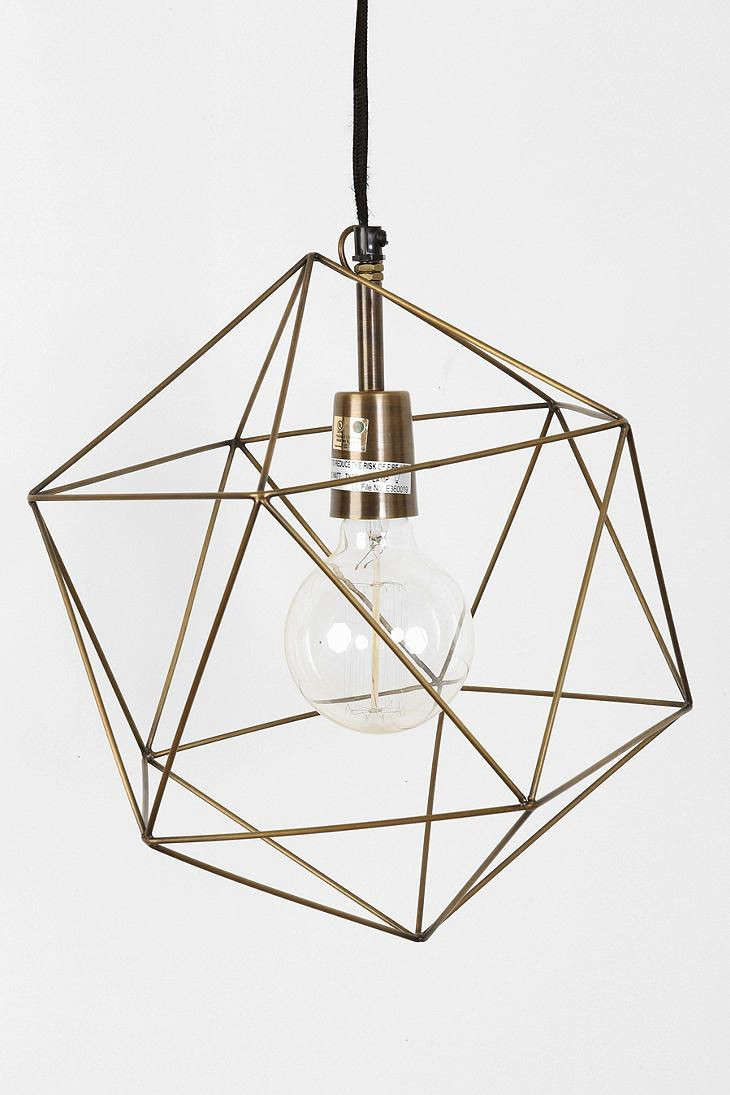
A room can have excellent furniture, respectable paint, and pillows that cost more than anyone should admit in publicand still feel unfinished. Often, the missing ingredient is overhead lighting with personality. The Magical Thinking Geo Pendant earned attention because it turns a basic lighting need into a small piece of architectural theater: an open, geometric metal form that frames the bulb rather than hiding it.
Originally associated with Urban Outfitters’ Magical Thinking home collection in the mid-2010s, the Geo Pendant became a memorable example of affordable statement lighting. Public design roundups from that period described it as a gold- or copper-toned geometric pendant and listed it around the budget-friendly price point of the day. Today, the exact original can be difficult to find, but the design language remains remarkably current: angular wire frames, warm metallic finishes, exposed bulbs, and a clean silhouette that feels equal parts industrial, bohemian, and modern.
This guide explains what makes the Magical Thinking Geo Pendant look work, where it belongs, how to light it properly, and how to recreate its charm without turning your ceiling into a hardware-store accident.
What Is the Magical Thinking Geo Pendant?
The Magical Thinking Geo Pendant is best understood as a decorative hanging light built around geometric structure. Rather than enclosing the bulb in a traditional fabric shade, glass globe, or opaque metal shell, the fixture relies on open lines and angular planes. The bulb becomes visible, which means the fixture does not merely provide illuminationit stages illumination.
That difference matters. A shaded pendant tends to soften, conceal, and direct light. A wire-frame pendant exposes the source and lets shadows, reflections, and negative space become part of the design. In plain English: the light fixture is doing some decorating before your guests even notice the throw pillows.
The “geo” appeal comes from its faceted shape. Depending on the version or inspired alternative, the form may resemble a diamond, prism, polyhedron, cage, or abstract lantern. The original visual identity leaned toward warm metal tones, which helped it feel less cold than chrome and less formal than a crystal chandelier.
Why Geometric Pendant Lighting Still Feels Fresh
Geometric pendant lighting has impressive staying power because it balances two opposing design instincts. It is structured, but not stiff. It is decorative, but not fussy. It can look artistic without requiring a homeowner to explain it with the phrase, “My designer says it is conceptual.”
Open-frame pendants work especially well when a room already has visual weight from cabinetry, bookshelves, tile, upholstery, or artwork. Because the fixture has empty space within its outline, it can make a statement without becoming a solid visual block. This is particularly useful in smaller rooms, where a heavy chandelier may feel like it is preparing to collect rent.
Another advantage is versatility. A copper, brass, antique gold, or black geometric pendant can move between several interior styles:
- Bohemian interiors: Pair it with rattan, plants, woven textiles, and imperfect handmade finishes.
- Mid-century modern rooms: Let the angular silhouette echo tapered furniture legs and warm wood tones.
- Industrial spaces: Combine it with matte black, brick, concrete, and Edison-style LED bulbs.
- Modern farmhouse kitchens: Use the pendant as a lighter, more sculptural contrast to substantial cabinetry.
- Eclectic apartments: Mix it with vintage art, colorful rugs, and furniture that has clearly collected a few stories.
Where a Magical Thinking Geo Pendant Works Best
The best location depends on whether the pendant is meant to act as a focal point, task light, ambient light, or all three. A geometric pendant can look fantastic almost anywhere, but “almost anywhere” is not permission to hang one directly over the refrigerator and declare victory.
Over a Kitchen Island
This is one of the strongest placements for a Magical Thinking Geo Pendant-inspired fixture. One larger pendant or a row of two to three smaller pendants can add definition to an island while giving the kitchen a more intentional look. Because open-frame lighting does not block sightlines as much as a bulky shade, it works well in open-concept homes where the kitchen connects to a dining or living area.
For task lighting, choose bulbs that provide enough brightness for chopping, reading recipes, and locating the one spice jar that has somehow vanished behind the olive oil. A pendant should complement recessed lighting or under-cabinet lighting, not carry the entire kitchen on its little metal shoulders.
Above a Dining Table
A single geo pendant can bring intimacy to a small round table, while a pair or cluster can anchor a longer rectangular table. A common starting point is to hang the bottom of the fixture roughly 30 to 36 inches above the tabletop. That range usually keeps the light low enough to feel connected to the table while preserving sightlines across the room.
Use a dimmer whenever possible. Dinner lighting should be flattering, not resemble a medical examination. A dimmable LED bulb with a warm color temperature can help the fixture shift from weekday homework station to Friday-night pasta drama with one smooth adjustment.
In an Entryway or Foyer
An entryway is where a geo pendant can behave like jewelry for the home. The fixture does not have to provide every lumen needed for the entire area; its job is to create a first impression. In a tall foyer, a pendant with a more substantial silhouette can bring visual balance to the vertical space and prevent the ceiling from looking like it wandered off and forgot the room below.
Over a Bedside Table or Reading Nook
Suspending a small pendant beside a bed can free up nightstand space and add a boutique-hotel feeling. In a reading nook, a geometric pendant can frame a chair without requiring a floor lamp to occupy precious square footage. Choose a softer bulb and make sure the exposed filament is not positioned at direct eye level when someone sits down.
Choosing the Right Size and Hanging Height
Scale is the difference between “beautiful design choice” and “why is there a metal birdcage hovering over the dining table?” Before buying a geometric pendant, measure the room, ceiling height, furniture below it, and the fixture itself.
For a dining table or island, start by considering the width of the surface. A single large pendant should generally feel related to the furniture beneath it rather than wider than the table or island. With multiple pendants, leave enough air between them so the arrangement reads as a rhythm rather than a traffic jam.
Ceiling height matters too. In rooms with standard eight-foot ceilings, a fixture should not hang so low that tall guests begin checking their posture. For higher ceilings, the pendant can often be lowered to create a stronger connection with the table, island, or seating area beneath it. Adjustable cords, chains, and downrods are useful because they let the fixture adapt to your actual room instead of an imaginary showroom with twelve-foot ceilings and no laundry baskets.
For open-frame designs, visual size can be deceptive. A fixture may measure modestly across but still feel large because its geometric outline catches the eye. Tape out the approximate dimensions with painter’s tape or cardboard before ordering. It is a gloriously low-tech step that can save you from learning advanced vocabulary involving return shipping.
Bulbs That Make a Geo Pendant Look Better
Because the bulb is visible, it becomes part of the fixture’s appearance. This is where many otherwise lovely pendant lights lose the plot. A harsh, overly bright bulb inside an open cage can make a room feel less “warm modern home” and more “interrogation room with plants.”
For most living spaces, warm white bulbs in the neighborhood of 2700K to 3000K create a relaxed, familiar glow. For a kitchen work zone or home office, a slightly cooler light may be appropriate, but avoid treating color temperature like a competitive sport. The goal is useful light that still makes people look alive.
Brightness is measured in lumens, not merely watts. A lower-lumen decorative bulb can be beautiful for mood lighting, while a brighter bulb may be needed when the pendant is expected to support real tasks. If the fixture is used over an island or dining table, consider combining it with other light sources so one exposed bulb does not have to audition for the role of “sun.”
LED bulbs are usually the practical choice because they use less energy and generally last longer than traditional incandescent bulbs. Look for a bulb compatible with the fixture’s socket, maximum wattage rating, and dimmer system. A dimmable bulb is not automatically guaranteed to dim beautifully with every switch, so check compatibility before assuming the universe will sort it out.
For a Magical Thinking Geo Pendant look, these bulb styles are especially effective:
- Clear globe LEDs: Clean, modern, and ideal when the fixture itself is the star.
- Vintage filament-style LEDs: Great for warm, decorative glow without the energy appetite of old incandescent bulbs.
- Amber-tinted LEDs: Useful for a moodier, softer look in bedrooms, lounges, or dining areas.
- Frosted LEDs: Better when glare is a concern and you want a gentler visual effect.
Installation, Safety, and the Unsexy Details That Matter
A beautiful pendant light still needs to be a safe pendant light. When shopping for a replacement or look-alike, check that the fixture is appropriately listed or certified for residential electrical use. Confirm its socket type, maximum bulb rating, mounting requirements, and whether it is suitable for dry, damp, or wet locations.
Do not assume every geometric pendant can go in a bathroom, covered porch, or steamy laundry room. Moisture ratings exist for a reason, and that reason is not to ruin your decorating plans. It is to reduce electrical and fire risk.
For a hardwired fixture, installation is best handled by a qualified electrician when you are not fully comfortable working with household wiring. This is especially important in older homes, where the ceiling box, wiring condition, grounding, and fixture support may need professional attention. A pendant light should be secured to an approved ceiling box capable of supporting its weightnot to optimism, drywall, or a suspiciously confident YouTube tutorial.
Once installed, dust the frame with a soft microfiber cloth and turn the power off before cleaning around the bulb or socket. Avoid spraying cleaners directly onto the fixture. For metal finishes, use products appropriate for the manufacturer’s recommendations, since abrasive cleaners can dull plated or painted surfaces.
How to Recreate the Magical Thinking Geo Pendant Look Today
Finding the exact original Magical Thinking Geo Pendant may require patience, resale hunting, or the kind of keyword searching that makes a person unexpectedly fluent in phrases like “vintage wire cage ceiling light.” Fortunately, the look is easier to recreate than the exact item is to locate.
Search for terms such as geometric pendant light, open-frame pendant, wire cage pendant, diamond pendant light, gold geometric ceiling light, or copper wire pendant fixture. Focus less on whether a listing uses the exact phrase “Magical Thinking” and more on whether it captures the design essentials: open geometry, warm metal, visible illumination, and a proportion that suits your room.
A black version can feel more industrial and graphic. Antique brass tends to look softer and more collected. Copper-toned finishes bring warmth but should be paired thoughtfully with other metals; they do not need to match every doorknob in the house, but they should look like they belong at the same party.
For a more refined version of the look, choose a fixture with a sculptural frame and a frosted globe inside. For a rawer, loft-inspired feel, choose an exposed vintage-style LED bulb. For a playful bohemian approach, place the pendant near natural textures such as cane, wood, linen, or leafy plants.
Is a Geo Pendant Worth It?
A Magical Thinking Geo Pendant-inspired light is worth considering when you want lighting that performs two jobs at once: practical illumination and visual personality. It is not always the best choice for rooms that need soft, fully diffused light, and it may not be ideal in very low-ceiling spaces. But in the right location, it adds depth, warmth, and a sense that someone made a decision beyond “the builder included this.”
The strongest version of this look is not necessarily the most expensive. It is the fixture that fits the room, gives the right kind of light, and feels like a deliberate extension of the home’s character. Geometry may have traumatized some of us in school, but it can be surprisingly charming once it is hanging from the ceiling and not appearing on a final exam.
Real-World Experiences With a Magical Thinking Geo Pendant
The following scenarios are illustrative experiences based on common ways homeowners use geometric pendant lighting. They are not claims of supernatural powers, paid endorsements, or evidence that a light fixture can solve a group chat disagreement.
1. The Small Apartment Kitchen Upgrade
In a compact apartment kitchen, the biggest challenge is usually visual clutter. Cabinets, appliances, open shelving, countertop gadgets, and one very determined fruit bowl can make the ceiling feel like the only peaceful area left. A Magical Thinking Geo Pendant-style light can help because its open frame brings personality without blocking the view across the room.
Imagine replacing a plain builder-grade dome light over a narrow peninsula with a warm brass geometric pendant. During the day, the fixture adds a sculptural line against the ceiling. At night, a dimmable 2700K LED gives the kitchen a softer glow while recessed or under-cabinet lighting handles actual food prep. The pendant is no longer trying to do everything. It is simply the stylish friend who arrives with good energy and does not monopolize the conversation.
The practical lesson is simple: in a small kitchen, choose an open pendant with manageable dimensions and pair it with other lighting sources. The visual payoff comes from the shape, not from choosing the biggest fixture that will physically fit through the doorway.
2. The Dining Table That Finally Became a Destination
Many dining areas are used for much more than dinner. They become laptop desks, homework stations, wrapping-paper headquarters, and temporary holding zones for mysterious mail. A geometric pendant can help restore a sense of purpose by making the table feel like a destination rather than a horizontal storage shelf.
A homeowner might hang a single diamond-shaped pendant over a round oak table, positioning it about three feet above the surface. With the light brightened, the table becomes useful for work or puzzles. With the dimmer lowered, it becomes a relaxed spot for dinner. The frame casts gentle patterns and gives the room a focal point, even when the meal is takeout and the centerpiece is a heroic carton of noodles.
The experience works because the pendant visually connects ceiling and table. It draws the eye downward, makes the seating area feel intentional, and adds a touch of ceremony to everyday routines.
3. The Entryway That Stopped Feeling Like a Hallway
Entryways are often treated as pure utility: keys go here, shoes go there, and everyone tries not to trip over the dog. But a small geometric pendant can change the mood immediately. In a foyer with a modest ceiling height, a compact open-frame fixture can create a memorable first impression without overwhelming the space.
One especially effective approach is combining a warm metal pendant with a simple mirror, a narrow console table, and a small lamp for layered light. The pendant adds overhead drama; the table lamp prevents harsh shadows; the mirror bounces light around and lets guests confirm that they have, in fact, remembered their own face. The result is welcoming rather than theatrical, which is ideal unless your household dress code includes capes.
4. The Bedroom Lighting Reset
Bedrooms often rely too heavily on one ceiling fixture, which creates flat light and makes relaxation harder than it needs to be. A pair of small geo pendants hung beside the bed can replace bedside lamps and free up room for books, water glasses, or the ever-growing collection of chargers that apparently reproduce overnight.
Using warm, dimmable bulbs is essential here. The open frame keeps the visual design light, while the warmer bulb prevents the fixture from feeling too sharp or industrial. The pendants can be especially appealing in a bedroom with linen bedding, wood furniture, woven accents, or a restrained color palette. They offer a bit of edge without turning the room into a loft conversion in a detective show.
5. The Lesson Learned After Choosing the Wrong Bulb
One common experience with open-frame pendant lighting is discovering that the bulb matters more than expected. A homeowner may install a beautiful brass geo pendant, step back proudly, flip the switchand immediately feel like the kitchen has been upgraded to airport-security brightness.
The fix is often easy: swap the cool, high-output bulb for a warm LED with lower glare, install a compatible dimmer, or add another ambient source so the pendant does not need to operate at full blast. This is the kind of adjustment that teaches an important lighting truth: the fixture is only half the design. The bulb, placement, surrounding surfaces, and controls all shape the final experience.
That is why the Magical Thinking Geo Pendant remains a useful design reference. Its magic is not mystical. It is practical, visual, and surprisingly powerful: a few clean lines, the right light, and a room that suddenly feels more like home.
Final Thoughts
The Magical Thinking Geo Pendant proves that pendant lighting does not need ornate crystals or oversized shades to make an impact. A simple geometric frame, warm finish, thoughtful bulb, and correct placement can transform a kitchen island, dining table, bedside, or entryway into a more intentional space. Choose the size carefully, layer the lighting, prioritize electrical safety, and let the fixture provide a little everyday dramawithout making your ceiling the main character in a renovation disaster story.